
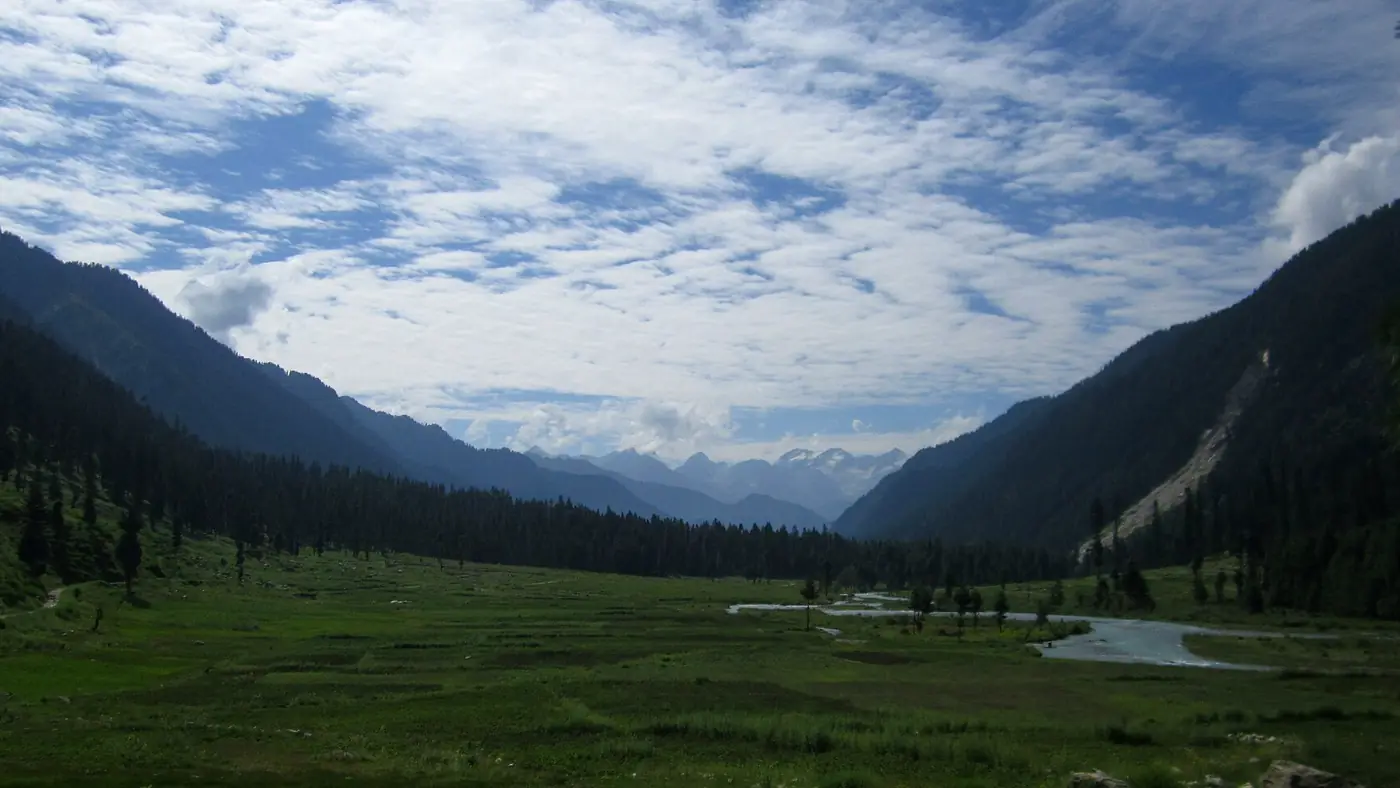
Camping in Kumrat usually means a tent at one of the seasonal camps along the Panjkora in the forest above Thal: you hire a fixed tent with bedding, eat what the camp cooks, and fall asleep to the river. You can also bring your own tent and pay to pitch it on a camp's ground, or pay far more for a glamping dome or cabin. The season runs roughly from late May to September, and nights are cold even in July.
What matters most is not which camp you pick but where your tent stands in relation to the river, and how you deal with fire and rubbish. This guide covers all three, along with where the camps are and whether to hire a tent or bring your own.
| At a glance | |
|---|---|
| Main camping area | The forest along the Panjkora, about 12 to 14 km beyond Thal by jeep |
| Other sites | Around Kala Chashma and towards Dojanga; Jahaz Banda meadows on a separate route |
| Season | Roughly late May to September; some camps stay open into October |
| Nights | Cold all season; bring a warm sleeping bag |
| Power | Solar panels or a generator for a few hours; bring power banks |
| Signal | None in the forest; Thal is the last reliable signal |
Where do people camp in Kumrat?
Kumrat has no single campsite. Camps are strung along the jeep track wherever the forest meets a flat stretch of riverbank. The main areas, from Thal upwards:
- The main forest camping area, about 12 to 14 km from Thal near Kumrat waterfall. This is where most camps are, where the Panjkora splits into braided channels with grassy banks and gravel islands between them. It is the busiest area and the easiest to reach.
- Around Kala Chashma, about 5 to 6 km further up the valley. There are fewer camps and it is quieter. Our guide to Kala Chashma covers the spring and the ride up.
- Towards Dojanga, near the end of the jeep track. Remote and quiet, with thicker forest and very few people. It suits experienced campers with their own kit, not a first trip.
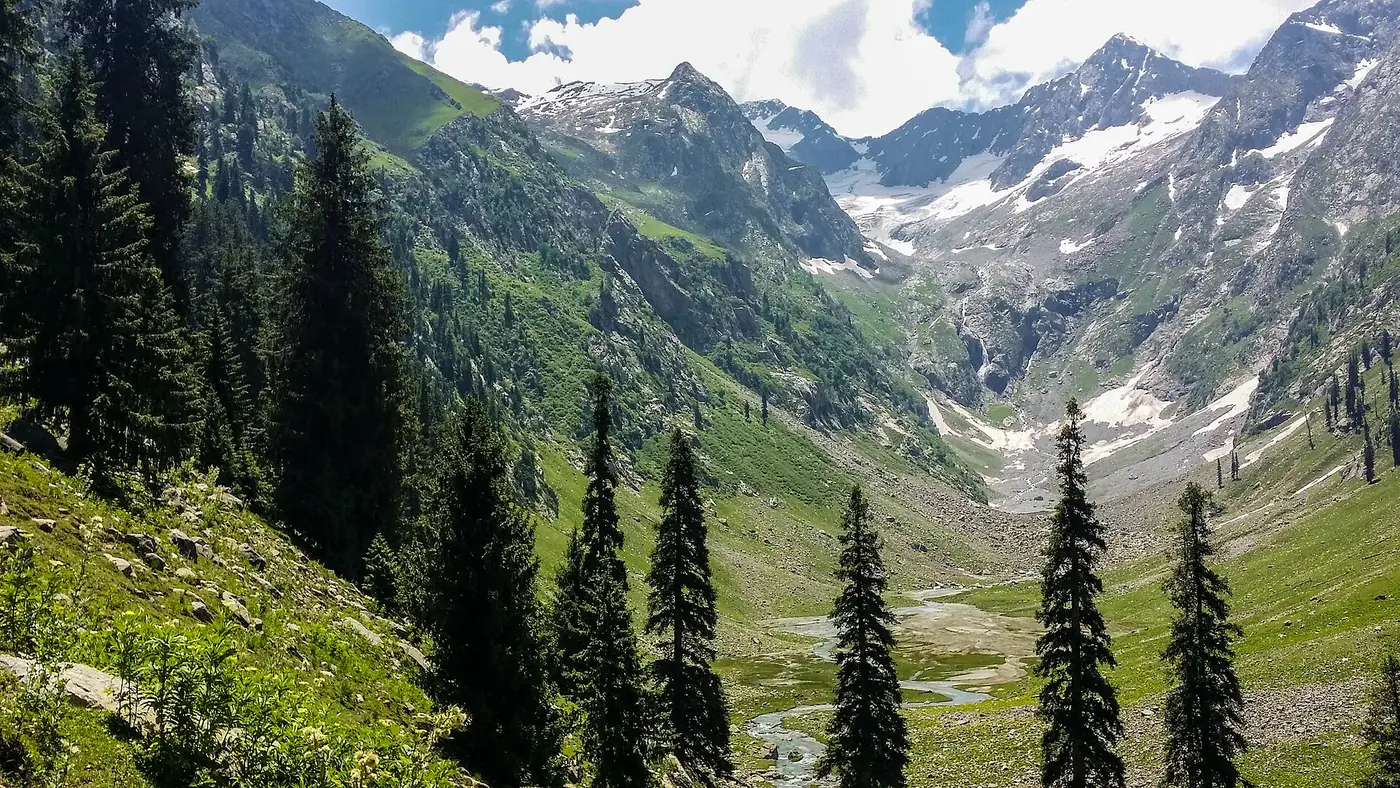
- Jahaz Banda, the high meadows reached by a separate jeep road and a walk of several hours. Camps there are seasonal and simple, and the nights are much colder than in the forest.
If you would rather sleep in a room, Thal has hotels and guesthouses. Our Kumrat Valley guide shows where each of these places sits.
Hiring a tent or bringing your own?
Hiring a tent at a camp
This is what most people do. Camps put up fixed tents with mattresses and quilts inside, and cook set meals for their guests. Some have wooden huts or rooms alongside. Standards and prices vary a great deal from one camp to the next, so before you agree, ask:
- What is the bedding? How many quilts per person, and is there a mattress?
- Where are the toilets, and is there hot water?
- Are meals included?
- Is there power for charging, and for how many hours?
- How far is the tent from the water, and how high above it?
- What is the total price for your group per night?
For rough costs, see our Kumrat trip cost guide. Prices rise sharply at Eid and on summer weekends.
Bringing your own tent
You can, and it is the cheapest way to camp. But the flat land along the river is generally claimed by local families or camps, so expect to pay to pitch, and always ask before you set up. Pitching on a camp's ground usually gives you access to its toilets, food and a fire, which is worth paying for.
Wild camping further up the valley, away from any camp, is not something we would suggest on a first trip or in the current security situation.
Glamping
A handful of sites offer domes, pods, cabins and chalets with proper beds and attached bathrooms. They are a different price bracket: at one established glamping site in the forest, 2025 peak-season rates ran from about PKR 8,000 a night for a pod to more than PKR 40,000 for a family chalet. Book well ahead for weekends and Eid.
Choosing a safe pitch by the river
The Panjkora is the reason to camp in Kumrat, and also the main danger. It is cold, fast and fed by snowmelt, and heavy rain upstream can raise it and its side streams quickly. In August 2024, flash floods washed away the road at Barikot and three bridges between Makrala and Thal, and around 250 tourists had to be brought out of the valley. In June 2025, 11 members of one family from Sialkot died when a flash flood caught them picnicking beside the Swat River in neighbouring Swat.
So, wherever you camp:
- Don't pitch on gravel islands, sandbars or low banks between river channels, however inviting they look. Choose ground well above the water line, with an easy way back to higher ground.
- Watch the water. If the river turns brown, rises, or starts carrying branches, move tents and people to higher ground straight away, even at night.
- Keep children away from the edge. Rocks by the water are slippery, and the current can knock an adult off their feet.
- Look up before you pitch. Avoid spots under dead trees or hanging branches, and below loose, steep slopes.
- Store food properly. Asiatic black bears live in the Kumrat forest. Keep food sealed, in the camp kitchen or the jeep, never in your tent, and don't leave scraps lying around.
Fires: what is and isn't acceptable
Most camps light a fire in the evening. But deodar in Kumrat is already being lost to fuelwood, and every tourist bonfire adds to that. Keep to these rules:
- Never cut trees or branches, living or dead-looking. Buy firewood from your camp.
- Use the camp's existing fire pit, or a ring of stones on bare ground, well away from tents and trees.
- Keep it small, and never light one on a windy evening.
- Put it out completely with water before bed, until the ashes are cold.
- Cook on a gas stove if you are self-catering.
Leaving no trace in Kumrat
Litter is Kumrat's most visible problem, with plastic piling up around the busiest camps and at the waterfall. The basics:
- Take all your rubbish back to Thal, including food waste, and bring a few bin bags for it.
- Don't wash with soap or detergent in the river or the springs. Carry water away from the bank to wash.
- Use the camp toilets. Where there are none, go at least 60 metres from water and bury waste in a small hole.
- Keep the noise down after dark. Loud music carries a long way in a quiet valley, and other campers came for the river.
- Respect the people who live here. Thal and the villages are conservative. Dress modestly, and ask before photographing people or homes.
What to pack for camping in Kumrat
- A sleeping bag rated to near freezing, even in summer, and a sleeping mat
- Warm layers, a hat and a rain jacket
- A head torch and power banks, charged before you leave Thal
- A gas stove and fuel if you are cooking for yourself
- Bin bags, a water bottle and a way to treat water
- A first-aid kit and any regular medicine
- Cash from Timergara or Dir, as there are no ATMs in the valley
- Your CNIC for the checkposts on the Dir road
In October, pack for nights below freezing; our guide to Kumrat in October explains what changes late in the season.
Is camping in Kumrat safe?
The UK government currently advises against all travel to Upper and Lower Dir, and militants have attacked police in both districts in 2026, including an overnight gun battle in Upper Dir in August. Pakistani tourists still camp in Kumrat every summer, and none of these incidents targeted visitors. For now, stay at established camps with other people around rather than alone in a remote spot, check the news and police advice before you leave, and drive in daylight.
Foreign nationals need a No Objection Certificate to visit Upper Dir, applied for online through the Khyber Pakhtunkhwa tourism department, and should know that their government's advice may void their travel insurance. Our guide to whether Kumrat is safe covers security, the road and the river in more detail.
Camp, hut or a room in Thal?
Camp if you want the river and the trees at night and are comfortable with cold, shared toilets and limited power. This is the Kumrat most groups of friends and couples come for.
Take a hut or a glamping site if you want the forest at night with a real bed, especially with older parents or children.
Sleep in Thal on your first night after the long drive, in wet weather, late in the season, or if anyone sleeps badly in the cold. You can still spend the day in the forest. If you would like help choosing where to stay and arranging the jeep, send us your dates.
Frequently asked questions
Can you camp anywhere in Kumrat?
Not freely. Most flat land by the river is owned or run by local families and camps, so ask permission and expect to pay to pitch. For now, established camps are the sensible choice.
Do you need a permit to camp in Kumrat?
We know of no separate camping permit for Pakistani visitors, but you need permission from whoever owns or runs the site, and your CNIC for the police checkposts. Foreign nationals need an NOC for Upper Dir.
Are bonfires allowed in Kumrat?
Most camps light one in the evening. Use their fire pit and firewood, never cut trees or branches, and put the fire out completely before you sleep.
Is it cold at night in Kumrat?
Yes, all season. Even in July you need warm layers and a proper sleeping bag, and in October nights fall to around freezing.
Is camping in Kumrat safe for families?
At an established camp, with tents pitched well above the river and children watched near the water, it can be. Families with young children are often more comfortable in a hut or a room in Thal.
.jpg)