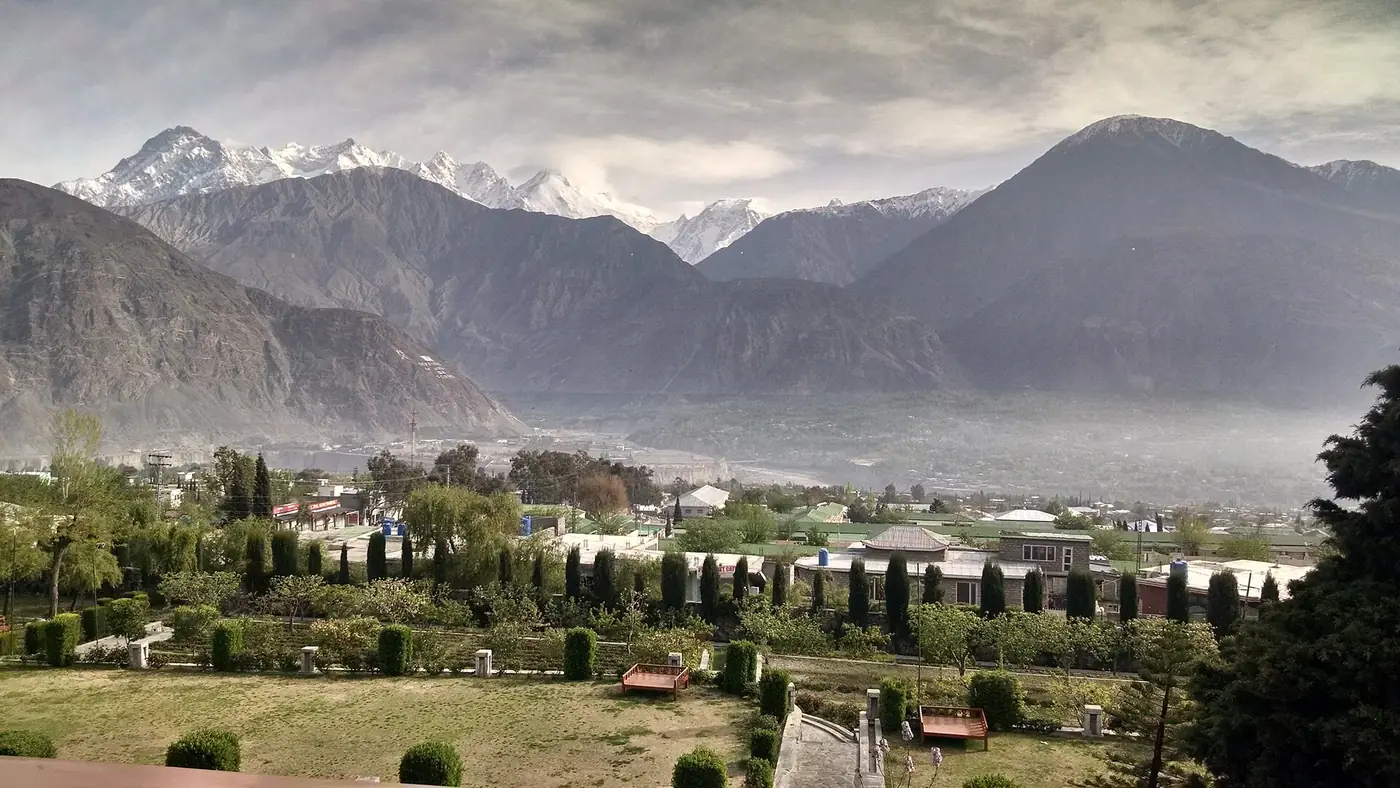

Gilgit-Baltistan Independence Day, on 1 November, marks the 1947 uprising against Dogra rule that ended with the region joining Pakistan. It is a public holiday across Gilgit-Baltistan, marked with flag hoisting ceremonies, parades and speeches, the largest of them in Gilgit itself. If you are travelling in the region around this date, it is worth knowing what the day is about and what to expect in town.
What happened in 1947
In October 1947, as British rule over the subcontinent ended, the Maharaja of Jammu and Kashmir, whose Dogra dynasty had ruled Gilgit-Baltistan as part of his princely state since the 19th century, acceded to India rather than Pakistan. The mostly Muslim population of Gilgit had expected the state to join Pakistan, and the announcement triggered a revolt.
On 1 November 1947, the Gilgit Scouts, a local paramilitary force commanded by the British officer Major William Brown, moved against the Dogra governor, Ghansara Singh, and took him into custody in a bloodless coup. Captain Mirza Hassan Khan led Muslim troops in a parallel action at Bunji, further down the Indus. A provisional government under a local leader, Shah Rais Khan, ran the region for around two weeks, before a Pakistani political agent arrived in mid-November to take over the administration. The Pakistani flag was raised in Gilgit on 2 November.
The background: Dogra rule and the Great Game
Gilgit-Baltistan's road to 1947 stretches back further than the uprising itself. In the 19th century, the region was annexed to the princely state of Jammu and Kashmir under its Dogra rulers, against a backdrop of British anxiety over Russian expansion into Central Asia, the rivalry historians call the Great Game. The British leased the Gilgit Agency from the Maharaja in 1935 and administered it directly, then handed it back to Dogra control just weeks before independence, in August 1947. That handover, so close to the end of British rule, left local sentiment unsettled and set the stage for the uprising two months later.
Why the date is still contested
Gilgit-Baltistan's status has remained part of the unresolved dispute between Pakistan and India over Kashmir ever since, and the region is administered separately from the rest of Pakistan rather than as a full province. The choice of 1 November as an official commemorative date came later: after the Gilgit-Baltistan Self-Governance Order was introduced in 2009, the government designated it as the day's official Independence Day. It has since grown into the region's most significant public holiday, with senior Pakistani leaders occasionally attending the main ceremony in Gilgit.
How the day is marked
The central event each year is held at Chinar Bagh in Gilgit, beside the Yadgar-e-Shuhada, the martyrs' memorial. It typically includes:
- A flag hoisting ceremony, usually attended by the Governor of Gilgit-Baltistan, the Chief Minister and senior military officers.
- A parade, with contingents from local forces and civil institutions.
- Speeches recounting the 1947 uprising and its place in the region's history.
- Cultural performances and the national anthem, alongside award ceremonies recognising local contributions.
Similar, smaller ceremonies are held in other towns across Gilgit-Baltistan, including Skardu, but the Gilgit event is the one most visitors are likely to encounter if they are in the city that day.
What it means for a visitor
If you happen to be in Gilgit on 1 November, expect government offices, banks and many businesses to be closed for the public holiday, and expect extra security and some road closures around Chinar Bagh while the ceremony is under way. Shops and restaurants elsewhere in town generally stay open, and the day itself is calm rather than disruptive to travel. It is not a date most tour itineraries are built around, since it falls outside the main travel season for the high valleys, but it is a good day to understand a little more about the place you are visiting, particularly if your trip already includes Gilgit as a stop on the way to Hunza. Our guide to Gilgit and Hunza covers the wider region and how the two fit together on a typical itinerary.
Frequently asked questions
What does Gilgit-Baltistan Independence Day commemorate?
It commemorates the 1 November 1947 uprising, when the Gilgit Scouts overthrew the Dogra governor of Gilgit and the region moved towards joining Pakistan, formalised when Pakistan's flag was raised on 2 November.
Is 1 November a public holiday in Gilgit-Baltistan?
Yes. It is observed as a public holiday across Gilgit-Baltistan, with government offices and many businesses closed for the day.
Where is the main ceremony held?
The principal ceremony is held at Chinar Bagh in Gilgit, next to the Yadgar-e-Shuhada martyrs' memorial, with a flag hoisting, a parade and speeches.
Will travel be disrupted in Gilgit on 1 November?
Expect some road closures and extra security near Chinar Bagh during the ceremony, but the rest of the city and normal travel through the region are unaffected.
Is Gilgit-Baltistan's status still disputed?
Yes. Gilgit-Baltistan remains part of the unresolved Kashmir dispute between Pakistan and India, and it is administered under its own self-governance arrangements rather than as a full Pakistani province.