The festivals of Gilgit-Baltistan follow the farming year and the polo season. Nauroz opens spring on 21 March, the orchards of Hunza blossom in April, polo tournaments fill the grounds in Gilgit from late April and at Shandur in June, Ginani marks the first harvest in Hunza around 21 June, and 1 November brings Independence Day and more polo. The year ends with the winter solstice fires of Mayfung and Thumushelling on 21 December.
Some of these are fixed by the sun and fall on the same date every year. Others, including the polo tournaments, are set by the organisers each season and announced only a few weeks ahead. This calendar goes month by month and says which is which.
| At a glance | Event | Where |
|---|---|---|
| January to February | Ski and ice sports events | Naltar |
| 4 February | Imamat Day | Ismaili villages in Hunza, Gojal and Ghizer |
| 21 March | Nauroz | Across the region, especially Hunza, Nagar, Gilgit and Skardu |
| Late March to April | Blossom season | Hunza first, then Gojal |
| Late April to May | Jashn-e-Baharan polo | Gilgit |
| June (dates vary) | Shandur Polo Festival | Shandur Pass |
| Around 21 June | Ginani harvest festival | Hunza and Nagar |
| 1 November | Independence Day and Jashn-e-Azadi polo | Gilgit and Skardu |
| 21 December | Mayfung and Thumushelling fire festivals | Baltistan; Hunza and Nagar |
How the festival calendar works
Three kinds of date shape the year here, and it helps to know which you are dealing with.
Solar dates stay put. Nauroz on 21 March, Ginani around the summer solstice, 1 November and the winter solstice festivals on 21 December are the same every year.
Organised events move. The polo tournaments, sports galas and the Shandur Polo Festival are scheduled by the Gilgit-Baltistan tourism and sports department, sometimes with the army or the Khyber Pakhtunkhwa government, and dates are usually confirmed only weeks in advance. Watch the Gilgit-Baltistan tourism department's website before booking around one.
Islamic dates move about 11 days earlier each year. Eid, and Muharram in particular, change what travel is like in the region, and they are covered at the end of this guide.
Spring: Nauroz and the blossom (March and April)
Nauroz, 21 March, is the Persian New Year and the start of spring, celebrated mostly by the Ismaili and Shia communities in Gilgit, Hunza, Nagar, Ghizer, Astore, Skardu and Ghanche. It has been a public holiday in the region in past years. Families cook special dishes and share them with relatives and neighbours, and there are polo matches and music. In Hunza it has traditionally marked the start of ploughing. In Baltistan, one well-known custom is egg fighting, in which two people knock hard-boiled eggs together and the owner of the egg that survives keeps the other. Skardu has traditionally held a polo tournament over Nauroz.
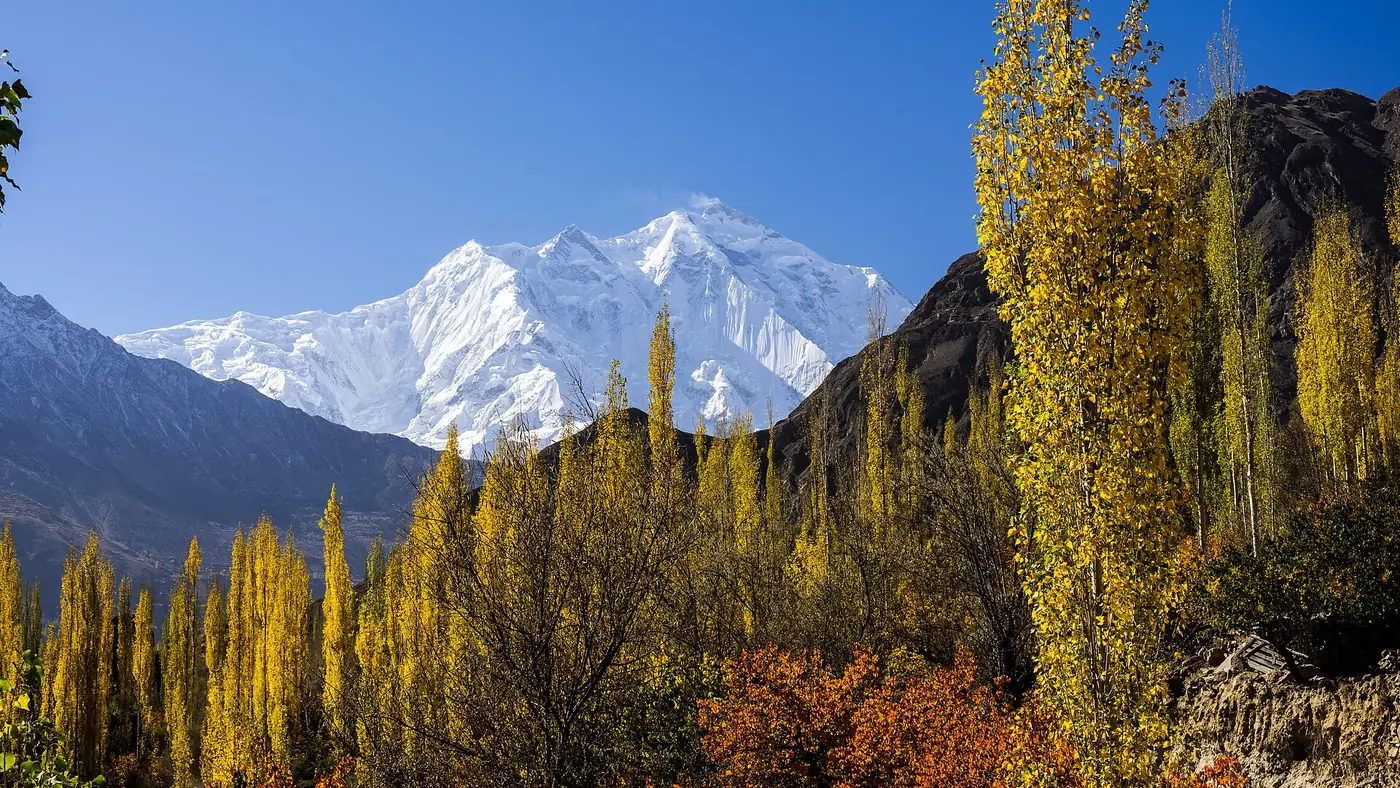
Blossom season follows. It is not a single event but it is the reason many people come in spring: apricot and cherry trees flower in central Hunza from the last days of March into mid-April, and the bloom climbs to Gulmit and Passu in the second half of April. Our guide to Hunza's blossom season covers the timing village by village. The high passes, including Khunjerab and Babusar, are still closed at this time.
Late spring: polo in Gilgit (April and May)
The Jashn-e-Baharan polo tournament, the spring festival of polo, is played at the Wahab Shaheed polo ground in Gilgit. In 2026 it opened on 25 April; in 2025 it ran into the second half of May. Teams come from across the region, and spectators are welcome.
This is the easiest place to see mountain polo without the effort of Shandur. The game is played freestyle, fast and physical, with a band of drums and pipes playing throughout and a loud home crowd. If you are in Gilgit on a match day, go.
Summer: Shandur and Ginani (June)
The Shandur Polo Festival is the region's great sporting event: three days of polo between Gilgit-Baltistan and Chitral on a ground at about 3,700 metres. It was held on 7 to 9 July for many years, but it has moved earlier to avoid Muharram, to 20 to 22 June in 2025 and 11 to 13 June in 2026, when Gilgit-Baltistan won the title for the first time in 12 years. Our Shandur Polo Festival guide covers dates, getting there and where to stay.
Ginani, the harvest festival of Hunza and Nagar, falls around 21 June, the summer solstice, when the first wheat and barley ripen. Under the Mirs of Hunza it was a court ceremony: musicians played at the fort in the days beforehand, and on the day the first sheaf was cut, threshed and cooked. Today it is a village celebration with prayers, traditional music and dancing, and a special dish of new wheat. The Wakhi of Gojal keep the same festival under their own name.
14 August, Pakistan's Independence Day, is marked across the region with cultural programmes, sports events and flag-raising.
Autumn: Independence Day and polo (October and November)
1 November is Gilgit-Baltistan Independence Day, marking the 1947 rebellion against Dogra rule that led the region to join Pakistan. The main ceremony is at Chinar Bagh in Gilgit, with flag-raising, parades and speeches, and the day is a public holiday in the region.
Around it run the Jashn-e-Azadi polo tournaments. In 2025 the Skardu final was played in early November, and a separate tournament at the Shahi polo ground in Gilgit ended with Chilas beating Skardu in the final. The days are cold but often clear, and Hunza's autumn colour lasts into the first days of November, so a late-October trip can take in both.
Winter: fire festivals and ice (December to February)
21 December, the winter solstice, is the night of the fire festivals.
- Mayfung is celebrated in Baltistan. People light bonfires on hillsides and rooftops and swing flaming torches while singing traditional songs. The festival is far older than Islam in the region and is linked with the Balti new year; in Balti belief, the fire protects against misfortune in the year ahead.
- Thumushelling, also known as Taleno in some villages, is the Hunza and Nagar version: a night of torches and bonfires marking the end of the farming year. In local legend it celebrates the fall of Shri Badat, the man-eating king of Gilgit, and in Khanabad in Hunza an effigy is burned.
Both are community festivals rather than tourist events. If you are in Skardu or Hunza in late December, ask your hotel where the fires will be.
Winter sports follow in January and February. Naltar, above Gilgit, has hosted ski championships and, in January 2025, the national ice sports championship. Dates are announced late and depend on the snow. Our guide to Gilgit-Baltistan in winter covers roads, heating and what is open.
Imamat Day, 4 February, is celebrated in Ismaili communities across Hunza, Gojal and Ghizer. It marks the day the present Aga Khan became Imam in 2025.
Dates that move: Eid and Muharram
Eid ul-Fitr and Eid ul-Adha bring the biggest crowds of the year to Hunza and Skardu from the plains, with full hotels and slow traffic on the Karakoram Highway. In 2027 Eid ul-Fitr falls in March and Eid ul-Adha in May, depending on the moon.
Muharram matters more. In Baltistan, Nagar and Gilgit, the first ten days are a period of mourning, with processions on the 9th and 10th. It is not a festival, and music and celebration stop in Shia areas. In 2025 the Gilgit-Baltistan tourism department advised visitors not to travel on those two days, as main roads were closed and mobile networks suspended in many areas. In 2026, Ashura fell on 25 and 26 June; in 2027 it falls in mid-June. Plan to be settled somewhere quiet, or to travel after the 12th.
Is it worth planning a trip around a festival?
For polo, yes. A match in Gilgit or Skardu is the easiest way to see the region's own sport, and Shandur is the biggest polo event in the country, if you can manage three days at altitude.
For Nauroz and the blossom, yes, if you like spring travel: combine the two in late March or early April and you get the orchards and the celebrations together, with fewer crowds than summer. Our guide to when to go weighs spring against the other seasons.
For Ginani, Mayfung and Thumushelling, go if you are already in the area, but don't build a trip around them. They are village and family occasions, not staged shows, and a visitor is a guest rather than an audience. Ask before photographing, and follow your hosts' lead.
To understand the communities behind these festivals, read our guide to the culture and traditions of Gilgit-Baltistan.
Frequently asked questions
What are the main festivals of Gilgit-Baltistan?
Nauroz in March, the spring polo tournament in Gilgit, the Shandur Polo Festival and Ginani in June, Independence Day on 1 November, and the Mayfung and Thumushelling fire festivals on 21 December.
When is the Shandur Polo Festival?
It was traditionally 7 to 9 July, but it has recently been held in June: 20 to 22 June in 2025 and 11 to 13 June in 2026. Dates are set each year, so wait for the announcement before booking.
What is Ginani?
The harvest festival of Hunza and Nagar, held around 21 June when the first wheat ripens. Once a ceremony at the court of the Mir, it is now celebrated in the villages with prayers, music and a special wheat dish.
What is Mayfung?
A fire festival held in Baltistan on 21 December, the winter solstice. People light bonfires and swing flaming torches while singing, a custom that predates Islam in the region.
Can tourists attend festivals in Gilgit-Baltistan?
Yes. Polo matches welcome spectators, and visitors are welcome at Nauroz and the village festivals as guests. Dress modestly and ask before photographing people, especially women.