The Salt Range is a line of low hills running roughly 300 km across northern Punjab, from the Jhelum river to the Indus, and it holds an unusual mix of places to visit for a hill range of its modest height: the world's second-largest salt mine, an ancient Hindu temple complex, a Mughal emperor's rock-cut throne, saline lakes that host migratory birds each winter, an abandoned monastery on its highest eastern point, and the range's own highest peak, topped by a military radar station. This guide works through the main sites from east to west and links to a full guide for each.
| At a glance | |
|---|---|
| Where | Northern Punjab, from Jhelum district to Mianwali district |
| Length | About 300 km, roughly Jhelum to the Indus |
| Main clusters | Khewra and Jhelum district in the east; Chakwal district in the middle; Soon Valley and Sakesar in the west |
| From Islamabad or Lahore | 2 to 4 hours depending on which end of the range you head for |
| How to get around | By car; there is no public transport linking the sites |
| Time needed | A weekend covers the eastern and central clusters well; add a day for Soon Valley in the west |
The eastern Salt Range: Khewra and Tilla Jogian
The eastern end of the range, in Jhelum district, is anchored by Khewra Salt Mine, one of the largest salt mines in the world and a working mine open to visitors by guided train and walking tour. Our guides on how to reach Khewra and Khewra's ticket prices cover the routes in and the current fees.
A short distance away, on the range's highest eastern point, Tilla Jogian holds the ruins of a monastery that housed Hindu ascetics for close to a thousand years, and which Guru Nanak is said to have visited in the early 1500s. It needs a proper hike or a jeep track to reach and has no facilities. See our Tilla Jogian guide for the routes and warnings.
The central Salt Range: Chakwal district
Chakwal district holds the range's best-known cluster of sites. Katas Raj, a Hindu temple complex around a sacred pond, dates from roughly the 6th to 10th centuries and remains an active pilgrimage site. Kallar Kahar, right on the M-2 motorway, combines a saltwater lake with Takht-e-Babri, a throne the Mughal emperor Babur's soldiers cut into rock, and a shrine known for its peacocks. Nearby, Neela Wahn is a rocky hike down to a series of blue pools, at its best after the monsoon, and Malot Fort is a 10th-century temple-fortress that sees far fewer visitors than Katas Raj. Our Chakwal district guide covers all of these together with a suggested route.
The western Salt Range: Soon Valley and Sakesar
At the western end, in Khushab district, Soon Valley brings together saline lakes important for winter migratory birds, a spring-fed garden at Kanhatti, and the drive up Sakesar, the Salt Range's highest peak at 1,525 m, whose summit is a restricted Pakistan Air Force base but whose lower slopes and forest road are open to visitors. Our Soon Valley guide, Uchali Lake guide and Sakesar guide cover the valley's stops individually. Further west again, near Mianwali, Namal Lake is a colonial-era dam that has shrunk considerably in recent drought years; see our Namal Lake guide for its current condition.
Geology and why the range looks the way it does
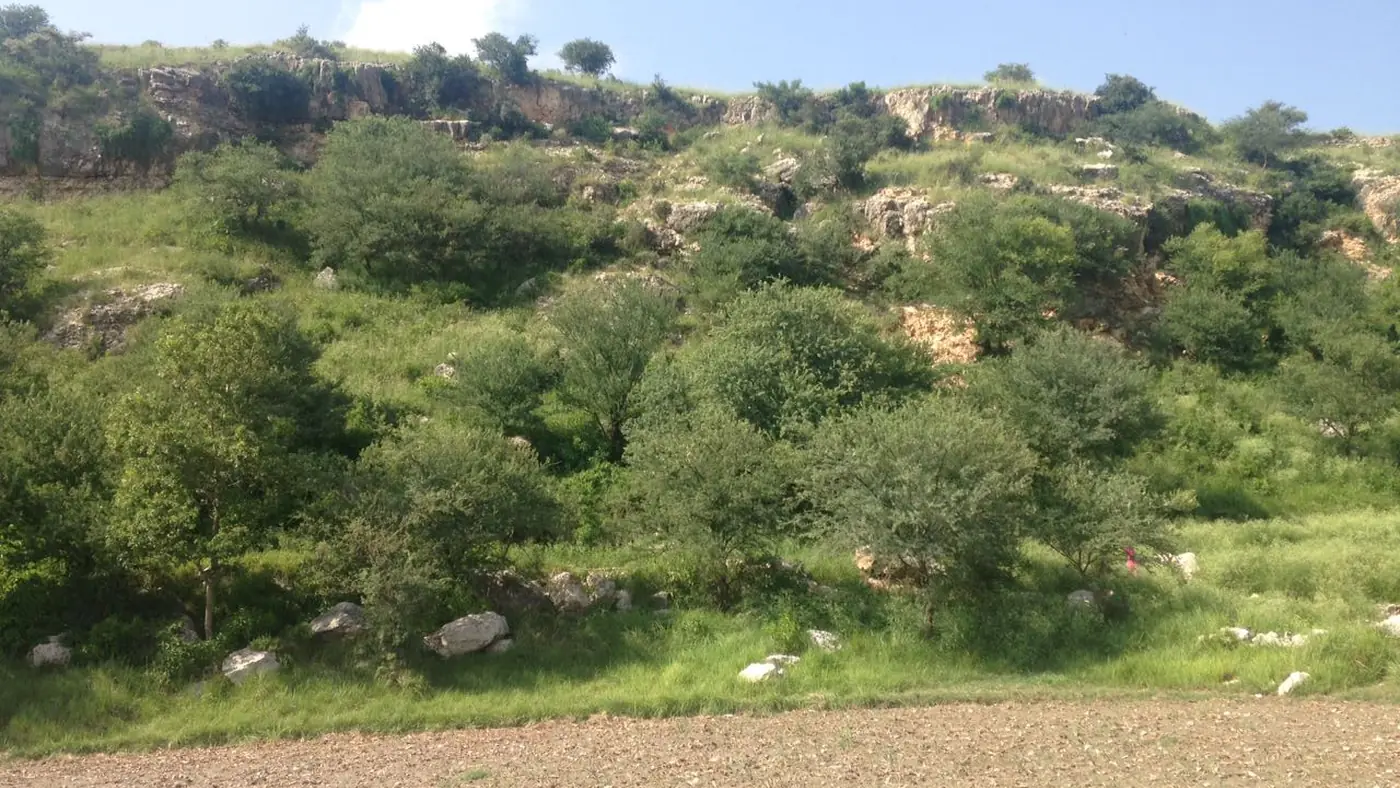
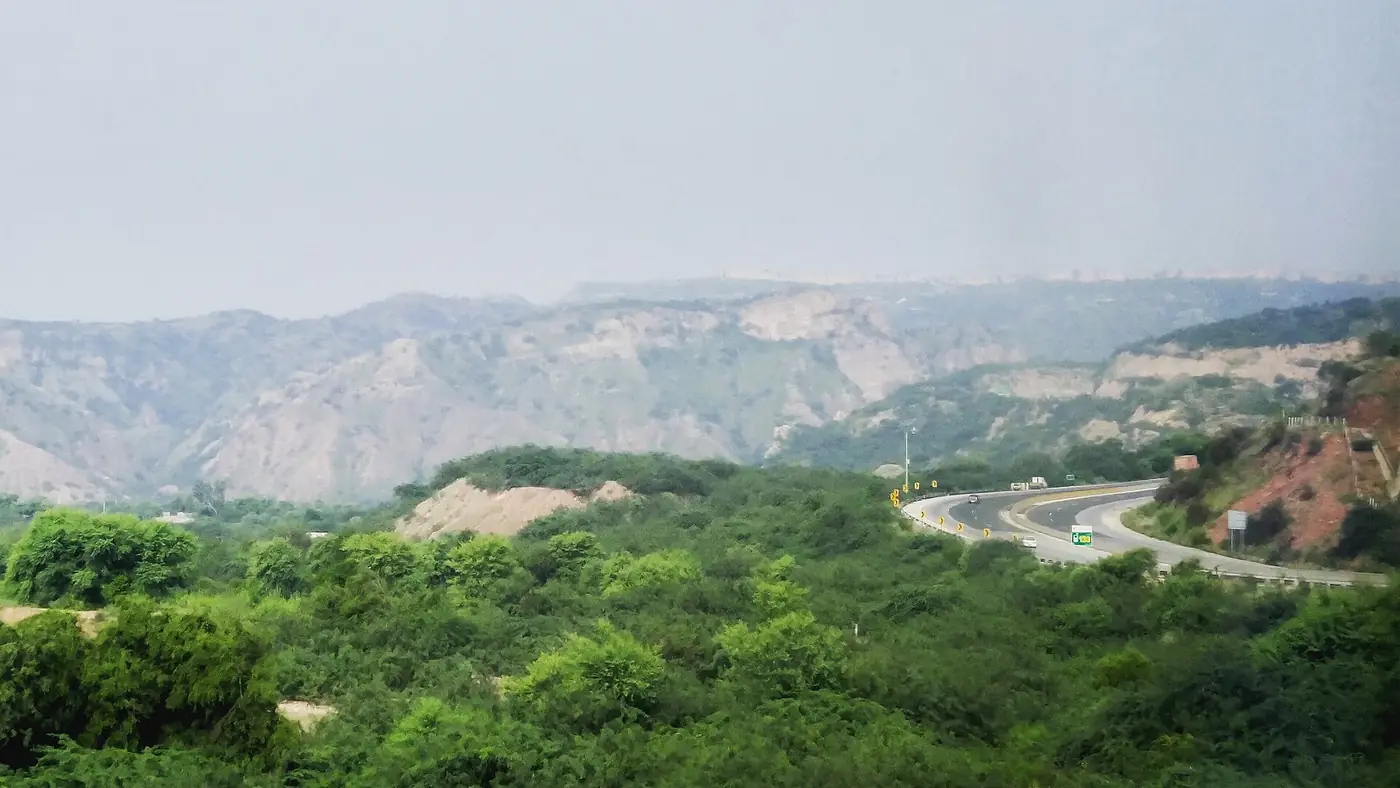
The Salt Range takes its name from vast underground deposits of rock salt, the same seams that Khewra mine works, laid down millions of years ago when the area was covered by a shallow sea. That geology explains much of what you see travelling through it: the pale, folded hillsides, the saline lakes of Soon Valley that hold no fresh water, and the red sandstone that builders used at sites like Malot Fort and the Katas Raj temples. It is a low range by Pakistani standards, rarely much above 1,500 m even at its highest points, which is part of why it works as a manageable trip rather than a mountain expedition.
Planning a route
The range splits naturally into two trips rather than one: the eastern and central clusters (Khewra, Katas Raj, Kallar Kahar, Neela Wahn, Malot and Tilla Jogian) sit within a couple of hours of each other and of the M-2, while Soon Valley and Sakesar in the west add a further 1.5 to 2 hours of driving beyond Kallar Kahar. Our Salt Range road trip guide sets out a two-day loop covering both halves for anyone with the time.
If you only have a day, stick to the eastern and central cluster: Khewra and Katas Raj, or Kallar Kahar and Katas Raj, pair well without much backtracking. If you have a weekend, add either Neela Wahn or Tilla Jogian for a hike, and if you have three days, push on to Soon Valley for the lakes and Sakesar.
What kind of trip this is
The Salt Range rewards visitors interested in history, geology and quieter landscapes over dramatic scenery. Nothing here matches the mountains of the north, and several of the sites, Malot Fort and Tilla Jogian especially, are genuinely unmanaged ruins rather than developed attractions. What the range offers instead is variety within a short drive of Islamabad and Lahore: a working salt mine, an active Hindu pilgrimage site, Mughal history, Ramsar-listed wetlands and a genuine hilltop ruin, all reachable without the long drive north that a trip to Gilgit-Baltistan or Kaghan requires.
It suits a weekend trip from either city, a stop on a longer drive between Islamabad and Lahore, or a first outdoor trip for a family not ready for the altitude and distance of the northern areas. It is also a sensible choice outside the northern areas' main travel season, since none of its sites close for winter snow the way the high mountain passes do. Our trip-planning guide can help you build a Salt Range route around the time you have.
Frequently asked questions
What is the Salt Range best known for?
Khewra Salt Mine, one of the largest salt mines in the world, and the Katas Raj Hindu temple complex are its two best-known sites, alongside Kallar Kahar's lake and its connection to the Mughal emperor Babur.
How many days do you need to see the Salt Range?
A weekend covers the eastern and central clusters (Khewra, Katas Raj, Kallar Kahar and one hike) well. Add a third day to reach Soon Valley and Sakesar in the west.
Is the Salt Range safe to visit?
Yes. It runs through settled districts of Punjab with no security advisories, and Pakistani families visit its lakes and temples regularly, particularly on weekends and public holidays.
Can you visit the Salt Range without a car?
Not comfortably. There is no public transport network linking the sites to each other, so a private car or a hired car and driver is needed to see more than one place in a day.
What is the best time of year for the Salt Range?
October to March, for cooler, clearer weather. Summer is hot across the range, often into the low 40s°C by June, with little shade at most outdoor sites.