Sakesar, at 1,525 m, is the highest point of the Salt Range and the peak that stands over Soon Valley from its southern edge. Most of the mountain is open to visitors, with a forested drive and walking trails giving wide views of the valley and its lakes, but the very summit is a Pakistan Air Force radar station and is off limits without prior military permission. This guide covers the drive up, the walks below the base, what to expect from the weather, and how to plan around the restricted top.
| At a glance | |
|---|---|
| Where | Soon Valley, Khushab district, above Uchali Lake |
| Altitude | 1,525 m (5,003 ft), highest peak in the Salt Range |
| Summit | PAF Base Sakesar, a radar station; access restricted |
| Public access | Forest road and walking trails below the base, open without permission |
| Drive to the walking area | About 30 minutes from the valley floor through forest |
| Weather | Cooler than the valley year-round; the only Salt Range peak that sees occasional winter snow |
| Nearby | Uchali Lake about 13 km away |
Can you visit Sakesar?
Partly. Sakesar is the site of PAF Base Sakesar, a high-powered radar station the Pakistan Air Force established on the summit in the late 1950s for northern air defence. The base itself, and the very top of the mountain, are restricted: civilians need advance permission, in practice usually a serving contact in the armed forces, to go beyond the checkpoint.
Below that point, the forest road and the walking trails around the upper slopes are open to ordinary visitors. That is where most people actually go: a scenic drive and a walk with views, rather than the base itself.
The drive and the walk
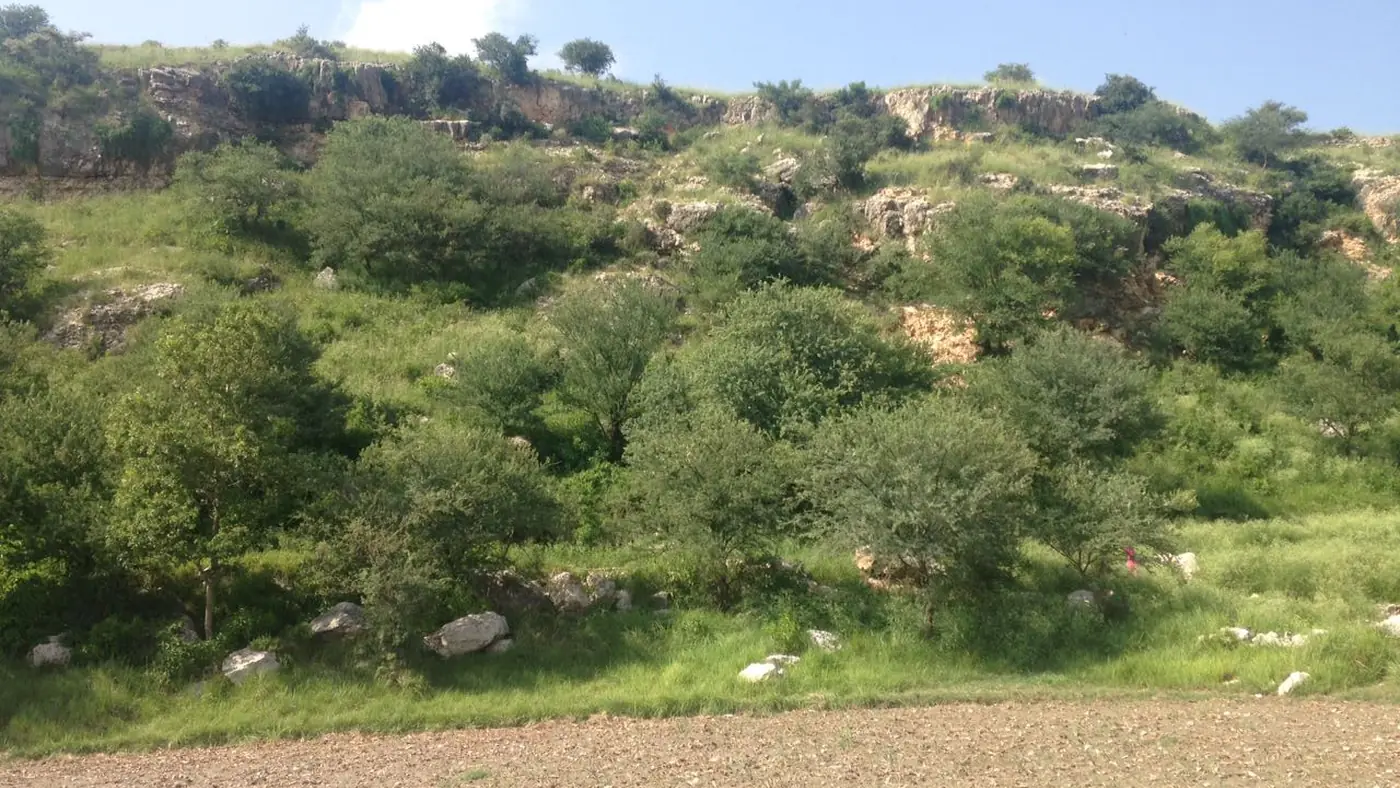
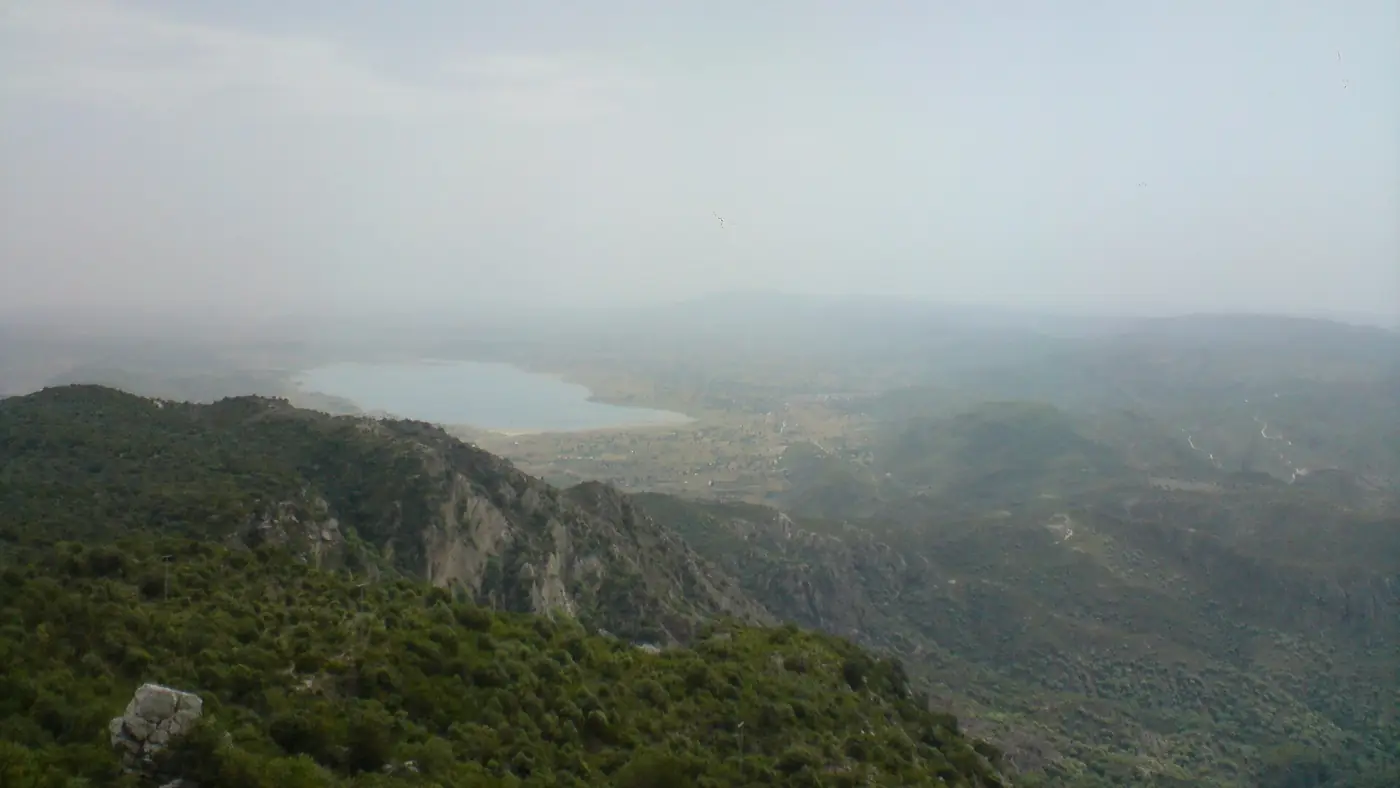
The road up from the valley floor climbs through pine and olive forest for around half an hour, with picnic spots and viewpoints along the way. A walking trail circles part of the upper mountain below the restricted area, giving several vantage points over Soon Valley and, on a clear day, Uchali Lake glinting below. The air is noticeably cooler than in the valley, and the forest itself, one of the few sizeable stretches of woodland in this part of the Salt Range, is worth the drive on its own.
Go by car; there is no public transport up the mountain, and the road is a proper climb rather than a level track.
Weather and snow
Sakesar's height and forest cover make it the coolest spot in Soon Valley by a clear margin, and it is the only peak in this part of the Salt Range that sees snow. Winter minimums on the mountain drop to around -3 to -4°C, with daytime highs generally staying below the low 20s°C, and a dusting of snow is possible in December and January in a cold year, though not every winter. Summer is far more comfortable here than on the valley floor, with cooler air and regular cloud around the peak even when Soon Valley below is baking.
What to pack
- A jacket or fleece, even in summer, for the cooler air on the upper slopes
- Sturdy shoes for the walking trail below the base
- Binoculars, useful both for the views and the birdlife in the forest
- Water and snacks, since there is little to buy once you leave the valley floor
- Sunscreen for the exposed viewpoints, even on a cloudy day
Wildlife and history
A WWF survey of the mountain recorded more than 60 bird species and around ten species of mammal in the surrounding forest, making the walk worth doing slowly rather than as a quick stop. Sakesar also has an administrative history that predates the air force base: in the colonial period, it served as a summer headquarters for the deputy commissioners of three districts, drawn up from the plains by the cooler air, and Pakistan Television still keeps a re-broadcasting mast on the mountain.
The view from below the base
Even without reaching the summit, the drive and the open sections of trail give a sense of why the Pakistan Air Force chose this spot: it is the one place in the eastern Salt Range where the ground climbs high enough to see well beyond the immediate hills. On a clear day, Soon Valley's patchwork of fields and the silver line of Uchali Lake are visible from several points on the forest road, and looking the other way, the Salt Range folds away towards the Indus. Photographers generally do better in the morning, before the afternoon haze that tends to settle over the valley in warmer months.
The forest itself is worth slowing down for. Pine stands are uncommon this far south in Punjab, and the mix of pine and wild olive gives Sakesar a noticeably different feel from the bare, scrub-covered hills that make up most of the Salt Range.
Planning a visit
- Come as part of a Soon Valley day, combined with Uchali Lake and Kanhatti Garden, rather than as a destination on its own.
- Don't expect to reach the actual summit unless you have a genuine PAF contact arranging access in advance; plan the visit around the open forest road and trail instead.
- Bring a jacket even in summer. The temperature drop from the valley floor is real, and the upper slopes catch wind and cloud that the valley doesn't.
- Go earlier in the day. Cloud tends to build around the peak by afternoon, which can close off the views that are the main reason to come up.
Is Sakesar worth the drive?
Yes, if you are already in Soon Valley, because the forest road and viewpoints are a genuinely different experience from the lakes and gardens below, and the drive itself, through pine woodland that is unusual for this part of Punjab, is enjoyable regardless of what you can see from the top. It is not worth a special trip on its own, and anyone hoping to reach the actual summit and the radar station should not plan around it happening.
Treat Sakesar as the high point, in both senses, of a wider Soon Valley itinerary that also takes in Uchali Lake and the valley's other stops. Our trip-planning guide can help fit a day like this into a longer Salt Range route.
Frequently asked questions
Can civilians visit the top of Sakesar?
No, not without prior permission from the Pakistan Air Force, since the summit is an active radar base. The forest road and walking trails below the base are open to everyone.
How do you get to Sakesar?
By car from Soon Valley. A forest road climbs from the valley floor to the upper walking area in around half an hour; there is no public transport up the mountain.
Does it snow on Sakesar?
Occasionally. It is the only peak in this part of the Salt Range that sees winter snow, with a chance of a dusting in December and January in a cold year, though it doesn't happen every winter.
How far is Sakesar from Uchali Lake?
About 13 km, making it an easy combination with a Soon Valley day that also covers the Uchali Complex lakes.
What can you see from Sakesar?
Wide views over Soon Valley and, on a clear day, Uchali Lake below, along with the pine and olive forest that covers much of the upper mountain.