Rakaposhi base camp and Nanga Parbat base camp are the two most popular short base camp treks in Gilgit-Baltistan, and the choice usually comes down to access and time: Rakaposhi is a two-day trek reached directly off the Karakoram Highway near Hunza, while Nanga Parbat's base camp is a long day from Fairy Meadows, itself a jeep-and-hike journey off the KKH near Chilas. Both need no technical climbing skill and both put you directly under a mountain over 7,000 or 8,000 metres.
This guide compares access, difficulty, what you actually see, and how long each one needs, so you can choose between them or fit both into a longer trip.
| Rakaposhi base camp | Nanga Parbat base camp | |
|---|---|---|
| Trailhead | Minapin, off the KKH, about 25 km from Karimabad | Fairy Meadows, reached by jeep and a 3 to 4 hour walk from Raikot Bridge |
| Mountain height | Rakaposhi, 7,788 m | Nanga Parbat, 8,126 m |
| Base camp altitude | Tagaphari, about 3,300 m | Close to 4,000 m |
| Height gained | About 1,300 m from Minapin | About 700 m from Fairy Meadows |
| Usual time | 2 days, one night out | A long day (6 to 10 hours) or split with a night at Beyal |
| Difficulty | Moderate, steep but non-technical throughout | Easy to the viewpoint, then rough, steep and exposed |
| Season | June to September | Late June to September |
Getting there: the real difference
Minapin sits a short drive off the Karakoram Highway, so Rakaposhi base camp can be reached, trekked and finished inside two days from Karimabad with no separate access journey. Nanga Parbat base camp starts from Fairy Meadows, which itself takes a jeep ride of about two hours from Raikot Bridge to Tato, followed by a three to four hour walk. Add a night or two at the meadow to acclimatise before the base camp push, and the whole outing runs closer to three or four days once you count getting there and back.
If your route to Fairy Meadows uses the Karakoram Highway between Mansehra and Chilas, note that the UK government currently advises against travel on that stretch; the Babusar Pass route avoids it in summer, and travellers on a foreign passport should check their own government's advice, since it can affect travel insurance.
Difficulty: both moderate, in different ways
Rakaposhi base camp is steep from the first hour to the last, climbing about 1,300 metres from Minapin to Tagaphari over a well-used, non-technical path. It is consistently hard work rather than dangerous.
Nanga Parbat base camp starts easy: a gentle forest path from Fairy Meadows to Beyal, then on to the viewpoint, where most casual walkers turn back. The final stretch from the viewpoint to base camp is the part that changes the picture, crossing loose moraine on a line that shifts year to year, close enough to the Rakhiot face to hear rockfall. A local guide is worth having for this section specifically.
What you actually see
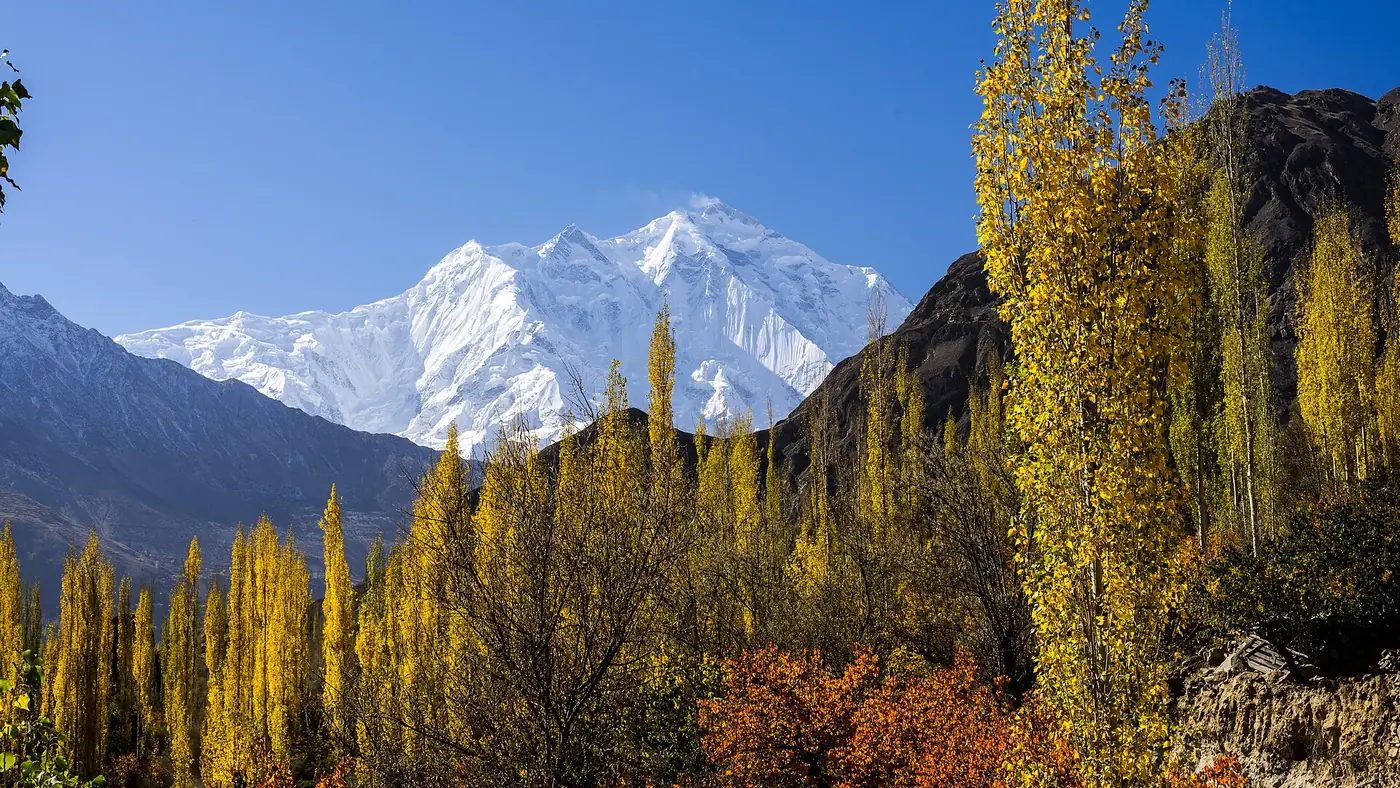
Rakaposhi base camp puts you on a grassy ridge with Rakaposhi on one side and Diran, 7,266 metres, on the other, looking down onto the Minapin glacier's broken ice. It is a wide, open view of two mountains at once.
Nanga Parbat base camp is more enclosed: you end close under the Rakhiot face itself, with the mountain's icefalls and hanging glaciers directly above, a more dramatic but less panoramic setting than Rakaposhi's.
Which suits you
- Short on time, based in Hunza or Nagar: Rakaposhi base camp. It needs no separate access trip and fits into a two-day gap in a wider Hunza itinerary.
- Already heading to Fairy Meadows anyway: Nanga Parbat base camp is a natural add-on, especially if you have a spare day at the meadow.
- Want the more consistently steep, straightforward trek: Rakaposhi.
- Want to stand closest to an 8,000-metre face, and don't mind rough, exposed ground for the last hour: Nanga Parbat, with a guide.
- First trek ever at altitude: Rakaposhi base camp is the gentler introduction of the two.
- Time for both: they sit on opposite sides of a Gilgit-Baltistan loop and can both be fitted into a two to three week trip without much detour.
Full route detail for each is in our Rakaposhi base camp trek guide and Nanga Parbat base camp trek guide.
Frequently asked questions
Which is easier, Rakaposhi or Nanga Parbat base camp?
Rakaposhi base camp is steadier and more predictable throughout. Nanga Parbat base camp is easier for its first two-thirds, then gets rougher and more exposed than anything on the Rakaposhi route.
Can I do both on the same trip?
Yes. Rakaposhi base camp fits into a Hunza or Nagar stay, and Nanga Parbat base camp fits into time at Fairy Meadows; the two are a few hours apart by road on the Karakoram Highway.
Do I need a guide for either trek?
Not legally required for either, but strongly advised for Nanga Parbat's final stretch past the viewpoint, where the path crosses shifting moraine. Rakaposhi's trail is easier to follow alone, though a guide still helps on a first attempt.
Which has the better view?
Rakaposhi base camp gives a wider view, with two mountains, Rakaposhi and Diran, framing the Minapin glacier. Nanga Parbat base camp is more dramatic and enclosed, directly under the Rakhiot face.
How fit do I need to be for either trek?
Both suit a reasonably fit walker with no prior high-altitude experience, but Rakaposhi's steady 1,300-metre climb and Nanga Parbat's final rough section both reward some hill-walking fitness beforehand.
See our travel planning guide for fitting either trek into a wider Gilgit-Baltistan itinerary.