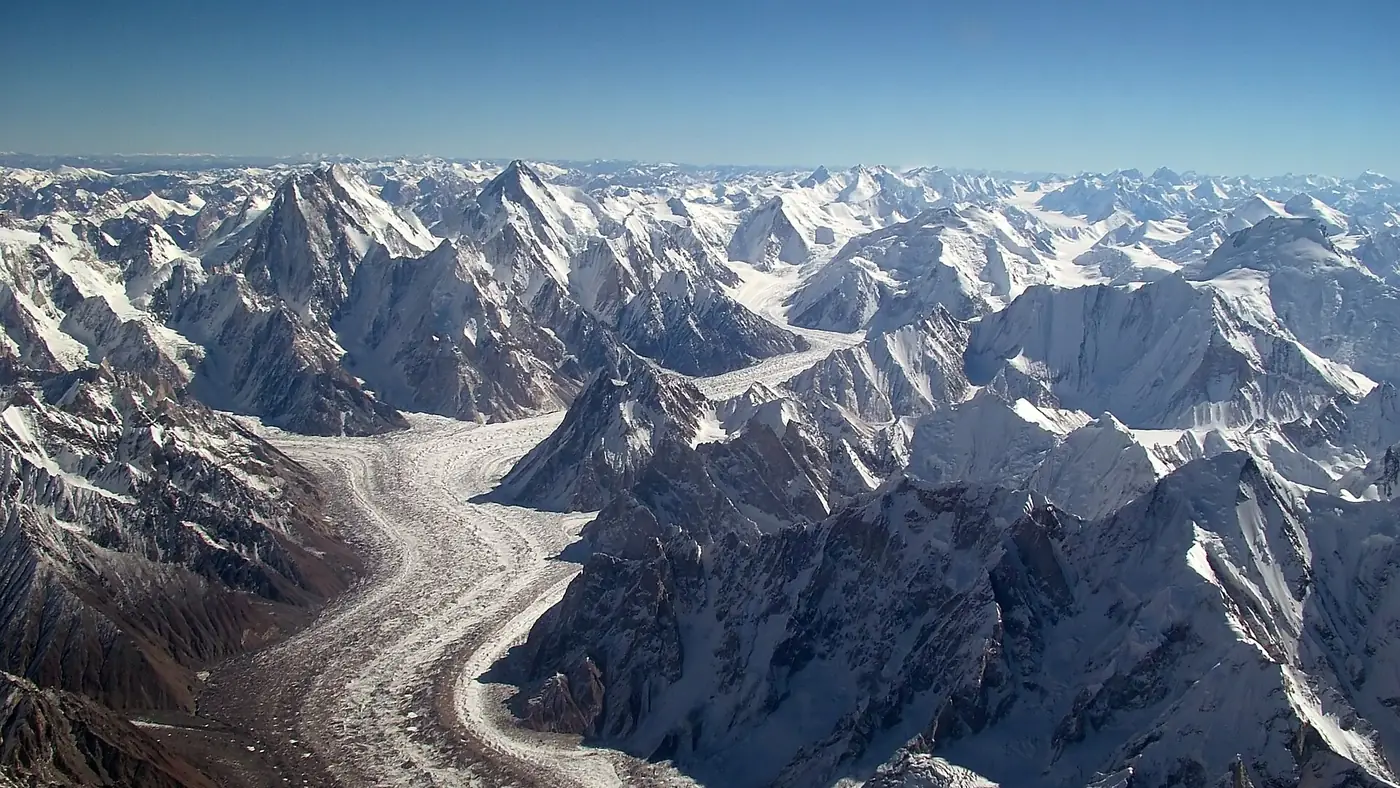
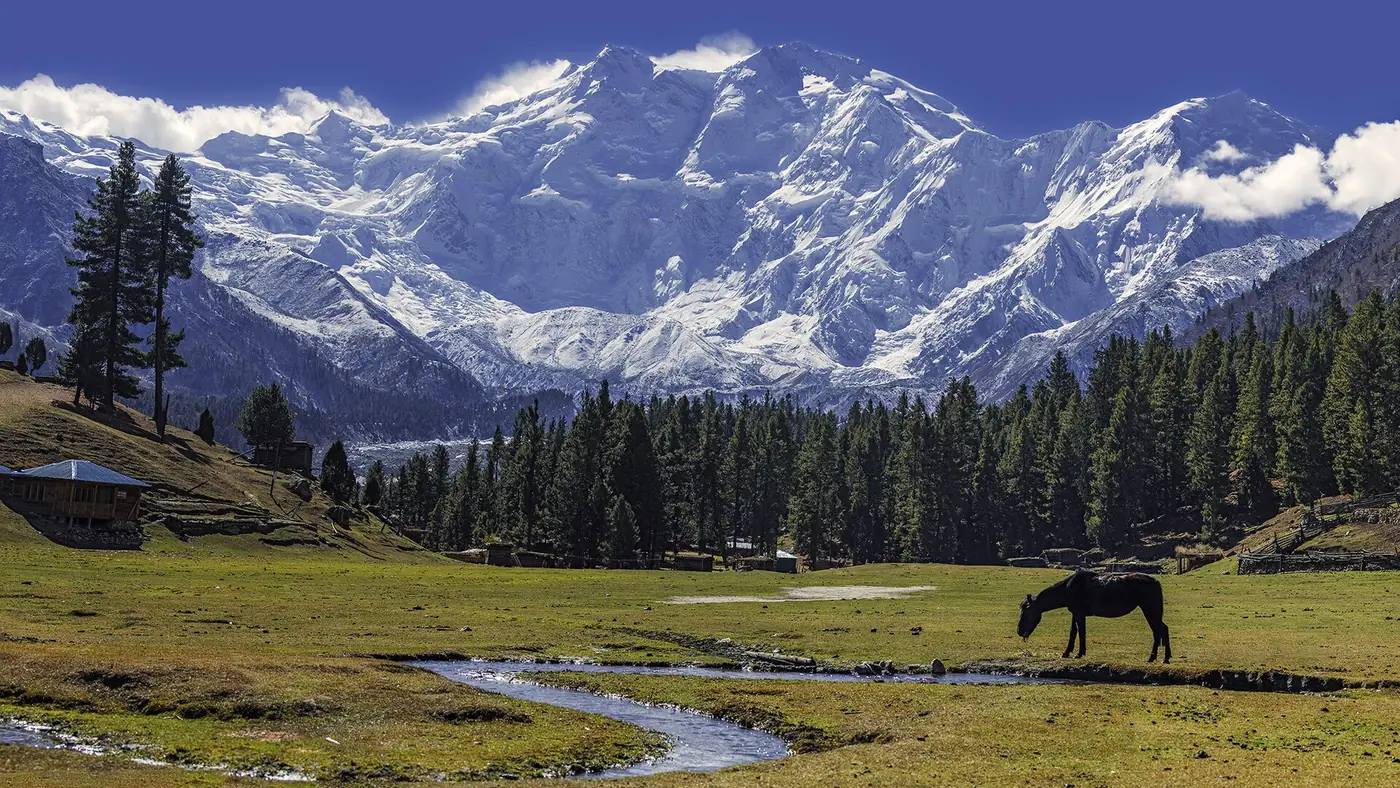
The Nanga Parbat base camp trek from Fairy Meadows follows the Raikot glacier up past Beyal camp and the Nanga Parbat viewpoint to the base camp below the Rakhiot face, at close to 4,000 metres. Fit walkers do it as a long day from the meadow, usually 6 to 10 hours there and back, or split it with a night at Beyal. It needs no climbing skills, but the last stretch beyond the viewpoint is rough, steep and exposed to the weather, and a local guide is the sensible choice. The season runs from about late June to September.
This guide covers the route beyond the meadow, how long each part takes, how hard the final climb really is, and the points where turning back is the right call.
| At a glance | |
|---|---|
| Start | Fairy Meadows, about 3,300 m |
| Base camp | Rakhiot side, close to 4,000 m |
| Height gain | Roughly 700 m from the meadow |
| Fairy Meadows to Beyal | About 1.5 to 2.5 hours |
| Beyal to the viewpoint | About 1 to 1.5 hours |
| Beyal to base camp | About 2.5 to 3 hours |
| Round trip from the meadow | 6 to 10 hours |
| Season | Late June to September |
| Difficulty | Moderate; easy to Beyal, rough and steep near the end |
Which Nanga Parbat base camp is this?
Nanga Parbat has three sides and three base camps, and it helps to know which one you are walking to.
- The Rakhiot side, above Fairy Meadows. This is the one in this guide. The German expeditions of the 1930s tried the mountain from here, and Hermann Buhl set out from this side on the first ascent in 1953.
- The Diamir side, to the west, where most expeditions now climb. Its base camp is two or three days' walk from the Karakoram Highway and is not a walk from Fairy Meadows.
- The Rupal side, to the south, where the Herrligkoffer base camp sits below the Rupal face. It is reached from Tarishing in Astore, and our guide to the Rupal valley covers it.
Before you set off
Three things decide whether the day goes well.
Sleep on the meadow first. Don't walk to base camp on the day you arrive from Tato. A night at 3,300 metres, or two, lets your body adjust before you climb another 700.
Watch the weather. Cloud usually builds around the mountain by late morning, and storms come in quickly this close to the face. Go on a settled day, and start at first light rather than after a slow breakfast.
Take a guide. Lodges on the meadow and families at Beyal can arrange a local guide, and for the section beyond the viewpoint it is money well spent. Agree the fee, the start time and the turnaround time the evening before.
The route, stage by stage
Fairy Meadows to Beyal
The easy part. A wide path runs up the valley through pine and fir forest beside the Raikot glacier, mostly gentle with a few short climbs, to the tea shops and huts at Beyal, at around 3,500 metres. Allow one and a half to two and a half hours. Our guide to Beyal camp covers this stretch and the huts in detail.
Beyal to the viewpoint
Above Beyal the path climbs more steeply, and the forest thins and then ends. After an hour to an hour and a half you reach the Nanga Parbat viewpoint, a ridge above the glacier at roughly 3,650 to 3,700 metres, with the north face of the mountain straight across the ice. In season a stall sells tea. This is where most day walkers turn round.
The viewpoint to base camp
This is the part that deserves respect. The path follows a ridge beside the glacier, then crosses stretches of loose rock and moraine, the rubble of stones and gravel the glacier has pushed aside. The line is less obvious than the path below, and it shifts from year to year as the ground moves. The final section is steep.
You are now in open ground with no shelter, close to the icefalls and hanging glaciers of the face. Listen for rockfall, keep to the line your guide picks, and don't go down onto the glacier itself.
At base camp
Base camp is an open area below the Rakhiot face, used by climbing expeditions when they come. Don't expect tea shops or huts. The reward is the face itself, at its closest.
The way back
Come down the same way, taking extra care on the loose ground below base camp, where tired legs make slips more likely. Most people are back at Beyal by mid-afternoon and on the meadow before dark.
How long does it take?
There are two sensible ways to do it:
- A long day from Fairy Meadows. Leave at first light, reach base camp around the middle of the day, and be back on the meadow in the late afternoon. Six hours is a fast day and ten a slow one.
- A night at Beyal. Walk up to Beyal the afternoon before, sleep there, and set off for base camp early the next morning. That takes nearly two hours off the big day and puts you at the face in the clearest hours. The huts are basic and the night is cold, so bring a warm layer and a sleeping bag or ask about blankets.
Either way, keep one spare day at Fairy Meadows. If the morning you planned for is cloudy or wet, wait for the next.
How difficult is it?
Up to the viewpoint it is a moderate day walk that most healthy adults manage. The difficulty lies in the last two hours:
- Rough ground. Moraine is slow and tiring, and a twisted ankle here is a long way from help.
- Altitude. Close to 4,000 metres is high enough for headaches and breathlessness, especially in anyone who arrived at the meadow the day before.
- The length. A full day of walking at altitude, with the steepest ground near the end.
- The weather. Cloud and rain can arrive within an hour, and with them cold and poor visibility.
It is not suitable for young children, for anyone who struggled on the walk up from Tato, or for anyone with a heart or lung condition. If the path to Fairy Meadows left you exhausted, our Tato to Fairy Meadows hike guide is a fair measure: base camp is a harder day than that.
Where to turn back
The best thing about this trek is that it has natural turning points, each worth the walk on its own:
- Beyal. The right end for families with children and for older parents: tea, a rest, and back to the meadow for lunch.
- The viewpoint. The right end for most people. You get the whole north face across the glacier without the rough ground beyond.
- Any point beyond the viewpoint, if the weather is turning, anyone in the group has a bad headache, nausea or dizziness, or you reach your turnaround time.
Agree the turnaround time before you leave and keep to it, even if base camp looks close.
What to carry
- Water, and a way to treat stream water on the way
- Food for the day; the tea stalls end at the viewpoint
- A warm layer, a windproof jacket and a rain shell
- Sun hat, sunglasses and sunscreen
- Walking boots with good grip; trainers are not enough on the moraine
- A small first-aid kit and any regular medicines
- A head torch in case the return runs late
Expect little or no mobile signal above the meadow. Tell someone at your lodge where you are going and when you plan to be back.
Getting to the start
Everything begins at Fairy Meadows, reached by jeep from Raikot Bridge on the Karakoram Highway to Tato and then a walk of a few hours; our Fairy Meadows destination page covers the journey. In summer most people drive from Islamabad via Naran and the Babusar Pass. The alternative, the Karakoram Highway through Kohistan between Mansehra and Chilas, is covered by the UK government's advice against all travel, updated in September 2026; Pakistani travellers still use it, but check current news and police advice before choosing that route.
Is it worth going all the way?
For fit walkers who have acclimatised on the meadow and get a clear morning, yes. Base camp puts you closer to the Rakhiot face than almost any other visitor to Fairy Meadows gets, on the ground where the first ascent began.
But the view improves less between the viewpoint and base camp than the effort suggests. If your group is mixed, short of time or unsure about the altitude, the viewpoint is the better goal, and nobody who turns round there has missed the point of the trip.
Frequently asked questions
How long is the Nanga Parbat base camp trek from Fairy Meadows?
Usually 6 to 10 hours there and back from the meadow, depending on fitness and stops. A night at Beyal shortens the big day by nearly two hours.
How high is Nanga Parbat base camp?
The Rakhiot side base camp, above Fairy Meadows, is close to 4,000 metres, about 700 metres higher than the meadow.
Is the Nanga Parbat base camp trek difficult?
It is moderate. The path to Beyal and the viewpoint is straightforward, but the last stretch to base camp crosses loose moraine and ends with a steep climb.
Do I need a guide for Nanga Parbat base camp?
Not for Beyal or the viewpoint, but beyond the viewpoint the path is less obvious and the ground changes, so a local guide is strongly advised. Lodges on the meadow can arrange one.
Can you stay overnight at Nanga Parbat base camp?
There are no huts or tea shops there. The usual way to break the trek is a night in the huts at Beyal, then an early start for base camp.
When is the best time for the Nanga Parbat base camp trek?
July to September, when the path is clear of snow. Late June is possible in some years; by October the huts close and nights are well below freezing.