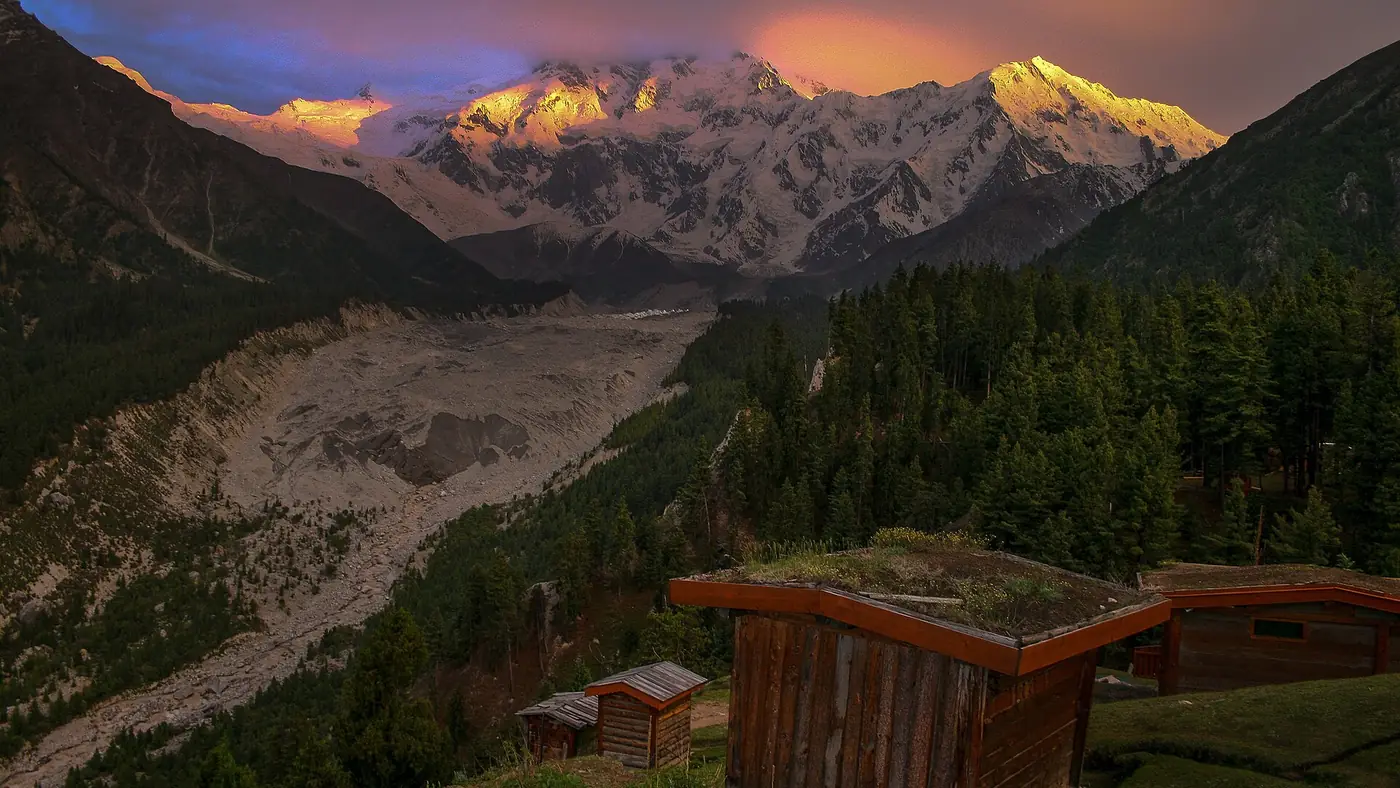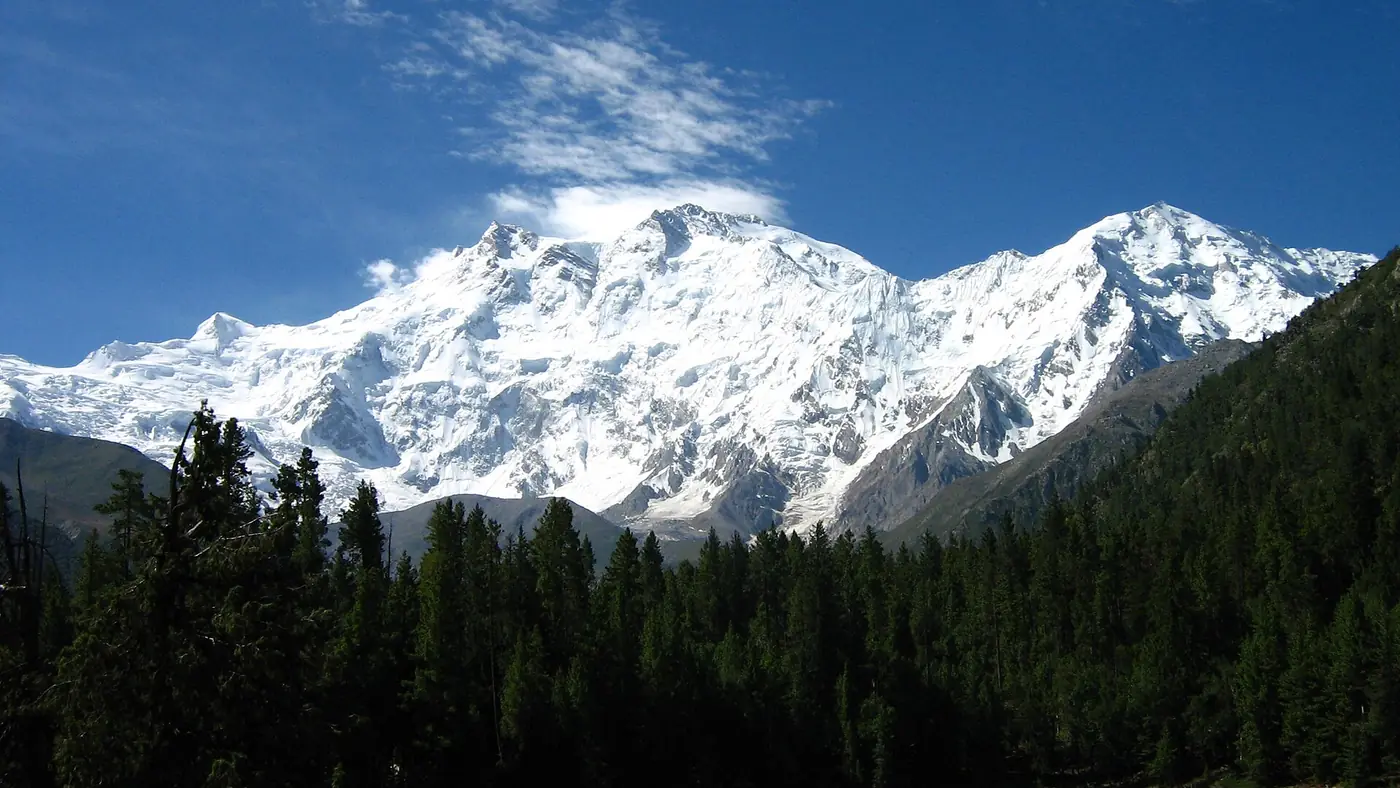
The Fairy Meadows hike starts at Tato, where the jeep track ends, and covers about 5 km through pine forest to the meadow at roughly 3,300 metres. You climb somewhere between 700 and 900 metres on the way. Fit adults usually take two to three hours; families, older walkers and anyone feeling the altitude should allow three to four. The path is clear and well used, with no scrambling, and horses wait at Tato for anyone who would rather ride.
This guide covers the distance and the climb, what each part of the path is like, how hard it really is, and how the horse and porter options work.
| At a glance | |
|---|---|
| Start | Tato village, where the jeep from Raikot Bridge stops |
| Finish | Fairy Meadows, about 3,300 m |
| Distance | About 5 km one way |
| Height gain | Roughly 700 to 900 m |
| Time up | 2 to 3 hours for fit adults; 3 to 4 at an easy pace |
| Time down | About 1.5 to 2 hours |
| Difficulty | Moderate: a steady climb, no technical sections |
| Horse from Tato | About PKR 2,500 to 4,000 one way (2025–2026) |
| Porter | About PKR 1,500 to 3,000, depending on the load (2025–2026) |
How long is the Fairy Meadows hike?
The Gilgit-Baltistan tourism department gives the walk as 5 km, and that is the figure most guides use. Some walkers' GPS records and a few trekking sites put it nearer 6 or 7 km, depending on where exactly the jeep stops and which shortcuts they took. Plan for 5 km of walking and don't be surprised if it feels longer.
Time matters more than distance here. The tourism department quotes three to four hours. Reasonably fit adults who walk regularly often do it in two to three, and a strong walker used to altitude can be faster still. A family with young children, or a group stopping for photographs, will take the full four. None of these times is wrong; they describe different people.
Coming down is quicker, usually an hour and a half to two hours, but it is harder on the knees than the climb is on the lungs.
What the path is like
The walk begins at Tato, a small village where the jeeps turn round. There is a tea house here with food, drinks and toilets, and this is where the horse owners and porters wait. Use the toilet, fill your water bottle and put a warm layer at the top of your bag before you set off.
From Tato the path climbs into forest. For most of the way it is a wide, well-trodden dirt track under pine, spruce and fir, following the stream up the valley at a steady, manageable gradient. You will share it with horses and with walkers coming down from the meadow. Step to the uphill side when horses pass, not the edge.
The steepest part comes near the top, where the path zigzags up the side of the valley in a series of switchbacks. This is where most people slow down, and it is worth doing so on purpose. Then the trees open, the ground flattens, and the first lodges appear with Nanga Parbat rising behind them.
A few things to expect along the way:
- Dust in dry weather, and mud after rain, when the path can be slippery on the steeper bends.
- Shade for most of the walk, which helps on a hot afternoon, although the first stretch can be warm.
- Streams and a spring along the path. Carry your own water all the same, and treat or filter anything you drink from a stream.
- Very little signal. Don't rely on your phone for the time you agreed with your jeep driver; write it down.
How hard is it?
On the flat, 5 km is an easy morning. What makes this walk moderate rather than easy is the combination of a steady climb and the altitude. You start at around 2,400 to 2,600 metres, after a morning that may have begun in the heat of the Indus valley, and finish at 3,300.
Most healthy adults find it tiring but comfortable if they walk slowly. People tend to struggle for one of three reasons:
- Starting too fast. The first half hour feels easy, so people rush it and pay for it on the switchbacks. Walk at a pace at which you can still talk.
- Arriving tired. Many visitors start the walk after two long days on the road and a rough jeep ride, often in the afternoon heat. A night in Chilas or at Raikot Bridge before the jeep makes a real difference.
- The altitude. At this height a mild headache and heavy breathing on the climbs are common. A bad headache, nausea or dizziness is a reason to stop, rest and, if it doesn't ease, go down. Our travel guide has more on altitude in the north.
If you can climb a few flights of stairs without stopping and walk for an hour on a hill at home, you can do this walk.
Riding up: the horse option
Horses are available at Tato for the ride up, and many visitors take one for part or all of the way. The owner walks alongside and leads the horse the whole time, so you don't need to know how to ride.
- The cost. Roughly PKR 2,500 to 4,000 one way from Tato to the meadow in 2025–2026. The ride down usually costs less, and some owners offer a price for both ways. Rates change each season, so agree yours before anyone climbs on.
- The ride itself. It is slow and a little uncomfortable on the steep sections, but it takes the effort out of the climb. Hold on, lean forward going uphill, and keep your feet in the stirrups.
- Who it suits. Children who would struggle with the full walk, older relatives, anyone with bad knees, and anyone who has felt unwell on the jeep ride.
- Riding down. Some people prefer to walk down even if they rode up. Going downhill on a horse on a steep, dusty path is not for everyone.
A horse can also carry your bags instead of you, which frees you to walk with a light day pack.
Porters and bags
If you are carrying more than a day pack, you have three choices: carry it yourself, load it on a horse, or hire a porter. Porters charged roughly PKR 1,500 to 3,000 in 2025–2026, depending on the weight and whether it is one way or both. Agree the price at Tato, and confirm which lodge the bags are going to.
Two things save trouble. Keep your warm layer, water, medicine and valuables in your own day pack, because the bags may arrive after you do. And pack light in the first place: a two-night stay does not need a suitcase. The full breakdown of what the trip costs, including horses and porters, is in our Fairy Meadows trip cost guide.
When to start the walk
The simple rule is to finish in daylight. The path runs through forest and gets dark earlier than the open sky suggests.
- In summer, start walking from Tato by about 3 pm at the latest.
- In September and October, when the days are shorter, aim for early afternoon.
- If you reach Raikot Bridge late, sleep there or in Chilas and go up in the morning. The jeep ride and the walk are both worse in a hurry.
The jeep ride that comes before the walk has its own rules and risks, and they are covered in our guide to the Fairy Meadows jeep track.
Who will find it hard?
Most visitors walk up without trouble, and the walk is not a reason to stay at home. Think harder, or plan on a horse from the start, if your group includes:
- Young children who don't normally walk for two hours at a time. Our guide to Fairy Meadows with family looks at children and older relatives in detail.
- Anyone with a heart or lung condition, who should ask a doctor before going to 3,300 metres at all.
- Anyone with weak knees, who will feel the walk down more than the walk up. Trekking poles help.
The walk up is the easy part of the higher trails. If it leaves you with energy to spare, the walk on to Beyal camp the next day is a similar effort on a gentler path. For the whole picture of the meadow, see our Fairy Meadows destination page.
Frequently asked questions
How far is Fairy Meadows from Tato?
About 5 km on foot, according to the Gilgit-Baltistan tourism department and most guides. Some GPS records come out a little longer, depending on where the jeep stops.
How long does the Fairy Meadows hike take?
Two to three hours for most fit adults, and three to four at an easy pace or with children. The walk down takes about an hour and a half to two hours.
Is the Fairy Meadows hike difficult?
It is moderate: a steady climb of roughly 700 to 900 metres on a clear path, with the steepest part near the top. The altitude makes it harder than the distance suggests, so walk slowly.
Can I ride a horse to Fairy Meadows?
Yes. Horses wait at Tato, and the owner leads the horse the whole way. In 2025–2026 the ride up cost roughly PKR 2,500 to 4,000 one way; agree the price before you set off.
Do I need hiking boots for Fairy Meadows?
Not in summer. Trainers or walking shoes with a good grip are enough on the dry path. In May, October or after rain, waterproof boots are better.
Is there water on the way to Fairy Meadows?
There are streams and a spring along the path, and food and drinks at Tato. Carry at least a litre per person and treat any stream water before drinking it.