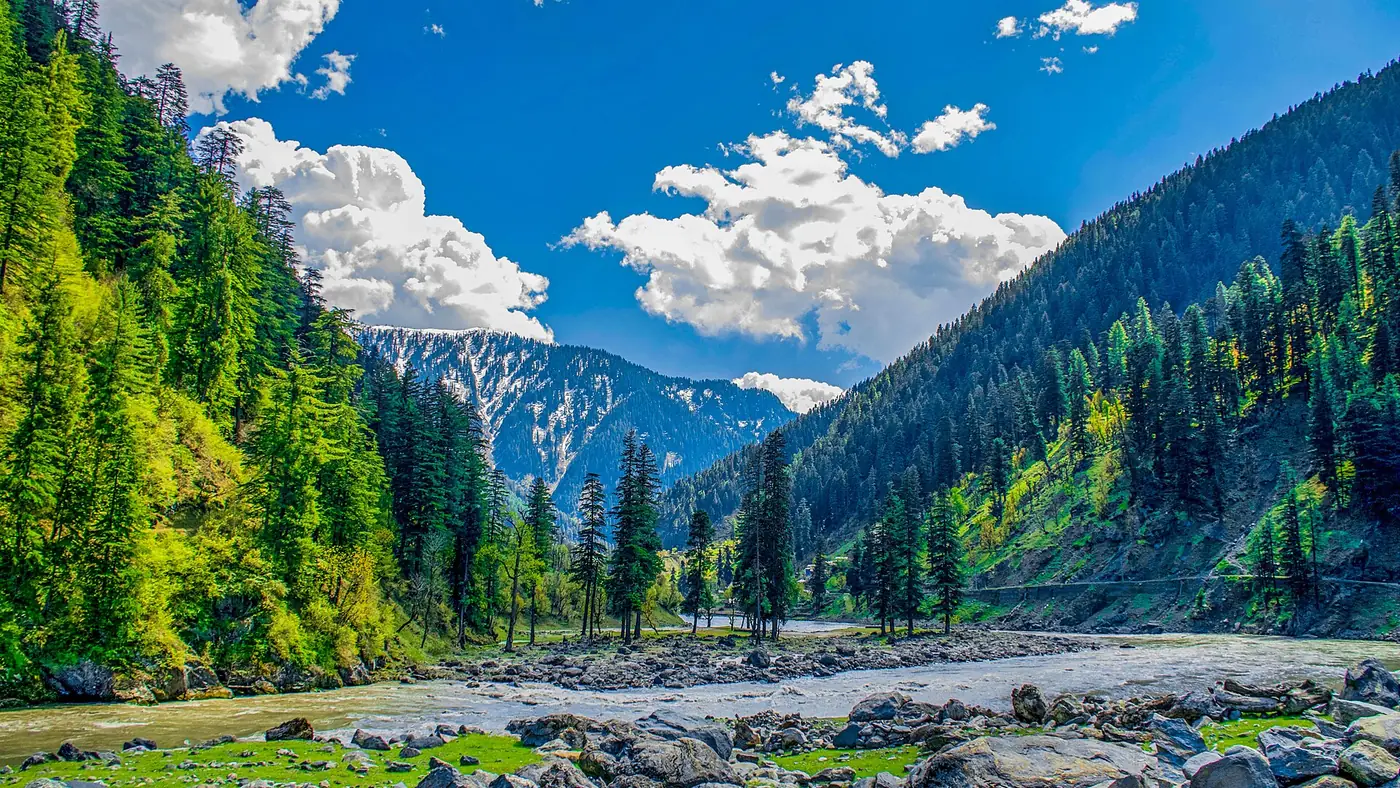
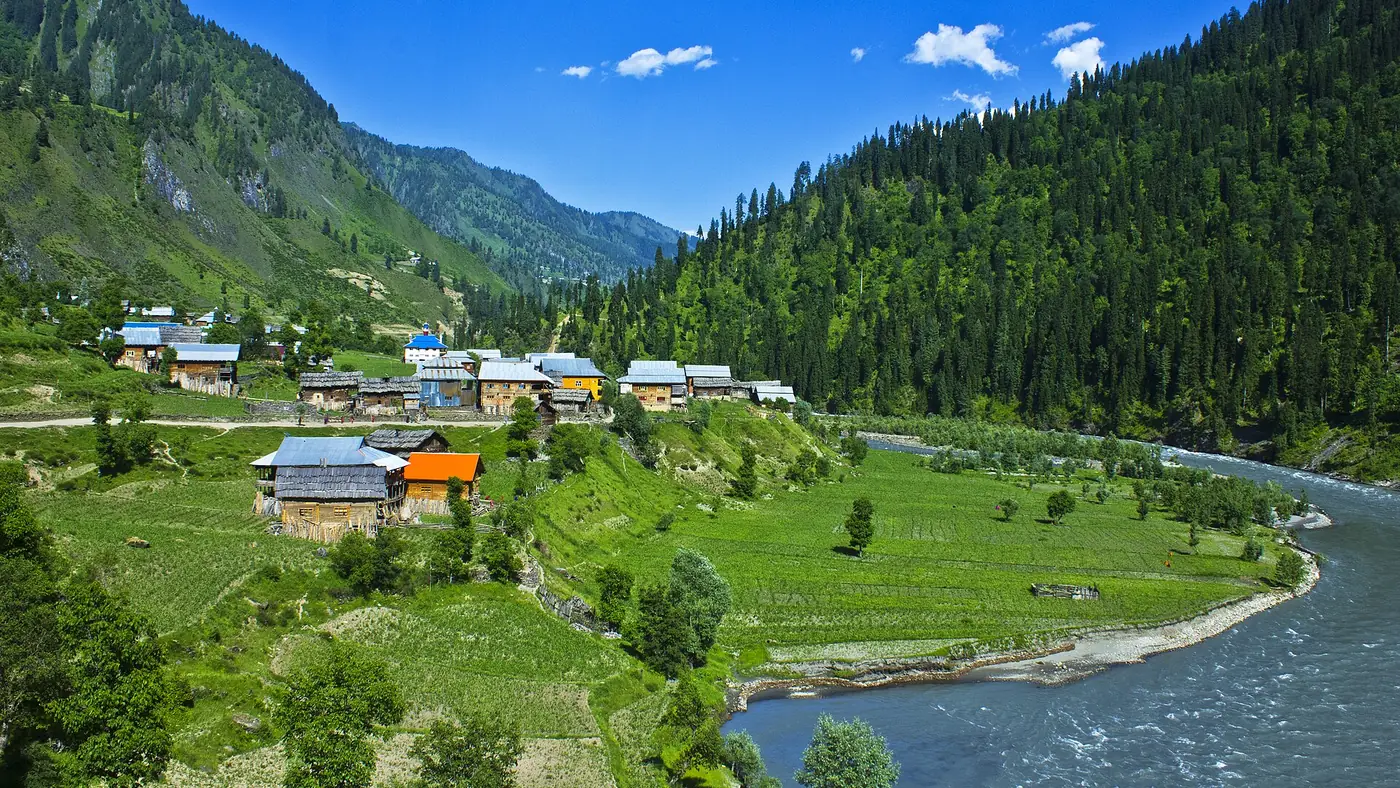
Neelum Valley weather is mild and green from May to September and snowbound from December to March. In July, Keran at about 1,500 metres reaches the high 20s by day, while Kel, 600 metres higher, sits in the mid-20s and drops to around 16°C at night. Winter days at Kel barely rise above freezing. The two wet spells to plan around are the late-winter storms of February to April and the monsoon bursts of July and August.
Below you will find a month-by-month table for Keran and Kel, what each month is like on the ground, where the snow line sits through the year, and what to pack.
| At a glance | |
|---|---|
| Warmest months | July and August |
| Coldest month | January |
| Wettest spells | February to April, and July to August |
| Driest spell | Late September to November |
| Snowbound upper valley | Roughly December to March |
| Main temperature rule | About 3 to 4°C cooler for every 600 m you climb |
| Best all-round months | June and September |
How height changes the weather
The valley road climbs steadily, so the weather you get depends on where you sleep. Muzaffarabad sits at about 740 metres and is hot in summer. Keran and Kutton are around 1,500 metres, Sharda about 1,980, Kel about 2,100, Arang Kel about 2,550, and Ratti Gali Lake close to 3,700.
As a rough rule, every 600 metres of height takes 3 to 4°C off the temperature. That is why a July afternoon can be warm enough for a T-shirt in Keran and cool enough for a fleece at Arang Kel, and why Ratti Gali can be close to freezing at dawn in August.
Month-by-month temperatures at Keran and Kel
These are typical daytime highs and night-time lows, rounded. They come from modelled climate data for 2015 to 2024, checked against the Pakistan Meteorological Department's long-term record for Muzaffarabad. Treat them as a guide to what to pack, not a forecast.
| Month | Keran day / night | Kel day / night | What it is like |
|---|---|---|---|
| January | 7–9° / about -1° | 2–4° / about -5° | Deep winter; upper road often blocked |
| February | 8–10° / about 0° | 4–5° / about -4° | Heavy snowfalls still likely |
| March | 12–14° / 3–4° | 7–9° / about 0° | Wet; late storms; snow above Sharda |
| April | 17–19° / about 7° | 11–13° / about 4° | Thaw; valley floor greening |
| May | 23–25° / 10–11° | 17–19° / about 7° | Fresh green; snow on the ridges |
| June | 26–29° / about 15° | 22–24° / about 12° | Settled and pleasant |
| July | 28–30° / about 19° | 24–26° / about 16° | Warmest; monsoon showers and storms |
| August | 28–30° / about 18° | 24–26° / about 16° | Warm, humid, risk of flash floods |
| September | 26–28° / about 15° | 22–24° / about 12° | Clearing skies; cooler nights |
| October | 21–23° / 8–9° | 16–18° / about 5° | Crisp; first snow on the tops |
| November | 14–16° / about 4° | 9–11° / about 0° | Cold nights; snow reaching Kel |
| December | 9–11° / about -1° | 4–6° / about -5° | Winter sets in |
For Arang Kel, take roughly 3°C off the Kel figures. At Ratti Gali Lake, summer days are only in the low to mid teens and nights fall to around 5°C.
What each season is like
December to February
Snow reaches the valley floor at Keran in most winters, and above Sharda it lies deep. People live in Kel all year, but the road beyond Sharda can be blocked for days after a heavy fall, and the upper valley is avalanche country: in January 2020 avalanches in Neelum killed at least 74 people. Keran and Kutton are the realistic winter destinations, and only in settled weather.
March and April
This is one of the wettest parts of the year up the valley, as western weather systems bring heavy rain low down and snow higher up. Slides are common as the ground thaws; the rockfalls that blocked the road near Kel in 2024 came in March and April. By late April the lower valley is green and the orchards are coming into leaf.
May
May is the start of the season. Days are warm in Keran and fresh in Kel, the fields are at their greenest, and snow still lies on the ridges above. Arang Kel is usually walkable, but the high lakes are frozen and their jeep tracks closed. Storms still roll through, so keep a warm layer to hand.
June
June is the most settled month: warm days, cool nights, long light and little of the monsoon yet. Snow retreats to the high passes, and in most years the jeep tracks to the high lakes open at the end of the month or in early July. If you want the valley green without the August rain, this is the month.
July and August
The warmest months, and the busiest. The monsoon reaches the valley: at Muzaffarabad, July is the wettest month of the year, and further up the valley it tends to come as heavy showers and storms rather than days of steady rain. These bursts are what cause flash floods in the side streams. In August 2022 a cloudburst in the Ratti Gali nullah killed five tourists, and on 14 and 15 August 2025 floods washed away bridges and stranded around 700 tourists at the Ratti Gali base camp. Plan early starts, and keep a day spare.
September
The monsoon fades, the air clears and the crowds thin out after the school holidays. Days are still warm in Keran and pleasant in Kel, and nights turn cool. For many people this is the best month of the year in Neelum.
October and November
October is crisp and bright, with autumn colour in the lower valley and the first snow dusting the high ground. The high lakes close during the month. By November nights are near freezing at Kel, and snow can arrive in the upper valley at any time.
When does it rain in Neelum Valley?
There are two wet periods, and they behave differently:
- February to April. Long spells of rain and snow from western weather systems. Grey, cold and slow on the road, with slides as the slopes thaw.
- July and August. The monsoon. Clear mornings are common, with storms more likely later in the day. Total rainfall matters less than intensity: a short cloudburst over a side valley can send a flood down a nullah within minutes.
The driest spell is from late September to November, which is why autumn visibility is so good. For a live picture before you go, the Pakistan Meteorological Department posts forecasts and heavy-rain alerts at weather.gov.pk. For what rain does to the drive itself, see our Neelum Valley road condition guide.
Where the snow line sits through the year
- December to February: snow down to Keran in most winters, deep above Sharda.
- March and April: retreating from the valley floor; still heavy at Kel and Arang Kel early on.
- May: gone from the villages; lying on the ridges and high meadows.
- June: melting off the high passes; the lakes still partly frozen.
- July to September: only on the peaks and in shaded gullies.
- October and November: returning to the high ground, then down towards Kel.
The high lakes run later than the valley. Our guides to the best time to visit Ratti Gali Lake and the best time to visit Arang Kel go into the timing for each.
What to pack for the weather
May to September
- Light clothes for the day, and a fleece or warm layer for evenings in Sharda, Kel and Arang Kel
- A waterproof jacket, whatever the forecast
- A proper warm jacket, hat and gloves if you are going to Ratti Gali
- Shoes with grip that can get wet, for muddy paths and stream crossings
- Sunscreen and sunglasses; the sun is strong above 2,000 metres
October, November, March and April
- A warm jacket, hat and gloves, plus thermal layers for the nights
- Waterproofs, as spring especially is wet
- Warm socks and something dry to change into
December to February
- Full winter clothing, including waterproof boots
- Rooms can be cold and power unreliable, so ask whether your hotel has heating
Which months suit which trip?
- A first family trip to Keran, Sharda and Kel: June or September. Warm, settled, and the road is at its most predictable.
- Ratti Gali and the high lakes: mid-July to early September, when the tracks are open and the snow has melted.
- The greenest valley and the meadows in flower: July, accepting monsoon storms and the crowds.
- Autumn colour and clear air: October, for the lower and middle valley.
- Snow: January or February, to Keran or Kutton only, and only when the forecast is settled.
Our guide to the seasons across the north compares Neelum with Hunza, Skardu and Swat if you are still choosing where to go. The Neelum Valley Escape runs in the settled months, when the road to Kel and the walk to Arang Kel are reliable.
Frequently asked questions
What is the weather like in Neelum Valley in July?
Warm by day, around 28 to 30°C at Keran and the mid-20s at Kel, with cool nights higher up. It is monsoon season, so expect afternoon storms and occasional flash floods in the side streams.
Is it cold in Neelum Valley in summer?
Not in the day, but evenings are cool above Sharda, and Arang Kel and Ratti Gali are cold at night. Bring a fleece for the valley and a proper warm jacket for the high lakes.
Does it snow in Neelum Valley?
Yes. Snow falls from about December to March, reaching Keran in most winters and lying deep at Kel, Arang Kel and Taobat. The high lakes stay frozen until early summer.
When is the rainy season in Neelum Valley?
There are two: February to April, with long spells of rain and snow, and the monsoon in July and August, with heavy afternoon storms. Late September to November is the driest time.
What is the best month for weather in Neelum Valley?
June and September are the most settled: warm days, cool nights and less rain than July and August. For the high lakes, aim for mid-July to early September.