
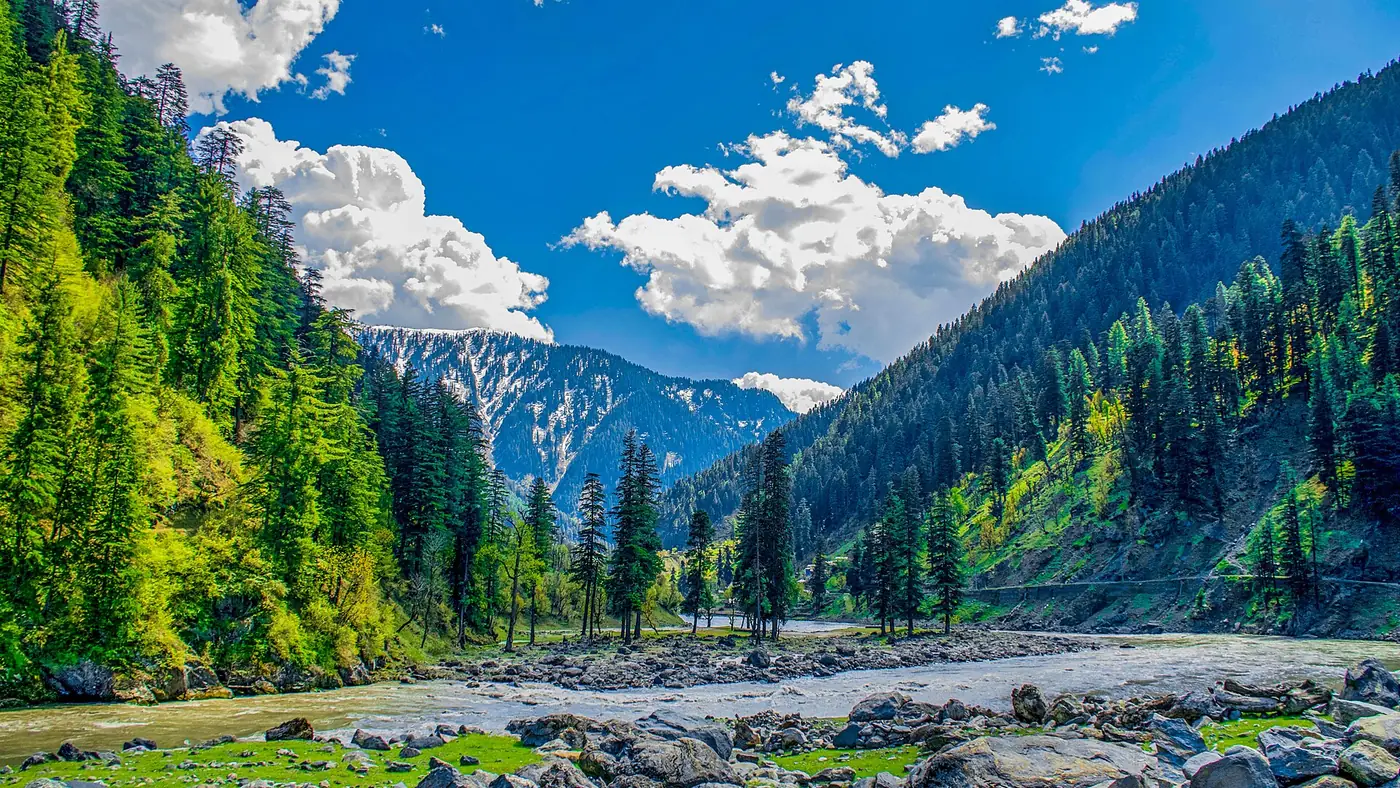

Most Neelum Valley hotels are grouped in four places along the road: Kutton, Keran, Sharda and Kel, with wooden guesthouses and huts above Kel at Arang Kel. For a first trip, spend the first night in Keran and the second in Sharda or Kel, and add a night at Arang Kel if you can manage a steep walk with an overnight bag. Kutton suits a short break that doesn't go far up the valley.
This guide compares the bases, explains the kinds of places you will find in each, gives a rough idea of prices, and covers the few things worth checking before you book.
| At a glance | Height | From Muzaffarabad | Best for |
|---|---|---|---|
| Kutton | about 1,500 m | about 2.5 to 3 hours | Short trips, families, a quiet side valley |
| Keran | about 1,500 m | about 3 hours | First night, riverside rooms, Ratti Gali |
| Sharda | about 1,980 m | about 5 hours | Middle of the valley, ruins, Kel day trips |
| Kel | about 2,100 m | about 6 hours | Arang Kel, Taobat, the upper valley |
| Arang Kel | about 2,550 m | Kel, then chairlift and a walk | A night in the meadow village |
Which town should you base in?
The Neelum Valley is one long road, and the further you go the longer the drive back. So the right base depends mostly on how many days you have:
- Two days: stay in Keran or Kutton. Going further means spending most of the trip in the car.
- Three days: one night in Keran, one in Sharda or Kel. Kel lets you reach Arang Kel early the next morning before the crowds.
- Four or five days: Keran, then Sharda, then Kel or Arang Kel, then back down. This is the shape of most good Neelum trips, including ours.
- Ratti Gali Lake: stay in Keran or Dowarian the night before, because the jeeps leave early.
Moving base every night is tiring. If you have four days, two nights in one place usually beats four hotels.
Kutton and the Jagran valley
Kutton is a village in the Jagran valley, a side valley that turns off the main road at Kundal Shahi. At about 1,500 metres it is warm in summer, green, and close enough to Muzaffarabad to reach easily on the first day.
Accommodation here is a mix of government rest houses, run by the AJK Tourism and Archaeology Department and by WAPDA, and private rest houses and small resorts along the stream. It suits families who want a short trip with little driving, and it is a good first night if you leave Islamabad late.
The trade-off is that it is off the main road: every day you spend going up the Neelum starts with the drive back down to Kundal Shahi.
Keran and Upper Neelum
Keran is the most popular base in the lower valley. It sits on the Neelum River at about 1,500 metres, with Indian-administered Kashmir directly across the water, and most places to stay are riverside resorts and hotels with gardens or terraces facing the river. The AJK Tourism and Archaeology Department runs a tourist lodge and a motel here, and tourist huts at Neelum village nearby.
Keran works well as the first night on a longer trip and as a two-night base for a short one: Upper Neelum above it, the river, and Ratti Gali via Dowarian are all within reach. It is also the busiest place in the lower valley on holiday weekends.
Sharda
Sharda, at about 1,980 metres, is the tehsil headquarters of the upper valley and the natural halfway point. It has a proper bazaar, the riverside ruins of Sharda Peeth, and a spread of hotels from simple bazaar rooms to larger places on the edge of town. The AJK Tourism and Archaeology Department has a tourist lodge and two youth hostels here.
Sharda is the best base if you want to see the upper valley without committing to the rougher road beyond. Kel and Arang Kel are an easy day trip from here, and it is where many people leave their own car and switch to a local jeep.
Kel
Kel, at about 2,100 metres, is the last proper town on the road and the starting point for Arang Kel, Taobat and the Shounter valley. It has a bazaar, a bank branch, the tehsil headquarters hospital, private hotels and an AJK Tourism motel.
Rooms in Kel are generally simpler than in Keran, and the town itself is a working place rather than a pretty one. What it gives you is position: you can be on the first chairlift to Arang Kel in the morning, ahead of the day-trippers coming up from Sharda.
Arang Kel: sleeping above the valley
Arang Kel is a meadow village about 450 metres above Kel, reached only by chairlift and a steep walk, or on foot all the way. There is no road, so everything you bring you carry up, or pay someone to carry.
Places to stay are wooden guesthouses and huts around the meadow, from basic rooms with shared bathrooms to newer cabins built for tourists, and a few tent camps in summer. Power can be limited, so ask whether a place has solar or a generator. Food is simple, and costs a little more than in Kel because supplies come up the same way you do.
A night here is the best thing you can do in Neelum if everyone in your group is fit enough for the walk. The day-trippers leave in the afternoon, and the meadow at first light is quiet. Our Arang Kel guide covers the village and the walks in more detail.
Dowarian and Taobat
Two smaller places are worth knowing about. Dowarian, about 15 km beyond Keran, is where the jeep track to Ratti Gali Lake starts, and it has an AJK Tourism lodge and a forest rest house. It is handy for an early jeep, though there is less choice than in Keran.
Taobat, at the end of the road about 40 km beyond Kel, has an AJK Tourism motel and a handful of small hotels. It is only worth staying there if you have taken the jeep track up specifically to explore the far end of the valley.
Types of places to stay
- Government lodges and motels. The AJK Tourism and Archaeology Department runs a tourist lodge at Kutton, a lodge and a motel at Keran, tourist huts at Neelum village, a lodge at Dowarian, a lodge and two youth hostels at Sharda, a motel at Kel and motels at Taobat. Settings are often good; standards vary.
- Riverside resorts. Mostly in Keran and Kutton: private places with gardens, family rooms and restaurants. The most comfortable option in the valley.
- Town hotels. In the bazaars of Athmuqam, Sharda and Kel. Simple, central, and useful when everything else is full.
- Guesthouses and huts. Especially at Arang Kel and in smaller villages. Wooden rooms, basic facilities, and often the best views.
- Camps. Tent camps at Arang Kel and at the Ratti Gali base camp in summer. Our Ratti Gali Lake guide covers what the base camp is like.
What rooms cost and what to check
Prices move a great deal with the season, and online listings are often out of date. As a rough guide from 2025–26 listings, simple guesthouse rooms can still be found for a few thousand rupees a night, riverside resorts in Keran and Kutton start from around PKR 7,000 to 10,000, and the best rooms in the valley cost PKR 15,000 or more. Rates rise sharply on Eid holidays and the 14 August weekend. Treat these as a starting point, not a quote.
Before you pay, ask:
- Heating and hot water. Nights are cool above Sharda even in July.
- Power backup. Cuts are common; a generator or solar system makes a difference.
- Parking. Some riverside places are down steep lanes from the road, and some in Arang Kel have no road at all.
- Which mobile network works there. Signal gets patchier the higher you go.
- Whether the room faces the river or the road. It changes the night more than the star rating does.
Booking in peak season
June to August is busy, and the Eid holidays and the 14 August weekend are among the busiest days of the year in the valley. For those dates, book well ahead and confirm by phone the day before. Outside them, you can usually find a room on arrival in Keran, Sharda or Kel, though the better places still fill on weekends.
Carry a CNIC for every adult in the group. Since early 2025, hotels in Neelum have been required to record guests' details and itineraries through a "safe tourism" app that reports to the police, so expect to be asked for them at check-in.
Which base suits you?
- Families with small children or elderly parents: Keran or Kutton, with day trips rather than daily moves. Arang Kel only if everyone can manage a steep walk.
- Couples: a riverside place in Keran, then a night at Arang Kel.
- Groups of friends on a budget: town hotels in Sharda and Kel, or a camp at Arang Kel.
- People who want the whole valley: Keran, Sharda, Kel, Arang Kel, in that order.
Our five-day Neelum Valley Escape follows exactly that last pattern, with nights in Keran and Sharda and a night above the valley at Arang Kel, and the accommodation arranged for you. If you are still weighing up the region, the Kashmir destination page gives the wider picture.
Frequently asked questions
Which is the best place to stay in Neelum Valley?
For a first trip, Keran for the first night and Sharda or Kel for the second. Keran has the most comfortable riverside hotels; Kel puts you closest to Arang Kel.
Are there hotels in Arang Kel?
Yes, but small ones: wooden guesthouses, huts, a few newer cabins and summer tent camps. There is no road, so you carry your bags up from the chairlift or on foot.
Do I need to book Neelum Valley hotels in advance?
For Eid, the 14 August weekend and summer weekends, yes. On ordinary weekdays you can usually find a room on arrival, though the best places fill first.
How much does a hotel cost in Neelum Valley?
From a few thousand rupees for a simple room to PKR 15,000 or more for the best places, with riverside resorts in Keran starting around PKR 7,000 to 10,000 (2025–26). Prices rise on holidays.
Is Keran or Sharda better to stay in?
Keran is lower, warmer and has more comfortable hotels; Sharda is further up the valley and a better base for Kel and Arang Kel. On a three-day trip, staying one night in each works well.
Do hotels in Neelum Valley have electricity and heating?
Most have electricity, with cuts; the better ones have backup. Heating varies, so ask, especially above Sharda and in spring or autumn.