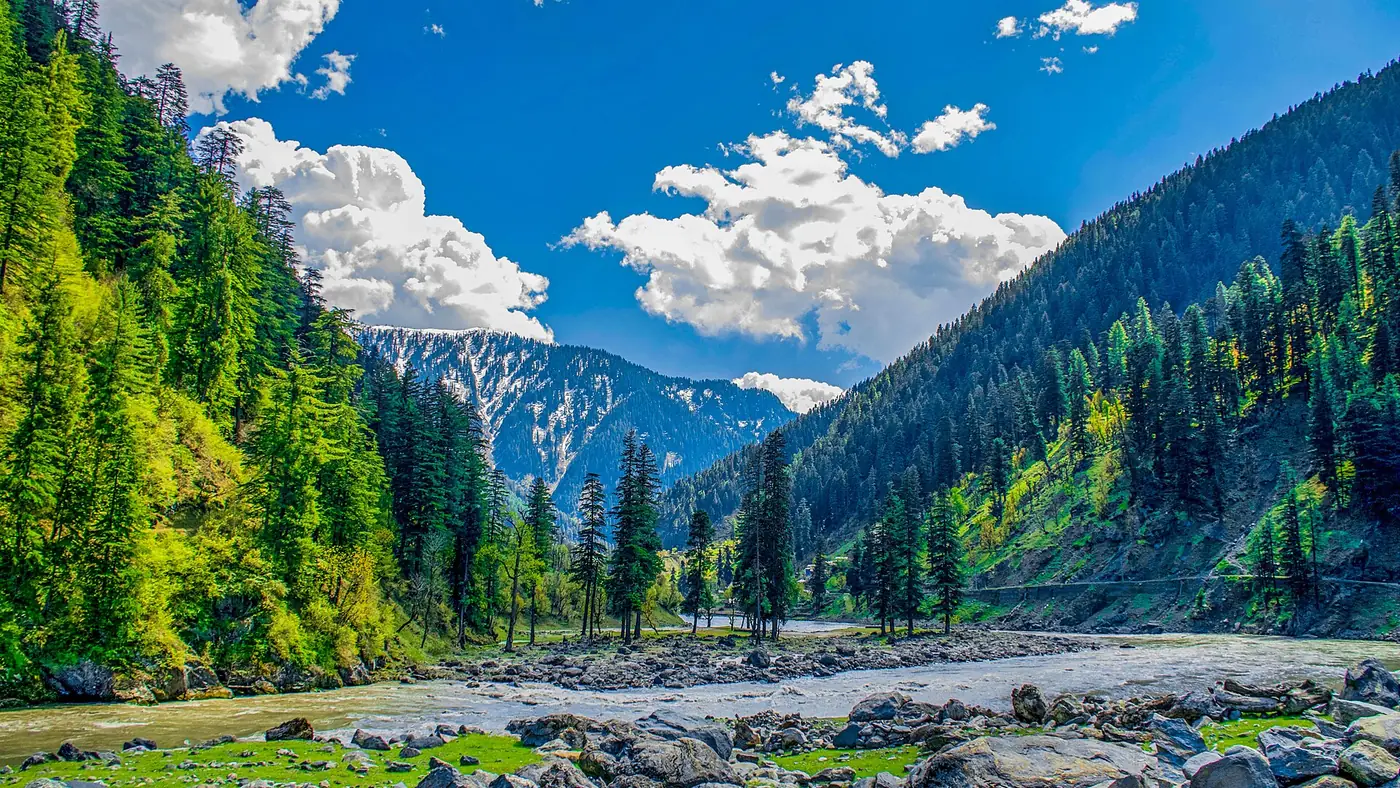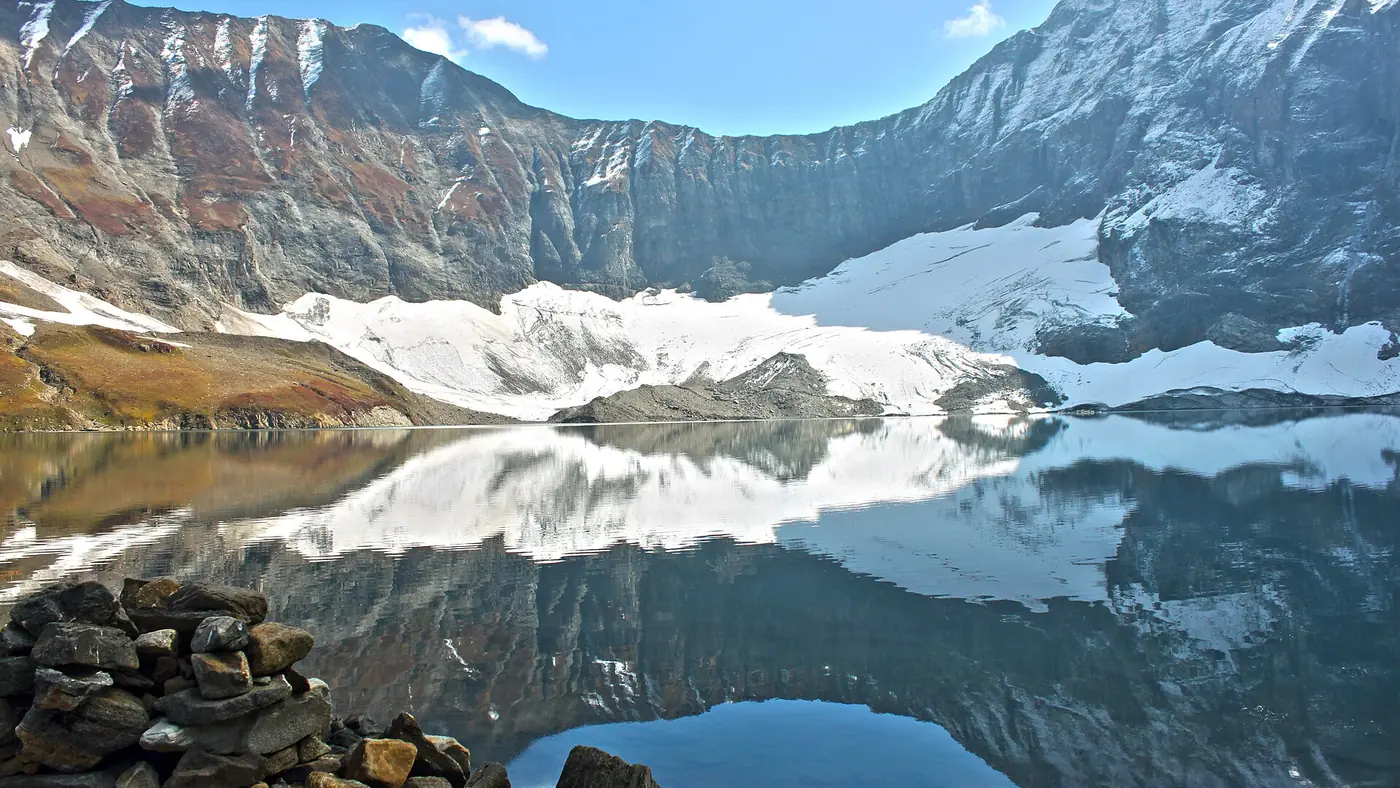
Ratti Gali Lake is a glacial lake at about 3,680 metres in the mountains above Dowarian, in the middle of the Neelum Valley. You reach it by a 16 km jeep track from Dowarian to a tented base camp, then walk for 45 minutes to an hour and a half up to the shore. It can only be visited in summer, usually from early July to September, and it is at its best on a clear morning in late July or August, when the ice has gone and the meadows are in flower.
This guide covers where the lake is, how the approach works, when it is open, what you will find at the base camp and the lake, the risks worth taking seriously, and whether it suits your group.
| At a glance | |
|---|---|
| Altitude | About 3,680 m |
| Nearest village | Dowarian, about 106 km from Muzaffarabad |
| Jeep track | 16 km, Dowarian to base camp, 2 to 3 hours up |
| Walk | About 2 to 3 km from base camp, 45 minutes to 1.5 hours |
| Season | Roughly July to September, once the track is cleared |
| Facilities | Tent camps and food stalls at base camp; nothing at the lake |
| Mobile signal | None at the base camp or the lake |
| Documents | CNIC for Pakistanis; foreign nationals should check NOC rules first |
Where is Ratti Gali Lake?
The lake lies in Neelum district, Azad Kashmir, at the head of the Ratti Gali nullah, a side stream that joins the Neelum River at Dowarian. Dowarian itself is a village on the main valley road at about 1,615 metres, some 15 km beyond Keran and about 106 km from Muzaffarabad.
The lake sits just below the ridge that separates the Neelum Valley from the Kaghan valley. That is why experienced trekkers sometimes arrive from the other side, starting at Jalkhad in the Kaghan valley and crossing Noori Top past Noori and Hans Raj lakes, a route of three days or more. For almost everyone else, Ratti Gali is reached from Dowarian.
How do you get to Ratti Gali Lake?
The approach has three parts:
- Drive to Dowarian. From Islamabad this is a full day, usually broken with a night in Keran or Dowarian.
- Jeep to the base camp. Private cars cannot use the track. You hire a jeep in Dowarian for the 16 km climb through forest and then open grassland above the tree line. It is a single-lane track with hairpins and stream crossings, and it takes around two to three hours up.
- Walk to the lake. From the base camp a path climbs roughly 300 metres over grassy slopes, boggy patches and, early in the season, old snow. Most people take 45 minutes to an hour and a half. Horses can be hired for those who would rather ride.
Our guide to getting from Islamabad to Ratti Gali Lake sets out the timings, overnight options and a realistic three-day plan.
When can you visit?
The jeep track is closed by snow for roughly half the year, and in May 2024 it was still blocked at several points with maintenance not yet started. In most years it opens between late June and early July, once the snow has melted and the highways department has cleared it, and it closes again when the first heavy snow comes, usually in October.
Within that window the lake changes a great deal. Early in the season it can still be partly frozen, with snow down to the water. By late July and August the ice has gone and the slopes are green. September is quieter and colder. Our guide to the best time to visit Ratti Gali Lake goes through it month by month.
What is at the base camp?
The base camp is a seasonal tent settlement where the jeep track ends. In summer local operators run tent camps and stalls selling tea, simple meals and snacks, with basic toilets. There is no mobile signal.
On a busy summer day there can be hundreds of people here. When floods cut the track in August 2025, around 700 to 800 tourists were stranded at the base camp, and camp owners agreed to feed and house them free until they could be brought down. That gives a sense both of how many people now stay overnight in peak season and of how isolated the place becomes when the track goes.
If you sleep at the base camp, bring a warm sleeping bag or check what the camp provides. Nights at this height are cold even in August, often around 5°C, and the tents are basic.
What is the lake really like?
Ratti Gali is a proper glacial lake: blue-green water under a dark grey wall of rock, with snowfields and small waterfalls on the slopes around it. In late July and August the grass around the shore is full of wildflowers, including primulas, potentillas and gentians. Below the lake a wide, grassy flat is where most people sit, eat and take photographs.
It is not a wilderness experience in peak season. Around midday in July and August the shoreline can be busy, and litter is a real problem: plastic bottles and wrappers do not decompose at this height and nobody collects them. Take every piece of your rubbish back down to Dowarian.
The best way to see it at its quietest is to arrive early, or to sleep at the base camp and walk up at first light. Fit walkers with a local guide sometimes continue to the ridge above the lake for the view into the Kaghan side and on towards Hans Raj Lake, but that is a separate, longer outing and should not be improvised.
The risks worth taking seriously
Large numbers of families visit Ratti Gali safely each summer, but three things have gone badly wrong in recent years, and all of them are avoidable.
- Flash floods. In August 2022 a cloudburst in the Ratti Gali nullah killed five young tourists about six kilometres below the lake. In August 2025 floods washed away more than 2 km of the track. If heavy rain is forecast, don't go up, and never camp or park beside the stream.
- Unsafe jeeps. In July 2024 a jeep carrying 14 people lost drive on a bend about three kilometres from the main road and rolled back into the nullah; two people died and others were missing. Choose a proper passenger jeep, don't accept an overloaded one, and walk away from a driver who seems careless. Since 2025 the authorities have required vehicles on high-altitude tourist routes to be well maintained and driven by licensed drivers.
- Altitude. You go from about 1,600 metres at Dowarian to about 3,680 at the lake in one morning. Walk slowly, drink water, and if anyone develops a bad headache, vomiting or confusion, take them down.
What does it cost?
The main cost is the jeep, which you hire as a whole vehicle in Dowarian. Fares vary with the season, the size of the group, and whether you come down the same day or stay overnight, and they have changed every year. Agree the price, the waiting time and the return plan before you set off.
Tents, meals and horses at the base camp cost more than their equivalents in the valley, because everything comes up by jeep. Carry enough cash from Muzaffarabad or Athmuqam; there is nowhere to draw money on the way up.
Is Ratti Gali Lake worth it?
For a fit group in late July or August with a spare day in hand, yes. It is the easiest way in the Neelum Valley to stand beside a high glacial lake, and on a clear morning it is spectacular.
It is less suited to families with toddlers, anyone with heart or lung problems, and people who suffer badly on rough roads, since the jeep ride is long and jolting. It also needs a full day from Keran, which is a lot to give up on a three-day trip. If that describes your group, Arang Kel offers meadows, forest and mountain views at a far gentler 2,550 metres, and it is the high point of our Neelum Valley Escape.
If you want Ratti Gali built into a longer trip, with the jeep, the timing and a spare day for weather handled for you, tell us your dates on our custom trip planner.
Frequently asked questions
How high is Ratti Gali Lake?
About 3,680 metres, or just over 12,000 feet. The base camp is a few hundred metres lower, and Dowarian, where the jeep track starts, is at about 1,615 metres.
Can you go to Ratti Gali Lake by car?
Only as far as Dowarian on the main Neelum Valley road. From there a 16 km jeep track leads to the base camp, and the last stretch to the lake is on foot or horseback.
How long is the walk to Ratti Gali Lake?
From the base camp it is about 2 to 3 km with roughly 300 metres of climbing. Most people take 45 minutes to an hour and a half each way.
Can you stay overnight at Ratti Gali?
Yes. Tent camps operate at the base camp in summer. Nights are cold, around 5°C even in August, so bring warm layers and ideally your own sleeping bag.
Is Ratti Gali Lake open now?
It is normally reachable from about early July until the first heavy snow, usually in October. Opening depends on snow and track repairs, so ask in Keran or Dowarian before you go.
Is Ratti Gali Lake safe for families?
For healthy families, generally yes, in good weather. Avoid it after heavy rain, choose a sound jeep that is not overloaded, and watch children and older relatives for signs of altitude sickness.