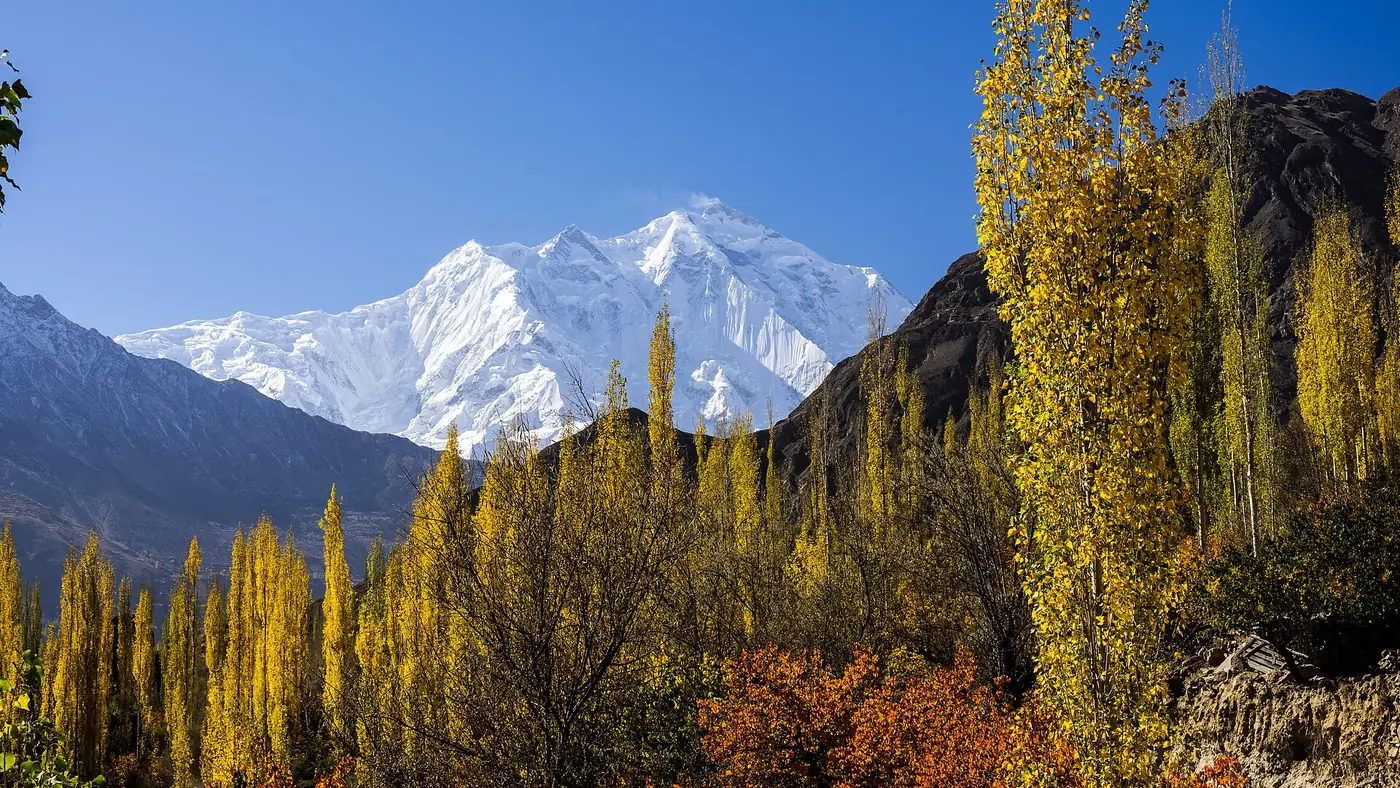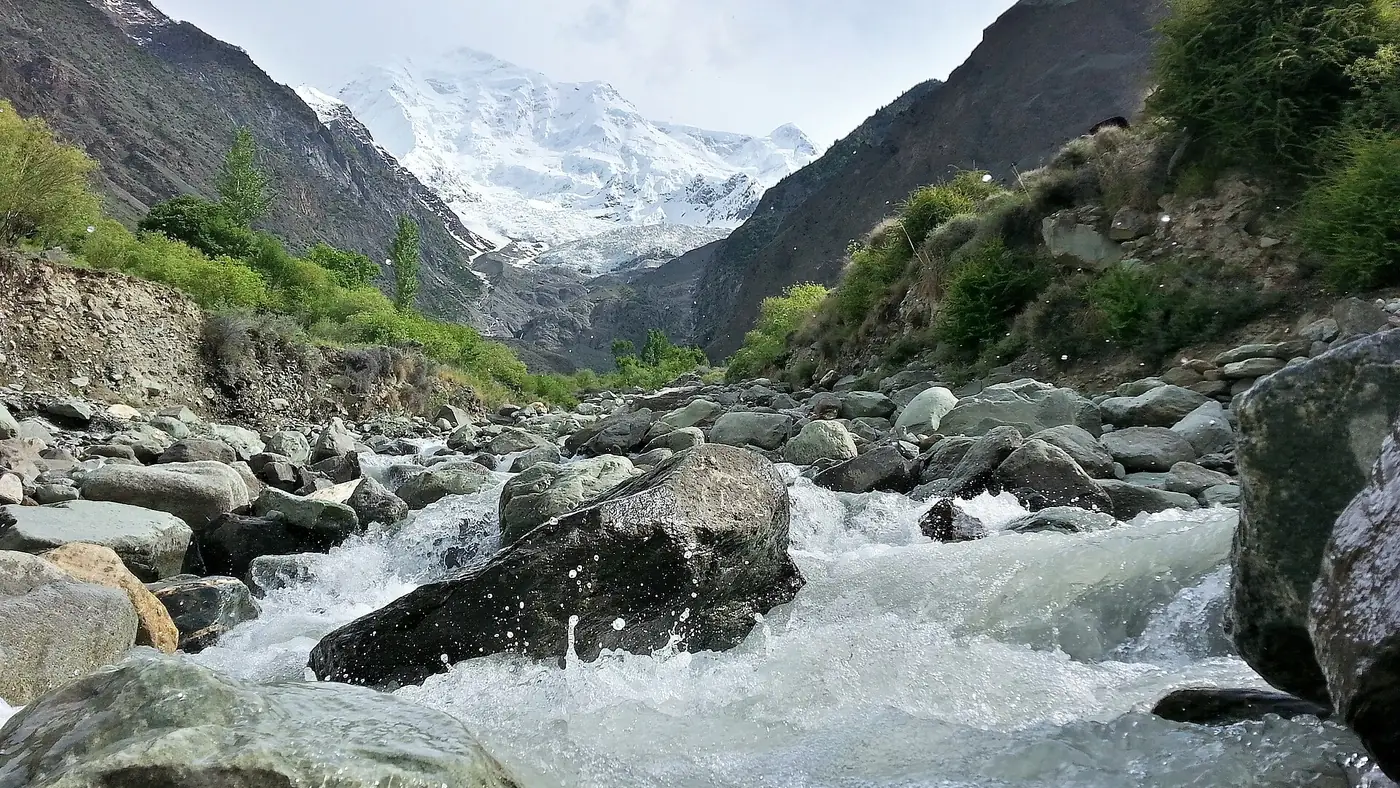
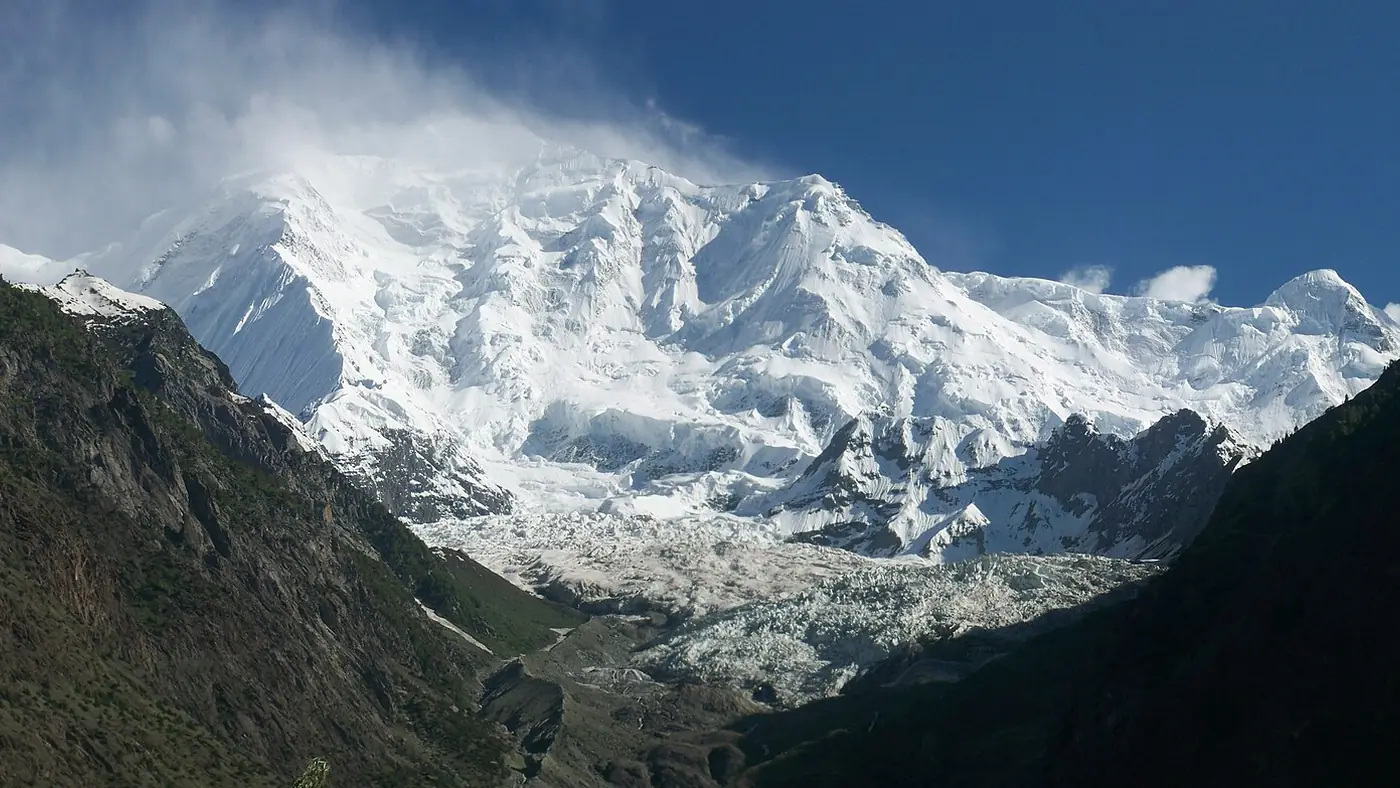
Gilgit-Baltistan's most beautiful villages are not the towns most visitors stay in, but the older settlements just off the main road: stone-and-wood houses, old irrigation channels, and a pace of life the Karakoram Highway skips past. Ganish, Passu, Gulmit and Hushe are the easiest to add to a normal Hunza or Skardu trip; Shimshal, Chipursan and the Rupal valley villages need an extra day or two on a jeep track.
This is a shortlist that leans towards villages you can actually visit well: reached by a real road, with somewhere to stay or eat, and used to guests.
Ganish, Hunza's oldest settlement
Ganish sits just below Karimabad, on the old Silk Road line through central Hunza, and is reckoned to be over a thousand years old. Its centre is a shaded stone tank surrounded by four wooden mosques, some 300 to 400 years old, with carved watchtowers and a walled graveyard around them. The restoration of the mosques won Ganish a UNESCO Asia-Pacific Heritage Award for Cultural Heritage Conservation, first in 2003 and again in 2009.
Because it is so close to Karimabad, Ganish works as a short stop rather than a special trip: a guided walk through the old lanes takes less than an hour. Our Ganish village guide covers the walk and visiting etiquette in more detail.
Passu and Gulmit, under the Passu Cones
Passu and Gulmit sit a few kilometres apart on the Karakoram Highway in upper Hunza, both old Wakhi villages with some of the best mountain views on the entire road. Passu looks straight across the valley at the Passu Cones and its glacier; Gulmit, the old capital of Gojal, has a quieter centre with a small museum, a polo ground and the walk up to Ondra Poygah above the village.
Both are set up for overnight stays, with guesthouses rather than just a lunch stop, so they suit travellers who want a night away from Karimabad's crowds. Our guide to things to do in Passu covers glacier walks, the Hussaini bridge and where to stay in both villages.
Hushe and Machulu, on the road to the Karakoram giants
On the Skardu side, the villages worth the detour sit up the side valleys off Khaplu. Machulu, about an hour from Khaplu on the road to Hushe, is a farming village and the trailhead for Machulu La, a ridge walk from which trekkers report seeing K2 and several other 8,000-metre peaks on a clear day, without going anywhere near the Baltoro glacier.
Hushe itself, a further two and a half to three hours by jeep, is the last village in its valley, a little over 3,000 metres up, facing Masherbrum. It is the starting point for treks to Masherbrum base camp and the Gondogoro La, but it is also a striking place to simply spend a night if trekking isn't the plan. Our Hushe valley guide has the route from Khaplu and where to stay.
Shimshal, the road that took decades to build
Shimshal, at around 3,100 metres in Gojal, upper Hunza, is one of the most isolated villages a visitor can reasonably reach by road. The 56 km jeep track in from the Karakoram Highway near Passu was only finished in 2003 and remains one of the most exposed roads in Pakistan, so this is a trip for a hired jeep and driver, not your own car. Visitors stay in family guesthouses, and the reward is Wakhi village life and the high pastures above it largely untouched by the highway traffic a few hours away. Our Shimshal valley guide covers the road, stays and who the trip suits.
Zood Khun, the last village before Afghanistan
Chipursan valley runs north-west from Sost towards the Afghan border, and Zood Khun, three to four hours up an unpaved jeep road, is its last village before the shrine of Baba Ghundi. It is Wakhi-speaking, remote even by Hunza standards, and normally visited by staying with local families rather than in a hotel. The valley was badly damaged by an earthquake on 19 January 2026, and as of September 2026 many families there were still living in tents, so check current conditions before planning a visit. Our Chipursan valley guide has the detail.
Tato and the villages of Astore
Tato, at around 2,200 metres on the lower slopes below Nanga Parbat, is where the Fairy Meadows jeep track ends and the walk up begins. It is a proper Shina village of several thousand people, not just a car park, and takes its name from the hot springs nearby (tato means "hot" in Shina).
Further east, in the Astore valley, Tarishing is the gateway village to the Rupal valley and the south side of Nanga Parbat, reached by jeep from Astore through the Astor gorge. At around 2,900 metres, it is the last proper settlement before the trail climbs towards the Rupal face, one of the highest mountain walls on earth. It suits trekkers heading further up the valley more than a casual day visit.
How to visit respectfully
These are working villages, not open-air museums, and a few habits make a real difference to how a visit is received:
- Ask before photographing people, especially women, and expect some parts of a village (family courtyards, prayer areas) to be off limits to outsiders.
- Dress modestly, covering shoulders and knees, in every village on this list, regardless of season.
- Keep to marked paths and lanes in historic centres like Ganish, where walls and irrigation channels are old and easily damaged.
- Buy something small where you can, tea, fruit or a meal, rather than only passing through.
- Take your rubbish with you. None of these villages has municipal waste collection to speak of.
Our Gilgit-Baltistan tourist etiquette guide covers greetings, dress and photography in more depth.
Frequently asked questions
Which is the oldest village in Gilgit-Baltistan?
Ganish, below Karimabad in central Hunza, is generally reckoned to be over a thousand years old and is the best-preserved old settlement most visitors can easily reach.
Can these villages be visited without a jeep?
Ganish, Passu and Gulmit sit on or just off the paved Karakoram Highway and are easy in a normal car. Hushe, Machulu, Shimshal, Chipursan and Tarishing all need a jeep for at least part of the way.
Do villages like Shimshal and Chipursan have hotels?
Not in the usual sense. Expect family guesthouses and homestays rather than hotel-style rooms, and book or arrange these locally, through a driver or guesthouse contact in Hunza.
Is it safe to visit remote villages like Chipursan on your own?
The road and the welcome are generally safe, but Chipursan in particular was affected by a January 2026 earthquake, with recovery still under way through 2026. Check current conditions locally before setting out, and don't expect full services.
How many of these villages can I fit into a normal Hunza trip?
Ganish, Passu and Gulmit fit easily into a standard Hunza itinerary of four or five days. Hushe, Machulu, Shimshal and the Astore villages each need a dedicated extra day or two, so pick one rather than trying to fit several in.