The best things to do in Passu are to watch the light change on the Passu Cones, walk to the snout of the Passu glacier, cross the Hussaini suspension bridge, drive up to Borith Lake for the walk to the glacier viewpoint, and eat apricot cake with the Cones in view. One night covers the highlights. Two nights give you time for a longer walk, or for the Khunjerab Pass, which is closer from here than from Karimabad.
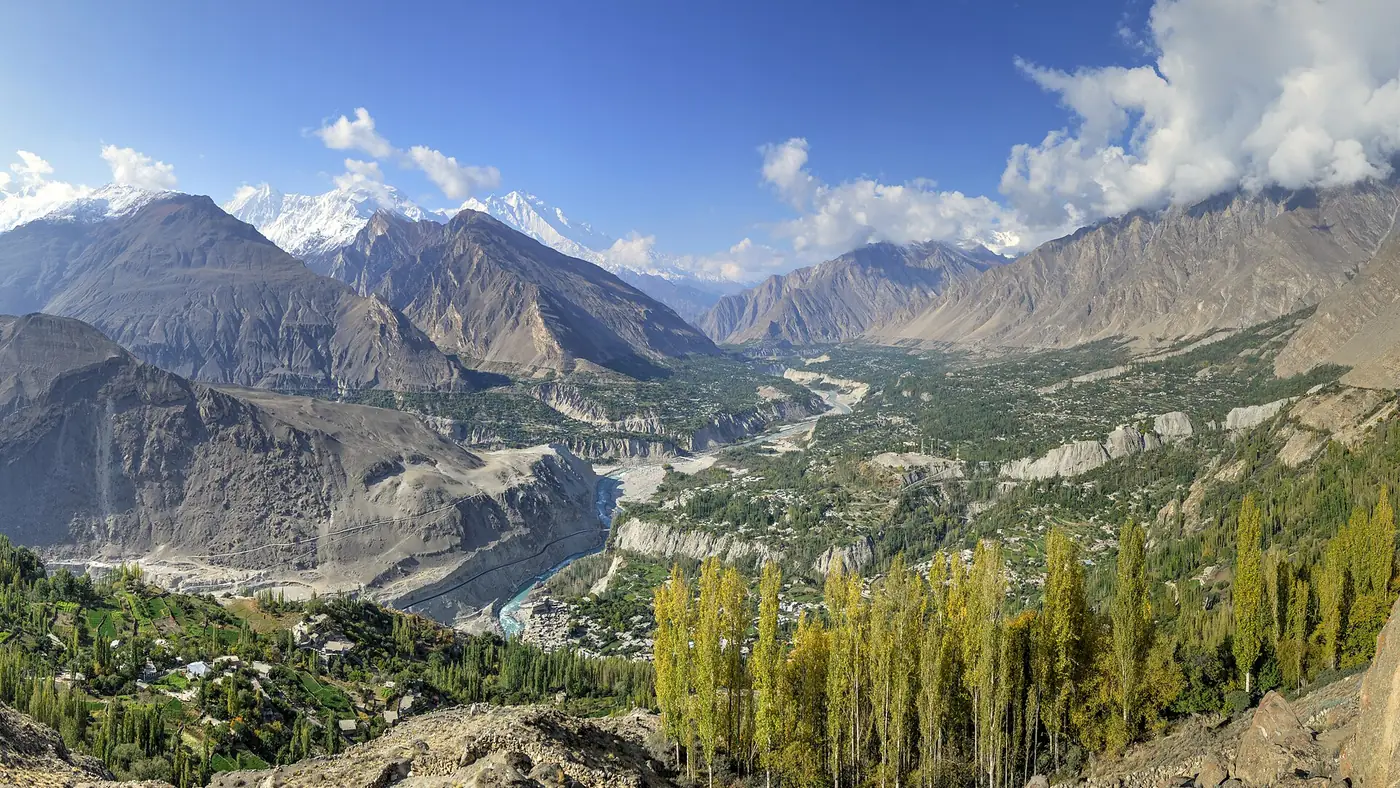
Passu is a small Wakhi village in Gojal, upper Hunza, strung along the Karakoram Highway about 50 km north of Karimabad. It has no bazaar or fort, just a scattering of houses, fields, small hotels and some of the biggest mountain scenery on the highway. This guide covers what to do, how long each thing takes, and how to plan one or two nights.
| At a glance | |
|---|---|
| Where | Gojal, upper Hunza, on the Karakoram Highway |
| From Karimabad | About 50 km, 1 to 1.5 hours |
| The Passu Cones | Tupopdan, 6,106 m |
| Glaciers nearby | Passu, and the Batura, about 56 km long |
| To Sost | About 40 km, under an hour |
| Stays | Small hotels and guesthouses |
| Time needed | One night for the highlights; two for longer walks |
| Best months | April to October |
Why spend a night in Passu?
Most people see Passu from a car window on the way to Khunjerab, stopping for ten minutes at the Cones viewpoint. That is a pity, because the village is at its best when the day visitors have gone: in the early morning, with the Cones lit before the valley, and in the evening, when the wind drops and the glaciers go quiet.
It also suits walkers better than anywhere else in Hunza. Two big glaciers come down almost to the road, and there are good walks from the village itself, from ten minutes to a full day. And if you are going to Khunjerab, Passu is about an hour closer than Karimabad.
The Passu Cones
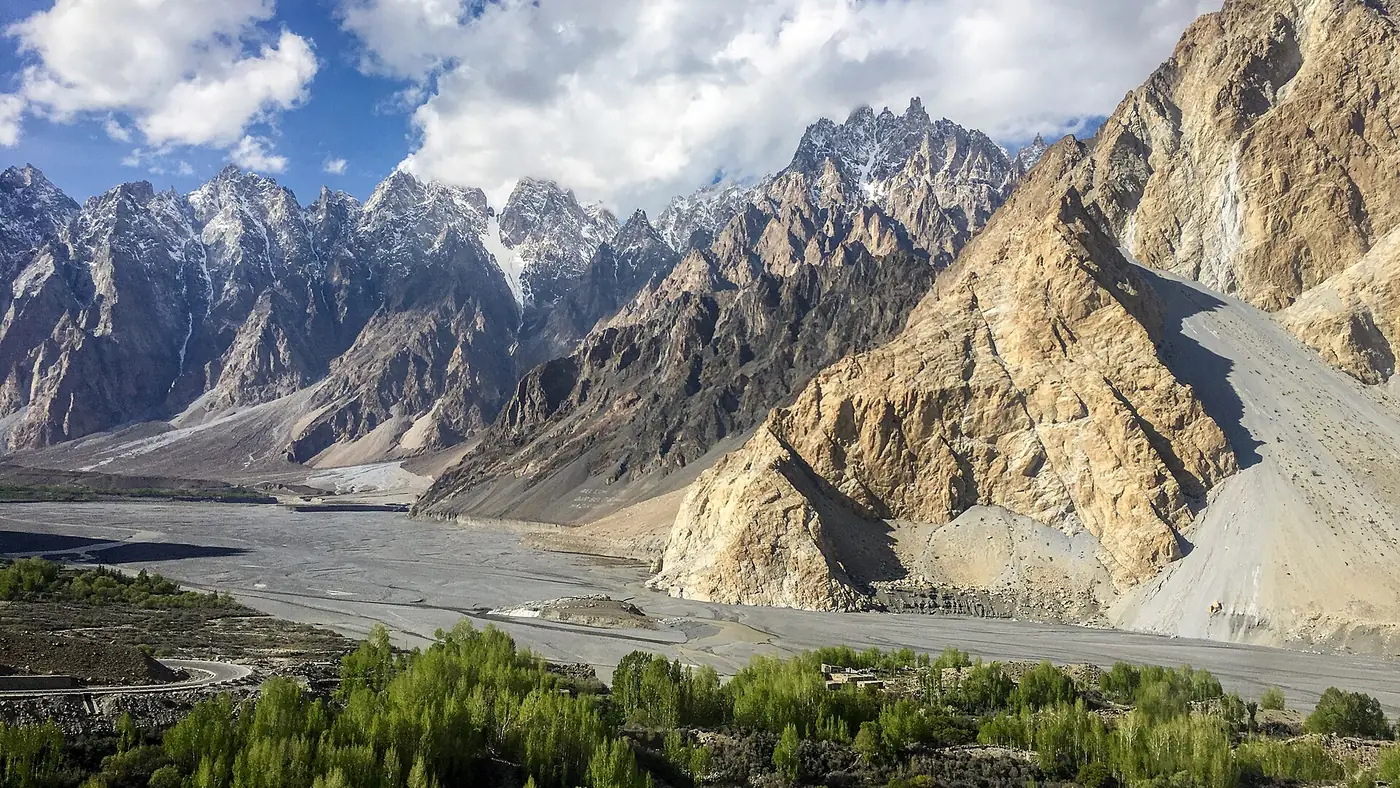
The saw-toothed ridge above the village is Tupopdan, 6,106 metres high, which everyone calls the Passu Cones or the Passu Cathedral. It is the most photographed mountain in upper Hunza.
The classic view is from the highway just south of the village, where the road straightens beside the river and the whole ridge lines up above it. Pull off properly, well clear of the traffic; this is the main road to China, and trucks come through fast.
The light matters more than the spot. The Cones look their best early and late in the day, and at midday they can look flat. If you are passing through, stop on the way back rather than the way up. If you are staying, get up for the first light.
Walk to the Passu glacier
The Passu glacier comes down from the peaks west of the village, and the easy walk to its snout is the first thing to do on arrival.
The path starts on the highway at the southern end of the village and follows a track across the flat bed of an old glacial lake, beside the meltwater stream. It is about 2 km, flat or gently rising, and takes 30 to 45 minutes each way. You end at the grey, dirt-streaked front of the ice, with the white upper glacier climbing away behind it.
- Stay off the ice unless you are with someone who knows it. The snout is unstable, with loose rock and hidden meltwater channels.
- Go in the morning in summer. The stream rises through the afternoon.
- For the view from above, the better walk starts at Borith Lake (see below).
Cross the Hussaini suspension bridge
A few kilometres south of Passu, the Hussaini suspension bridge crosses the Hunza river to the hamlet of Zarabad. It is about 194 metres long, a line of wooden planks slung from steel cables, with gaps between the planks and the river running fast below. The Passu Cones rise straight behind it, which is why it appears in so many Hunza photographs.
It sways, and the gaps feel wider than they are, but it is sturdier than it looks, and it has been rebuilt and re-planked more than once. A small community toll is charged, and visitors are given a life jacket to cross. It is not for anyone nervous of heights over fast water, and small children should stay on the bank.
Further upstream, the older Passu suspension bridge has been poorly maintained in recent years, with bent and missing planks. A walk linking the two bridges through Zarabad exists, but only attempt it if people in the village tell you the Passu bridge is currently sound. Otherwise, admire it from the bank.
Borith Lake and the glacier viewpoint
Borith Lake sits on a shelf above Hussaini, about 2 km up a side road from the highway and 10 to 15 minutes from Passu by car. It is a small, brackish lake between the Ghulkin and Passu glaciers, with migrating ducks in spring and autumn.
The main reason to go is the walk from the lake up onto the ridge above the Passu glacier. From the viewpoint you look straight down on to the broken white ice, a view you cannot get from the village. Allow one and a half to two hours each way, so about half a day. Our Borith Lake guide covers the road, the birds and the walk in detail.
The Batura glacier and the Yunz valley
North of Passu the Batura glacier, about 56 km long and one of the longest glaciers outside the polar regions, reaches down towards the highway. You get a sense of its scale from the road, where its lower end spreads out as a wide field of grey, rock-strewn ice.
For keen walkers, the Yunz valley walk climbs from Passu into the high ground between the Passu and Batura glaciers and loops back via the Batura side. It is about 19 km and takes a long day, with a steep climb and some route-finding. Take a local guide and start early.
The multi-day treks to Patundas and up the Batura glacier start here too. They need a guide, camping kit and time to acclimatise, and they are trips in their own right.
Where to eat in Passu
Passu has a few cafés and hotel restaurants rather than a choice of places to eat, but two have become destinations in themselves:
- Glacier Breeze, on the slope beside the highway with a view of the Passu glacier and the Cones, is known across Hunza for its apricot cake. Stop for cake and tea even if you are only passing.
- Yak Grill, near the start of the glacier walk, serves yak burgers and steaks alongside Pakistani food.
Most hotels also cook dinner for their guests, and many will make local Wakhi dishes if you ask in the morning.
A one-night and a two-night plan
One night
- Arrive by early afternoon from Karimabad, stopping at Attabad Lake and Gulmit on the way.
- Walk to the Passu glacier snout in the afternoon, then apricot cake at Glacier Breeze.
- The Cones at sunset from the viewpoint south of the village.
- Next morning: the Hussaini bridge and Borith Lake, then on to Khunjerab or back to Karimabad.
Two nights
- Day one as above.
- Day two: Borith Lake and the Passu glacier viewpoint in the morning, the Hussaini bridge in the afternoon, and an early night.
- Day three: the drive from Hunza to Khunjerab Pass, about two and a half hours from Passu, returning to Passu or Gulmit, or on down to Karimabad.
If the second day is a walking day, the Yunz valley loop can replace Borith for fit walkers.
Is Passu for you?
Passu suits walkers, photographers, couples who want quiet, and anyone going to Khunjerab. The hotels are simple to mid-range, the evenings are very quiet, and there is little to do after dark except watch the stars.
It suits families with small children or older parents less well. There are no easy attractions beyond the viewpoints, the wind off the glaciers makes evenings cold even in summer, and the bridges and glacier walks need care. For them, a day trip from Karimabad or a night in Gulmit, which has a little more life, may work better. Our guide to things to do in Gulmit covers the neighbouring village.
For a wider view of the valley, see our Gilgit and Hunza page. Our nine-day Gilgit, Hunza and Khunjerab tour crosses the Hussaini bridge, stops at the Cones and spends a night in Gulmit or Passu before the pass.
Frequently asked questions
How far is Passu from Karimabad?
About 50 km, or one to one and a half hours by car, through the Attabad Lake tunnels and past Gulmit. It makes an easy day trip, but it is better with a night.
What is Passu famous for?
The Passu Cones, the jagged peak of Tupopdan above the village, along with the Passu and Batura glaciers, the Hussaini suspension bridge nearby and the apricot cake at Glacier Breeze.
Can you walk to the Passu glacier?
Yes. An easy 2 km path from the southern end of the village reaches the snout in 30 to 45 minutes. For a view down on to the ice, walk up from Borith Lake to the viewpoint, which takes about half a day there and back.
Is the Hussaini bridge safe?
It sways and has wide gaps between the planks, but it is maintained by the community, and visitors cross with a life jacket. It is not suitable for small children or anyone who is afraid of heights.
How many days do you need in Passu?
One night covers the Cones, the glacier walk, the Hussaini bridge and Borith Lake. Two nights let you add the Passu glacier viewpoint walk, the Yunz valley or a day to Khunjerab.