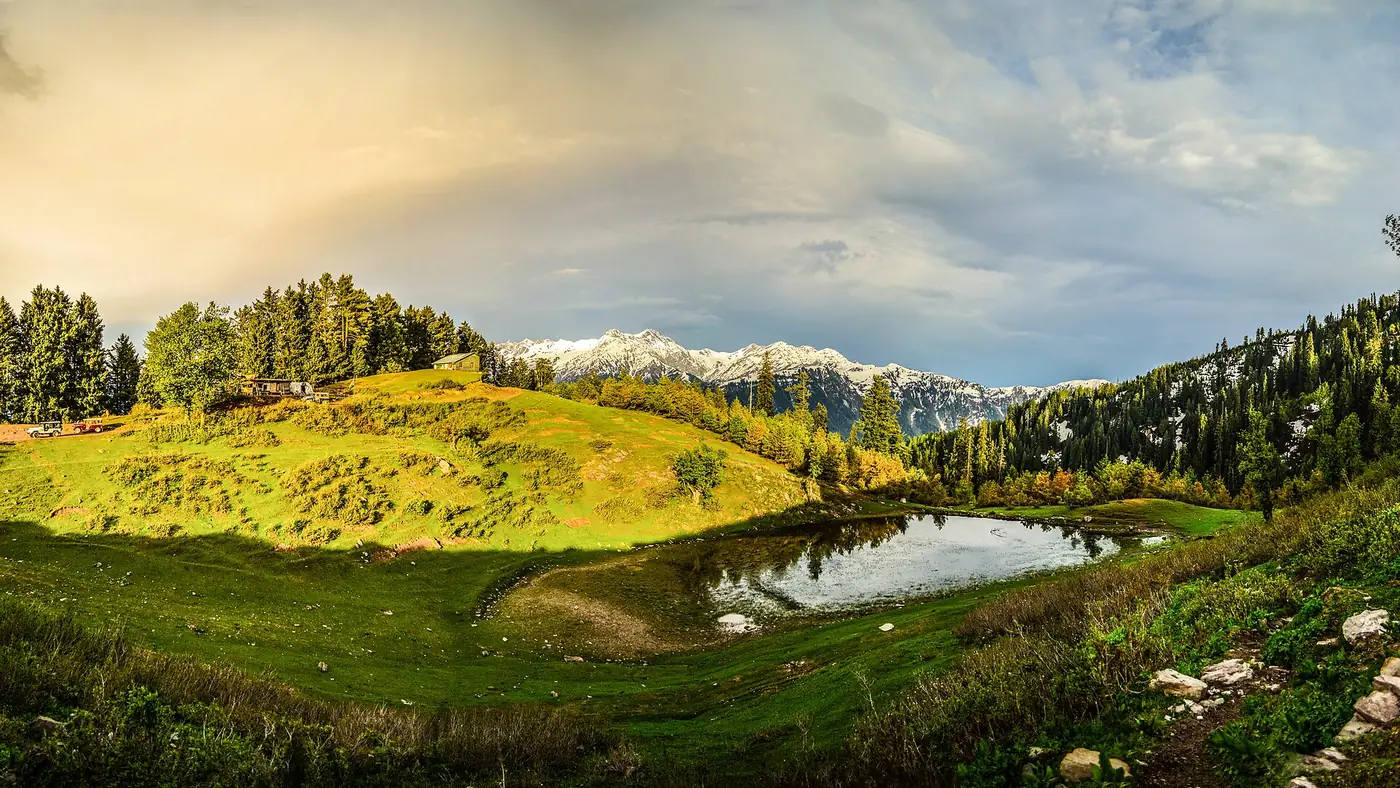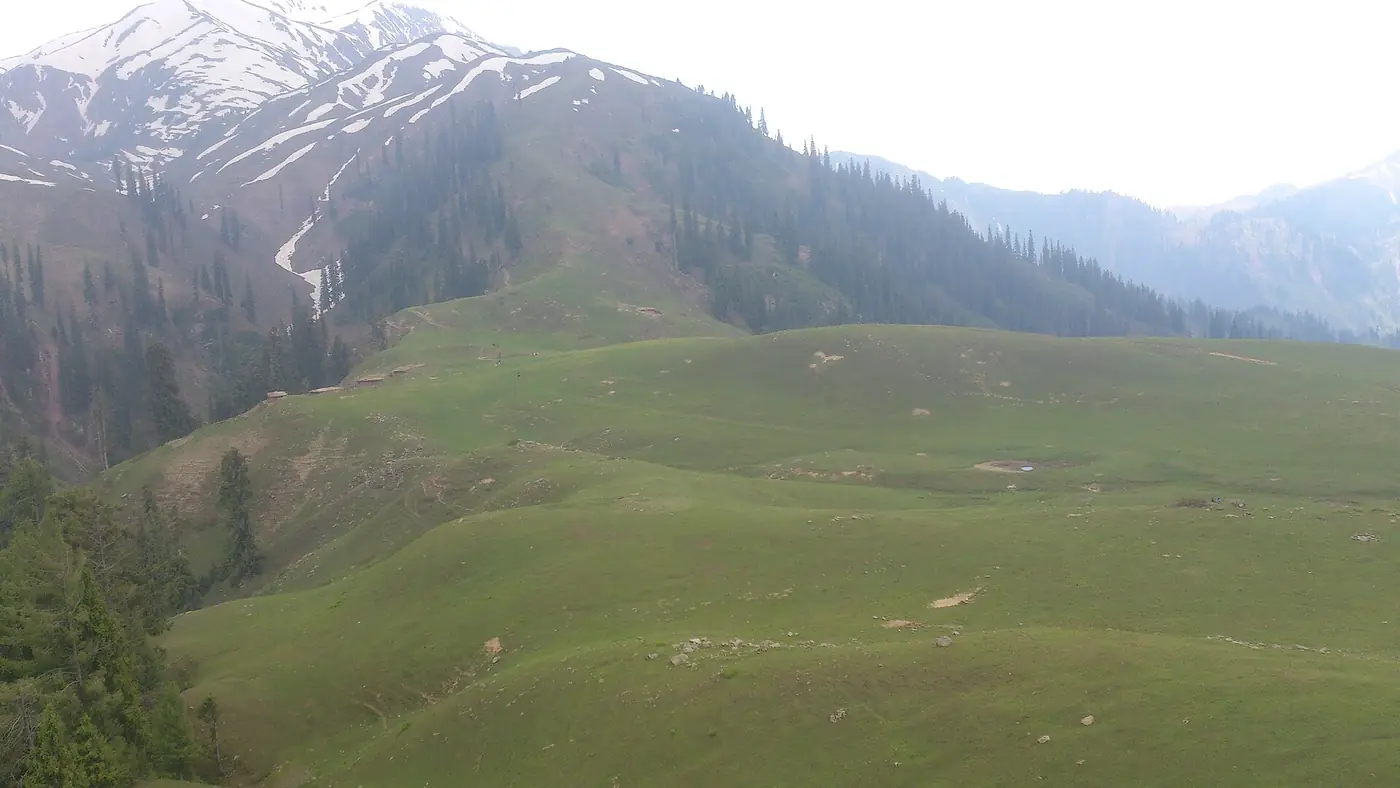
Lalazar is a high meadow and pine plateau at 3,123 metres, on a shelf above Batakundi, about 15 km up the valley from Naran. You reach it by local jeep up a steep 4.2 km track that leaves the main road just before Batakundi, about an hour from Naran bazaar in all. The return fare notified by the Balakot administration in July 2026 was PKR 4,500 per jeep, from Naran or from Batakundi. It is quieter than Saif-ul-Malook, and on a clear morning the view south takes in Malika Parbat, the highest peak in the valley.
This guide covers the jeep ride, what you find at the top, when to go, and whether to base yourself in Batakundi or Naran.
| At a glance | |
|---|---|
| Altitude | 3,123 m |
| Where | Above Batakundi, about 15 km beyond Naran |
| Access | Local jeep only; 4.2 km unpaved track from Batakundi |
| Time | About 30 minutes to Batakundi, then 30 to 45 minutes up the track |
| Jeep fare | PKR 4,500 return per jeep from Naran or Batakundi (notified July 2026) |
| Season | Roughly June to October, snow permitting |
| Best for | A half-day out, a picnic, easy walks and mountain views |
Where is Lalazar?
Lalazar sits in the upper Kaghan Valley, on the south side of the Kunhar above Batakundi. From Naran, the N-15 runs about 15 km up the valley to Batakundi, the last proper village before the high country, at 2,624 metres. Just before the village, coming from Naran, the Lalazar track turns off the main road and climbs about 430 metres in a series of switchbacks to the plateau.
It is close to Naran but feels a long way from it. You come out of the forest onto an open, stepped plateau of grass and scattered pines, with the river far below and snow peaks across the valley.
The jeep ride from Naran or Batakundi
The track is 4.2 km long, entirely unpaved and steep, with an average gradient of about 10 per cent and sections steeper than that. Some of the bends are tight enough that jeeps have to reverse to get round them. It is not a road for your own car, whatever its clearance, and not one to attempt as a driver new to mountain tracks.
You have two options:
- From Naran. Hire a jeep at the stand in Naran. The ride takes about an hour each way: half an hour on the paved road to Batakundi, then the climb. The notified fare in 2026 was PKR 4,500 return per jeep, shared between everyone in it.
- From Batakundi. If you are staying in Batakundi, or driving back from Babusar and Lulusar in your own car, take a jeep from there. The notified fare in 2026 was the same PKR 4,500 return, so this saves time rather than money.
Before you get in, agree how long the driver will wait at the top. An hour or two is normal for a half-day trip. Fares are revised each season, so check the current rate. Since 2026 jeeps have not been allowed into Naran's main bazaar, so ask your hotel where to meet the jeep.
Walking up instead
Fit walkers can climb the jeep track on foot from Batakundi. It is only 4.2 km, but the 430-metre climb starts at over 2,600 metres, so allow a good hour and a half or more going up, and more if you stop for the views. Jeep traffic and dust are the drawbacks on busy days. Walking up and taking a jeep down is a sensible compromise.
What is at the top?
Lalazar is a plateau rather than a single viewpoint. The jeeps stop near its edge, and from there you can walk the length of it in about half an hour on gentle ground, with short informal paths out to the rim for the views.
What you find:
- Open meadow and pine forest, with room to spread out even on a busy day.
- Wildflowers in early summer, from late June into July, when the grass is at its greenest.
- Herders and their animals on the pastures in midsummer. Keep your distance from the dogs and don't walk through the flocks.
- A tea stall or two near where the jeeps park in season, but don't rely on them for a proper meal. Take water and food with you.
There are no proper facilities beyond that, so treat it as a picnic and a walk rather than a place to spend the day.
Malika Parbat and the views
The view is the reason to go. To the south, across the side valleys, rise the snow peaks around Saif-ul-Malook, including Malika Parbat, at about 5,290 metres the highest mountain in the Kaghan Valley. Below you the Kunhar runs along the valley floor, and up the valley the view opens towards Lulusar and Babusar.
Clouds often build over the peaks by midday in summer. For the clearest view of Malika Parbat, be on the plateau in the morning. The evening light is also good, but leave enough time to be down the track before dark.
For walkers, a footpath crosses the ridge between Lalazar and Saif-ul-Malook, five to seven hours one way over rough ground. It is a serious day with a guide, not an add-on to a jeep trip; our guide to treks in the Kaghan Valley covers it with the other routes.
When to go
The jeep track opens once the snow has gone, usually by June, and stays open into October until the first heavy snow. The Naran road itself opens earlier in spring, so a May visit to Naran does not guarantee Lalazar.
- June and early July: fresh green meadows, snow still on the peaks, and the flowers starting.
- Mid-July and August: the busiest time, with monsoon cloud and the risk of rain making the track slippery. Go early in the day.
- September and early October: clearer air, fewer jeeps, and cold mornings.
Our guide to the best time to visit Naran covers the whole valley month by month.
Where to stay: Batakundi or Naran
There is no hotel on the plateau you can book with confidence. Most visitors stay in one of two places:
- Naran, for the most choice of hotels and restaurants, and the jeep stand for Saif-ul-Malook as well. Our guide to hotels in Naran covers the options.
- Batakundi, at the foot of the track, which has its own hotels and restaurants. It is quieter than Naran and closer to Lulusar and Babusar, which makes it a good base if the upper valley is your focus.
Some visitors camp on the plateau with their own gear. If you want to, go with a local who can tell you where it is allowed and safe, keep well away from streams after rain, and carry everything back down.
Is Lalazar worth it?
Yes, for most people with a spare half-day in Naran. It gives you a high meadow, forest and a view of Malika Parbat with none of the crowds at Saif-ul-Malook and very little effort once the jeep has done the climb. It suits families, couples and anyone who wants a picnic in the mountains.
It is less rewarding in low cloud, when the view that makes it special disappears, and the switchbacks are hard on anyone prone to motion sickness. If you have only one jeep trip in Naran, choose Saif-ul-Malook first; if you have two, add Lalazar. For all the sights above Naran in one list, see places to visit in Naran, and if you would like us to fit Lalazar into a longer trip, send us your plans.
Frequently asked questions
How far is Lalazar from Naran?
About 15 km by road to Batakundi, then 4.2 km up a steep jeep track. The whole trip takes about an hour each way by jeep.
Can a car go to Lalazar?
No. The track from Batakundi is steep, narrow and unpaved, and visitors go up in local jeeps or on foot. You can drive your own car as far as Batakundi.
What is the jeep fare from Naran to Lalazar?
The return fare notified by the Balakot administration in July 2026 was PKR 4,500 per jeep, the same from Naran or Batakundi. Fares change each season, so confirm before you get in.
How high is Lalazar?
Lalazar is at 3,123 metres, about 700 metres higher than Naran. Walk slowly at first and watch children for headaches.
Can you stay overnight at Lalazar?
Don't plan on a hotel at the top. Stay in Batakundi or Naran; camping is possible with your own gear if a local confirms where it is allowed.
Is Lalazar open in winter?
No. Snow closes the track in late autumn, and the upper Kaghan Valley, Naran included, is shut to visitors in winter. Plan a visit between June and October.