The lakes in Kaghan Valley fall into three groups by how you reach them. Lulusar is beside the road, about 50 km above Naran, and any car gets there. Saif-ul-Malook, the small lakes at Siri Paye and Sambaksar need a local jeep. Dharamsar, Pyala, Dudipatsar and Ansoo need a walk, from half an hour to two days. All of them are at their best from late June to early September, when the snow has gone and the roads are open.
This guide compares them side by side: how high each one is, where you start, what vehicle or how much walking it takes, and which suit families, drivers and trekkers.
| Lake | Altitude | Start from | How you get there | Time from the start |
|---|---|---|---|---|
| Lulusar | 3,410 m | Naran | Any car, N-15 | 1.5 to 2 hours |
| Saif-ul-Malook | 3,224 m | Naran | Local jeep, 9 km | 45 to 60 minutes |
| Siri and Paye | About 2,590 m and 2,895 m | Kiwai | Jeep via Shogran | 1 to 1.5 hours |
| Sambaksar | Well above 3,000 m | Gittidas side of Babusar Top | 4x4 track | About an hour or more |
| Dharamsar | Sources vary | Sambaksar | On foot | 30 to 60 minutes |
| Pyala | Not reliably recorded | Jalkhad | On foot | Ask locally |
| Dudipatsar | About 3,800 m | Besal | On foot, about 18 km | Usually two days |
| Ansoo | Above 4,000 m | Saif-ul-Malook | Hard hike | 7 to 9 hours return |
Lakes you can drive to
Lulusar
Lulusar is the one high lake in the valley you can reach without a jeep or a walk. It lies right beside the N-15 at 3,410 metres, about 50 km above Naran on the way to Babusar Top, an hour and a half to two hours' drive. It is long and narrow, set between bare slopes, and it is the main source of the Kunhar River that you have been following since Balakot.
The road is paved, and an ordinary car in good order manages it once the upper valley opens, usually by late May or June. Stop at the pull-offs rather than on the bends, and bring a warm layer: at this height the wind off the water is cold even in July. Lulusar suits anyone who cannot or should not walk far at altitude, including small children and older parents.
Lakes you reach by jeep
Saif-ul-Malook
The valley's famous lake, at 3,224 metres below Malika Parbat, about 9 km from Naran up a rough track. Private cars are not the way up: local jeeps take 45 minutes to an hour, and the return fare notified by the Balakot administration in 2026 was PKR 5,500 per jeep. Fit walkers can go up on foot instead.
It is also the lake most affected by the weather. After a cloudburst in late July 2026 left some 200 jeeps stranded on the track, the district closed the road for a week. When it reopened on 7 August, visits were limited to 9:30 am to 4 pm, with police stopping anyone leaving early or staying late. Check the current hours in Naran before you plan around a sunrise or a late afternoon. Our Saif-ul-Malook guide has more on the jeep, the walk and the crowds.
Siri and Paye
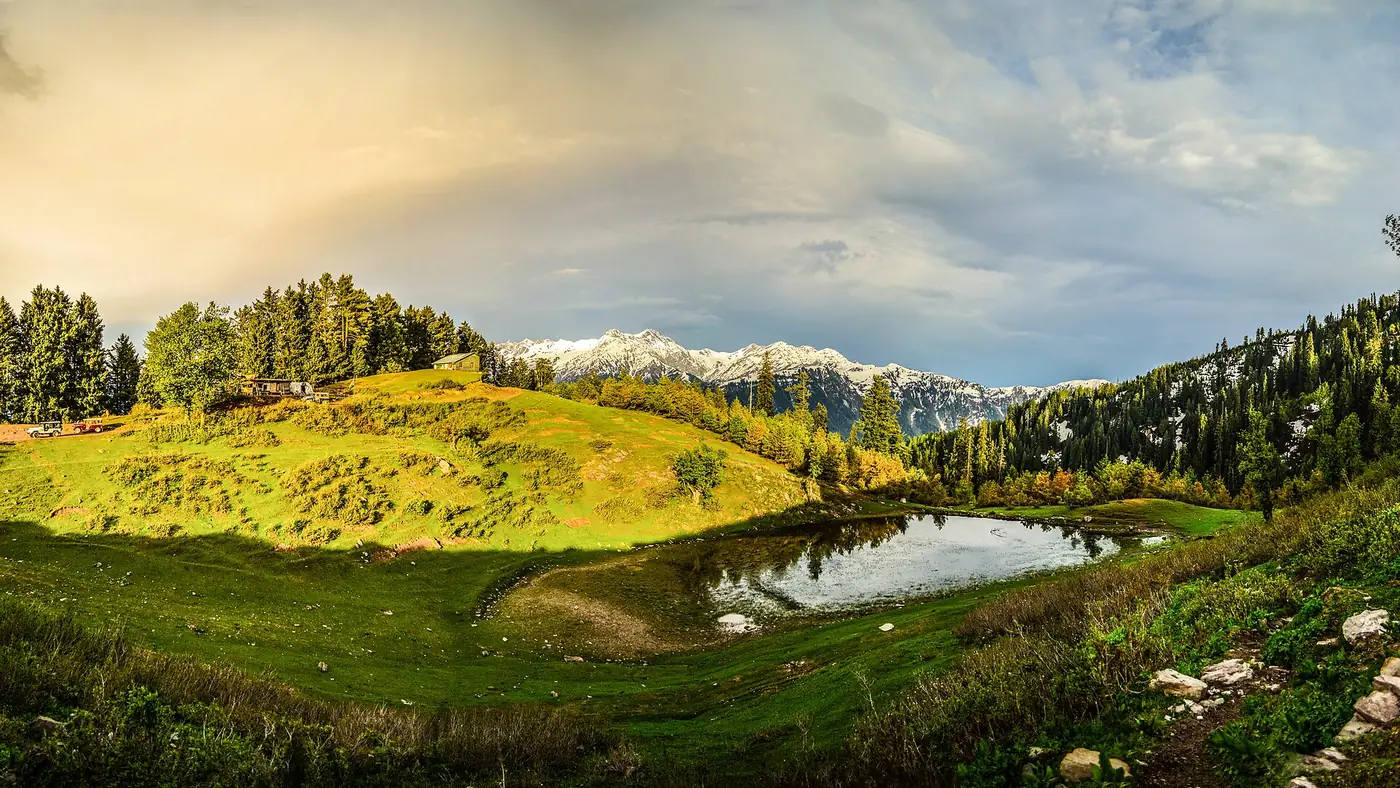
The two small lakes on the Siri Paye meadows above Shogran, at roughly 2,590 and 2,895 metres, are the lowest and gentlest lakes in the valley. A jeep climbs from Kiwai through Shogran to the meadows; the notified return fare from Kiwai to Siri Paye in 2026 was PKR 8,000 per jeep. They are ponds rather than glacial lakes, and can still be frozen early in the season, but with Makra Peak above them they make the classic Siri Paye view. Our Shogran guide covers the jeep and the meadows.
Sambaksar
Sambaksar and its neighbour Dharamsar sit high in the hills on the Gittidas side of Babusar Top, close to the point where Khyber Pakhtunkhwa, Azad Kashmir and Gilgit-Baltistan meet. A rough 4x4 track leaves the Babusar road and climbs towards Ganai Gali; accounts put the drive at about an hour, longer if the track is poor. This is not a route for your own car. Arrange a local jeep and driver in Naran or Batakundi the day before, and go only in settled weather, with the Babusar road's daylight rule in mind.
Lakes you have to walk to
Dharamsar
Dharamsar is the easiest of the walking lakes, once you have reached Sambaksar. The path between the two takes 30 minutes to an hour on foot. Published heights for Dharamsar range from about 3,700 to 4,100 metres, which tells you how little mapped this corner is. At that height even a short walk is breathless work, so go slowly.
Pyala
Pyala, meaning "bowl", is a small round lake in the hills near Jalkhad, about 40 km above Naran. It is one of the least visited lakes in the valley, and accounts of the walk to it differ widely, from a couple of hours to half a day. Treat that as a reason to go with someone from Jalkhad who knows the path, rather than setting off alone.
Dudipatsar
Dudipatsar, at about 3,800 metres in the Lulusar-Dudipatsar National Park, is the walking lake most trekkers come for. The trail starts at Besal, just below Lulusar, where there is a roadside hotel and a police check post, and runs about 18 km up the side valley, with stream crossings, some of them on log bridges. Most people take two days, camping at Mulla ki Basti near the lake, and mules and local guides can be hired at Besal.
Ansoo
Ansoo, the "teardrop" lake, lies above 4,000 metres near Malika Parbat, and came to wider notice after Pakistan Air Force pilots spotted it from the air in 1993. It is the hardest lake in the valley to reach: a seven-to-nine-hour round trip from Saif-ul-Malook, climbing past the Malika Parbat base camp and over snow and glacier ice, usually passable only from about mid-July to mid-August. It needs a local guide, and the time limits at Saif-ul-Malook in 2026 made the usual dawn start difficult. Our guide to treks in the Kaghan Valley covers Dudipatsar, Ansoo and the other walks in detail.
When are the lakes open?
The lakes open from the bottom up. Siri and Paye can usually be reached from about May, snow permitting. The Saif-ul-Malook track opens later than the Naran road, typically late May or June, and snow can linger around the lake into June. Lulusar depends on the upper N-15, and the high walking lakes, Dudipatsar, Dharamsar and Ansoo, are realistic only from late June or July into early September. After that, the first snow can close the high ground at any time.
July and August are the most reliable months for access and the riskiest for weather. Monsoon rain brings landslides, cloudbursts and flash floods, and the district closes tracks when warnings are issued. In the 2026 monsoon it also banned visitors from the banks of the Kunhar and other streams under Section 144. Keep a spare day, start early, and turn back if cloud comes down.
Which lake suits you?
- Families with small children or older parents: Lulusar from the car, and Saif-ul-Malook by jeep on a weekday morning. Siri Paye if you are staying in Shogran.
- Drivers heading over Babusar: Lulusar on the way, with a stop at the viewpoints rather than a detour.
- Fit walkers with one day: Saif-ul-Malook on foot from Naran, or the jeep to Sambaksar and the walk to Dharamsar.
- Trekkers with two days and a tent: Dudipatsar from Besal.
- Experienced trekkers with a guide: Ansoo, in the short midsummer window.
If you have only one full day above Naran, Saif-ul-Malook in the morning and Lulusar in the afternoon is the easiest pair to fit together. For Dudipatsar or Ansoo, plan the rest of the trip around the walk, not the other way round. Our trip planning page is the place to start if you want help with the order.
Looking after the lakes
Saif-ul-Malook, Lulusar and Dudipatsar sit inside national parks, and the upper lakes are fragile: short summers, thin soil, and growing numbers of visitors along the paths. Take your rubbish back down, don't wash in the lakes or the streams that feed them, and keep off the lake edges where the grass is torn up. For how these lakes compare with the rest of the country, see our guide to the best lakes in Pakistan.
Frequently asked questions
Which lake in Kaghan Valley is the easiest to reach?
Lulusar. It sits beside the paved N-15 about 50 km above Naran, so any car in good order can reach it in summer, with no jeep or walk.
How many lakes are there in the Kaghan Valley?
Many more than most people visit. The ones visitors actually reach are Saif-ul-Malook, Lulusar, Siri and Paye, Sambaksar, Dharamsar, Pyala, Dudipatsar and Ansoo, and there are smaller unnamed lakes in the high side valleys.
Can a normal car go to Saif-ul-Malook?
No. The last 9 km from Naran is a rough jeep track, and visitors go up in local jeeps or on foot.
Which is the most beautiful lake in Kaghan?
Among trekkers, Dudipatsar, for its colour and the ring of snow peaks around it. Of the lakes you can reach without a long walk, Saif-ul-Malook is the one people come for.
When do the Kaghan lakes melt?
The road lakes, Saif-ul-Malook and Lulusar, are usually reachable and largely clear of snow from late June. The high lakes, especially Ansoo, can stay frozen or snowbound into July, and Ansoo is only reliably accessible from about mid-July to mid-August.
Do I need a guide for the Kaghan lakes?
Not for Lulusar, Saif-ul-Malook or Siri Paye. For Dudipatsar, Pyala and especially Ansoo, go with a local guide who knows the route and the weather.