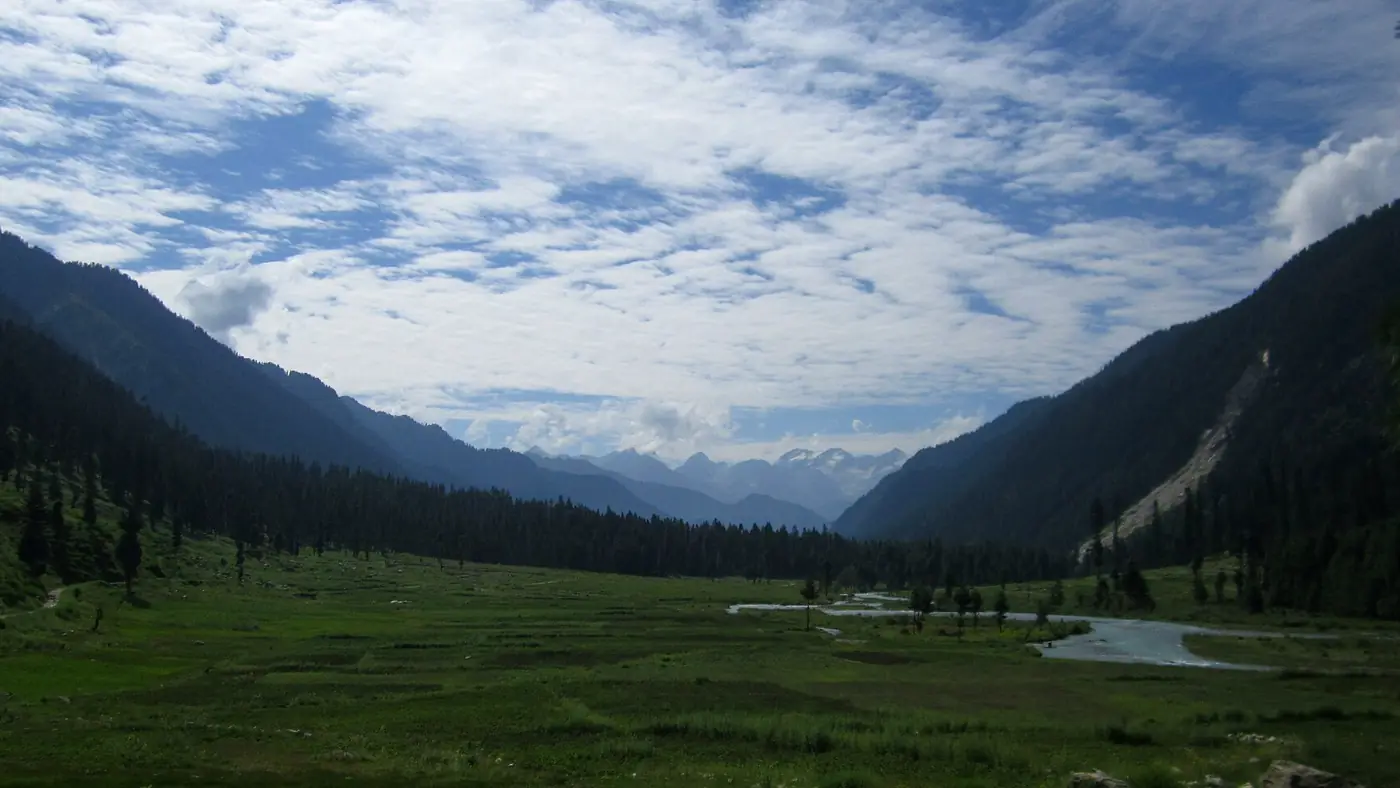
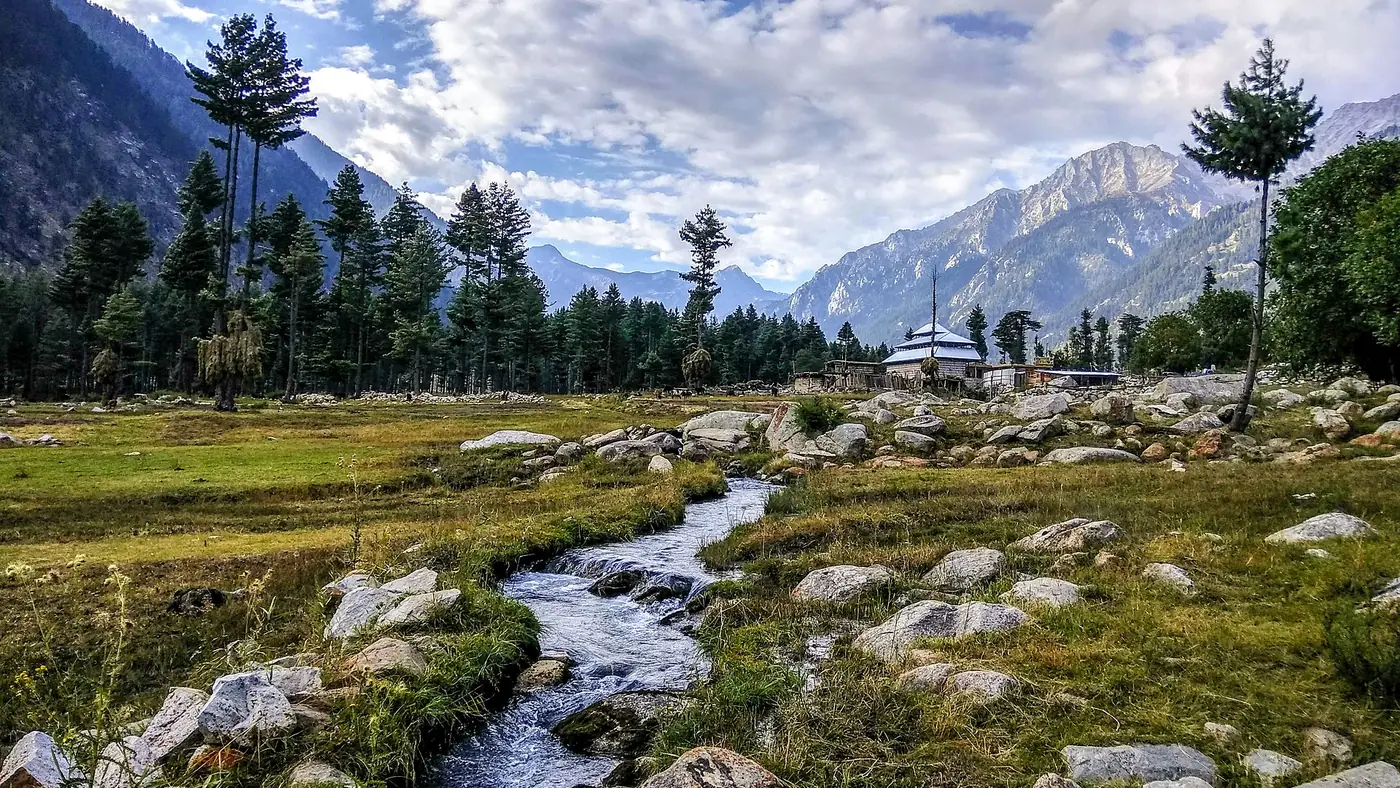
Kumrat is warm by day and cool by night from May to September, wet in July and August when the monsoon reaches Upper Dir, and closed by snow from around November to April. There is no official weather station inside the valley itself, so the figures below are modelled estimates for Thal, the last village, rounded to give a working idea of what to expect. The forest camps above Thal, at around 2,400 metres, run several degrees cooler than Thal at every time of year.
This is a month-by-month reference. For when to actually go, see our guide to the best time to visit Kumrat; our guide to the seasons covers the rest of the north.
| Month | Typical day / night (Thal) | Rain | Valley status |
|---|---|---|---|
| January | 12°C / 1°C | Low | Closed above Thal, snowbound |
| February | 13°C / 2°C | Highest of the year | Closed above Thal, snowbound |
| March | 18°C / 7°C | High | Closed above Thal, snowbound |
| April | 24°C / 12°C | Moderate | Track often still closed |
| May | 31°C / 17°C | Moderate | Opening, muddy early on |
| June | 34°C / 21°C | Low | Fully open, driest of summer |
| July | 32°C / 23°C | Highest of summer | Open, monsoon risk |
| August | 29°C / 19°C | High | Open, monsoon risk |
| September | 27°C / 15°C | Moderate | Open, quieter and drier |
| October | 23°C / 11°C | Low | Open early, closing by snow later |
| November | 18°C / 5°C | Low | Usually closed above Thal |
| December | 14°C / 2°C | Low | Closed above Thal, snowbound |
Winter: December to February
This is the cold season proper. Thal itself sits low enough to stay lived in, with day temperatures that can feel mild in the sun, but nights fall close to freezing and heavy snow settles above the village. The jeep track into the forest is under snow and effectively closed, and the road up to Thal itself can be blocked for days after a heavy fall. This is not a season to plan a Kumrat trip around; see our guide to Kumrat in winter for what is realistically possible.
Spring: March to May
March and April bring the heaviest rain of the year lower down the valley, while the forest itself is still thawing out and often still shut to jeeps. May is the turning point: the snow retreats from the track, streams run high with meltwater, and by the second half of the month most camps are opening for the season. Days are already warm; nights are still cold enough for a proper jacket.
Summer: June to August
June is the driest and one of the most reliable months, with long, warm days and the track fully open. July and August are the warmest months and also the wettest, as the monsoon reaches Upper Dir. Storms can arrive quickly, swell the side streams that cross the jeep track, and cause landslides on the valley road below Thal. Most days are still fine for a trip, but keep a spare day in the plan through these two months.
Autumn: September to November
September is usually the best combination of warm days, cool nights and low rainfall, with the crowds of the school holidays gone. The first half of October can be clear and beautiful, though nights approach freezing in the forest by mid-month. From late October a single snowfall can close the upper valley for the year, and by November the season is normally over.
What the numbers mean for packing
Whatever the season, take a proper warm layer for the evening: even a hot June afternoon in Thal turns cold once the sun drops behind the ridges, and the forest camps are colder still. In July and August add a rain jacket and a dry bag for electronics, because storms build fast. From November to April, don't plan a trip into the forest at all without checking locally that the track is open.
A few things the table doesn't show. Wind picks up most afternoons in the forest, which makes the evenings feel colder than the temperature alone suggests. Humidity rises sharply with the monsoon, so July and August nights in a tent feel damper than the numbers imply, even when the rain itself has stopped. And because there is no permanent gauge in the valley, local hotels and jeep drivers in Thal are the best source for what is actually happening on a given day, rather than any forecast written for the district as a whole.
Frequently asked questions
What is the coldest month in Kumrat?
January and February, when nights in Thal fall close to freezing and the forest above it holds deep snow. The valley is effectively closed to visitors in both months.
What is the wettest month in Kumrat?
July and August bring the monsoon, with the highest rainfall and the greatest risk of a landslide or a washed-out stream crossing on the road and jeep track.
Is Kumrat hot in summer?
Days in June and July can reach the low 30s°C in Thal, though the forest camps higher up stay noticeably cooler. Nights are mild to cool even in peak summer.
Does it snow in Kumrat?
Yes, heavily, from around November to March or April. The jeep track above Thal is normally under snow through the winter, and a late or early snowfall can close it outside those months too.
Is Dir safe for overseas visitors?
Pakistani visitors still travel to Upper and Lower Dir, including Kumrat, but as of September 2026 the UK government advises against all travel to both districts. If you hold a foreign passport, check your own government's advice before you go, because travelling against it can void your insurance. Everyone should check local news and current police advice before setting out.