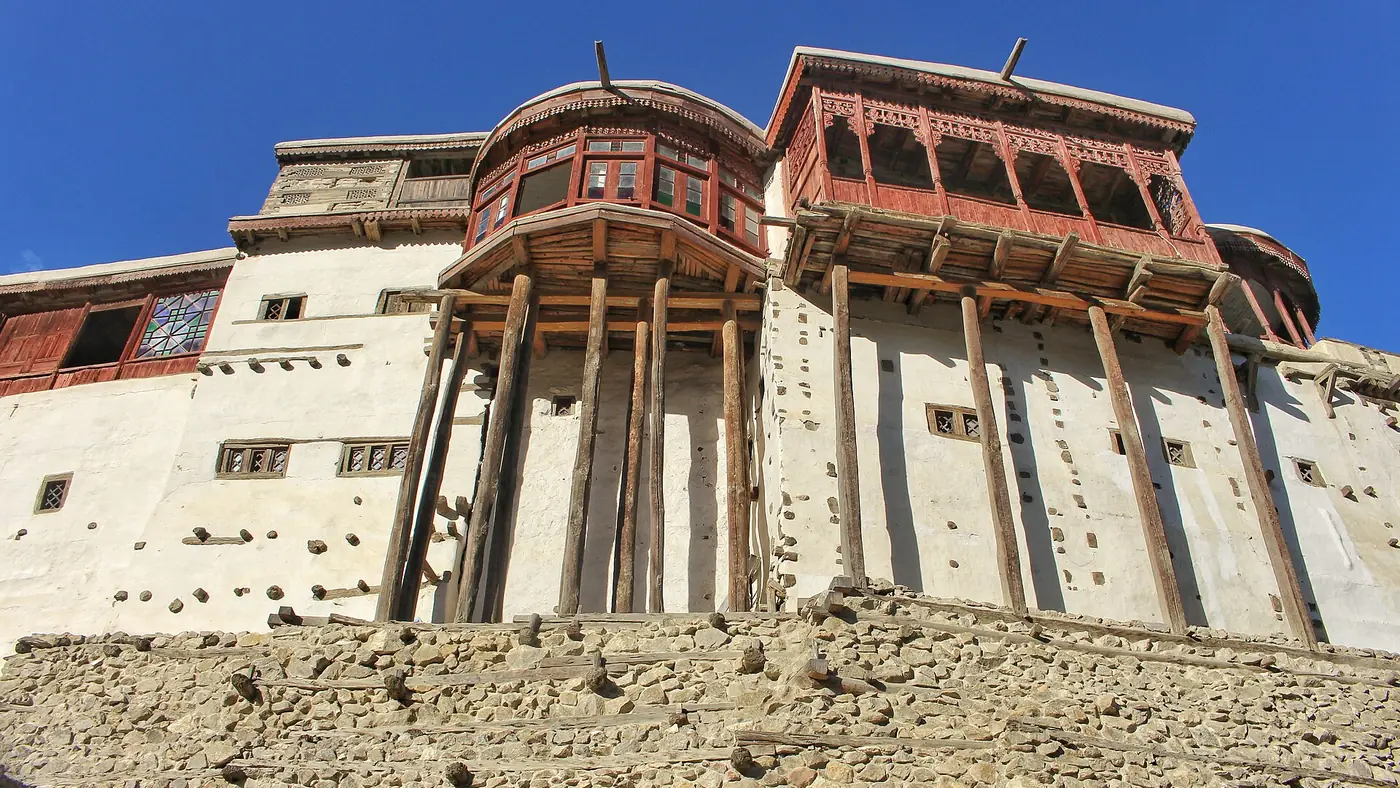
The old town of Karimabad, sometimes still called Baltit village, is the cluster of stone houses and narrow lanes below Baltit Fort, restored in the 1990s and best seen on foot rather than from the road. It takes about an hour to walk properly, connects naturally with a fort visit, and is one of the few parts of Karimabad where you are walking through a working settlement rather than a tourist strip.
This guide sets out a self-guided route through the lanes, what the restoration actually involved, and how to walk through a place people still live in without being a nuisance. See our Gilgit-Hunza guide for planning the rest of a trip around it.
| At a glance | |
|---|---|
| Where | Below Baltit Fort, central Karimabad |
| Restored by | The Aga Khan Historic Cities Programme, completed 1996 |
| Time needed | About an hour, unhurried |
| Best time | Morning, before the day's heat and before fort tour groups arrive |
| Combine with | Baltit Fort, immediately above the old town |
| Cost | Free to walk; the fort itself charges a separate ticket |
What was restored, and why it matters
Karimabad's old town was the first major project of the Aga Khan Historic Cities Programme, completed in 1996 after several years of work. Houses that had fallen into disrepair were rebuilt using traditional stone and timber techniques, lanes were repaved, and basic services, electricity, water and sanitation, were brought in without erasing the settlement's original layout. A local body, the Northern Areas Town Management Society, was set up alongside the physical restoration to manage zoning and construction going forward, which is a large part of why the old town still looks the way it does rather than being replaced by newer building over the following decades.
The result is not a museum piece: people still live in these houses, run small shops from the ground floors, and use the lanes as everyday routes, which is exactly what makes walking through them different from visiting the fort itself.
A self-guided route
- Start at the base of the climb to Baltit Fort, where the main bazaar lane narrows and starts to rise. Rather than taking the direct paved path straight up to the fort, look for the older stone lanes running off to either side.
- Follow the side lanes rather than the main tourist route. These narrower passages, some covered, some opening onto small courtyards, are where the restoration work is most visible: stone walls, carved wooden doors and window frames, and the tight, defensive layout typical of old Hunza settlements.
- Look for the water channels. Channels fed from the Ultar Nala, the stream coming down from the glacier above town, run through parts of the old town and were historically the settlement's water supply for irrigation and household use. Several stretches are still walkable alongside, and following one for a short distance gives a sense of how the old town was engineered around water long before piped supply existed.
- Finish by climbing to the fort itself. The lanes lead naturally up toward Baltit Fort, so ending the walk there and going straight into the fort tour is the practical way to combine both in a single morning. Our Baltit Fort guide covers tickets and timings.
Doing the walk before the fort's first tour groups arrive, in the early morning, gives quieter lanes and better light for photographs, though there is little to no formal signage, so a loose, unhurried route through whichever lanes look interesting works as well as any fixed itinerary.
Etiquette
This is a residential area, not an open-air museum. Keep your voice down, especially near doorways and courtyards. Ask before photographing people, and don't photograph women without clear permission. Stick to the lanes rather than stepping into private courtyards or gardens, even ones that look open, and be ready to give way in the narrower passages, where local residents carrying goods or leading animals have priority.
How it compares to Ganish and Altit
Karimabad's old town is not the only historic settlement in the valley. Ganish village, a short drive below Karimabad, is older again, with its own watchtowers and a mosque that predates Baltit Fort, and Altit Fort has its own older settlement around it. If you have more than a day in Hunza, the three make a natural, if unhurried, comparison of how differently each has aged and been restored; our things to do in Karimabad guide sets the old town walk alongside the rest of the town's sights.
Frequently asked questions
How long does the Karimabad old town walk take?
About an hour at an unhurried pace, longer if you stop often for photographs or combine it directly with the Baltit Fort tour.
Do I need a guide for the old town walk?
No. There is no ticket or formal route, and the lanes are straightforward to explore on foot on your own, though a guide can add context on the restoration and the water channel system if you want more detail.
Is the Karimabad old town different from Ganish village?
Yes. Ganish is a separate, older settlement a short drive from Karimabad with its own watchtowers and mosque, while Karimabad's old town sits directly below Baltit Fort and was restored as part of the same Aga Khan-led programme as the fort.
When was Karimabad's old town restored?
The main restoration, by the Aga Khan Historic Cities Programme, was completed in 1996, alongside the restoration of Baltit Fort itself.
Is the old town walk suitable for older visitors or young children?
It involves walking on uneven stone lanes with some steps and slopes, so it suits most fit older visitors and children who can manage a steady uphill walk, but it is not level or paved throughout.