The Karakoram Highway in winter is kept open all the way from Islamabad to Sost, the last town before the Chinese border, though snow, ice and rockfall can close stretches for hours or days. What shuts is everything high: the last climb from Sost to the Khunjerab Pass is closed to visitors from roughly December to April, and the Babusar route through Naran is closed from about November to late May. Below Gilgit the winter problem is mostly rain and rockfall; above Aliabad it is ice, and that is where you need chains.
This guide takes the highway section by section through December to February, then covers where ice forms, what to carry in the car, how to plan around short days, and whether a winter drive is worth it.
| At a glance | December to February |
|---|---|
| Open | Islamabad to Sost, weather permitting |
| Closed to visitors | Sost to Khunjerab Pass; the Babusar route |
| Snow and ice | Mostly from Gilgit northwards, worst in Gojal |
| January averages | Chilas about 6°C; Gilgit about −3°C at night; Gulmit about −5.5°C |
| Daylight in late December | Under ten hours, less in deep valleys |
| Vehicle | 4x4 advised north of Gilgit, with snow chains |
| Road news | GB Tourism advisories; Tourist Police 1422 in Gilgit-Baltistan |
Which sections stay open in winter?
| Section | Winter picture | Watch for |
|---|---|---|
| Islamabad to Thakot, on the Hazara Motorway | Open and low | Winter rain |
| Thakot to Chilas, through Kohistan | Kept open, mostly low and mild | Rockfall after rain; occasional heavy snow |
| Chilas to Gilgit | Low, dry and usually clear | Early-morning frost; the Tatta Pani slide zone |
| Gilgit to Karimabad | Open, with occasional snow | Rockfall; ice on shaded bends |
| Karimabad to Sost | Open, cold, with snow and ice | Black ice, tunnel mouths, drifting snow |
| Sost to Khunjerab | Closed to visitors | Snowbound; kept open for trade only |
| Babusar route (N-15) | Closed | Reopens late May or June |
The southern half: Islamabad to Chilas
The motorway and the Indus gorge through Kohistan are low, and most winter days here are cold and dry rather than snowy. Besham averages about 9°C in January and Chilas about 6°C. The trouble comes with storms. Rain on the gorge walls brings rockfall, and heavy snow can reach the road too: in late February 2025 it closed the highway at several points around Dasu and stranded thousands of passengers. In March 2026 landslides after heavy rain closed it again between Pattan and Bursin.
With Babusar shut, this is the only road into Gilgit-Baltistan, so a blockage here has no detour.
The middle: Chilas to Gilgit
This is often the pleasantest part of the winter drive. The valley is low and dry, and clear winter mornings give some of the sharpest views of Nanga Parbat from the Talechi viewpoint. Expect frost first thing, and treat the Tatta Pani slide zone before Raikot Bridge with the same caution as in summer.
Hunza and Gojal: Gilgit to Sost
North of Gilgit the road climbs, and winter becomes real. Karimabad is at about 2,500 metres, Gulmit and Passu at a similar height and Sost at about 2,800, and nights well below freezing are normal. The highway is paved and wide and is usually cleared quickly after snow, but rockfall still happens: on 24 December 2025 boulders at Chanas, near the boundary between Gilgit and Nagar, cut road access to Hunza and Nagar for about eight hours.
The side roads are a different matter. The climb to Karimabad, the lanes to Duikar and the tracks to Borith Lake can ice up or close for days. Our guide to Hunza in winter covers staying in the valley.
The top: Sost to Khunjerab
In December 2024 Pakistan announced that the Khunjerab crossing would stay open through the winter for trade. That is not the same as a tourist road. Above Sost the highway is often snowbound, the top can be around −20°C, and clearing it after a storm takes days. Don't plan a winter trip around reaching the border; if a clear, settled spell comes, ask in Sost before driving on. Our Khunjerab Pass guide covers the normal season.
Where ice forms
On the KKH in winter, ice is more dangerous than snow, because you often can't see it.
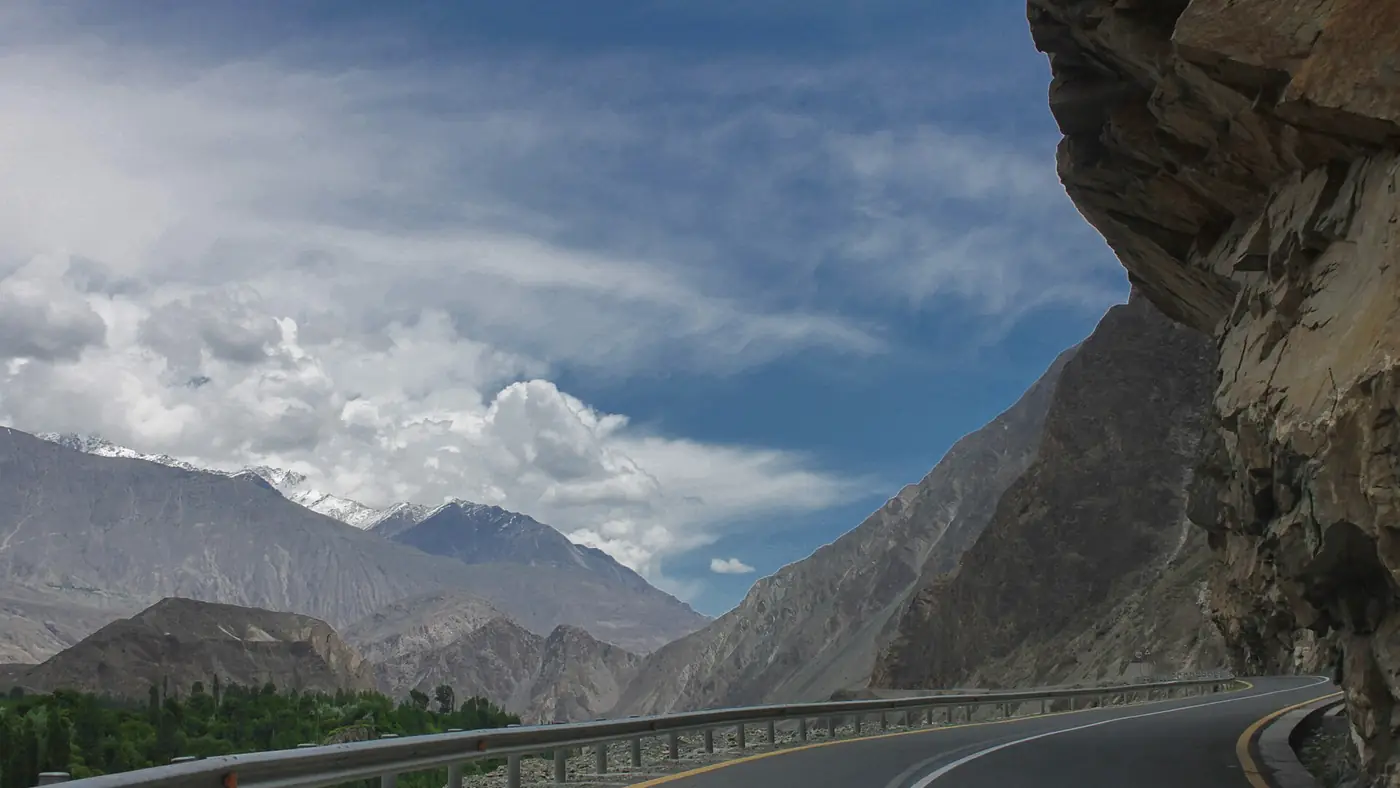
- Shaded bends. Where a cliff or ridge keeps the road in shadow, ice can last all day, even when the rest of the road is dry.
- Tunnel mouths. At the Attabad tunnels, meltwater can freeze at the portals. Slow down before you come out into the light.
- Bridges and culverts, which freeze before the road around them.
- Wet patches below springs and seeps, which turn to sheet ice overnight.
- The first and last hours of the day, when yesterday's meltwater is frozen hard.
The rule is simple: slow down before the shade, not in it, and never brake hard on ice.
Chains, tyres and the car
The Gilgit-Baltistan tourism department's advice during the heavy snow of January 2026 was to use a 4x4 where possible and to carry snow chains, extra fuel, food and warm clothing. That is a good checklist.
- Snow chains. Buy or borrow a set that fits your tyres before you leave, and practise fitting them once somewhere flat. Fit them before a slope, not halfway up it.
- Tyres. Good tread matters more than anything else. Bald tyres and a mountain road in January are a bad combination.
- Coolant and battery. Check the coolant is rated for the cold and the battery is strong; cold mornings in Gojal find weak batteries.
- A normal car can manage the highway itself in a dry spell with chains and an experienced driver. It is the wrong choice during active snowfall or on side roads.
- Fuel. Fill up at every main town, and keep the tank above half. A closure can mean hours with the engine running for heat.
In the car, not the boot: blankets or sleeping bags, water, food for a day, a torch, a power bank and any medicines. Our guide to driving on the Karakoram Highway covers the rest of the driving advice.
Short days: how to plan the drive
In late December the sun rises a little after 7 and sets before 5 in Gilgit, and in the deep valleys it drops behind the ridges much earlier. Every day of a winter drive needs to fit inside that.
- Split the drive from Islamabad into three days if you can: Besham, then Chilas, then Gilgit or Hunza. The two-day plan that works in summer leaves too little daylight for Kohistan.
- Leave at first light and aim to be parked by mid-afternoon.
- Keep a spare day at the end. Snow, rockfall and cancelled flights all happen more often in winter.
- Check each morning. Ask your hotel and the police, and read the latest advisories. Our guide to Karakoram Highway road status explains where to look.
Is it safe?
For careful drivers who keep to daylight, the main winter risks are ice, rockfall and being stranded in the cold, and all of them are manageable with preparation.
The Kohistan stretch also has a security history. In March 2024 a suicide bomber attacked a bus carrying Chinese engineers near Besham, and in December 2023 gunmen attacked a passenger bus near Chilas. The UK government's travel advice advises against all travel on the Karakoram Highway between Mansehra and Chilas. Pakistani travellers use this road every day, but check local news and police advice before setting out; overseas visitors should read their own government's advice, since travelling against it can void insurance.
Should you drive the KKH in winter?
Drive it if you have mountain experience, a 4x4 or a local driver, flexible dates and a clear reason to go: Hunza under snow, the empty valleys, the ice-hockey season in January. Winter light on the Karakoram is superb, and you will have the road largely to yourself.
Don't drive it for a first trip north, with a fixed return date, or in a small car you are not prepared to fit chains to. Flying to Gilgit or Skardu saves the long southern half, though winter flights are often cancelled for weather. Our guide to Gilgit-Baltistan in winter compares the options, and when to go sets winter against the rest of the year.
Frequently asked questions
Is the Karakoram Highway open in winter?
Yes, from Islamabad to Sost, though snow, ice and rockfall can close stretches for hours or days. The last climb from Sost to the Khunjerab Pass is closed to visitors from about December to April.
Do I need snow chains on the KKH?
South of Gilgit, rarely. North of Gilgit, especially in Gojal and on side roads after snow, carry them and know how to fit them. The tourism department advises chains and a 4x4 during snowfall.
Can I drive to Khunjerab Pass in winter?
Plan on no. The crossing is kept open for trade, but the road above Sost is often snowbound and extremely cold, so a visit depends on the weather on the day and local advice in Sost.
Is Babusar Pass open in winter?
No. The Babusar route through Naran usually closes in November and reopens in late May or June. In winter the KKH through Kohistan is the only road to Gilgit.
What is the coldest part of the Karakoram Highway?
Upper Hunza and the climb to Khunjerab. Gulmit averages about −5.5°C in January, and the pass itself can drop to around −20°C.
Is it safe to drive the KKH in winter?
It can be, if you drive only in daylight, carry chains, warm kit and food, and check conditions each morning. If you are not used to mountain roads in snow, hire a local driver.