
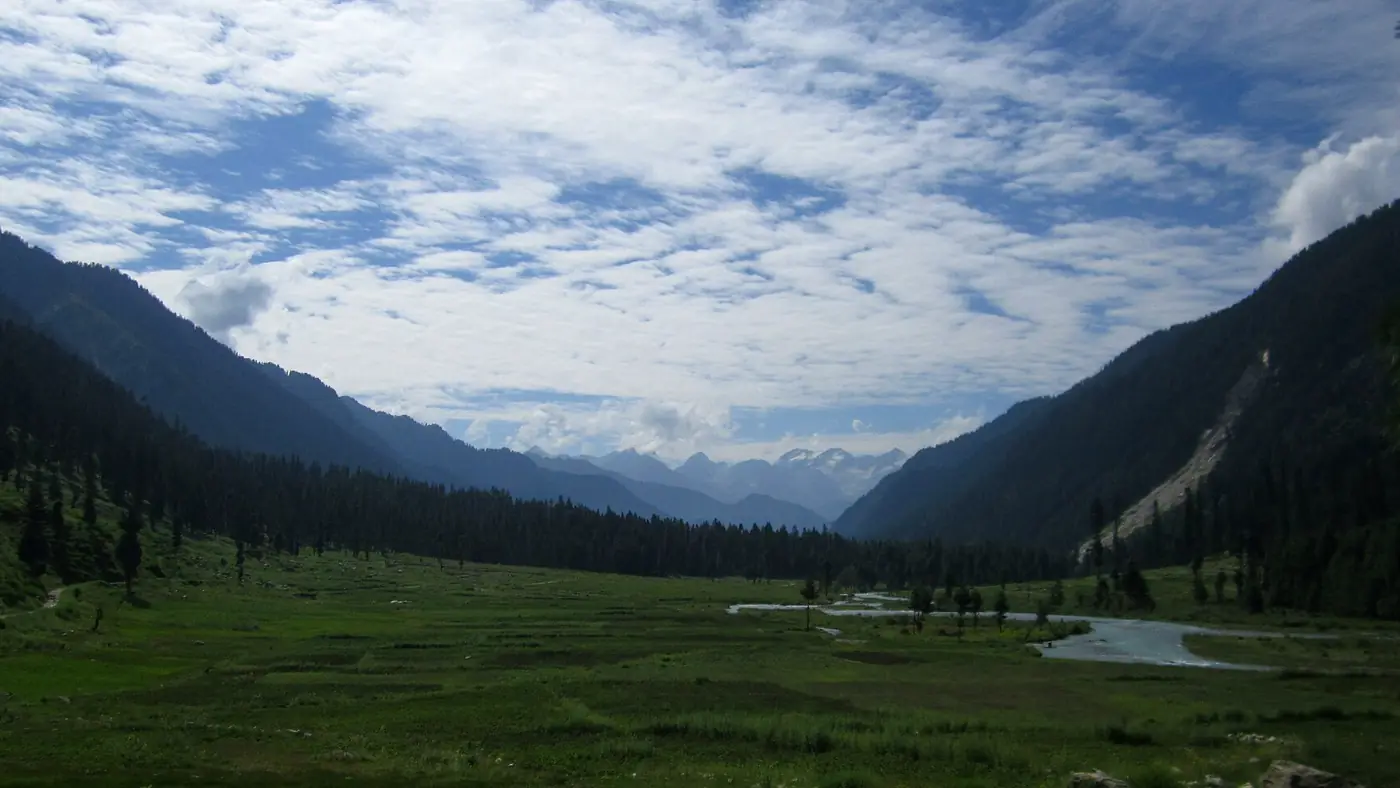
Islamabad to Kumrat Valley is about 375 km to Thal, the last village, and takes 8.5 to 10 hours by car. You take the M-1 and the Swat Motorway to Chakdara, the N-45 through Timergara to a turn just short of Dir, and then a slow valley road through Sheringal and Kalkot to Thal. From Thal it is another hour or two by jeep into the forest.
The motorway part is quick and easy. The last 65 km take as long as the first 190, and that is what this post is mostly about: what each stage is like, where to fill up, and how to time the day so you are not on the valley road after dark. For what to see once you arrive, see our Kumrat Valley guide.
| At a glance | |
|---|---|
| Islamabad to Chakdara | About 190 km on the M-1 and M-16, around 3 hours |
| Chakdara to the Kumrat turn | About 100 km on the N-45, 2.5 to 3 hours |
| Turn-off to Thal | About 65 km on the valley road, 3 to 4 hours |
| Total to Thal | About 375 km, 8.5 to 10 hours with short stops |
| Thal to the forest camps | About 13 km by jeep, 45 minutes to 1.5 hours |
| Thal to Kala Chashma | About 18 km by jeep, up to 2 hours |
| Last reliable fuel and ATMs | Dir and Timergara |
The route in brief
- Islamabad to the Swat Motorway. Take the M-1 towards Peshawar and leave it at the Colonel Sher Khan interchange, where the M-16 Swat Motorway begins.
- Swat Motorway to Chakdara. Follow the M-16 north to its current end at Chakdara, on the Swat River.
- N-45 to the Kumrat turn. Cross into Lower Dir and follow the N-45, the Chitral road, through Timergara towards Dir.
- Turn off before Dir town. A few kilometres short of Dir, the road to Kumrat leaves the N-45 at a gateway known as Bab-e-Kumrat.
- The valley road to Thal. Follow the Panjkora upstream through Sheringal, Patrak, Barikot and Kalkot to Thal.
- Jeep into the forest. Park in Thal and hire a jeep for the track to the camps, Kumrat waterfall and Kala Chashma.
Stage 1: Islamabad to Chakdara on the motorways
This is the easy part. The M-1 runs west from Islamabad towards Peshawar, and after roughly 110 km you turn north onto the M-16 at the Colonel Sher Khan interchange. The first phase of the Swat Motorway opened in 2019 and runs for about 80 km through the hills to Chakdara. It cut the drive from Nowshera to Chakdara, which used to take three hours on the old road, to about one.
Allow around three hours from central Islamabad to Chakdara, a little more if you leave from Rawalpindi at rush hour. Both motorways have tolls, and there are service areas on the M-1 for fuel, tea and toilets.
Chakdara is where the motorway ends and the slow roads begin. If you are travelling with children, this is a good place for a proper break before the next five or six hours. The Dir Museum is here, and Churchill's Picket looks down on the town from its hilltop; both are better saved for the return journey, when you are not racing the daylight.
Stage 2: Chakdara to Dir on the N-45
From Chakdara the N-45 heads north-west into Lower Dir. It is a two-lane national highway, paved and generally in fair order, but it is busy with trucks, buses and traffic through every bazaar, and overtaking is slow work.
Timergara, the main town of Lower Dir, is roughly 40 km from Chakdara and the natural stop for breakfast or lunch. It has banks, fuel stations and plenty of places to eat. The road then climbs gradually towards Dir, the headquarters of Upper Dir.
The turn for Kumrat comes a few kilometres before Dir town. It is on the right as you head north, at a gateway known as Bab-e-Kumrat. If you need fuel or cash and have not stopped in Timergara, carry on the short distance into Dir and come back for the turn. Do not start up the valley road with less than half a tank or without enough cash for the whole trip: there are no ATMs beyond this point, and fuel in the upper valley is limited and unreliable.
Allow 2.5 to 3 hours from Chakdara to the turn-off, with a stop.
Stage 3: the valley road from Dir to Thal
The last 65 km are the slowest of the day. The road follows the Panjkora River upstream, first through the narrow gorge near Sheringal that separates Dir proper from Dir Kohistan, then past Patrak, Barikot and Kalkot to Thal.
The road was paved in the 2000s, but years of floods and landslides have broken it up, and the rebuilding of the Patrak to Kumrat section has dragged on for about a decade without being finished. Expect a mix of old tarmac, gravel, diversions around works, and single-lane stretches where one vehicle has to wait for another. In May 2024 part of the road near Daba caved in after heavy rain and left tourists stranded in the valley for a time.
What that means in practice:
- Allow 3 to 4 hours from the turn-off to Thal, longer at Eid or after rain.
- Drive it in daylight. The road is narrow, unlit and above the river for long stretches. Plan to reach Thal by late afternoon at the latest.
- Carry your CNIC. There are police checkposts along the road.
- Expect signal to drop as you climb. Download offline maps and tell someone your plan before you leave Dir.
- Keep your speed down on gravel sections, where loose stones and blind bends catch people out.
Stage 4: Thal to the forest by jeep
Thal is the end of the road for most cars. From here a rough jeep track runs north up the valley through the forest: rocky in places, crossed by side streams, and muddy after rain. The main camping area and Kumrat waterfall are about 13 km on, and Kala Chashma, where most jeeps turn round, about 18 km from Thal.
Jeeps wait in Thal bazaar and are hired by the vehicle, not the seat. Agree the fare, where you are going and how long the driver will wait before you set off. Our Kumrat trip cost guide has the current range of jeep fares and what they usually include.
A few people take high-clearance 4x4s of their own up the track in dry weather. Sedans and small SUVs should stop in Thal: a scraped sump or a stuck car in a stream costs far more than a jeep.
Check the crossing at Thal before you go. The bridge linking Thal bazaar to the Kumrat road collapsed under a loaded truck in November 2025, and monsoon floods in 2024 and 2025 have washed away bridges around Thal and cut off Jahaz Banda for a time. Ask your hotel or camp how vehicles are getting across before you leave Islamabad.
How long does the drive really take?
On a normal day with short stops, 8.5 to 10 hours from Islamabad to Thal. A realistic plan looks like this:
- Leave Islamabad at 5 am, before the traffic.
- Chakdara by about 8 am.
- Breakfast and fuel in Timergara, around 9 am.
- The Kumrat turn by about 11 am.
- Thal by 2 to 3 pm, leaving time to find your room or take a jeep into the forest before dark.
Leaving later is the most common mistake. Leave Islamabad at 9 and you reach the valley road in mid-afternoon and Thal around dusk, or after it. At Eid the whole day can take several hours longer, much of it in queues between Kalkot and the forest; our guide to the best time to visit Kumrat covers the weeks to avoid.
If you are travelling with young children or older parents, or you are driving from Lahore, split the journey. Leave in the afternoon, sleep in Timergara or Dir, both of which have hotels, and drive the valley road fresh the next morning. Our three-day Kumrat itinerary shows how the drive fits into a short trip.
Your own car, a hired car or public transport?
Your own car is fine as far as Thal in dry weather, and most people drive. A car with decent ground clearance is more comfortable on the broken sections; low sedans do make it, slowly. Have the brakes and tyres checked before you leave, and keep warm clothes in the car rather than packed away.
A hired car with a driver from Islamabad is worth considering if nobody in the group has driven mountain roads before. It also means nobody is tired behind the wheel on the long drive home.
Public transport is possible but slow: coaches run to Dir and Timergara, and local vans go on to Thal, where you hire a jeep like everyone else. It suits solo travellers and students with time more than families.
Other ways in: from Swat over the Badgoi Pass
If you are already in upper Swat, a seasonal jeep route crosses the Badgoi Pass from Utror, near Kalam, to the Thal side of Kumrat. It is roughly 65 km of rough mountain track, takes four hours or more, and is open only in the summer months, when the snow has cleared from the pass. It makes a good loop with Kalam for groups with a hired 4x4 and a driver who knows the route. The paved alternative from Swat is back down to Chakdara and up the N-45, as above. Our Swat Valley guide covers Kalam and the upper valley.
If you would rather hand over the driving and the timings, tell us your dates and we will draft a route with realistic hours for each day.
Frequently asked questions
How far is Kumrat Valley from Islamabad?
About 375 km to Thal, the last village, and roughly 390 km to Kala Chashma, where most jeeps turn round.
How many hours is the drive from Islamabad to Kumrat?
About 8.5 to 10 hours to Thal with short stops, then 45 minutes to 2 hours by jeep into the forest. Eid traffic and rain can add several hours.
Which is the best route from Islamabad to Kumrat Valley?
The M-1 to the Colonel Sher Khan interchange, the Swat Motorway to Chakdara, the N-45 through Timergara, and the valley road from just before Dir through Sheringal and Kalkot to Thal.
Can I take my own car to Kumrat Valley?
Yes, as far as Thal in dry weather. Beyond Thal the track needs a 4x4, so most visitors park in Thal and hire a jeep.
Is the road to Kumrat paved?
The motorways and the N-45 are paved. The valley road from Dir to Thal is a mix of broken tarmac, gravel and sections under reconstruction, and beyond Thal it is an unpaved jeep track.
Where is the last petrol pump before Kumrat?
Fill up in Dir or Timergara. Fuel further up the valley is limited, so don't rely on finding it.
.jpg)