The Hussaini suspension bridge is a footbridge of wooden planks and wire ropes across the Hunza river at Hussaini, in Gojal between Gulmit and Passu, about an hour's drive north of Karimabad. It is roughly 194 metres long, the planks have gaps between them, and it sways, but people cross it every day. The village charges a small fee in cash, and the quietest time to go is early morning, before the day trippers arrive and the afternoon wind picks up. Allow about an hour, including the walk down from the highway.
This guide covers where it is, what the crossing is really like, the fee, safety, how to avoid the crowds, and the second, less visited bridge near Passu.
| At a glance | |
|---|---|
| Where | Hussaini village, Gojal (upper Hunza), on the Karakoram Highway |
| From Karimabad | About 1 hour by road |
| From Gulmit / Passu | About 10 to 15 minutes / 15 minutes |
| Length | About 194 m |
| From the road | 10 to 20 minutes' walk down, and back up |
| Fee | Small fee collected by the village, in cash |
| Time needed | About an hour |
| Quietest time | Early morning, on a weekday |
| Not for | Small children, or anyone nervous of heights over fast water |
Where is the Hussaini bridge?
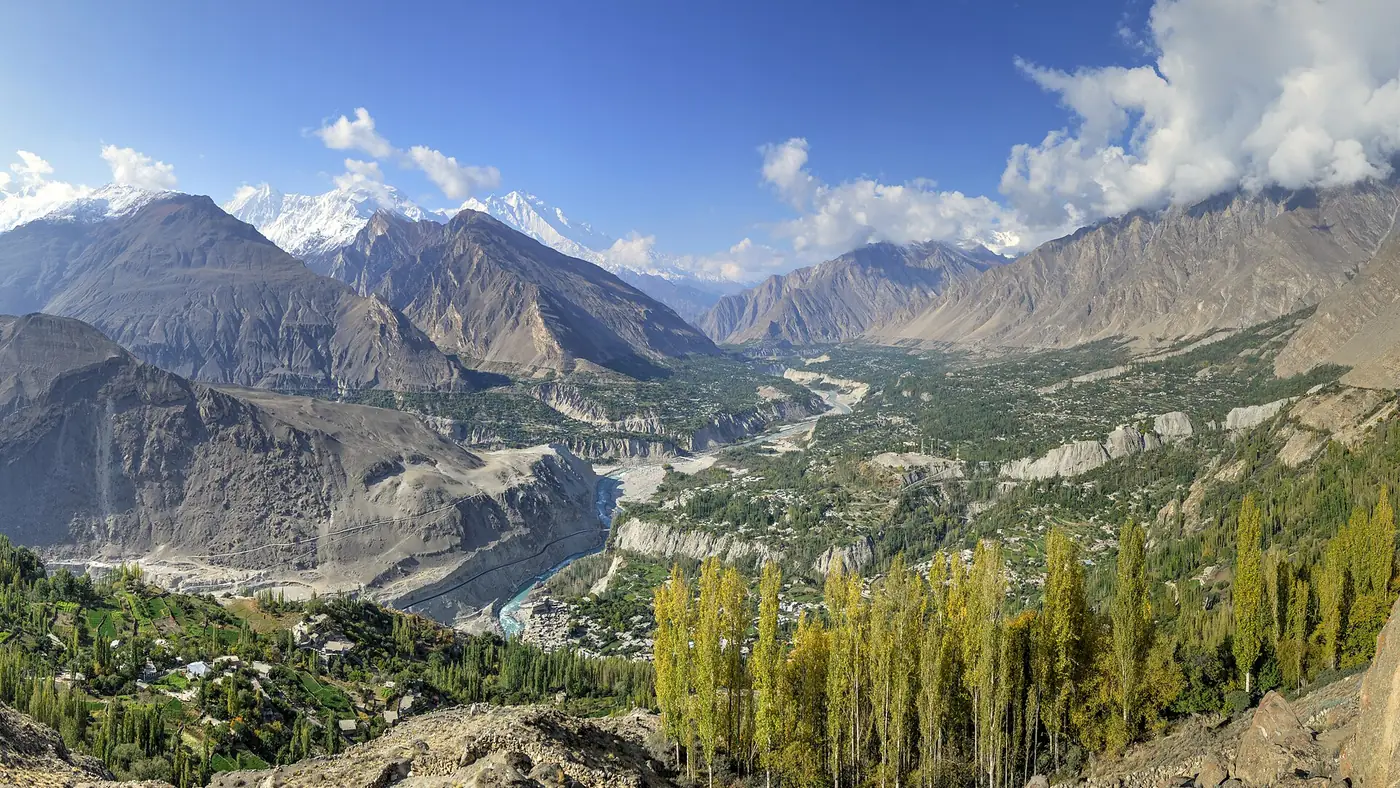
The bridge crosses the Hunza river below Hussaini, a small Wakhi village on the Karakoram Highway between Gulmit and Passu. On the far bank is Zarabad, a scattering of fields and pastures that people from Hussaini farm. The bridge was built for them, not for visitors, and villagers still use it to reach their land.
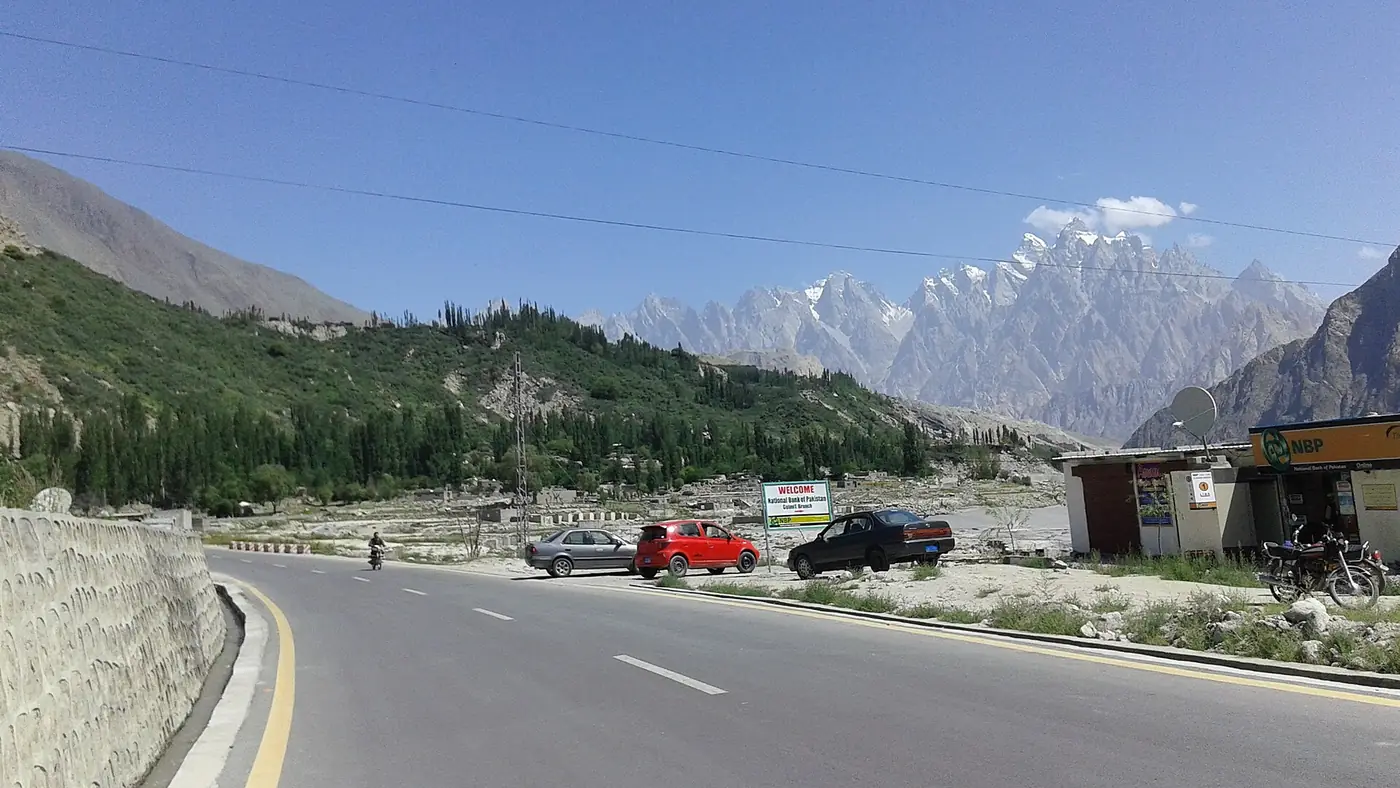
Coming from Karimabad, you pass Attabad Lake and its tunnels, then Gulmit and Ghulkin. There is space to park beside the highway above the bridge. From there a path and steps lead down to the riverbank; it takes 10 to 20 minutes down, and a little longer to climb back up at about 2,500 metres.
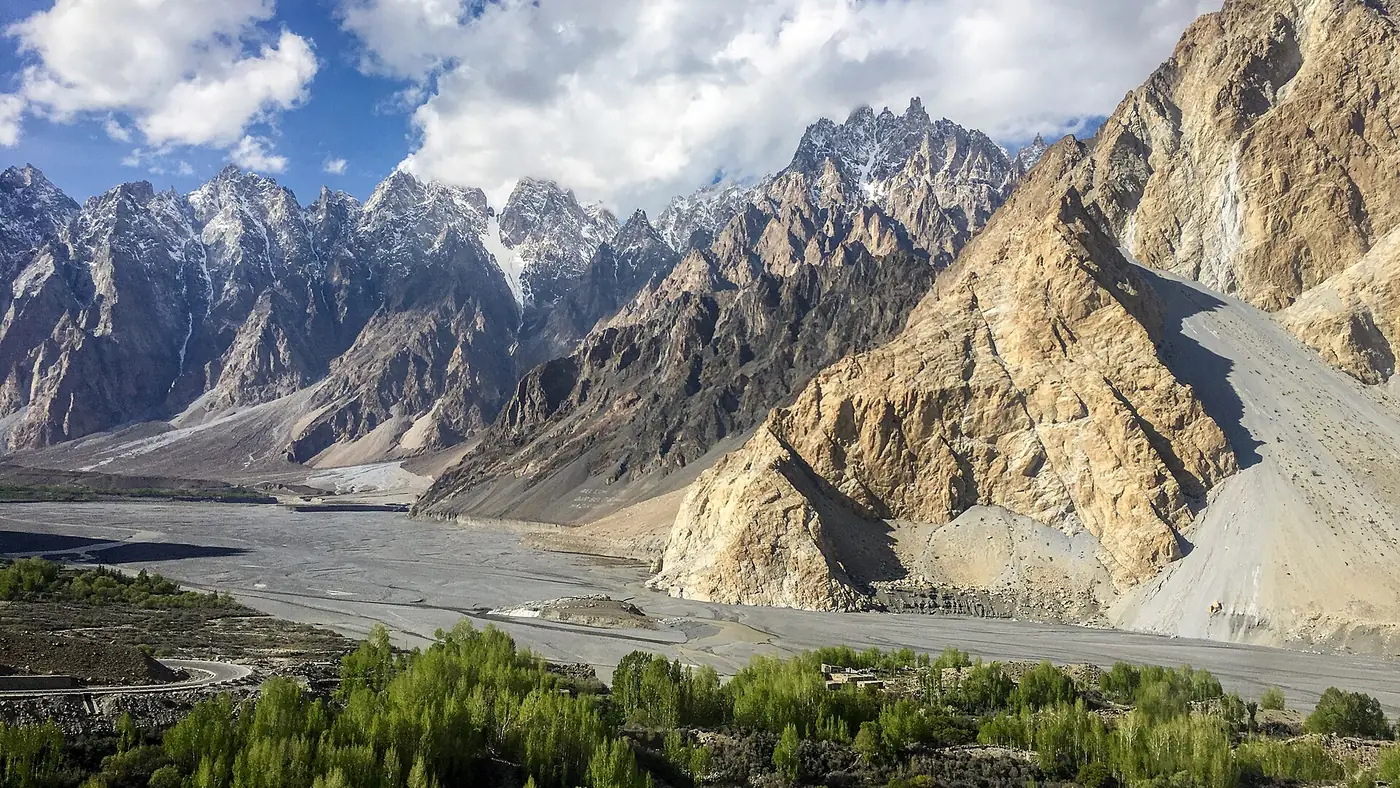
Attabad Lake is about half an hour south, and the Passu Cones rise just to the north, so the bridge fits easily into a day in Gojal. Our Gilgit and Hunza page shows how the upper valley fits together.
What is the crossing actually like?
The bridge is a long span of wooden planks laid across wire ropes, with a rope on each side at hand height. There are gaps between the planks, and in places you can see the river through them. It moves with every step and swings in the wind.
Walking it is less alarming than the photographs suggest, and more tiring than people expect. Most visitors walk a short way out, stop, take a picture and come back. Crossing to Zarabad and back takes 20 to 30 minutes at a careful pace.
Beside the bridge you can see the remains of an older one, with missing planks and broken sections, which is where many of the dramatic online photos come from. You do not walk on that one.
A bridge has crossed here since the late 1960s. It has been rebuilt and re-planked by the village several times since, most recently reported in 2022, and it is looked after by the community, which is what the entry fee pays for.
Is there an entry fee?
Yes. The village collects a small fee at the entrance, which pays for the upkeep. Recent reports put it at a few hundred rupees for Pakistani visitors, with a higher rate for foreign nationals. Carry cash, and pay what is posted.
In recent seasons a zipline has also run across the river beside the bridge, charged separately. Check whether it is running and who operates it before you pay.
Is the Hussaini bridge safe?
It is crossed daily by villagers and, in summer, by a steady stream of visitors, and the community maintains it. But it is a swaying bridge over a fast, cold river, and accidents have happened. In July 2022 a student from Sindh fell from the bridge and drowned; the fall was attributed to a seizure.
Take it seriously and without drama:
- Only a limited number of people should be on the bridge at once. Follow what the people at the entrance tell you, and wait if it is crowded.
- Keep one hand on the side rope at all times.
- Don't jump, run or shake the bridge for a video, and don't stop in the middle to pose while others are trying to pass.
- Skip it in strong wind or rain, when the planks are slippery and the swing is worse.
- Keep small children off it. An older child should cross holding an adult's hand, one step at a time.
- Don't cross if you are prone to dizziness, fainting or seizures, or have a heart condition. Watching from the bank is a perfectly good visit.
Crossing tips
- Wear shoes with grip. No slippers or heels; the planks are uneven and can be wet.
- Pack everything away. Put your phone on a strap or in a zipped pocket, and don't carry anything you would mind losing to the river.
- Look ahead, not down. Fix your eyes on the far end and on the next plank or two.
- Take small, steady steps in the middle of each plank, and pause when the bridge swings until it settles.
- Take photographs from the ends, where you can stand still, rather than halfway across.
- Leave time for the climb back up to the road, and take it slowly.
When to go to avoid the crowds
The bridge is busiest from late morning to late afternoon in summer, when day trips from Karimabad reach Gojal, and busiest of all over Eid and long weekends. At those times you may queue at the entrance and share the bridge with a line of people taking videos.
For a quieter crossing:
- Go early, before about 10 am. If you are staying in Gulmit or Passu, it is 15 minutes away, which makes an early visit easy.
- Go on a weekday rather than a Friday, Saturday or Sunday.
- Avoid the afternoon if you can; the wind in the valley tends to be stronger then.
- Consider spring or autumn. April and late October are much quieter than July and August, and the autumn colours in Gojal are at their best in late October.
The Passu bridge and the walk between them
There is a second suspension footbridge over the Hunza river near Passu, less visited than Hussaini. Walkers link the two in a half-day trek: from one bridge along the far bank through Zarabad to the other, then back along the highway. It is a proper walk on rough paths rather than a stroll, and it is one of the better short hikes in Gojal.
The Passu bridge is also maintained locally, and its condition varies from year to year. Ask in Passu or Hussaini about the state of the bridge and the path before setting out, and consider taking a local guide, who will know the way and the current conditions.
Is the Hussaini bridge worth it?
Yes, as part of a day in Gojal rather than as a destination on its own. The setting is superb, with the river, the villages and the Passu Cones above, and the crossing is memorable even if you only walk a few metres out.
It suits teenagers, groups of friends and adults who are steady on their feet. It suits small children, older parents and anyone afraid of heights much less; for them, the view from the bank and a photograph from the end is enough.
Fit it into the same drive as Attabad Lake and the Passu Cones, with lunch in Gulmit. Our three-day Hunza itinerary shows how that day works, and our Gilgit, Hunza and Khunjerab tour includes the bridge with a night in Gulmit or Passu.
Frequently asked questions
Where is the Hussaini suspension bridge?
It crosses the Hunza river at Hussaini, in Gojal (upper Hunza), between Gulmit and Passu. It is about an hour's drive north of Karimabad on the Karakoram Highway.
How long is the Hussaini bridge?
About 194 metres. Crossing it and coming back takes 20 to 30 minutes at a careful pace, plus 10 to 20 minutes each way on the path from the highway.
Is there a fee for the Hussaini bridge?
Yes, a small fee collected by the village for upkeep, a few hundred rupees for Pakistani visitors in recent reports and more for foreign nationals. Pay in cash at the entrance.
Is the Hussaini suspension bridge dangerous?
People cross it safely every day, but it sways, the planks have gaps and the river is fast and cold. Keep a hand on the side rope, don't cross in strong wind, and keep small children off it.
What is the best time to visit the Hussaini bridge?
Early morning on a weekday, before the day trips arrive and the wind picks up. Spring and late autumn are quieter than July and August.
Can children cross the Hussaini bridge?
Small children should not. Older children can cross holding an adult's hand, slowly and on a calm day.