Hunza vs Naran is mostly a question of how many days you have. Naran is the short trip: six to seven hours from Islamabad, open from about May to November, and a long weekend is enough to see its lakes and the Babusar Pass. Hunza is the bigger journey: two days' drive each way, but a longer season, far more to see, and a valley you can stay in for a week without running out of things to do. With three or four days, go to Naran. With a week or more, go to Hunza.
Both are classic first trips north for families from Lahore, Karachi and Islamabad, and many people end up doing both in the end. This comparison covers the drive, the scenery, the crowds, the cost, the season and altitude, and finishes with a straight recommendation for each kind of trip.
| At a glance | Hunza | Naran |
|---|---|---|
| Where | Karakoram Highway, Gilgit-Baltistan | Kaghan valley, Khyber Pakhtunkhwa |
| Base altitude | Karimabad, about 2,500 m | Naran, about 2,400 m |
| From Islamabad by road | 650 to 700 km, two days | 260 to 290 km, 6 to 7 hours |
| By air | Flights to Gilgit, weather permitting | None |
| Days needed | 7 or more by road | 3 to 4 |
| Open to visitors | All year; best April to early November | About May to November |
| Headline sights | Baltit and Altit forts, Attabad Lake, Passu, Khunjerab Pass | Saif-ul-Malook, Lulusar Lake, Babusar Top |
| Jeeps needed | Rarely | For Saif-ul-Malook and Lalazar |
| Crowds | Busy in peak weeks, spread along the valley | Packed at Eid and on summer weekends |
The short answer
Choose Naran for a first taste of the mountains on a short holiday. It is close enough for a three-day trip from Islamabad, the sights are all within a couple of hours of the bazaar, and a family can reach a glacial lake and a 4,000-metre pass without walking far. The price for that convenience is the crowd: in season Naran is one long, busy bazaar.
Choose Hunza when you can give it a week or more. The drive is long, but what waits at the end is on another scale: 7,000-metre peaks seen from the road, centuries-old forts, terraced villages with their own languages, and a highway that runs on to the Chinese border. It also works in more months of the year, including the blossom weeks of April and the autumn colour of late October, when Naran is either closed or closing.
How far is each from Islamabad?
Naran is roughly 260 to 290 km from Islamabad. You take the M-1 and the Hazara Motorway to Mansehra in about two to two and a half hours, then the N-15 up the Kunhar river through Balakot and Kaghan town. That last 119 km of valley road is the slow part. On a normal weekday, leaving at 6 am puts you in Naran by early afternoon. On a summer Saturday add an hour or two, and at Eid considerably more. Our Islamabad to Naran road guide goes through it stage by stage.
Hunza is roughly 650 to 700 km away, and 14 to 16 hours of actual driving. Almost everyone splits it over two days, with a night in Chilas, and reaches Karimabad in the afternoon of day two. The hardest stretch is the Kohistan gorge between Besham and Chilas, which is slow, narrow and prone to landslides, especially in July and August. The detailed route is in our Islamabad to Hunza road guide.
You can also fly to Gilgit and drive two to three hours up to Karimabad. PIA runs the flights with small turboprops that need clear weather, so cancellations are common and a spare day is essential. There is no airport anywhere near Naran.
The practical result: a Naran trip loses about one day in each direction to the road. A Hunza trip by road loses four, which is why it needs a week to feel worthwhile.
Scenery: what do you actually see?
Naran
Around Naran the pine forest gives out, and above the town the upper Kaghan valley is open grass, scree and snowfields. The scenery comes in a few big set pieces:
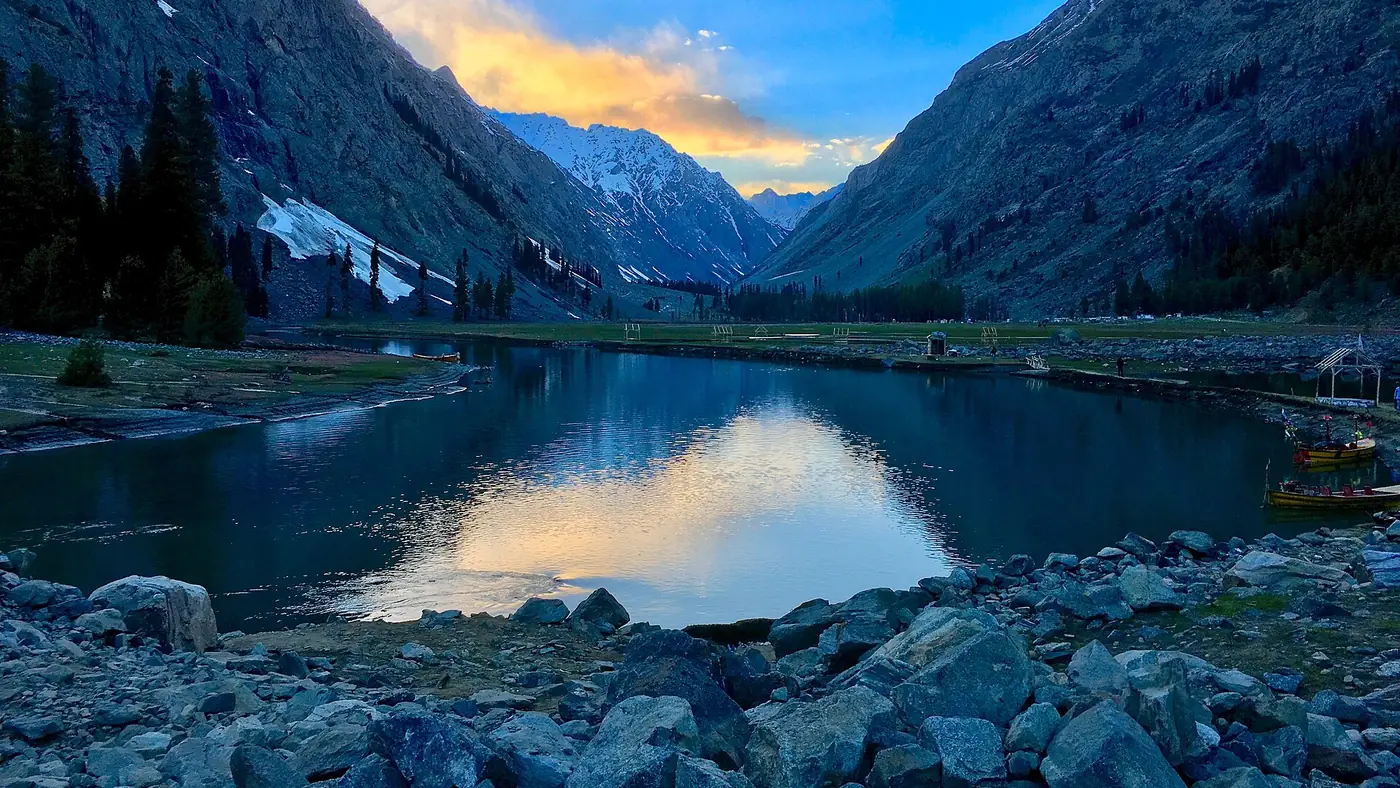
- Lake Saif-ul-Malook, at 3,224 metres, below Malika Parbat, about 9 km from the bazaar by jeep
- Lulusar Lake, at 3,410 metres, right beside the road to Babusar and reachable in your own car
- Babusar Top, at 4,173 metres, the pass into Gilgit-Baltistan
- Lalazar, a meadow above Batakundi, by jeep
Lower down, Shogran and Siri Paye above Kiwai add pine forest and meadow. It is grand, open country, but the peaks are around 5,000 metres rather than 7,000, and once you have seen the two lakes and the pass you have seen most of what the valley offers without trekking.
Hunza
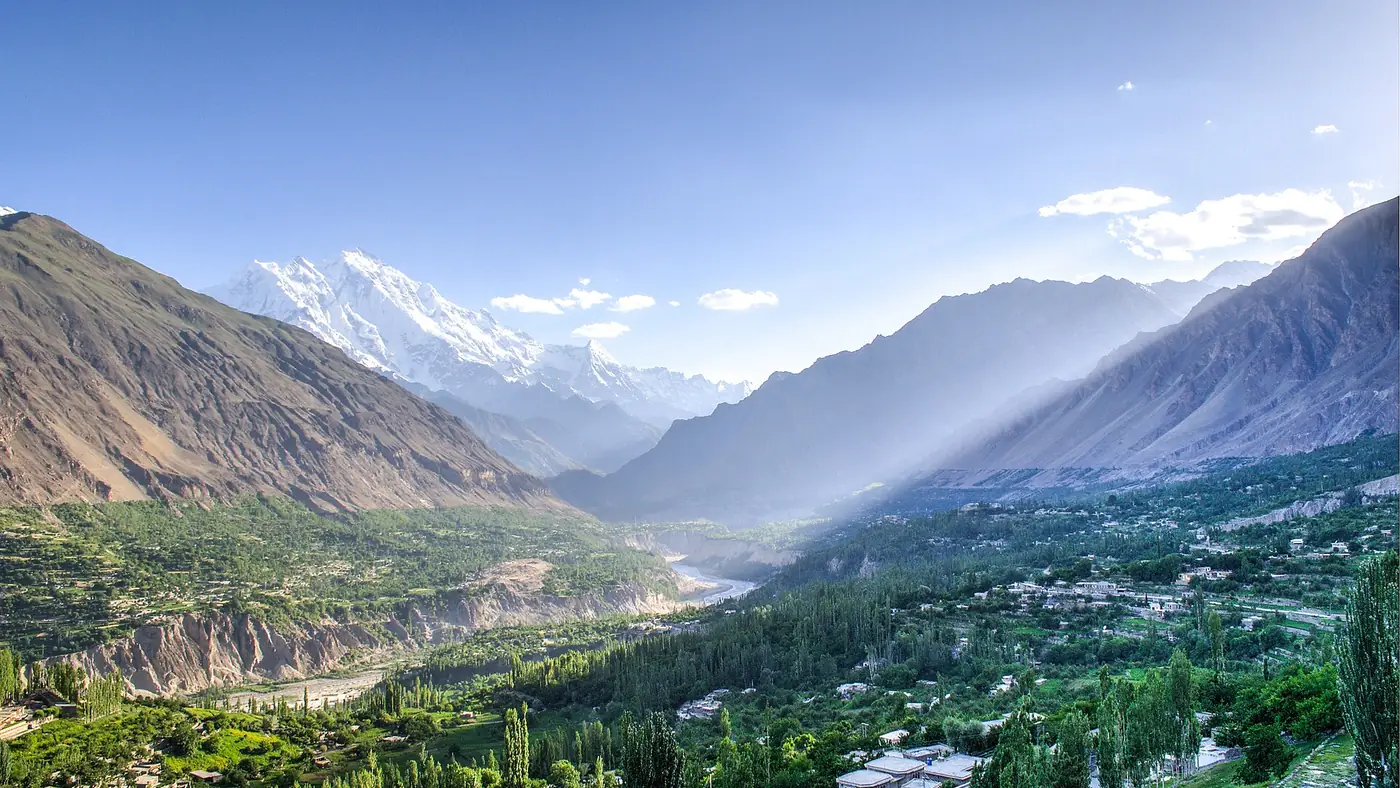
Hunza is a narrow, deep valley where the mountains stand very close. Rakaposhi, at 7,788 metres, rises almost straight up from the highway at Ghulmet on the way in. Above Karimabad are the peaks of the Ultar group; further north, the jagged Passu Cones and the Passu and Batura glaciers.
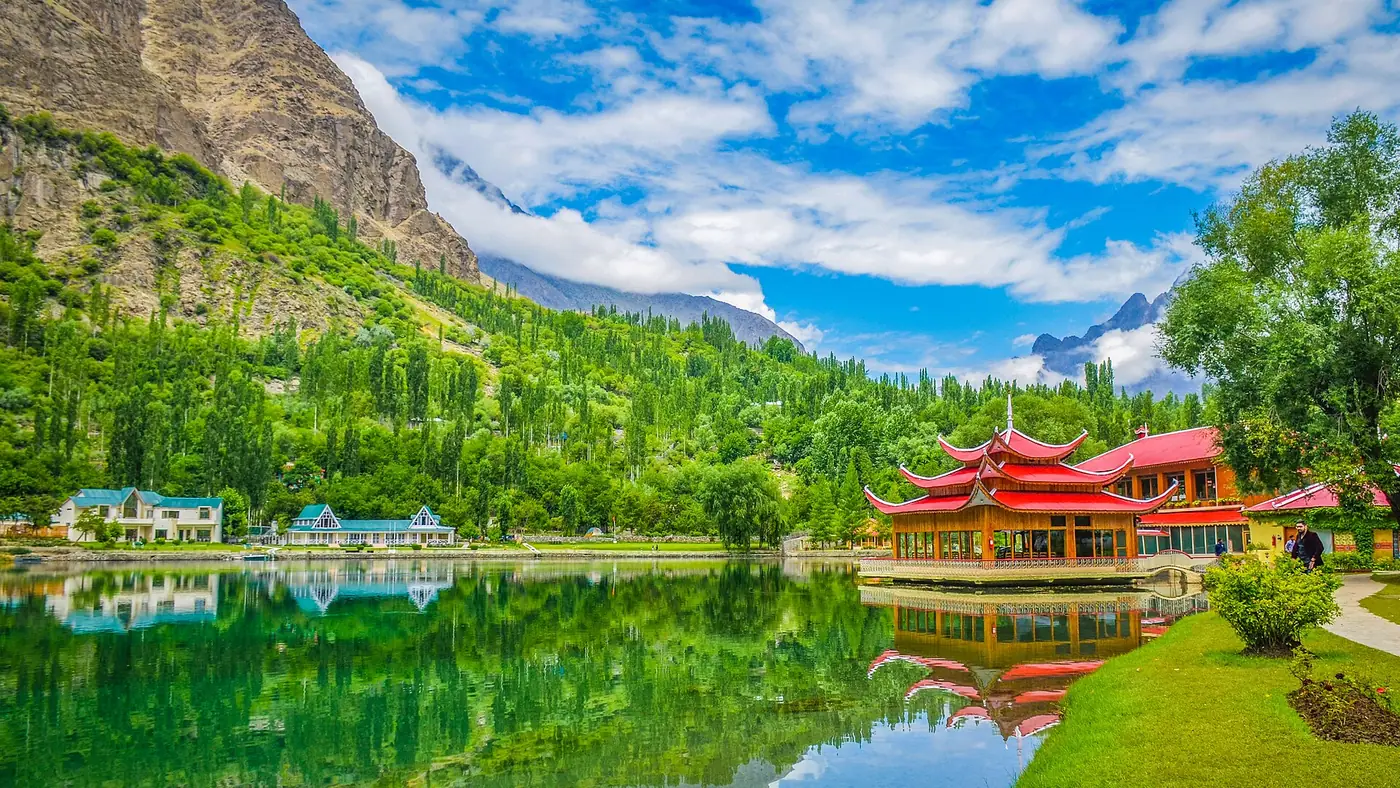
The difference from Naran is that the landscape is lived in. You walk up to Baltit Fort, through the lanes of old Altit, and along irrigation channels between apricot orchards. North of Attabad Lake, Gojal has Wakhi villages, the Hussaini suspension bridge and the road to the Khunjerab Pass at 4,693 metres. There is enough for five full days without repeating yourself, and more if you walk.
If you want lakes above everything, Naran gives you two very different ones for little effort. If you want mountains, villages and history together, Hunza wins clearly.
Crowds and the feel of the place
Naran is essentially one long street of hotels, restaurants and shops beside the Kunhar, and at Eid and on summer weekends it is packed. Traffic got bad enough that in May 2026 the Balakot administration brought in a one-way plan through the bazaar, with no parking in the bazaar itself and jeeps kept off the main street. The jeep queues for Saif-ul-Malook build from mid-morning, and the lake shore fills with them. Go midweek and early, and it is a different place.
Hunza gets busy too, especially in the blossom weeks, at Eid and in July and August. The Karimabad bazaar road is narrow and slow in the evening, and the main landing at Attabad Lake is crowded from late morning. But the visitors are spread along a much longer valley, from Karimabad and Aliabad to Gulmit and Passu, and there is always a quieter village a short drive away. Evenings in Karimabad feel like a small town rather than a fairground.
What each trip costs
The two are hard to compare directly, because a Hunza trip is simply longer. Rough 2026 figures from our own cost guides:
- Naran, three days from Islamabad: for four people sharing a car, fuel, tolls, two nights in budget rooms and the Saif-ul-Malook jeep come to roughly PKR 9,500 to 11,000 each before food. The official return jeep fare to the lake was PKR 5,500 per jeep in 2026. See our Naran trip cost guide.
- Hunza, five days by road: roughly PKR 30,000 to 45,000 per person on a budget, and PKR 50,000 to 80,000 at mid-range level, with four sharing a car and two sharing a room. Fuel for the long drive is the biggest single cost. See our Hunza trip cost guide.
Hotel rates are broadly similar at each level, and both valleys push prices up sharply at Eid and on summer weekends. The real difference is the number of nights and the fuel. Prices change often, so treat all of these as a guide rather than a quote.
When can you go?
Naran is a summer destination. Snow closes the road beyond Kaghan town from about December until late April, and the hotels shut for the winter. In 2026 the road reopened in the second half of April, and Babusar opened on 25 May. For everything to be open, including the lake track and the pass, plan on June to September. October is quieter and cold at night, and snow usually closes the upper valley during November.
Hunza works for most of the year. The Karakoram Highway is kept open in winter, weather permitting, and Karimabad has visitors in every month. The best windows are:
- April for apricot and cherry blossom, while Naran is still closed
- May to September for everything, including Khunjerab, which usually opens to visitors in early May
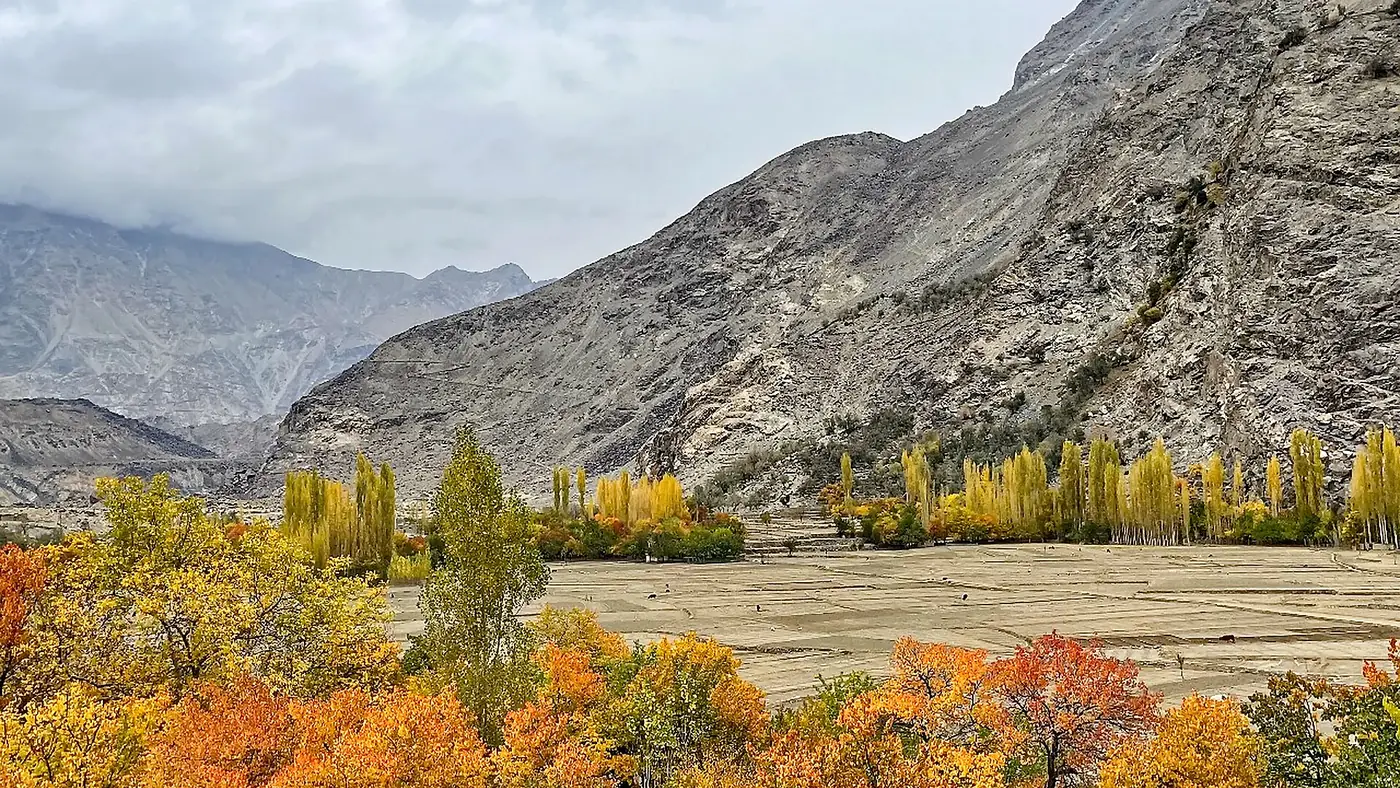
- Late October for the poplars and orchards turning gold
July and August are the monsoon months for both, with landslides on the Kohistan stretch of the Karakoram Highway and on the Kaghan road, and cloudbursts on the Babusar side. In July 2025 a cloudburst below Babusar Top killed several tourists. Whichever you choose, keep a spare day in the monsoon.
Families, older parents and altitude
Naran is easier to reach but asks more of you once you are there. The nights are cold even in July, the jeep ride to Saif-ul-Malook is steep and bumpy, and Babusar Top is a jump of about 1,800 metres from the town in a couple of hours. For small children, grandparents and anyone with a heart or lung condition, keep the stop at the top short, or skip it and spend the day at Lulusar instead.
Hunza is harder to reach but gentler once you arrive. The highway is paved throughout, drives between sights are short, and you are rarely far from a hotel, a toilet or a cup of tea. The one big altitude jump is the Khunjerab day, which is easy to leave out. The two long days on the road are the real test for a family, and splitting the drive into three days, with nights in Besham and Chilas, makes a big difference.
In both valleys the river is the biggest danger to children. The Kunhar and the Hunza are fast, cold and full of silt, and they rise quickly after rain.
Can you do both on one trip?
Yes, and between late May and September it is one of the best road trips in the country. Naran is the usual first night on the summer route to Gilgit-Baltistan over the Babusar Pass: Islamabad to Naran on day one, over the pass to Chilas and on to Hunza on day two. You see Lulusar and Babusar Top on the way, avoid the Kohistan stretch in one direction, and come home down the Karakoram Highway.
To see Saif-ul-Malook as well, add a night in Naran. Ten days is comfortable for the whole loop. The pass is a daylight-only road and closes with the first heavy snow of autumn, so check it is open before you plan around it.
Which should you pick?
- Three or four days, first trip north: Naran.
- A week or more: Hunza, with a day at Khunjerab.
- Travelling in April, or late October to November: Hunza. Naran will be closed or closing.
- You want lakes with little walking: Naran for Saif-ul-Malook and Lulusar, though Hunza has Attabad.
- You want forts, villages and culture: Hunza.
- You hate crowds but must travel at Eid: Hunza, staying in Gulmit or Passu rather than Karimabad.
- Budget is tight: Naran.
- Flying in: Hunza, via Gilgit, with a spare day for cancellations.
If Hunza is your choice, our nine-day Gilgit, Hunza and Khunjerab tour covers the whole valley from Gilgit to the border, and the Gilgit and Hunza destination page has more on what the valley holds.
Frequently asked questions
Which is better, Hunza or Naran?
Hunza is the bigger and more varied trip, with higher mountains, forts and villages, and a longer season. Naran is better for a short summer trip from Islamabad built around lakes. With a week, most people prefer Hunza.
How far is Hunza from Naran?
In summer, when the Babusar Pass is open, you can drive from Naran over the pass to Chilas and on to Hunza in one long day of about 9 to 11 hours. Outside that season there is no direct way, and you have to go back down towards Mansehra and up the Karakoram Highway.
Can I visit Naran and Hunza in one week?
Only as a rushed road trip. Seven days lets you spend a night in Naran on the way up over Babusar and three or four nights in Hunza, but you will skip Saif-ul-Malook or Khunjerab. Ten days is far more comfortable.
Which is cheaper, Hunza or Naran?
Naran, because the trip is shorter: three days against a week or more. Night for night, hotels and food cost about the same in both, and both get more expensive at Eid and on summer weekends.
Is Naran open in winter?
No. Snow closes the road beyond Kaghan town from about December to late April, and the hotels close. Hunza, by contrast, can be visited in winter, though it is cold and the high passes are shut.