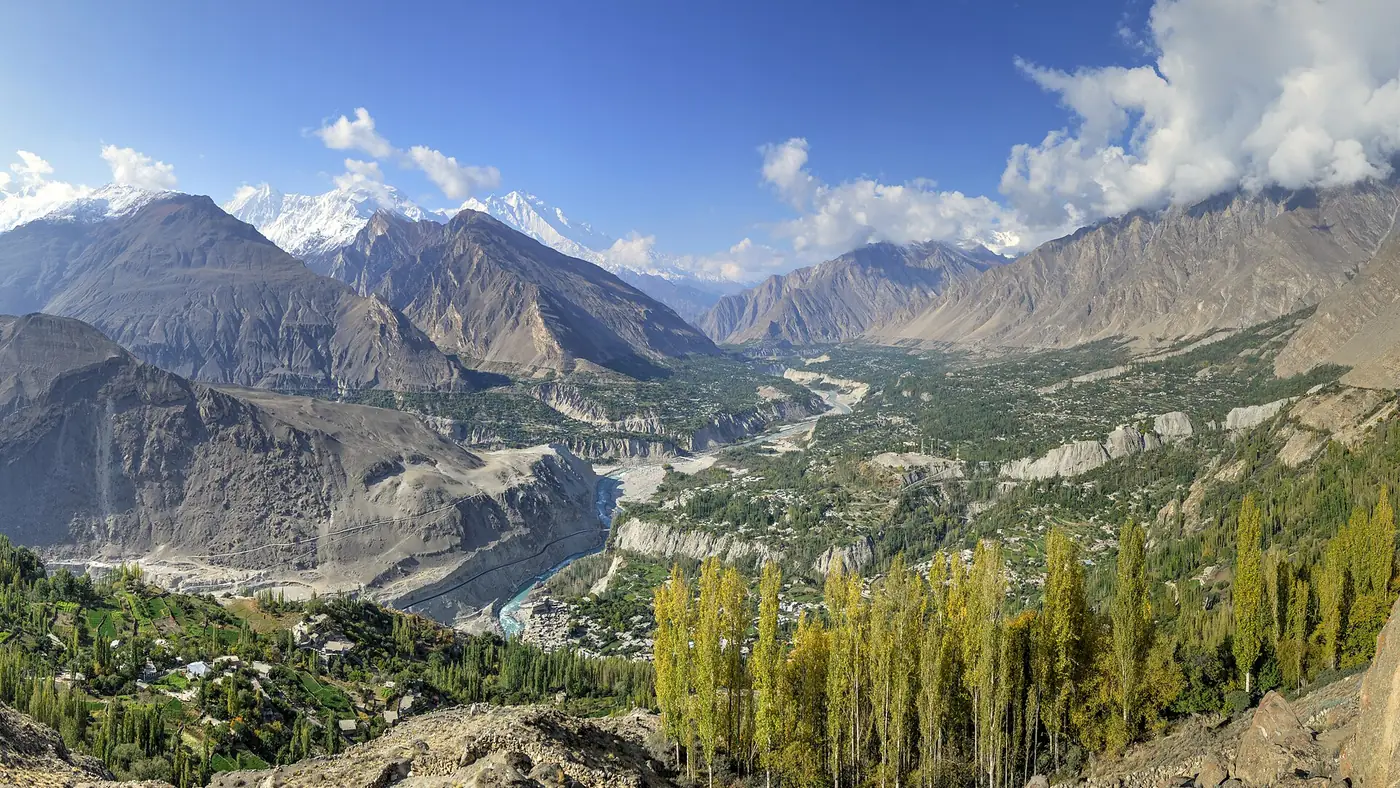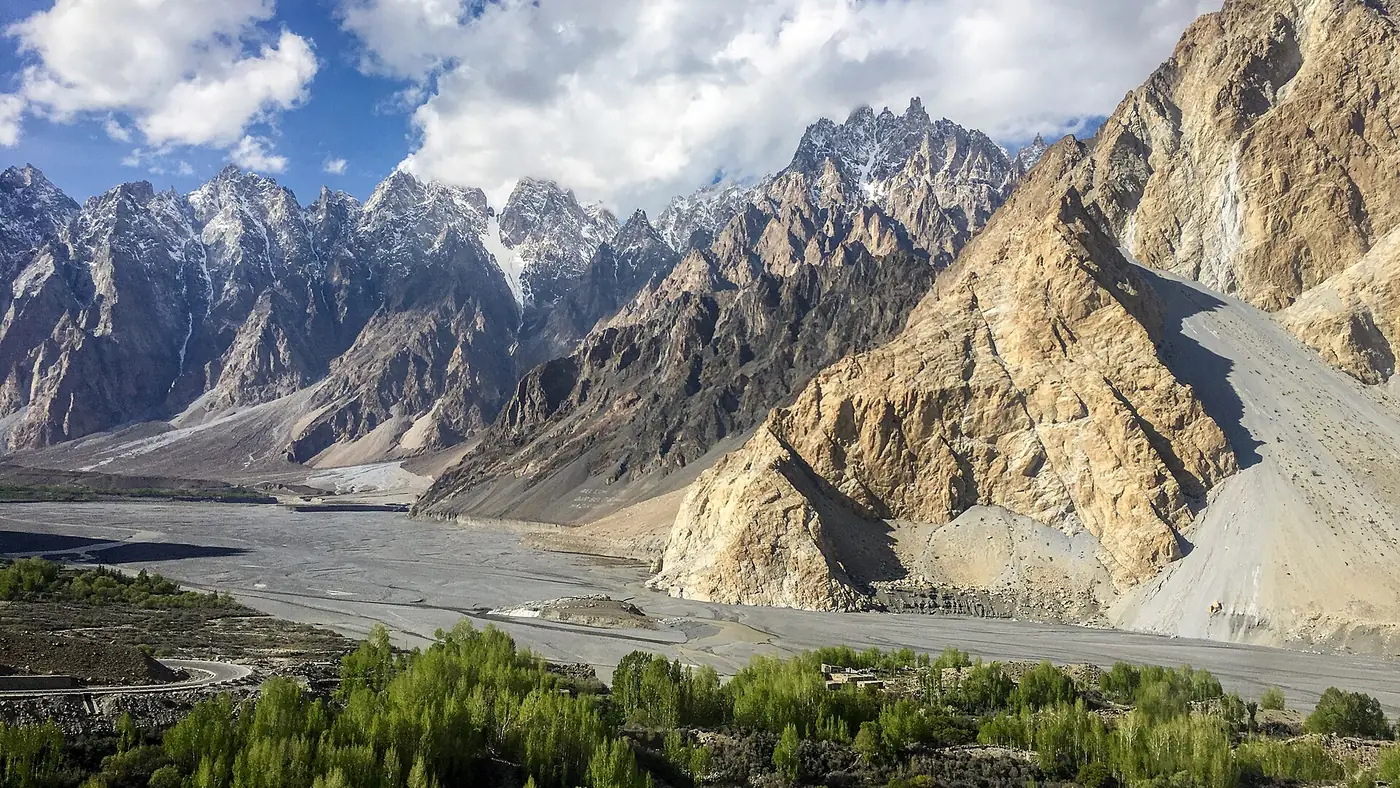
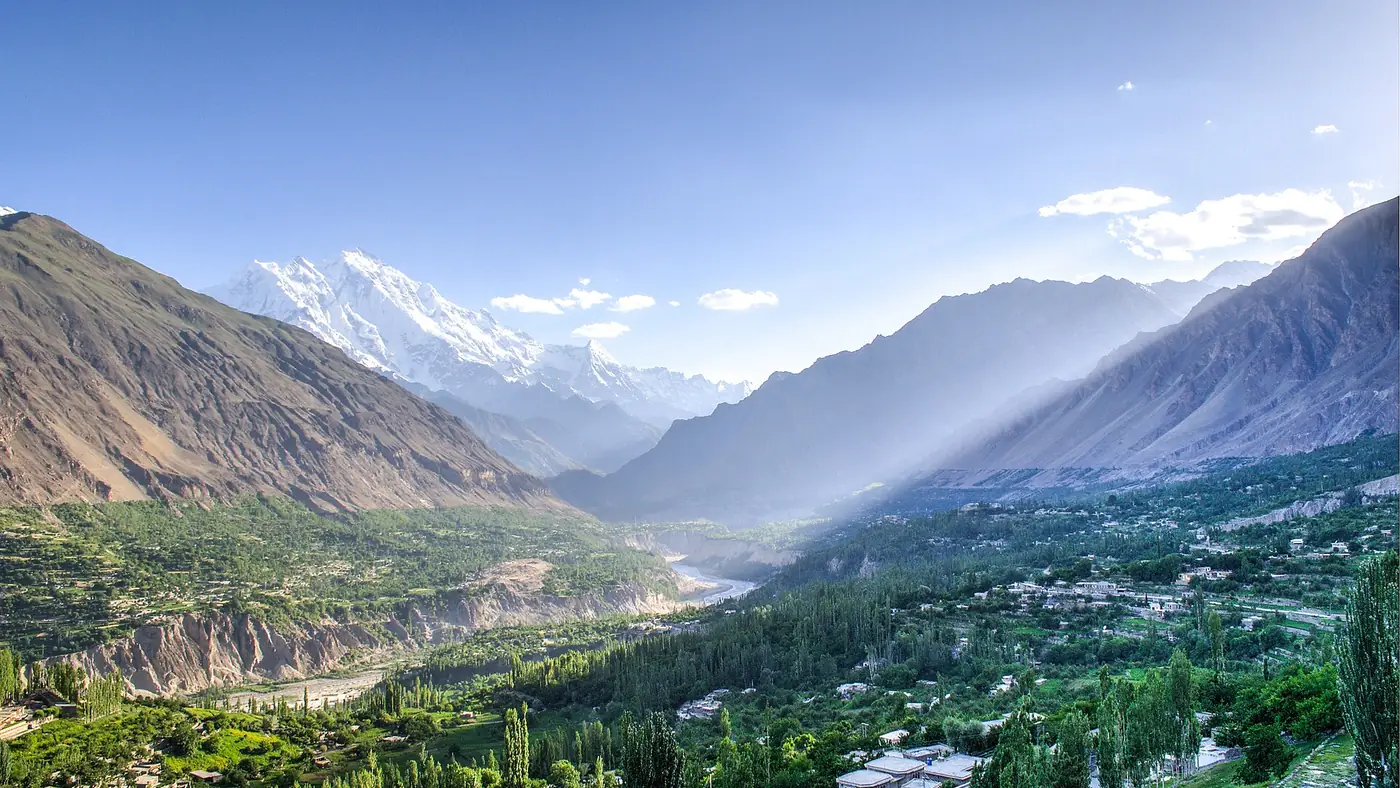
Hunza in summer, from June to August, is warm by day, cool at night and at its busiest. Afternoons in Karimabad and Gulmit reach the mid to high 20s while Gilgit and Chilas, on the way up, sit in the mid-30s and above. It is fruit season, with cherries from June and apricots through July and August, and every road in the valley is open, including Khunjerab and Shimshal. The cost is crowds and full hotels, so book early, start each day early, and keep a spare day for the road.
This guide is about handling peak season: when the crowds are worst and how to avoid them, what ripens when, what to book first, and how to stay cool. For how summer compares with blossom and autumn, see our guide to the best time to visit Hunza.
| At a glance | |
|---|---|
| Days in Karimabad and Gulmit | Mid to high 20s °C |
| Nights | About 12 to 15 °C |
| Busiest times | School holidays, Eid, 14 August and weekends |
| Fruit | Cherries June into July; apricots July and August |
| Book first | Hotels for weekends and holidays; family and view rooms |
| Main risk | Landslides and floods, worst in July and August |
| Quietest summer weeks | Early June and the last week of August |
What is Hunza like in summer?
Green and full. The terraces are at their greenest, the water channels run high, and the days are long enough for a morning walk, an afternoon drive and a sunset. Every high road is open, from Khunjerab to the jeep tracks into the side valleys.
It is warm rather than hot. Averages for Gulmit, at the same height as Karimabad, are about 25 °C by day and 12 °C at night in June, rising to about 29 and 15 °C in July. On a clear afternoon the sun is fierce, and after dark you will want a fleece on the hotel terrace. What summer lacks is crisp air: haze is common, and the clear views of Rakaposhi that autumn brings are less reliable.
When are the crowds worst?
Summer in Hunza follows the calendar in the plains:
- School holidays. In 2026 Punjab's schools closed from 22 May to 24 August, and the whole of that stretch is family travel season.
- Eid. Eid al-Adha moves about eleven days earlier each year, so in 2027 it falls in mid-May, before the summer holidays begin, but it still fills the valley.
- 14 August and weekends, when hotels in Karimabad fill and the traffic builds on the Karakoram Highway.
Ashura also needs a thought. In 2026, 9 and 10 Muharram fell on 25 and 26 June; in 2027 they fall around mid-June, depending on the moon. Processions and tight security in Gilgit, and suspended mobile service in sensitive areas, make it a day to stay put rather than drive through.
The crowds gather in the same few places. Attabad Lake's main landing is packed from late morning, and the bazaar road through Karimabad can jam in the evening. A few habits keep you ahead of them:
- Be at Attabad by 8 or 9 in the morning, when the water is calm and the boats are free.
- Walk Karimabad in the evening rather than trying to drive through it.
- Do Khunjerab on a weekday if you can move it.
- Sleep in Altit, Gulmit or Passu for quieter evenings than the Karimabad bazaar.
Fruit season: what ripens when
Summer is when Hunza's orchards pay off. The order is roughly:
- Cherries come first, from June into July.
- White mulberries (shahtoot) ripen in early summer, from the big old trees along the lanes and water channels.
- Apricots, the valley's defining fruit, ripen through July and August. By late summer you will see them drying on rooftops, and the new season's dried apricots reach the bazaars from then on.
As with the blossom, the fruit ripens a little later in Gojal than in central Hunza, so if Karimabad's cherries are finished, Gulmit's may not be.
Buy from stalls and orchard owners, and never pick from a tree without asking: every tree belongs to someone. Wash fruit in bottled or boiled water before eating it, especially with children, and go easy on the first day.
What to book first
Summer is the one season when leaving things late costs you. In rough order of importance:
- Your Hunza hotel, for weekends, Eid, 14 August and any date in July. Family rooms and rooms facing the valley go first. Ask for a booking you can move by a day, because a landslide on the way up can make you late. Our guide to where to stay in Hunza helps you choose the area.
- Flights to Gilgit, if you are flying. They fill in summer and are cancelled when cloud sits in the valleys, so hold a fallback plan by road.
- A car and driver, if you are not driving yourself, as early as you can for July and August.
- The night on the way. If you are driving, book Naran or Chilas ahead so you are not hunting for a room after a long day.
Jeeps for Shimshal and the side valleys can usually be arranged a day or two ahead through your hotel.
Staying cool on the way and in the valley
The heat that catches people out is on the road, not in Hunza. Chilas, where most drivers spend a night, reached 48.5 °C on 5 July 2025, and Gilgit averages 34 to 36 °C on summer afternoons.
- Drive the low stretches early. Leave Chilas at first light and be climbing towards Hunza before the worst of the afternoon.
- Book a Chilas hotel with working air conditioning, and ask about the generator.
- Carry plenty of water and some food. A breakdown or a landslide queue in the Indus gorge on a July afternoon is hard on anyone.
In the valley itself, the sun matters more than the air temperature. At 2,500 metres it burns fast, so wear a hat, sunglasses and high-factor sunscreen, and plan walks for the morning and late afternoon, with a slow lunch in the shade between them. For cooler air, Gojal is breezier than Karimabad, and at the Khunjerab Pass it can be close to freezing even in July, so carry a warm jacket.
Summer floods and the spare day
Hunza gets little rain, but summer is when the glaciers melt fastest and monsoon storms reach the mountains, and together they bring floods and landslides. In May 2022 an outburst from the Shishper glacier swept away the Karakoram Highway bridge at Hassanabad, just below Aliabad, and in July 2026 heavy rain blocked the highway at several points between Dasu and Hunza.
Keep one spare day in any summer trip, drive early, never stop on the fan of a side stream or drive through water crossing the road, and check the Gilgit-Baltistan tourism department's advisories before long drives. Our guide to Gilgit-Baltistan in summer covers the flood season across the region.
Getting there in summer
From about June the Babusar route through Naran is open, and it avoids the Karakoram Highway through Kohistan. Overseas visitors should know that the UK government's travel advice advises against all travel on the highway between Mansehra and Chilas; other governments may say the same, and travelling against that advice can void insurance. Our Islamabad to Hunza road guide compares the two routes.
June, July or August?
- June: the pick of the summer. Everything is open, cherries are in, the monsoon has not arrived, and the school-holiday crush builds only towards the end of the month.
- July: apricots and the longest days, but the busiest weeks and the highest flood risk.
- August: apricots and drying fruit, 14 August crowds, and continued flood risk that eases towards the end of the month, when schools reopen.
If your dates are flexible, the last week of August and early September keep the summer weather with far fewer people.
Is summer the right time for your Hunza trip?
Summer is right if school holidays decide your dates, if you want Khunjerab or Shimshal, or if the fruit is part of the point. It is the easiest season with children, because every road is open and the nights are mild. Our nine-day Gilgit, Hunza and Khunjerab tour runs in these months for that reason.
It is the wrong time if you dislike crowds, want the clearest mountain views, or have a fixed return date with no room for a closed road. For those trips, autumn or late spring suits better; our page on when to go sets the seasons across the north side by side.
Frequently asked questions
Is Hunza hot in summer?
Not by the standards of the plains. Karimabad and Gulmit average the mid to high 20s by day and 12 to 15 °C at night. The sun is strong, and the heat on the drive through Chilas is the bigger challenge.
Is Hunza crowded in summer?
Yes, especially during school holidays, Eid, 14 August and weekends. Attabad Lake is busiest from late morning and the Karimabad bazaar road in the evening, so go early and walk in town.
When is cherry season in Hunza?
Cherries ripen from June into July, a little later in Gojal than around Karimabad. Apricots follow in July and August.
Do I need to book hotels in Hunza in advance in summer?
Yes, for weekends, Eid, 14 August and all of July. Ask for a booking you can move by a day in case a landslide delays you.
Is it safe to travel to Hunza in July and August?
Yes, with care. These are the months of flash floods and landslides, so keep a spare day, drive early and check road advisories before long drives.
What should I wear in Hunza in summer?
Light clothes, a sun hat and sunglasses by day, a fleece or light jacket for the evening, and a warm jacket for any trip to the Khunjerab Pass.