
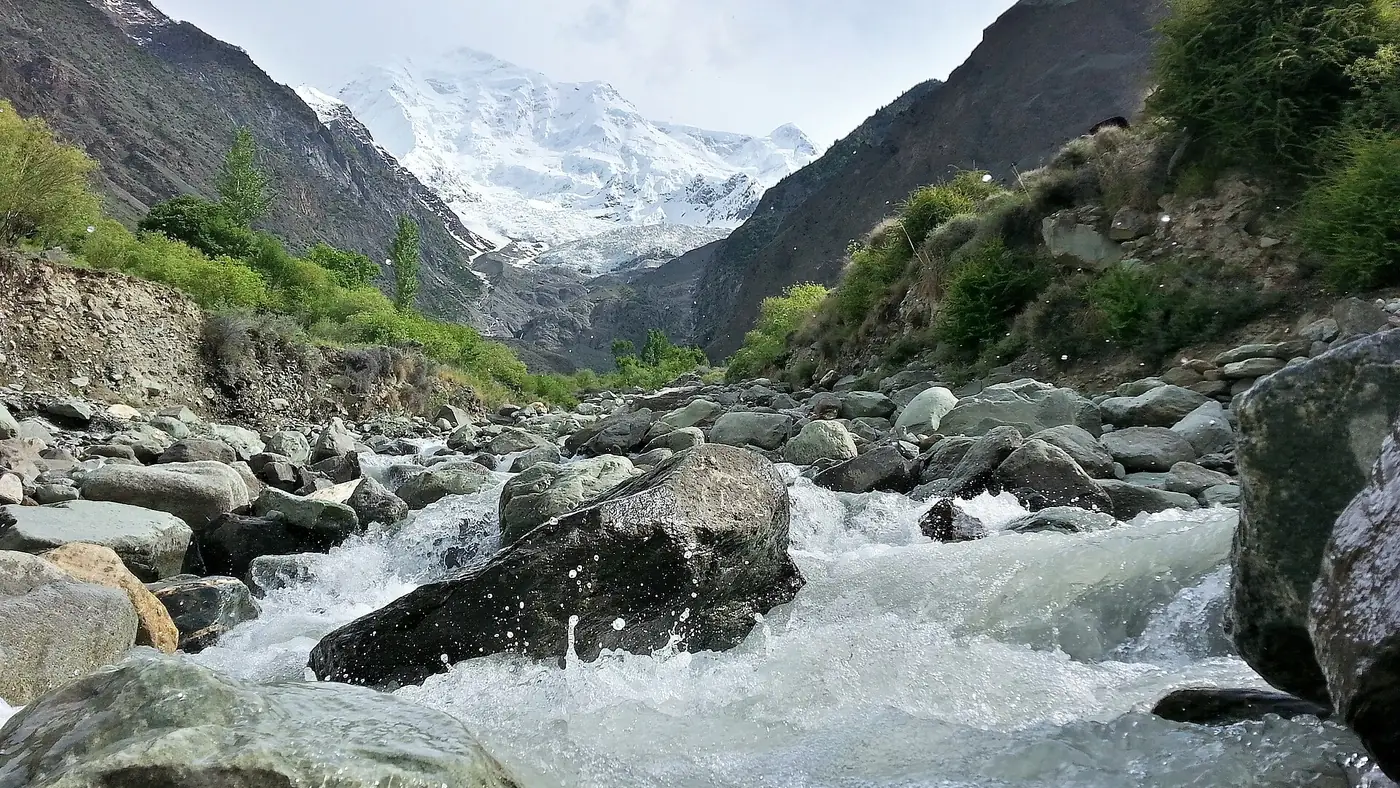
Gilgit-Baltistan in summer, from June to August, is the only time of year when everything is open at once: Deosai, the Khunjerab Pass, the Babusar road, Fairy Meadows and the trekking routes. It is also the busiest season and the riskiest one on the roads. The low valleys are hot, with Gilgit averaging around 35 °C in the afternoon, while Hunza, Skardu and the high side valleys stay comfortable. The summer rules are simple: book rooms and flights early, sleep high, and keep a spare day for landslides.
This guide covers how hot each area gets, where to go to stay cool, when the crowds peak, what to book ahead, and how the monsoon and glacier melt affect the roads.
| At a glance | |
|---|---|
| Everything open | June to August, with Deosai from about late June |
| Afternoons | Gilgit 34 to 36 °C; Skardu 29 to 32 °C; Gulmit in Hunza 25 to 29 °C |
| Nights | About 12 to 18 °C in the valleys; close to freezing on Deosai |
| Busiest times | Eid, the school holidays, 14 August and weekends |
| Main risk | Flash floods and landslides, worst in July and August |
| Book early | Hotels in Hunza and Skardu, Skardu flights, family rooms |
| Coolest bases | Gojal, Naltar, Khaplu, Fairy Meadows, Rama |
How hot does Gilgit-Baltistan get in summer?
It depends almost entirely on height. The valley floors along the Indus are low and very hot; the places most visitors stay are much higher and much cooler.
- Chilas, at about 1,265 metres, is one of the hottest places on the way north. It reached 48.5 °C on 5 July 2025.
- Gilgit, at about 1,500 metres, averages 34 to 36 °C in the afternoon from June to August.
- Skardu, at about 2,230 metres, averages 29 to 32 °C, dry and very sunny.
- Karimabad and Gulmit, at around 2,500 metres, are in the mid to high 20s by day and about 12 to 15 °C at night.
The sun at this altitude burns quickly even when the air feels mild, so hats, sunglasses and sunscreen matter more than a thicker jacket. The heat that most affects a trip is on the road: a breakdown in Kohistan or around Chilas on a July afternoon is hard on anyone, so carry plenty of water and choose a Chilas hotel with working air conditioning.
Where to go to stay cool
If the point of the trip is to escape the plains, base yourself high rather than in Gilgit.
- Gojal, upper Hunza. Gulmit and Passu sit at almost the same height as Karimabad but are quieter than the Karimabad bazaar in peak weeks.
- Naltar, about two hours from Gilgit, where July afternoons are around 22 °C among pine forest. The last stretch to the lakes is a jeep track; our Naltar Valley guide explains how it works.
- Khaplu, about three hours from Skardu at 2,600 metres, and calmer than Skardu town.
- Fairy Meadows, at about 3,300 metres under Nanga Parbat, reached by jeep and then on foot. Nights are cold even in July.
- Rama, a meadow and lake at about 3,300 metres above Astore, reached by jeep.
- Deosai, at over 4,000 metres, open from about late June. Days are cool and nights near freezing, so pack for winter if you camp.
Remember that sleeping above 3,000 metres on your first or second night is a bad idea for anyone. Spend a night or two in Hunza or Skardu first. Our travel guide has more on altitude.
When are the crowds worst?
Summer in Gilgit-Baltistan is shaped by the calendar in the rest of Pakistan.
- The school holidays. In 2026 Punjab closed its schools from 22 May to 24 August, earlier than usual because of the heatwave. The whole of that stretch is family travel season.
- Eid al-Adha. In 2026 it fell on 27 May, with public holidays from 26 to 28 May, and it moves about eleven days earlier each year, so in 2027 and 2028 it falls in May, at the very start of the season.
- Ashura. On 9 and 10 Muharram, which fell on 25 and 26 June in 2026, there are processions and tight security in Gilgit and Skardu, and mobile services are often suspended in sensitive areas. Plan a quiet day rather than a long drive.
- 14 August and summer weekends. Expect traffic at Attabad Lake, the Karimabad bazaar and the Babusar road, and full hotels.
Midweek in June, or the last week of August once Punjab's schools have reopened, gives you the summer weather with fewer people. Our guide to the northern areas in June looks at the start of the season in detail.
What to book ahead
Summer is the one season when leaving things to the last minute costs you.
- Hotels in Hunza and Skardu, especially family rooms and rooms with a view, for Eid, 14 August and weekends. Ask for a booking you can move if a road closes, and check whether the hotel has a generator.
- Flights to Skardu, which fill up and rise in price. In 2026, one-way fares from Islamabad ran from about PKR 13,000 for an early promotional fare to PKR 35,000 or more for a late summer booking. Prices change constantly, so treat these as rough.
- A car and driver, if you are not driving yourself, as early as you can for July and August.
- Chilas or Naran on the road north, so you are not hunting for a room after a ten-hour drive.
Deosai jeeps and Fairy Meadows jeeps are usually arranged locally, through your hotel or at the jeep stand, a day or so before.
Monsoon, glacier melt and closed roads
This is the part of a summer trip to plan hardest. Rain in the main valleys is light, but July and August bring the fastest glacier melt and monsoon storms over the side valleys, and together they cause flash floods, glacial lake outbursts and landslides that close roads.
The 2026 season showed how widely it can hit:
- Early May: the Gilgit-Baltistan tourism department issued an advisory for the season, warning of heavy rain, landslides, flash floods and glacial lake outburst floods, and asking visitors to check road status and avoid travelling after dark.
- Around 23 July: heavy rain blocked the Karakoram Highway at several points from Dasu to Hunza and Nagar, as well as the Babusar road, the Skardu road and the roads to Naltar, Ghizer and Astore, stranding thousands of people including tourists.
- Late July: the Skardu road near Haramosh stayed cut for several days while floodwater held up repairs.
- Early August: fresh floods closed the Karakoram Highway near Chilas.
Sensible habits for a summer trip:
- Keep a spare day, and treat it as a real spare rather than a bonus day.
- Drive early. Glacier-fed streams run highest in the afternoon, and storms tend to build later in the day.
- Don't stop on the fan of a side stream, and never drive through water flowing across the road.
- Stay off riverbanks and gravel bars, however calm the water looks.
- Check before every long drive. The Gilgit-Baltistan tourism department's news page posts advisories, and our guide to checking Karakoram Highway road status lists who to ask.
Which summer month is best?
- June: everything but Deosai is open by the middle of the month, the monsoon has not arrived, and the valleys are fresh and green. The best summer month for most families.
- July: Deosai in flower and the high treks in season, but the peak of the flood risk and the school-holiday crowds.
- August: similar to July, with 14 August crowds and continued flood risk, easing towards the end of the month.
If your dates are flexible, early September keeps almost everything open with fewer floods and people.
Is summer the right time for your trip?
Summer is the right time if you want Deosai, Khunjerab, Fairy Meadows or a trek, or if school holidays decide your dates. It is the only season when a single trip can cover all of them, and the long days make the driving easier. Our seven-day Skardu and Deosai tour runs in this window for exactly that reason.
It is the wrong time if you dislike crowds, or if a fixed return date and no spare day would leave you anxious every time it rains. For the valleys alone, April, May, September and October are calmer and often cheaper. Our page on when to go sets the seasons across the north side by side.
Frequently asked questions
Is Gilgit-Baltistan hot in summer?
Gilgit and Chilas are, with afternoons of 35 °C and more. Hunza and Skardu are much more comfortable, in the high 20s to low 30s, and nights in the valleys are cool.
Is it safe to visit Gilgit-Baltistan in July and August?
Yes, with care. These are the months of flash floods and landslides, so keep a spare day, drive early, stay off riverbanks and check road advisories before long drives.
Which is the coolest place in Gilgit-Baltistan in summer?
Among places you can stay, the high valleys: Naltar, Fairy Meadows, Rama and, for a night of camping, Deosai. For an easier base, Gulmit and Passu in upper Hunza are cooler and quieter than Gilgit.
Do I need to book hotels in advance in summer?
Yes, for Eid, 14 August and weekends in Hunza and Skardu. Ask for a booking you can change if a road closure delays you.
When does Deosai open in summer?
Usually from about late June, once the snow clears from the track, until the first heavy snow in autumn. July and early August are the best weeks for wildflowers.
Is June a good time to visit Gilgit-Baltistan?
Yes. For most people it is the best summer month: long days, green valleys, open passes and less flood risk than July and August.
.jpg)