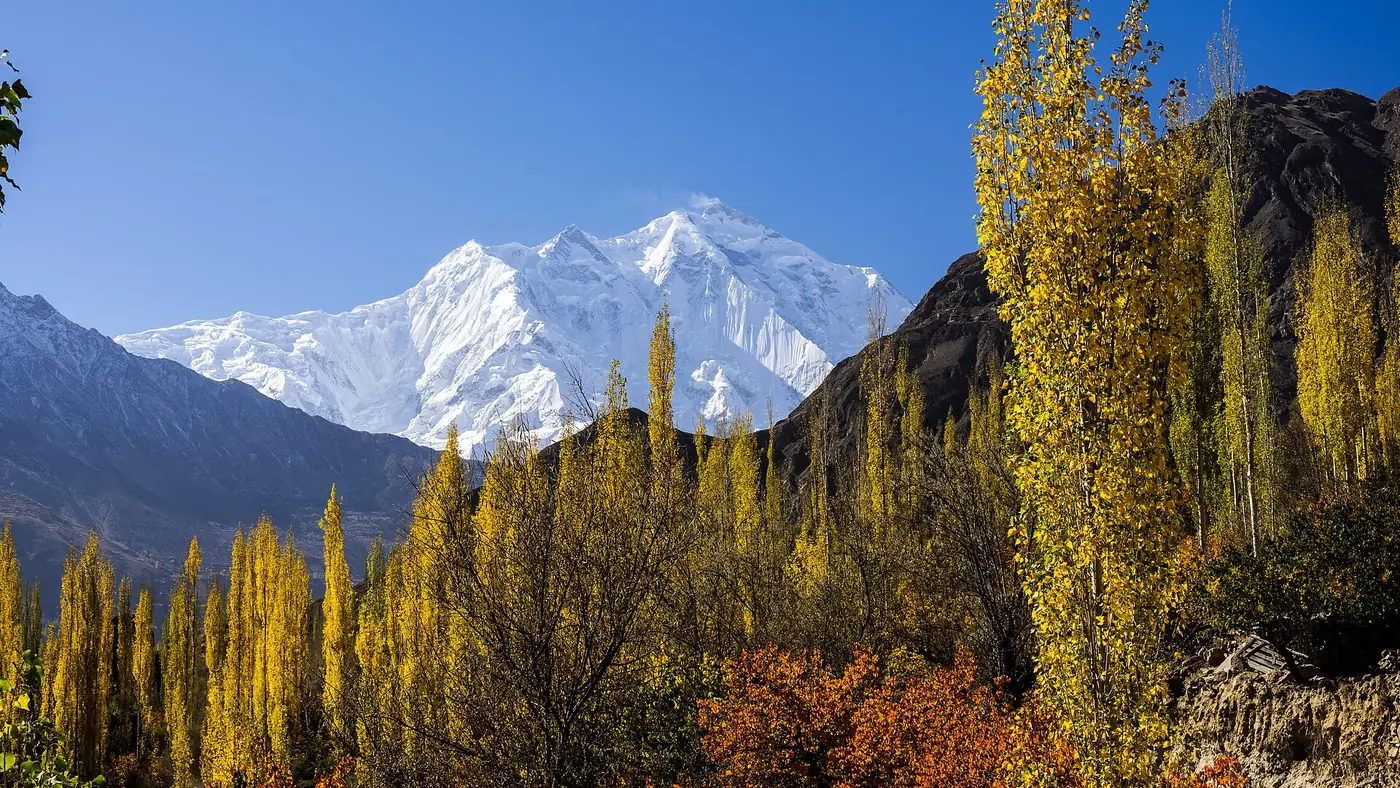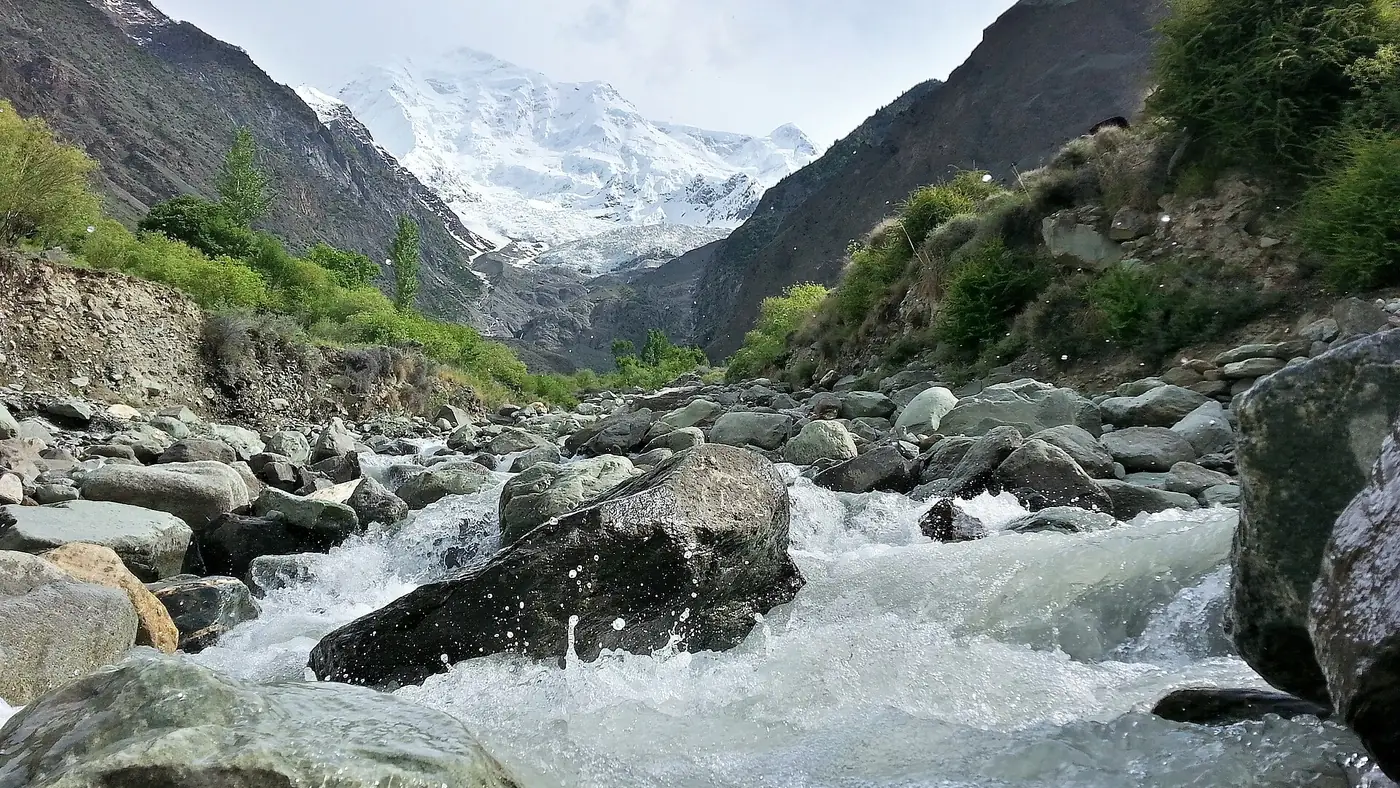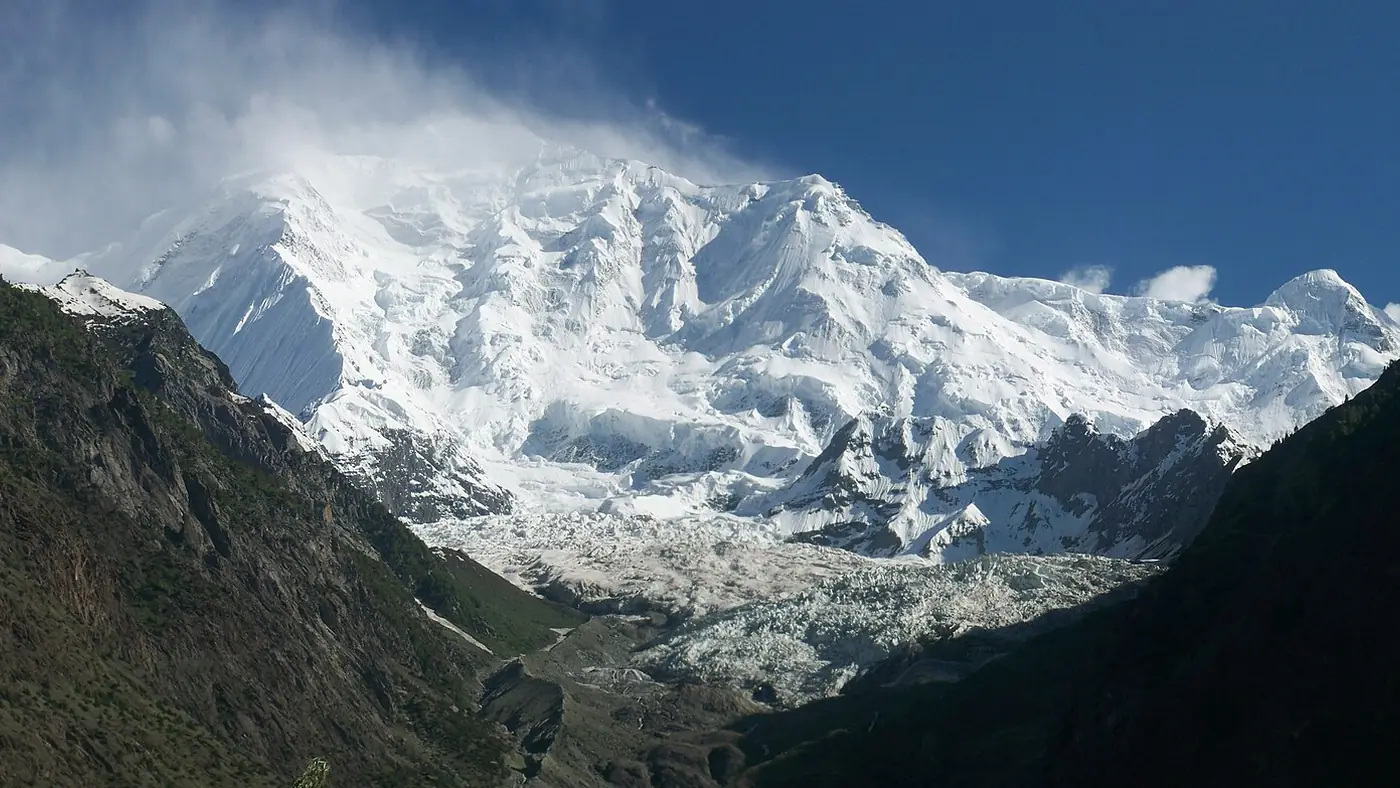
This Hunza and Skardu itinerary fits both valleys into ten days by flying into Skardu, crossing to Hunza on the Gilgit–Skardu road, and driving home down the Karakoram Highway. You get four nights in Baltistan, including a spare day that also covers a late flight, four nights in Hunza, and one night on the road home. It works best from late June to mid-September, when Deosai, the Khunjerab Pass and the Babusar road are all open at once.
It runs the opposite way to our 10-day northern areas itinerary, which drives up to Hunza first and flies home from Skardu. Below is why you might choose this direction, where to sleep each night, how the crossing day works, and what to change outside summer.
| At a glance | |
|---|---|
| Route | Fly Islamabad to Skardu; Skardu to Hunza by road; drive home on the KKH |
| Nights | Skardu 4, Karimabad 2, Gulmit or Passu 2, Chilas 1 |
| Crossing day | Skardu to Karimabad, about 7 to 8 hours with stops |
| Highest points | Deosai, over 4,000 m; Khunjerab Pass, 4,693 m |
| Spare day | Day 4, in Skardu |
| Best window | Late June to mid-September |
| Transport | One car with driver throughout, plus a local jeep for Deosai |
Skardu first or Hunza first?
Both directions use the same connecting road, so the choice is really about where you put the flight and where you put the risk.
Skardu first, as here, puts the flight at the start. Skardu takes jets, and in 2026 PIA, Airblue and AirSial all flew there from Islamabad, so it is the more dependable airport to fly into. A cancelled flight costs a day at the beginning, which the spare day absorbs, instead of your return to work. The altitude comes in a sensible order too: Deosai after two nights at about 2,200 metres, Khunjerab after four more at around 2,500.
Hunza first suits people driving from home who would rather end with a flight than a long drive. Its weak point is the last day: a cancelled Skardu flight then means a late return, or two days on the road.
The version to avoid is flying into Gilgit and out of Skardu with no slack at either end. Gilgit is served only by PIA's small turboprops, which need clear weather to land.
The ten days in brief
| Day | Plan | Driving | Night |
|---|---|---|---|
| 1 | Fly to Skardu; Kachura lakes in the afternoon | About 1.5 hours | Skardu |
| 2 | Shigar Fort, Amburiq mosque, Sarfaranga and Katpana | 2 to 3 hours | Skardu |
| 3 | Deosai by jeep | 6 to 8 hours | Skardu |
| 4 | Spare day, or Khaplu if unused | About 6 hours for Khaplu | Skardu |
| 5 | Skardu to Karimabad | 7 to 8 hours | Karimabad |
| 6 | Baltit, Altit and Duiker | Under an hour | Karimabad |
| 7 | Attabad, Hussaini and Passu | 1 to 1.5 hours, plus stops | Gulmit or Passu |
| 8 | Khunjerab Pass and back | 5 to 6 hours | Gulmit or Passu |
| 9 | Upper Hunza to Chilas | About 7 hours | Chilas |
| 10 | Chilas to Islamabad, by Babusar or the KKH | 10 to 13 hours | Home |
Days 1 to 4: Skardu, Shigar and Deosai
Day 1. The flight from Islamabad takes about an hour. Keep the afternoon gentle: Shangrila and Upper Kachura, the two lakes 35 to 45 minutes west of town, are enough for a first day at altitude.
Day 2. Shigar is about an hour north of Skardu. See the restored 17th-century fort, now a Serena heritage hotel, and the wooden Amburiq mosque, stop at the Sarfaranga dunes on the way back, and finish at the Katpana cold desert in the last hour of light. For one special night, swap a Skardu night for Shigar Fort; it adds about an hour to the Deosai day.
Day 3. Deosai needs a local jeep: the road is paved only as far as Sadpara Lake. Go out towards Sheosar Lake and back, with warm layers, water and food, because there is no shop and no signal. Our guide to the drive from Skardu to Deosai covers the route.
Day 4. This day protects the rest of the trip. If your day 1 flight was cancelled, everything moves back by a day and Khaplu drops out. If not, drive three hours up the Shyok valley to Khaplu Palace and the Chaqchan mosque, or rest. Either way, check the road to Gilgit in the evening.
Day 5: crossing from Skardu to Hunza
The whole plan depends on this day. The Skardu road, the S-1, runs 167 km down the Indus to the Karakoram Highway near Jaglot. Rebuilt as a two-lane road and reopened in December 2021, it now takes about four hours.
- Leave Skardu by 7, down the Rondu gorge with the river beside you.
- Join the KKH near Jaglot, and stop at the viewpoint where the Karakoram, the Himalaya and the Hindu Kush meet.
- Lunch in Gilgit, about an hour north.
- Drive two to three hours up the Hunza valley, stopping at Ghulmet for Rakaposhi, and reach Karimabad in the late afternoon.
The Skardu road still runs under loose, steep slopes, and floods and rockfall close it in a bad season: in late July 2026 flood damage near Haramosh shut it for several days. If it is closed on the evening of day 4, stay put and use the spare day. Your hotel and the local drivers usually hear about closures first.
Days 6 to 8: Hunza, from Karimabad to the border
Day 6 is on foot around Karimabad: Baltit Fort for the first tour of the morning, Altit and its garden after lunch, and Duiker for sunset over Rakaposhi.
Day 7 moves you north: a boat on Attabad Lake in the calm of the morning, then the Hussaini bridge and the Passu Cones. Sleep in Gulmit or Passu rather than going back to Karimabad. It saves an hour or more each way on the Khunjerab day, and the evenings are quieter.
Day 8 is the drive to the Chinese border at 4,693 metres. Fill up in Sost, pay the park fee in cash at the Dih checkpoint, and keep the visit at the top to about an hour. Our Khunjerab Pass guide covers the checkpoint and the altitude.
Days 9 and 10: the drive home
Day 9 is about seven hours from upper Hunza to Chilas, through Gilgit and down the Indus. Chilas is very hot in summer, so book a hotel with working air conditioning.
Day 10 is ten to thirteen hours to Islamabad. From late May to autumn you can cross the Babusar Pass and come down through Naran, avoiding Kohistan; night travel over the pass has been banned in recent seasons, so be over the top by early afternoon. Otherwise take the KKH through Besham. Decide on the day, after checking the weather over the pass.
Keep the day after you get home free. A slide on day 9 or 10 has no spare day behind it. If you would rather fly home, drive only as far as Gilgit on day 9 and take the morning flight on day 10, with the road as your fallback.
Changing the plan for the season
- July and August. Everything is open, but this is flood season: in late July 2026 the KKH, the Skardu road and the Babusar road were all blocked at once. Treat day 4 as a genuine spare.
- May to mid-June, and late September to October. Deosai is closed or closing, so make day 3 Khaplu and keep day 4 spare. Babusar opened on 25 May in 2026; before then, day 10 has to go by the KKH.
- April. Blossom in both valleys, but Khunjerab is shut until about early May. Replace day 8 with Nagar and the Hopper glacier.
- November to March. Not a good time for this plan: the passes are closed, Deosai is under snow, and one blocked road can cost two days.
Is ten days enough for Hunza and Skardu?
It is enough for the best of both, with Deosai, Khunjerab and a day in hand, but it is not relaxed: three long drives and two long days at high altitude.
It suits couples and groups of friends who are happy in a car. It suits families with young children and older parents less well: for them, one valley with fewer hotel changes is usually the better trip, and our comparison of Hunza and Skardu helps you pick. Our seven-day Skardu and Deosai tour gives Baltistan a week of its own, from PKR 90,000 per person, and the nine-day Gilgit, Hunza and Khunjerab tour does the same for Hunza.
Frequently asked questions
Can you visit Hunza and Skardu in one trip?
Yes. The Gilgit–Skardu road links them in a single day's drive, so ten days is enough to see both, with Deosai, the Khunjerab Pass and a spare day.
How far is Skardu from Hunza by road?
Skardu to Karimabad takes about seven to eight hours with stops: about four hours on the Skardu road to the Karakoram Highway near Jaglot, then Gilgit, then two to three hours up the Hunza valley.
Should I go to Skardu or Hunza first?
Skardu first if you are flying in, because Skardu has more flights than Gilgit and a cancelled flight at the start costs less than one at the end. Hunza first if you are driving from home and want to finish with a flight.
Are there flights between Skardu and Gilgit?
No. The two airports are each linked to the south, not to each other, so the crossing between the valleys is always by road.
What is the best month for a Hunza and Skardu trip?
Late June to mid-September, when Deosai, Khunjerab and the Babusar road are all open. September is usually the most settled month, with fewer floods than July and August.
Do I need a jeep for this itinerary?
Only for Deosai. The rest of the route is paved, and a car in good condition with an experienced mountain driver is enough.