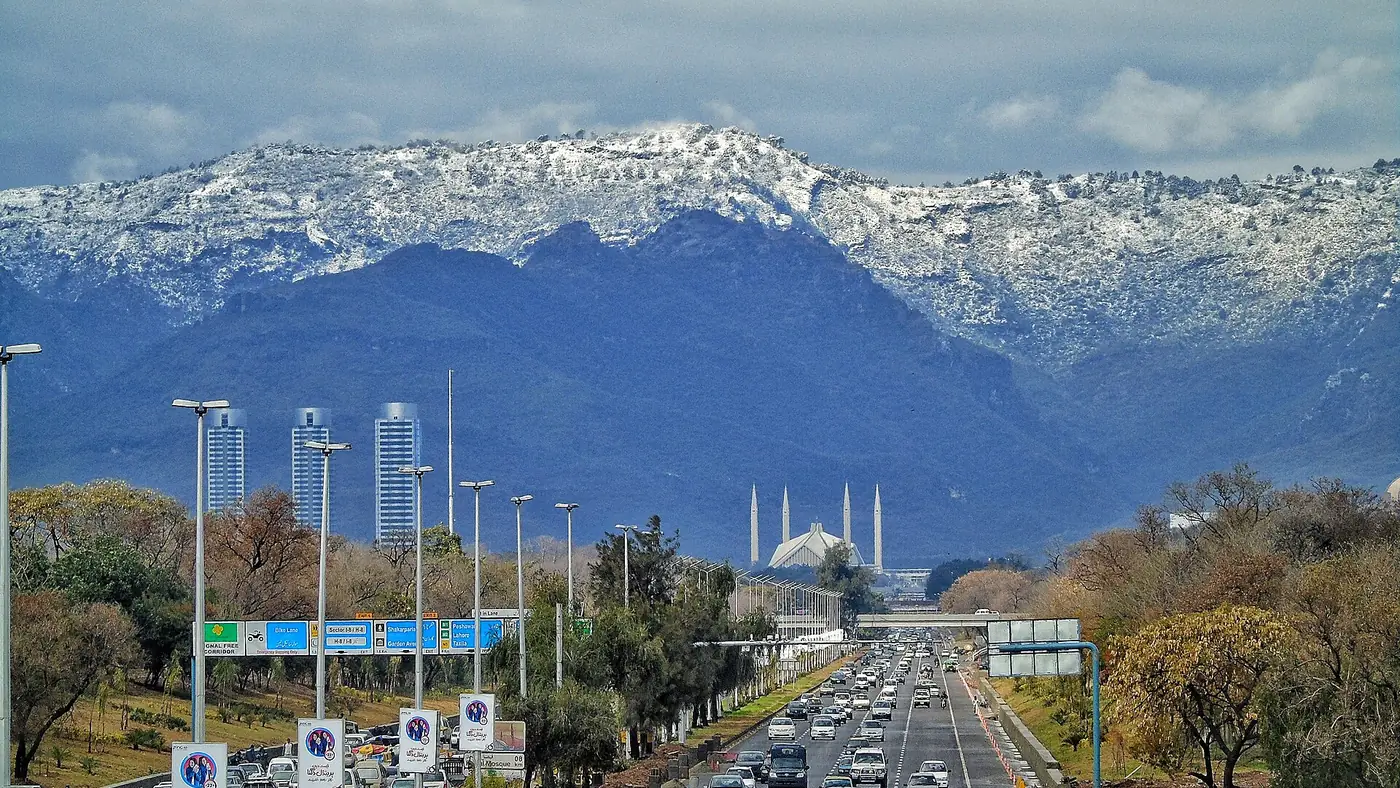
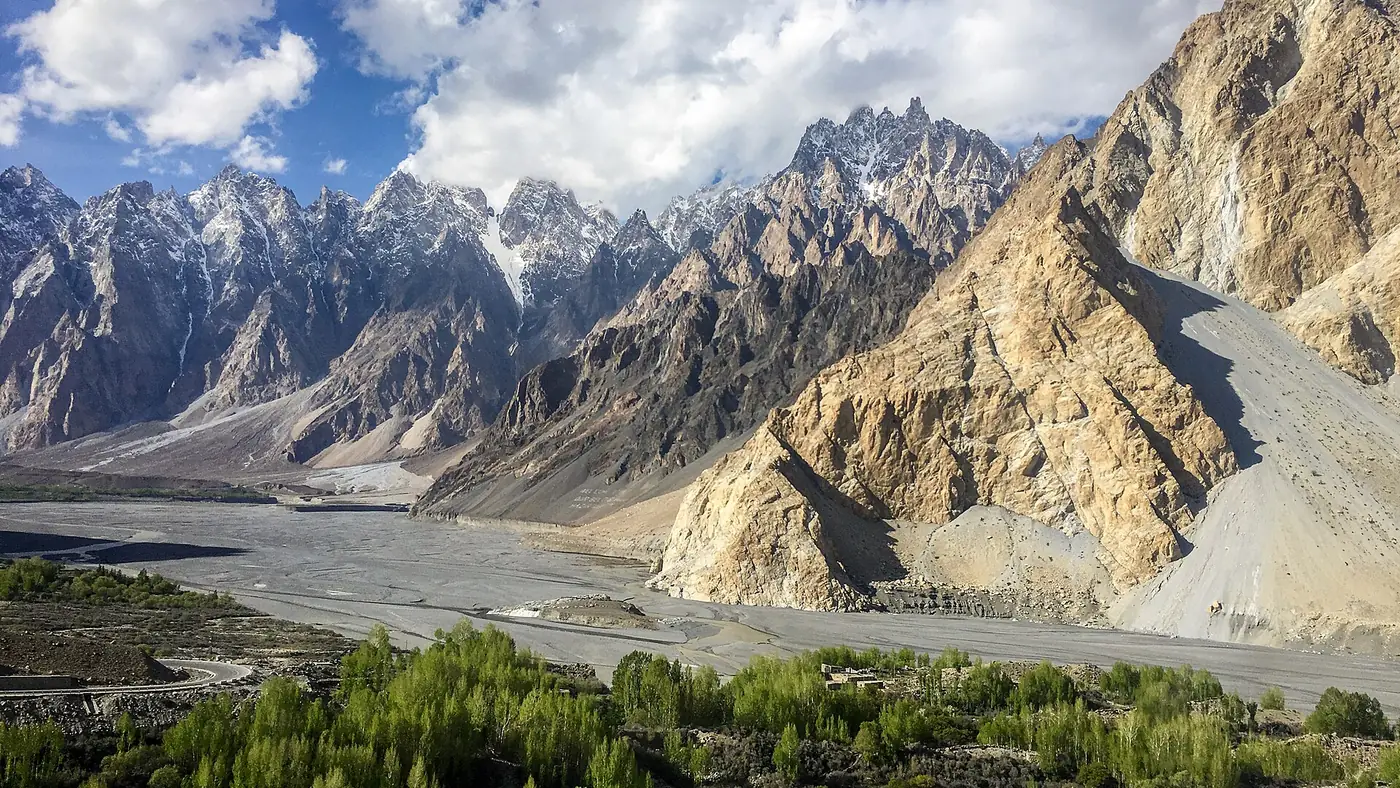
This 10 days northern areas itinerary drives from Islamabad to Hunza, takes a day trip to the Khunjerab Pass, crosses to Skardu for the lakes and the Deosai plateau, and flies back to Islamabad. It builds in two spare days, one in Hunza and one at the very end, because on this route a landslide or a cancelled flight is a matter of when, not if. It works best from June to September, when Khunjerab, Deosai and the Babusar Pass are all open.
Below is the plan in outline, then each day in detail, followed by what changes outside the summer, an all-road version, and a frank look at whether ten days is enough.
| At a glance | |
|---|---|
| Route | Islamabad, Chilas, Karimabad, Khunjerab, Skardu, Deosai, fly to Islamabad |
| Nights | Chilas 1, Karimabad 4, Skardu 3, Islamabad or home 1 |
| Spare days | Day 5 in Hunza and day 10 at the end |
| Longest drive | Islamabad to Chilas, 10 to 13 hours |
| Highest points | Khunjerab Pass 4,693 m; Deosai over 4,000 m |
| Best months | June to September |
| Transport | A car with a driver for the road, a local jeep for Deosai, one flight |
The ten days in brief
| Day | Plan | Driving time | Night |
|---|---|---|---|
| 1 | Islamabad to Chilas, via Babusar in summer or the KKH | 10 to 13 hours | Chilas |
| 2 | Chilas to Karimabad, via Gilgit and Rakaposhi | 5 to 6 hours | Karimabad |
| 3 | Baltit, Altit and the Duiker viewpoint | Under an hour | Karimabad |
| 4 | Attabad, Passu and the Khunjerab Pass | 7 to 8 hours | Karimabad |
| 5 | Spare day; Nagar and Hopper if unused | 2 to 3 hours | Karimabad |
| 6 | Karimabad to Skardu, via Gilgit and Jaglot | 7 to 8 hours | Skardu |
| 7 | Kachura lakes, Shigar and Katpana | 2 to 3 hours | Skardu |
| 8 | Deosai plateau by jeep | 6 to 8 hours | Skardu |
| 9 | Fly Skardu to Islamabad | 1 hour in the air | Islamabad or home |
| 10 | Spare day, for a cancelled flight |
Why this order works
Three things decide it.
- Road in, air out. Flights from Skardu are more numerous than from Gilgit, with PIA, Airblue and AirSial all flying to Islamabad, so leaving from Skardu gives you the best chance of getting home on time. Driving up first means the trip starts on schedule whatever the weather.
- Altitude in steps. Two nights at around 2,500 metres in Karimabad come before Khunjerab at 4,693, and two in Skardu before Deosai.
- A spare day in each half. Day 5 absorbs a closed Karakoram Highway, a snow closure at Khunjerab or a sick passenger. Day 10 absorbs a cancelled flight. If you don't need them, day 5 becomes a bonus and day 10 a day at home.
Days 1 and 2: Islamabad to Hunza
Day 1 is the long one. From late May or June to autumn, drive through Naran and over the Babusar Pass at 4,173 metres, down to the Karakoram Highway at Chilas. When the pass is closed, or heavy rain is forecast, take the KKH through Besham and Kohistan instead. Either way, leave Islamabad by 5 or 6 am so you arrive before dark. Chilas is low and very hot in summer, so choose a hotel with working air conditioning.
Day 2 is the good one. North of Chilas the road improves, Nanga Parbat appears near Raikot Bridge, and the viewpoint near Jaglot marks the meeting of three mountain ranges. Stop in Gilgit for lunch, then take the Hunza road past the Rakaposhi viewpoint at Ghulmet and arrive in Karimabad in the afternoon.
Day 3: Karimabad
No driving. Baltit Fort in the morning, before the tour groups, then a walk down to Altit and its fort above the river. In the late afternoon, drive up to the Eagle's Nest viewpoint at Duiker for sunset over Rakaposhi, Ultar and the Nagar peaks. Drink plenty of water and have an early night, because tomorrow goes much higher.
Day 4: Attabad, Passu and Khunjerab
Leave by 7 or 8. The highway runs through the Attabad tunnels beside the lake, then past Gulmit, Passu and Sost, the last town and the last fuel. At the Dih checkpoint you register and pay the national park fee in cash, then climb to the border at 4,693 metres. Keep the stay at the top to about an hour and go down at once if anyone feels unwell. Our Khunjerab Pass guide covers the opening season, the checkpoint and the altitude.
On the way back, stop at the Passu Cones, the Hussaini suspension bridge and Attabad Lake, where the afternoon light is better. Plan on eight to ten hours for the whole day.
Day 5: the Hunza spare day
If a landslide held you up on the way north, or snow closed Khunjerab, this is where you catch up. If everything ran to plan, choose one:
- Nagar and the Hopper glacier, across the river, grey, enormous and audible.
- Borith Lake and Gulmit, a gentler day in upper Hunza with short walks.
- A slow day in Karimabad, walking the irrigation channels and the old lanes.
Day 6: Karimabad to Skardu
A full day on the road, seven to eight hours with stops. Back down to Gilgit, south on the KKH to Jaglot, then east on the rebuilt Skardu road, which follows the Indus through a deep gorge for about four hours. It is a two-lane road now, but it runs under loose slopes and closes after heavy rain, as it did in July 2026, so check it the evening before. Arrive in Skardu, at about 2,200 metres, in the late afternoon.
Day 7: the lakes, Shigar and Katpana
Upper Kachura and Shangrila in the early morning, before the day boats start. Then an hour out to Shigar for the restored fort and the wooden Amburiq mosque, and back to the Katpana cold desert for the last hour of light, when the dunes and the snow peaks behind them are at their best.
Day 8: Deosai
Hire a local jeep for the day. The road climbs past Satpara Lake onto the plateau, which averages over 4,000 metres, and on towards Sheosar Lake. Expect marmots everywhere and, if you are lucky, a brown bear at a distance. It is a long day, ten to twelve hours out and back, cold even in July, with no shops and no signal. Take warm layers, water and food. The plateau is open roughly from June to September; our guide to the Deosai National Park covers the season and the routes across it.
Days 9 and 10: flying home, with a day to spare
Book the first flight from Skardu to Islamabad on day 9. The flight takes about an hour, and on a clear morning Nanga Parbat is in view on the way. If it is cancelled, you fly on day 10. If day 10 is cancelled too, the road is your fallback: Skardu to Islamabad is two days by car.
Don't book anything important in Islamabad or at work for day 10 or the morning after.
Changing it for the season or the road
May and October. Deosai is closed, Babusar may be, and Khunjerab can close for a day or two with snow. Take the KKH on day 1, and on day 8 drive to Khaplu, three hours up the Shyok valley, for the palace and the Chaqchan mosque, instead of Deosai.
July and August. The highest risk of landslides on the KKH and flash floods on Babusar. Check the road every morning, take the KKH if rain is forecast over Babusar, and treat day 5 as a genuine spare. Our guide to checking Karakoram Highway road status lists the sources.
All by road. If you would rather not depend on the flight, drive Skardu to Chilas on day 9 and Chilas to Islamabad on day 10. That leaves no spare day at the end, so make it an eleven-day trip if you can.
With children or older parents. Split day 1 with a night in Naran or Besham, and consider skipping Deosai. Both Khunjerab and Deosai take you above 4,000 metres for hours.
Is ten days enough for Hunza and Skardu?
It is enough to see the best of both, with Khunjerab and Deosai, and to have a buffer. What it doesn't give you is slack for extras: no Fairy Meadows, no Khaplu in summer, and not much time sitting still. Five of the ten days involve long drives.
It suits couples and groups of friends who are happy in a car and want the two headline valleys of Gilgit-Baltistan in one trip. For a first family trip, one valley done slowly is often better: our nine-day Gilgit, Hunza and Khunjerab tour spends the whole time on the Hunza side, starting from Gilgit so you can fly in, and our seven-day Skardu and Deosai trip does the same for Baltistan. With two weeks, our 14-day grand loop adds Chitral or Swat and comes home over Babusar.
Frequently asked questions
Can you do Hunza and Skardu in 10 days?
Yes. Drive to Hunza in two days, spend four nights there including Khunjerab and a spare day, cross to Skardu in a day, spend three nights there including Deosai, and fly back to Islamabad with a day to spare.
Should I visit Hunza or Skardu first?
Hunza first if you drive up and fly home, because Skardu has more flights to Islamabad than Gilgit, which makes it the more dependable place to leave from.
How far is Skardu from Hunza?
A full day: two to three hours from Karimabad to Gilgit, about an hour on to Jaglot, and about four hours on the Skardu road. Allow seven to eight hours with stops.
What is the best month for this 10-day itinerary?
June to September, when Khunjerab, Deosai and the Babusar Pass are all open. September usually has the most settled weather and fewer landslides than July and August.
Do I need a jeep for this trip?
Only for Deosai. The rest of the route is paved, and a car in good condition with an experienced mountain driver is enough. Hire the Deosai jeep through your hotel in Skardu.
Why build in two spare days?
Because landslides close the Karakoram Highway several times a season and Skardu flights are cancelled in cloud. One spare day in the middle protects Khunjerab, and one at the end protects your flight home.