Hunza vs Skardu comes down to how you are travelling and when. For a first trip by road, with family, or outside high summer, go to Hunza first: the sights sit close together along a paved highway, the season is long, and there is more to walk to from your hotel. Choose Skardu first if you are flying, if it is July or August and the Deosai plateau is the reason you are going, or if you have already seen Hunza.
Both are in Gilgit-Baltistan, both sit at a similar altitude, and both are worth a trip of their own. This comparison goes through access, scenery, where you stay, cost, family travel and season, and ends with a straight recommendation for different kinds of traveller.
| At a glance | Hunza | Skardu |
|---|---|---|
| Main base | Karimabad or Aliabad, about 2,500 m | Skardu town, about 2,230 m |
| Nearest airport | Gilgit, PIA only, small turboprops | Skardu, jets, three airlines from Islamabad |
| By road from Islamabad | Two days | Two days |
| Headline sights | Baltit and Altit forts, Attabad Lake, Passu, Khunjerab Pass | Shangrila and Kachura lakes, Katpana dunes, Shigar, Khaplu, Deosai |
| Getting around | Paved Karakoram Highway to almost everything | Paved to the valley sights; jeep for Deosai |
| Best months | April to early November | April to October; Deosai roughly June to September |
| Hotel prices | Lower on average | Higher on average |
The short answer
If you have one week and this is your first trip north, Hunza is the easier and fuller choice. Almost everything worth seeing lies on or just off the Karakoram Highway within an hour or two of Karimabad, and the valley works from April to early November.
Skardu is the better choice when you are flying, when your dates fall in July or August, or when your group wants wide open space more than villages and forts. It is also the natural second trip once you have seen Hunza, because it feels like a different country: broader, drier, sandier, with a Tibetan-influenced Balti culture rather than Hunza's Burusho and Wakhi one.
Getting there: road and air
By road, both take two days from Islamabad, usually with a night in Chilas. The routes are the same as far as the junction near Jaglot, about 40 km short of Gilgit, where the Skardu road turns east up the Indus gorge. From there it is about four hours to Skardu. Karimabad is about an hour to Gilgit and then another two to three hours up the Karakoram Highway, so there is little to choose between them on distance.
The Skardu road was widened in 2021 but still runs through a steep gorge prone to rockfall, and in July 2026 flood damage closed it until a temporary steel bridge was put in. The Karakoram Highway into Hunza has its landslide closures too, so on either route a spare day is worth having.
By air, Skardu wins clearly. Skardu's airport has a long runway that takes jets, and in 2026 PIA, Airblue and AirSial all fly there from Islamabad, with PIA and Airblue also flying from Lahore and PIA from Karachi. Gilgit has one operator, PIA, flying small ATR turboprops that need good visibility to land, and cancellations there are a familiar part of travelling north. Neither route is immune to weather, but with three airlines into Skardu there are more seats to rebook onto when a flight is grounded.
If you want to fly in, Skardu is the safer bet. If you fly to Gilgit for Hunza, keep a spare day and be ready to drive.
Scenery and what you do there
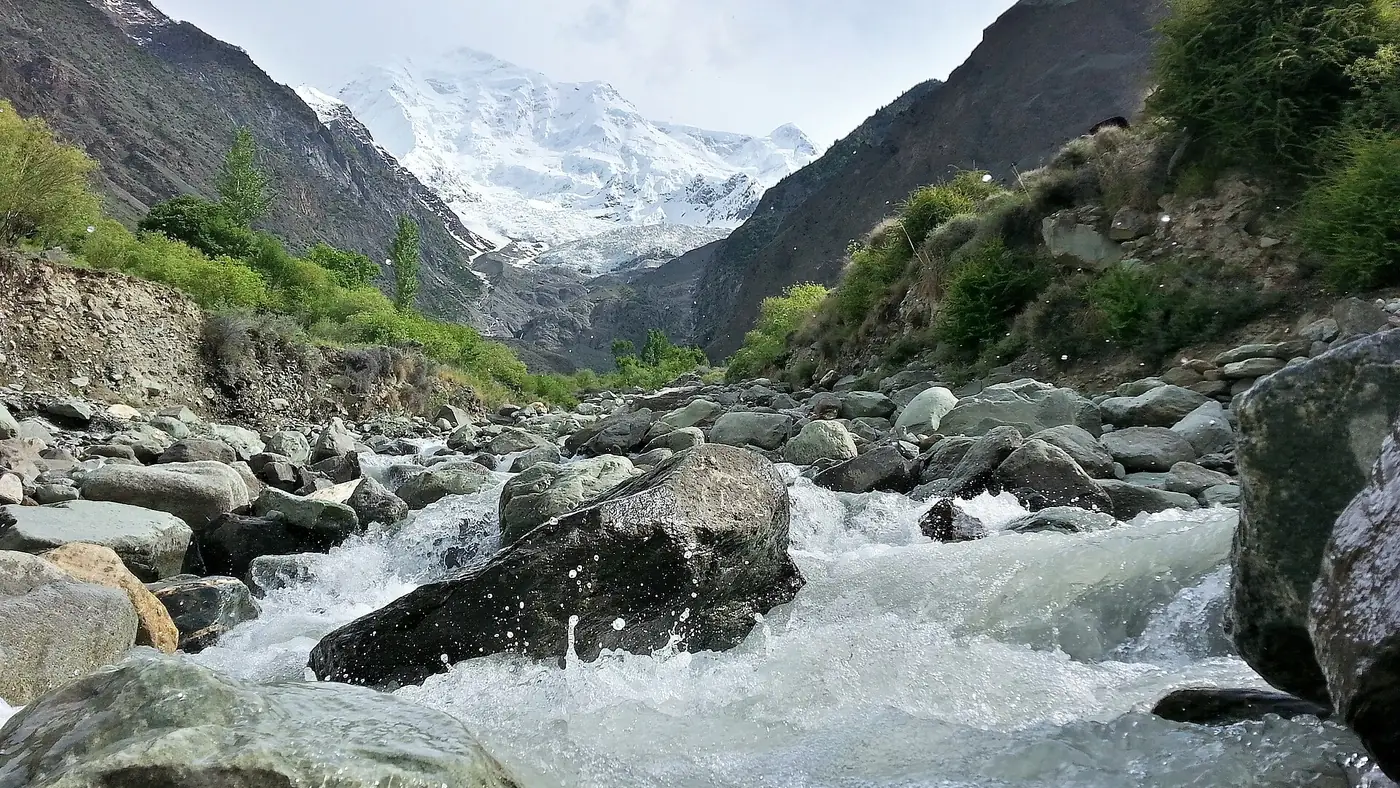
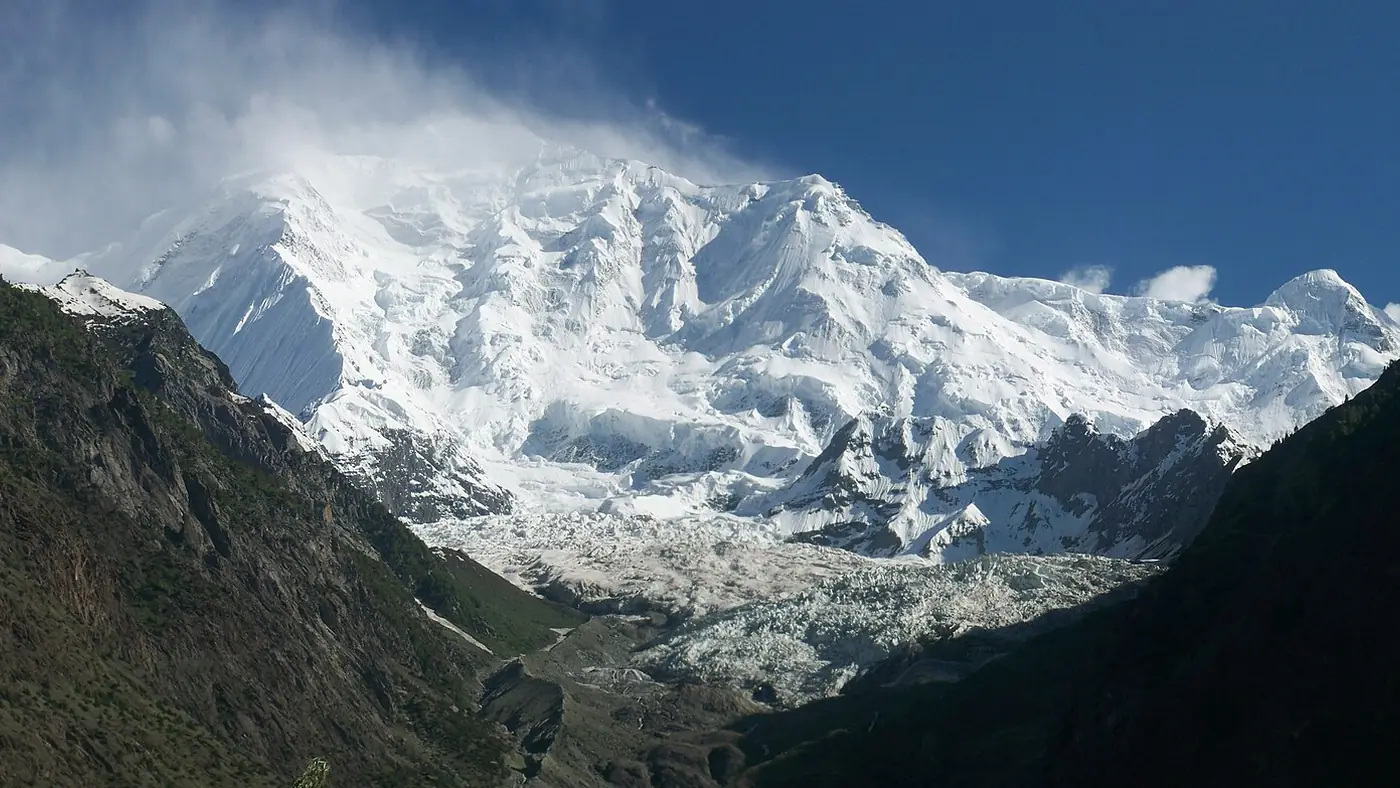
Hunza is a narrow, terraced valley. Villages climb the slopes in stepped orchards, and the mountains stand very close: Rakaposhi from the highway at Ghulmet, the peaks behind Karimabad, the jagged Passu Cones further north. The sights are human as well as natural. You walk up to Baltit Fort, through the lanes of old Altit, and along the irrigation channels above Karimabad.
A typical stay covers the two forts, the Eagle's Nest viewpoint at Duiker, Attabad Lake, Gulmit, the Hussaini bridge, Passu, and a day trip to the Khunjerab Pass at the Chinese border.
Skardu is a wide, flat-bottomed valley where the Indus spreads out between sand dunes and bare mountains. The scale is bigger and the sights are further apart. Shangrila and Upper Kachura lakes are a short drive out; the Katpana cold desert sits by the airport; Shigar Fort is about an hour away; Khaplu Palace is closer to three hours.
The reason many people go is Deosai, the high plateau above Skardu at an average of about 4,100 metres. In July and early August it is a sea of wildflowers with marmots everywhere and a real chance of brown bear. Nothing in Hunza is quite like it.
Where you stay
Hunza has the widest spread of places to stay anywhere in Gilgit-Baltistan. Karimabad and Aliabad are full of guesthouses and small hotels at every level, with more along Attabad Lake and in Gulmit and Passu. Karimabad is walkable, with cafés and craft shops along the bazaar road, so evenings are easy.
Skardu has plenty of hotels too, but it is a working town that spreads along the road rather than a village to stroll. The distinctive stays are outside it: the Shangrila resort at Lower Kachura, and the two restored palaces run as heritage hotels by Serena, Shigar Fort and Khaplu Palace. A night in one of the palaces is one of the best reasons to extend a Skardu trip.
Which costs more?
Skardu usually works out dearer, for three reasons.
- Hotels. In a snapshot of Booking.com listings in September 2026, average rates in Skardu ran roughly half as much again as in Hunza at three, four and five stars.
- Jeeps. Deosai needs a jeep for a full day or overnight, which is one of the bigger single costs of a trip north. Hunza's sights are almost all reachable in an ordinary car.
- Distance between sights. Khaplu, Shigar and Deosai are in three different directions, so you drive more each day.
Flying narrows the gap a little, because there are more airlines and seats into Skardu than into Gilgit. Our guide to what a Gilgit-Baltistan trip costs breaks down transport, hotels and food for both.
Travelling with family or older parents
Hunza is gentler. Drives between sights are short, the highway is paved, and you are rarely far from a hotel, a toilet or a cup of tea. The one real altitude jump is Khunjerab, at 4,693 metres, and it is easy to skip if anyone is not up to it.
Skardu has more long days. Shangrila, Kachura and Shigar are easy with children. Deosai is not: it means hours in a jeep on a rough track, cold even in summer, and most of the day at over 4,000 metres. Khaplu is a six-hour round trip. For small children or older parents, a Skardu trip without Deosai loses much of its point.
Neither is a problem for most healthy families. For anyone with a heart or lung condition, the higher day trips in both (Khunjerab and Deosai) are the ones to ask a doctor about first.
Season: which is better when?
- April: Hunza. Apricot and cherry blossom fills the terraces, and the valley is quiet. Skardu blossoms too, but Deosai is still under snow.
- May and June: both are good. Khunjerab usually opens to visitors in early May; Deosai is still waking up.
- July and August: Skardu, for Deosai in flower. Hunza is at its busiest, though still pleasant.
- September: both, with clear skies and fewer crowds. Deosai starts to close as the month goes on.
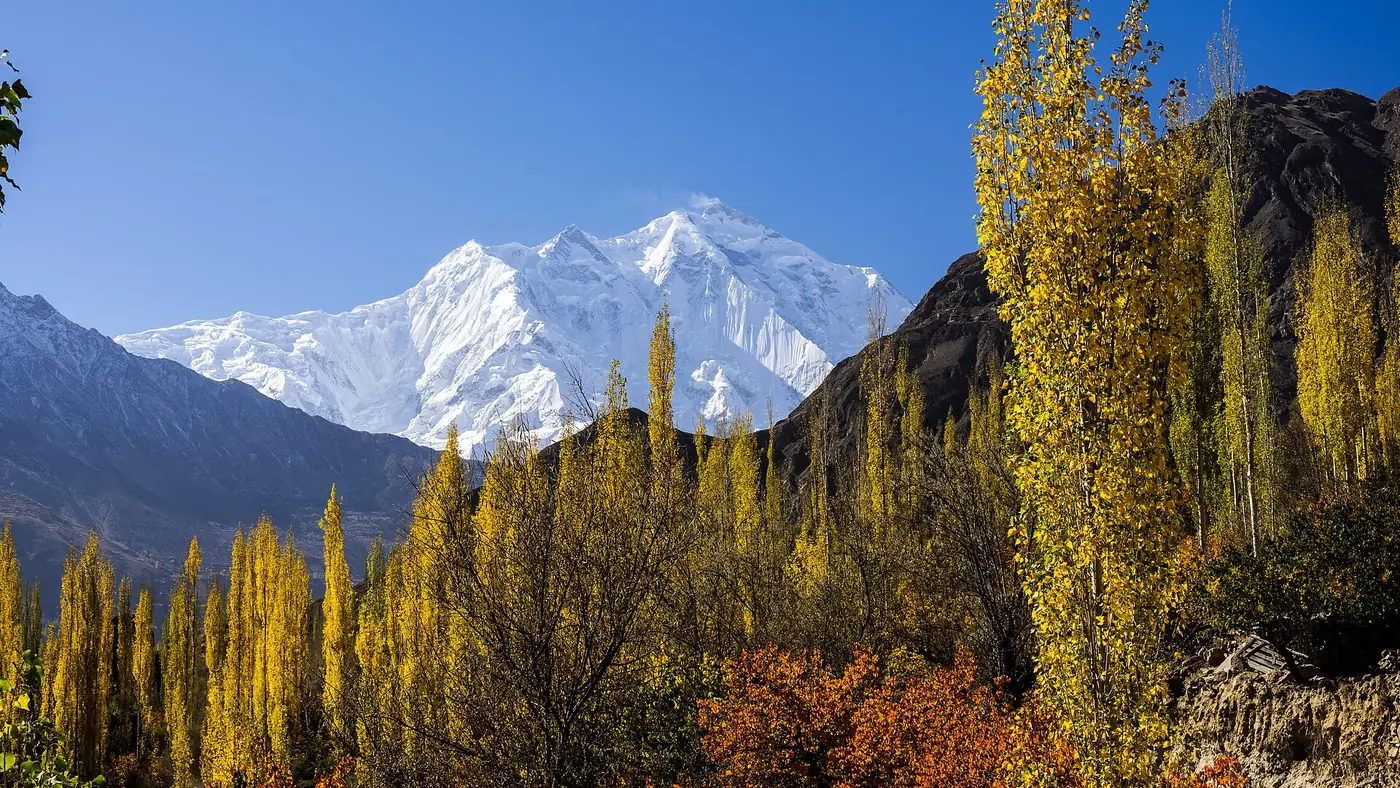
- October to early November: Hunza, for the poplars and orchards turning gold.
- December to February: both are cold and quiet, with the high passes and Deosai closed. Skardu's flights make a winter visit easier to reach.
For the full picture of which months suit which valley, see our guide to the best time to visit Gilgit-Baltistan.
Which should you pick, and can you do both?
- First trip north, by road, one week: Hunza.
- Flying in, short on days: Skardu.
- July or August, and you want landscape on a huge scale: Skardu, with at least one full day on Deosai.
- Travelling with small children or older parents: Hunza.
- Blossom in April or autumn colour in late October: Hunza.
- Already seen Hunza: Skardu, and give Shigar and Khaplu a night each.
You can do both with at least ten days. The Gilgit–Skardu road links the two, so a common route is Islamabad to Hunza by road, back down to Skardu, and a flight home from Skardu. Trying to fit both into a week means most of it is spent in the car.
If you are doing one at a time, our nine-day Gilgit, Hunza and Khunjerab tour and the seven-day Skardu and Deosai tour each give one region the time it needs. The Gilgit and Hunza destination page has more on what to see in the valley.
Frequently asked questions
Is Hunza or Skardu better for a first visit?
For most first-timers, Hunza. The sights are closer together, the road is paved throughout and the season is longer. Skardu is the better first visit if you are flying in or travelling in July or August for Deosai.
Which is colder, Hunza or Skardu?
They are similar. Karimabad is slightly higher than Skardu town, but Skardu's open valley gets bitterly cold in winter. In summer both are warm by day and cool at night, and Deosai and Khunjerab are cold at any time of year.
How far is Skardu from Hunza?
By road it is roughly seven to eight hours between Karimabad and Skardu, back down through Gilgit and then up the Indus gorge. There are no flights between them.
Is Skardu more expensive than Hunza?
Usually, yes. Hotels in Skardu average higher, and a day on Deosai means hiring a jeep. If you are flying, though, Skardu has more airlines and seats than Gilgit.
Can I see Deosai from Hunza?
Not as a day trip. Deosai is reached from Skardu, or from the Astore side, which is several hours south of Hunza by road. Plan it as part of a Skardu trip.