Amluk-Dara stupa stands in a side valley about 2 km north of Nawagai village, on the road toward Buner, with Mount Ilam rising directly behind it. Built up over centuries from around the 3rd century CE, it is one of the largest and best-preserved Buddhist stupas anywhere in the Swat valley, and its setting against the sacred mountain is what makes it stand out from the district's other Gandharan ruins.
This guide covers the stupa's history, what remains today, and why the mountain behind it matters.
| At a glance | |
|---|---|
| Location | About 2 km north of Nawagai, on the road toward Buner |
| Founded | Around the 3rd century CE, in use into the 11th century |
| Base diameter | About 34 metres (112 feet) |
| Drum diameter | About 21 metres |
| Excavated | 2012–2015, by the Italian Archaeological Mission |
| Entry fee | None reported |
History and excavation
Aurel Stein visited and recorded the site in 1926, judging it one of the best-preserved pieces of Buddhist architecture he had seen in Gandhara. The Italian scholar Giuseppe Tucci documented it further in 1956, and the Italian archaeologist Domenico Faccena carried out research there through the 1960s and 70s. Full excavation and restoration, a joint project of the Italian Archaeological Mission in Pakistan and Khyber Pakhtunkhwa's Directorate of Archaeology and Museums under director Luca Maria Olivieri, ran from 2012 to 2015.
That work uncovered a stupa built and rebuilt across several centuries, from roughly the 3rd century through to the 11th, making it one of the longer-lived Buddhist sites in the valley.
What you see today
The stupa sits on a square plinth with a moulded base, measuring around 34 metres across, topped by a drum some 21 metres in diameter, one of the largest of its kind recorded in the Ilam valley, and originally crowned by a dome roughly 7 metres high. Around the main stupa are the remains of smaller votive stupas and monastic buildings, giving a sense of the complex as a working religious site rather than a single monument.
The scale of the structure, visible from some distance across the valley, is what distinguishes Amluk-Dara from smaller stupas nearby such as Gumbat or Nimogram.
Why Mount Ilam matters
The stupa's position is not incidental. The valley of Amluk-Dara lies directly on the old route followed by Hindu pilgrims from lower Swat on their way to the summit of Mount Ilam, a mountain regarded as sacred since well before the Buddhist period and still an object of pilgrimage for some visitors today. The stupa was built where it is, in large part, because of the mountain looming behind it.
Getting there
Nawagai sits off the main road between Mingora and Buner, and the stupa is a short drive further, about 2 km, along a side track. A hired car or taxi from Mingora is the practical way to reach it, and the site is usually visited as a half-day trip rather than an overnight stop. There is no public transport laid on specifically for visitors.
Our Swat valley guide has more on getting around the district, and our Buddhist sites of Swat overview places Amluk-Dara alongside the valley's other Gandharan ruins if you are planning to see several in one trip.
Is it worth visiting?
For anyone interested in Gandharan Buddhist architecture, yes: this is one of the largest and most intact stupas left in Swat, and the setting below Mount Ilam adds a scale that smaller sites lack. If your time is limited and you can only manage one stupa in the valley, Amluk-Dara's size and preservation make a stronger case than most of the alternatives.
Is it safe to visit?
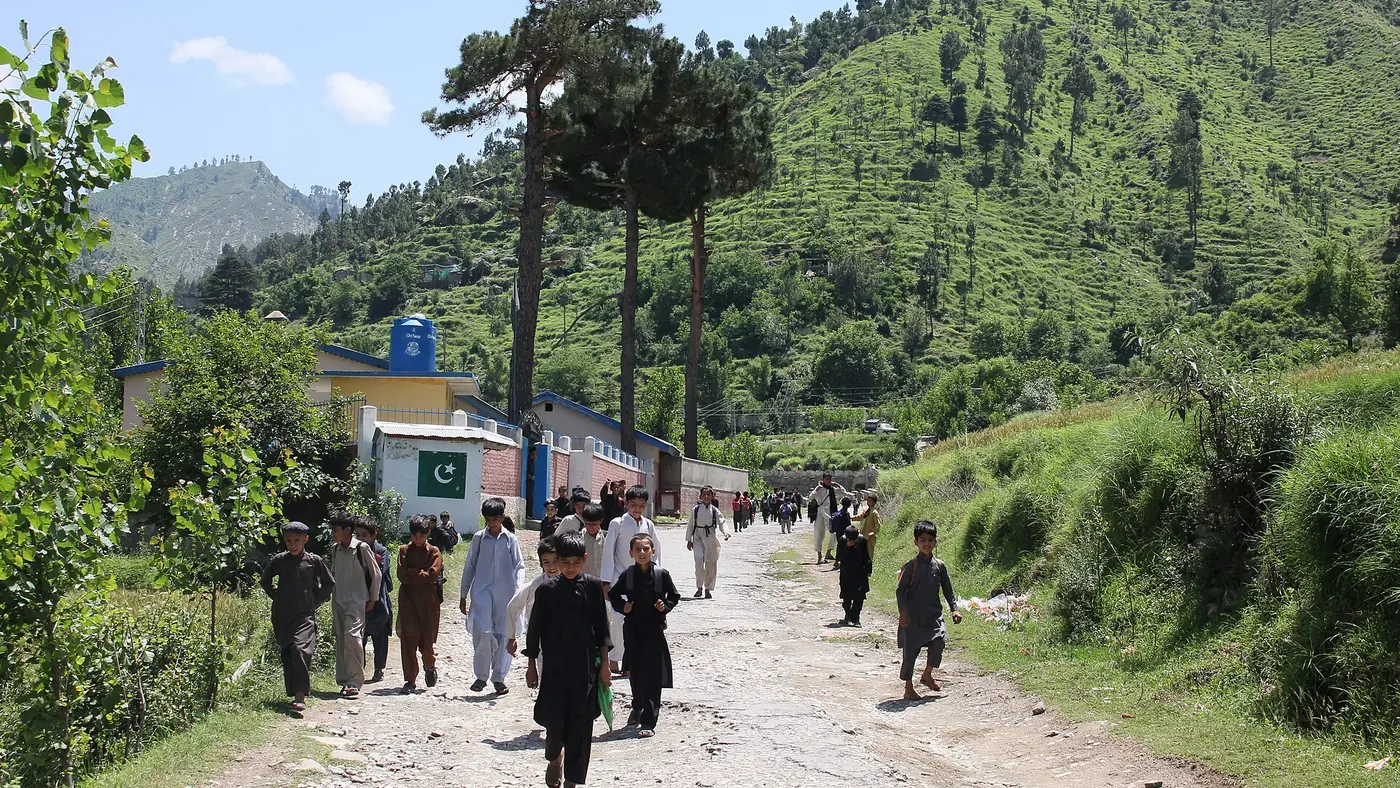
Nawagai and the surrounding area are visited routinely by domestic tourists and school groups. The UK government's Pakistan travel advice (updated September 2026) currently advises against all travel to Swat district as a whole, following a suicide bombing at Kabal police station in August 2026 that killed 17 people. Pakistanis continue to travel through the district in large numbers, but anyone planning a visit, particularly holders of foreign passports, should check current advice and recent local news before setting out, since a foreign government's advisory can also affect travel insurance.
Frequently asked questions
How old is the Amluk-Dara stupa?
Archaeologists date its founding to around the 3rd century CE, with building and rebuilding continuing until roughly the 11th century.
How do I get to Amluk-Dara from Mingora?
Drive toward Buner via Nawagai; the stupa is about 2 km along a side road north of the village. A hired car or taxi is the practical option.
Is there an entry fee?
No fee is reported, and there is no ticket office at the site.
Why is the stupa near Mount Ilam significant?
The site sits on the old pilgrimage route to the summit of Mount Ilam, a mountain considered sacred since before the Buddhist period, which is part of why the stupa was built in this particular valley.
Can I visit Amluk-Dara with other Swat archaeological sites?
Yes. It is usually combined with other stops such as Barikot, Udegram or the Swat Museum in Saidu Sharif as part of a half or full day of archaeological sightseeing.