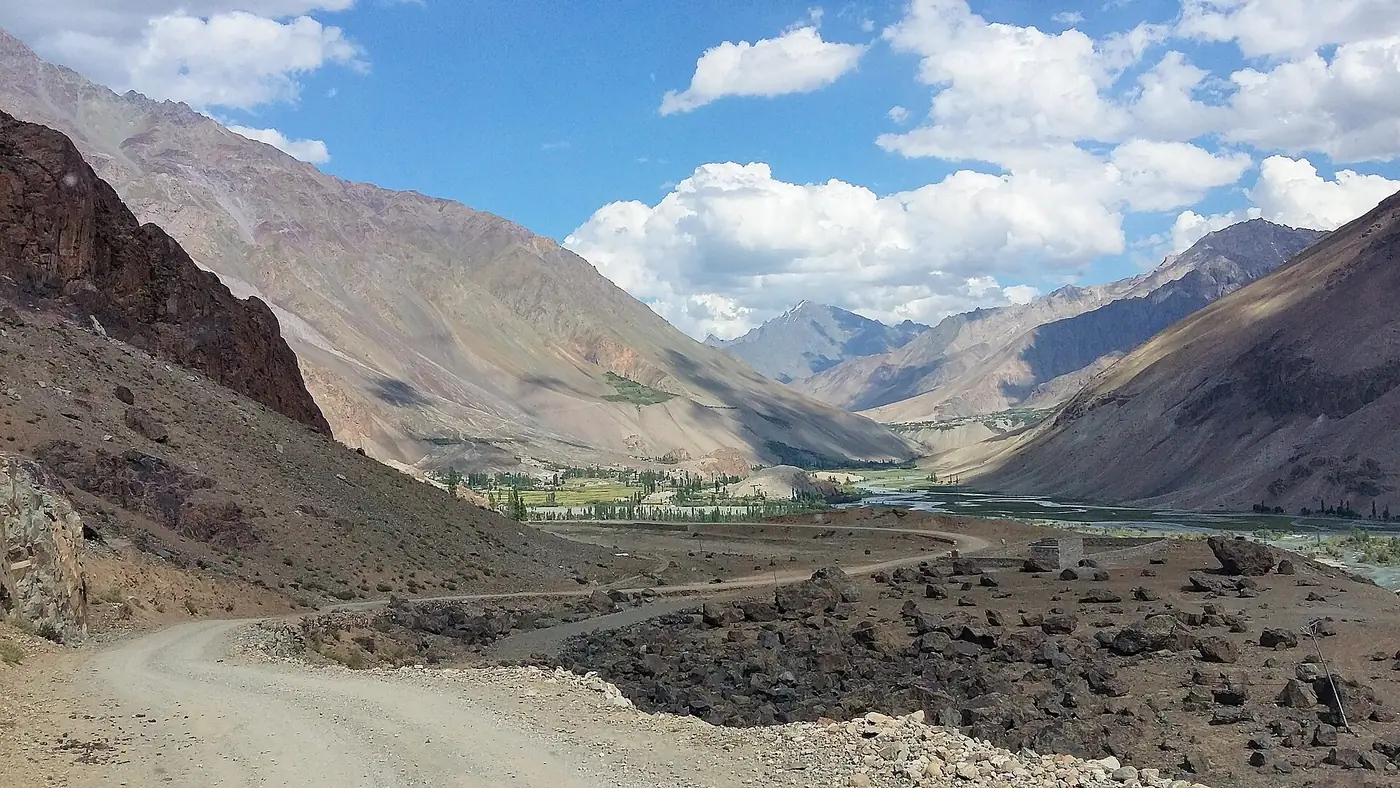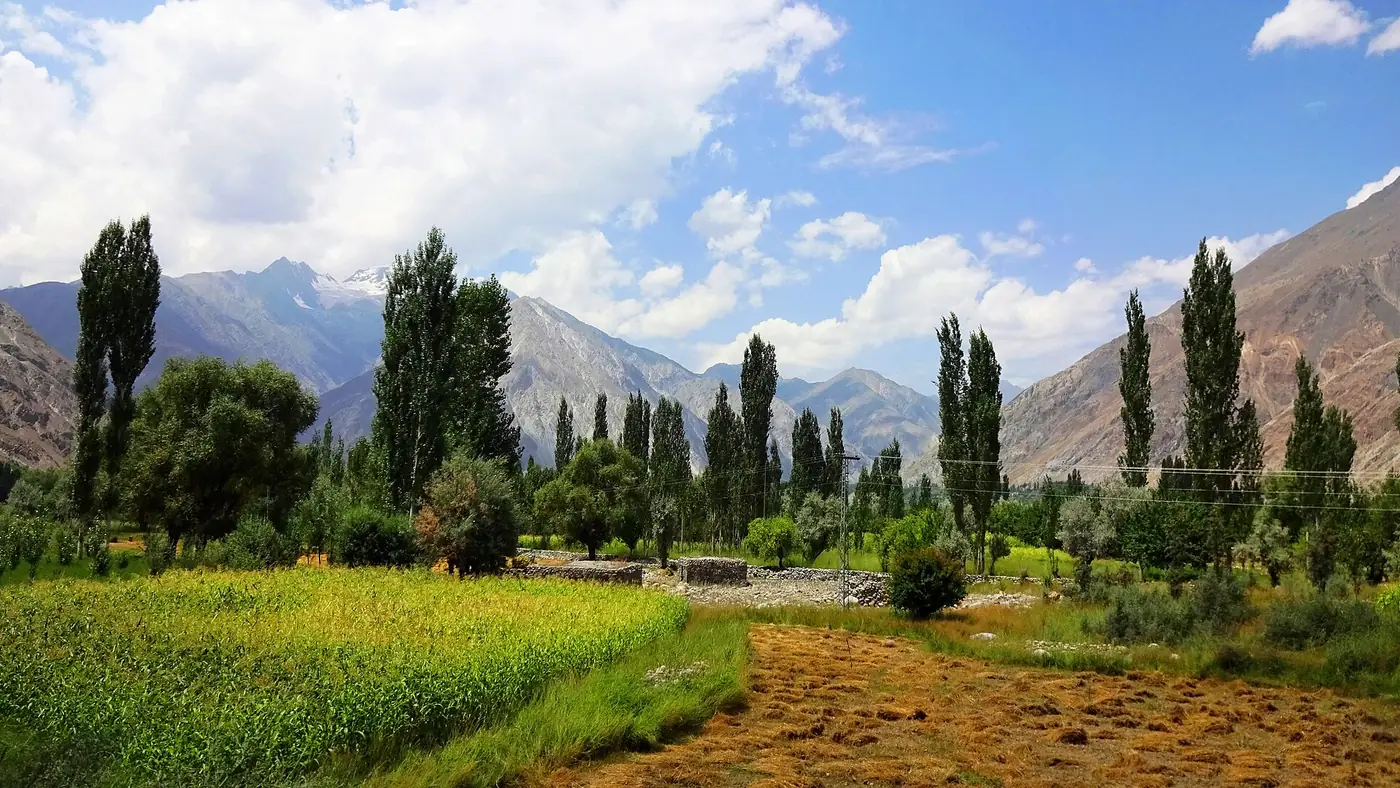
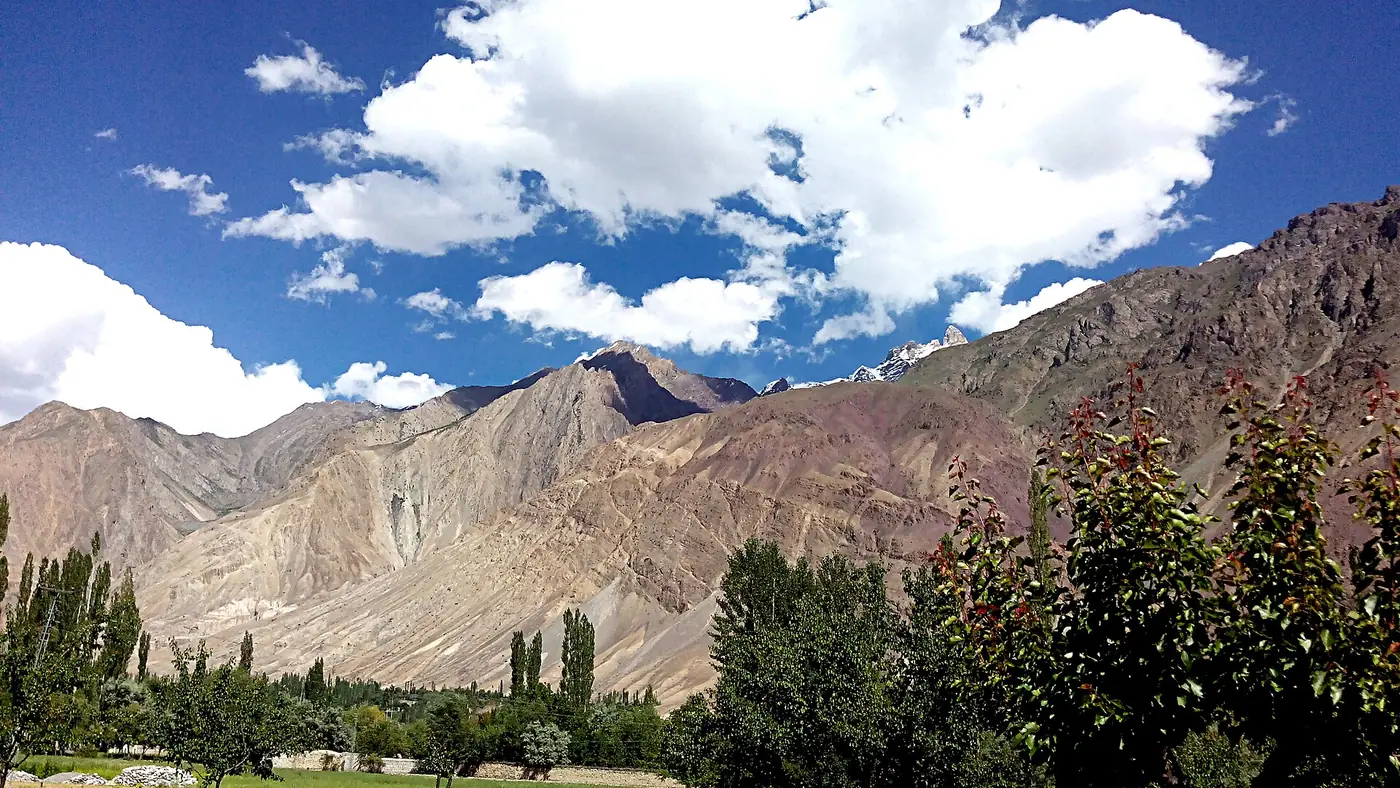
Yasin valley branches north from Gupis in Gilgit-Baltistan's Ghizer district, a long, fertile side valley of orchard villages that was once its own small mountain state. It is roughly 140 km and about four hours by road from Gilgit, further than most first-time visitors to the north go, which is exactly why it stays quiet. This guide covers the valley's history, its villages, and how it links to Darkot and the passes beyond.
| At a glance | |
|---|---|
| Where | North of Gupis, Gupis-Yasin District |
| Altitude | About 2,100 to 2,750 m along the valley floor |
| From Gilgit | Roughly 140 km, about 4 hours |
| Languages | Burushaski and Khowar |
| Best months | June to September |
| Main villages | Yasin (Barkulti), Sultanabad, Silgan, Thoi, Darkot |
Where is Yasin valley?
From Gilgit, the road runs west through Gahkuch to Gupis, where it splits: west towards Khalti Lake and Phander, north up the Yasin river towards Yasin town. Our Gupis valley guide covers that junction in more detail. The turn north climbs gradually through a string of villages before opening into the wider, greener floor of the valley proper.
Administratively, Yasin is its own tehsil within Gupis-Yasin district, split off from the old Ghizer district in 2019. Locally, and on this site, "Ghizer" still describes the whole valley system, new district lines aside.
A short history
Yasin was ruled for centuries by the Khushwakhte dynasty, a branch of the Katur family that also ruled neighbouring Chitral. Its rulers fought Sikh and Dogra forces moving up from Kashmir through the nineteenth century, and control of the valley changed hands several times between Chitral's rulers and the Dogra administration before the region came under British-supervised Kashmir rule and, eventually, Pakistan. That contested position, wedged between Chitral, Gilgit and the passes into the Pamir, is a large part of why Yasin carries more forts, watch points and old stories than its size would suggest.
The Darkot Pass at the head of the valley adds its own chapter: the British explorer George Hayward died there in 1870 during the Great Game, on a route that had carried traders and armies long before him. Our Darkot valley guide covers the pass and the villages below it.
The villages of Yasin
The valley is made up of a string of settlements rather than one town. Yasin proper (often marked as Barkulti on maps) is the largest, with a bazaar, schools and the tehsil's main services. Above and around it lie smaller villages, including Sultanabad, Silgan, Thoi, Sandi and Taus, each with its own fields and orchards along the river.
Hundur, a short drive from Yasin town, is the home village of Havaldar Lalak Jan, awarded Pakistan's highest military honour, the Nishan-e-Haider, for his part in the 1999 Kargil fighting. His grave and memorial are here, and it is the one fixed stop most visitors make in the valley; our guide to places to visit in Ghizer has more on visiting it.
Orchards define the valley in summer: apricot, mulberry and walnut trees line the fields, and the harvest from July into September is a good reason to time a visit for late summer rather than spring.
Onward to Darkot
At the head of the valley, past the last of the larger villages, the road narrows towards Darkot, the final settlement before the Darkot Pass. This is where Yasin stops being a farming valley and starts being a frontier: the pass at 4,703 metres carried Silk Route traffic between Yasin and the Wakhan for centuries, and it is still used today by trekkers heading over to Broghil and Chitral in summer. It is not a day trip from Yasin town; treat it as a separate, several-day undertaking with a local guide, covered in our Darkot valley guide.
Languages and everyday life
Burushaski, the language spoken around Hunza and Nagar, is the main language of central Yasin, while Khowar, the language of Chitral, is spoken in villages closer to the Chitral border and further up towards Darkot. Wakhi is also heard in some of the higher settlements. Hearing three languages inside one valley is a fair reflection of how many directions Yasin has always faced: towards Gilgit, towards Chitral, and towards the high passes into Central Asia.
When to go
June to September is the season that works for most travellers: the road is clear, orchards are green or fruiting, and guesthouses and the small number of shops are open. Late July into September is best for fruit, if that is part of the appeal. Outside this window, roads higher up the valley and any onward trek to Darkot are not something to plan around; snow and cold close the upper valley for much of the rest of the year.
Is Yasin valley worth the detour?
For most visitors on a first trip north, no. It is a long side trip off an already long drive, with little in the way of formal sights beyond Lalak Jan's memorial, and accommodation is basic. It suits people who already know Gilgit-Baltistan, who are interested in the region's history and its languages, or who are using Yasin as the approach to Darkot and the high passes.
If that is you, give the valley a night rather than a rushed afternoon, so you can walk through a village or two and talk to people rather than just pass through. Our Ghizer valley itinerary shows how a night in Yasin can be added to a longer loop through Gupis, Phander and Shandur, and our trip planning page can help fit it into a wider route.
Frequently asked questions
How far is Yasin valley from Gilgit?
About 140 km, roughly four hours by road through Gahkuch and Gupis, where the road turns north off the main Ghizer road.
What is Yasin valley known for?
Its history as an old ruling state, its orchard villages, and the memorial to Havaldar Lalak Jan Shaheed at Hundur. It is also the approach valley for Darkot and the high passes towards Chitral and the Wakhan.
What languages are spoken in Yasin valley?
Mainly Burushaski and Khowar, with Wakhi spoken in some higher villages. It is one of the few valleys in Gilgit-Baltistan where all three are heard within a short drive of each other.
Can you drive all the way to Darkot?
A jeepable track runs most of the way up the valley towards Darkot village in summer, but the Darkot Pass beyond it is a trek, not a drive, and needs several days with a local guide.
Is Yasin valley safe to visit?
The main valley is not on any current government travel advisory. Its upper reaches, towards Darkot and the passes, are close to sensitive border country, so check with the local administration before any trek beyond the last villages.