Swat weather by month depends on how high you are. Mingora, at about 970 metres, is hot in summer, with average highs close to 37°C in June, and mild in winter, with January days around 13°C and nights just above freezing. Kalam, at about 2,000 metres, is roughly ten degrees cooler: around 26°C by day in high summer, with average lows below freezing from December to March. The wettest months in Mingora are March, July and August; in Kalam, March and April.
The table below puts the two side by side for every month, then goes through the seasons with what that weather means on the ground and what to pack. For advice on which months to choose, our guide to the best time to visit Swat covers crowds, road openings and floods.
| At a glance | Mingora (about 970 m) | Kalam (about 2,000 m) |
|---|---|---|
| Hottest month | June, highs around 37°C | July, highs around 26°C |
| Coldest month | January, lows around 2°C | January, lows around -8°C |
| Wettest months | March, July, August | March, April |
| Driest month | November | November |
| Winter precipitation | Mostly rain | Mostly snow, usually December to February |
Swat weather month by month
Average daily highs and lows in °C and average monthly rainfall, rounded. Kalam's winter figures fall mostly as snow.
| Month | Mingora high / low | Mingora rain | Kalam high / low | Kalam rain or snow |
|---|---|---|---|---|
| January | 13 / 2 | 81 mm | 7 / -8 | 49 mm |
| February | 16 / 5 | 98 mm | 8 / -6 | 66 mm |
| March | 20 / 8 | 125 mm | 12 / -2 | 88 mm |
| April | 26 / 13 | 89 mm | 18 / 4 | 93 mm |
| May | 32 / 17 | 45 mm | 23 / 8 | 64 mm |
| June | 37 / 22 | 30 mm | 26 / 11 | 32 mm |
| July | 35 / 23 | 130 mm | 26 / 14 | 66 mm |
| August | 34 / 22 | 134 mm | 26 / 13 | 66 mm |
| September | 32 / 19 | 64 mm | 24 / 9 | 41 mm |
| October | 28 / 13 | 48 mm | 20 / 4 | 28 mm |
| November | 22 / 7 | 22 mm | 14 / -1 | 15 mm |
| December | 15 / 3 | 28 mm | 10 / -5 | 31 mm |
These are long-term averages from climate datasets, so treat them as a guide to what is normal rather than a forecast. Any single week can be very different: on 10 December 2024, for example, the Met Office recorded -6°C in Kalam and -4°C at Malam Jabba, well below the averages above. Malam Jabba, whose ski slope tops out at 2,804 metres, and the high ground around Mahodand Lake are colder than Kalam in every month.
Winter: December to February
Mingora has cool days in the low to mid teens and cold nights close to freezing. Rain comes in spells when weather systems cross from the west, and February is noticeably wetter than December. Ask whether your room is heated, because a night just above freezing feels a lot colder in an unheated concrete room.
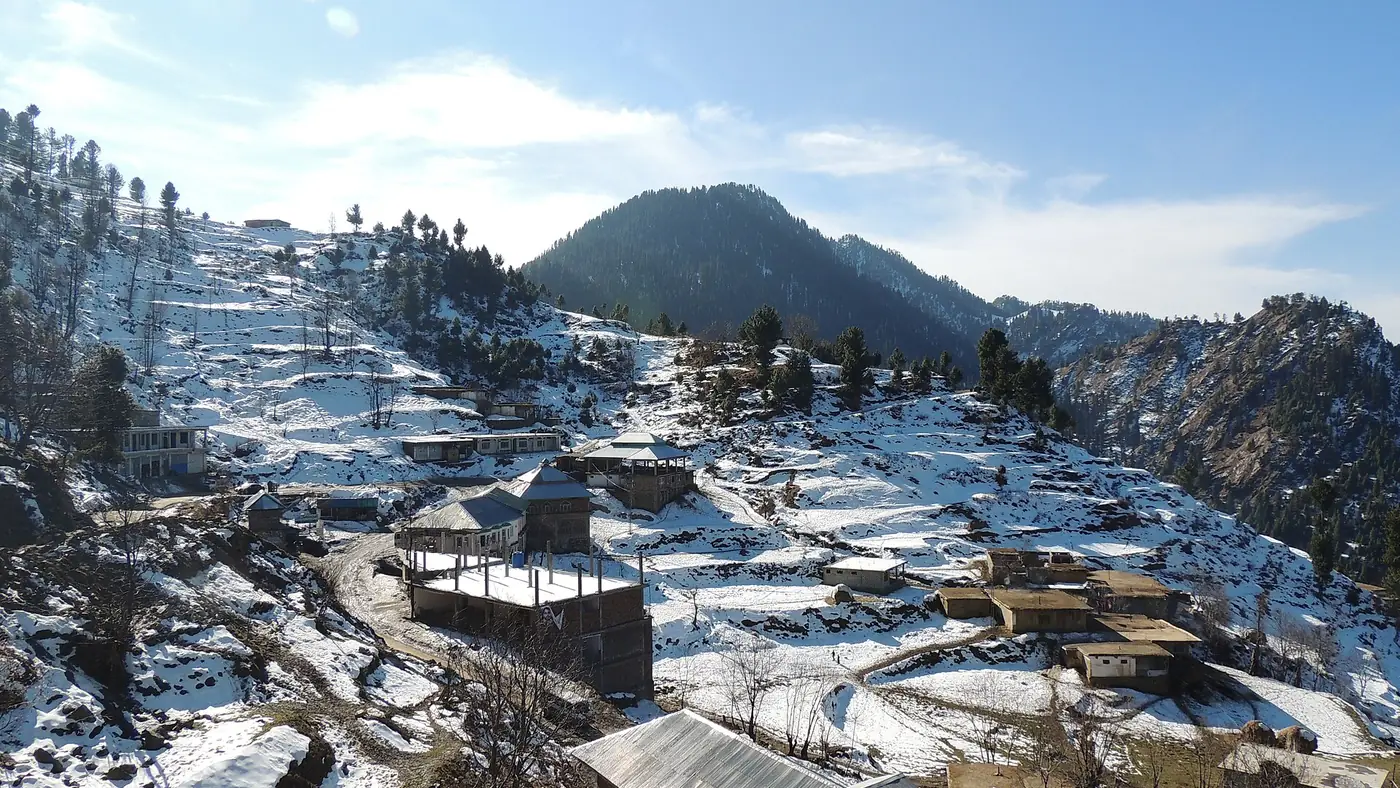
Kalam is a winter place. Days rarely get far above 10°C, nights average well below freezing, and snow can lie for weeks. Heavy falls close the road above Bahrain for a day or more at a time; in January 2026 the Met Office warned of road closures around Kalam for 26 and 27 January.
What to pack for winter:
- For Mingora: a warm jacket, a sweater and a shawl, and warm clothes to sleep in.
- For Kalam and Malam Jabba: a proper insulated jacket, thermal layers, waterproof boots with grip, gloves and a woollen hat, and a change of clothes for children who will end up in the snow.
Our guide to Swat in winter covers road access, chains and heated hotels in detail.
Spring: March to May
March is one of Mingora's wettest months, with grey, showery days and highs around 20°C. April warms up quickly to the mid-20s, and by May Mingora is hot, in the low 30s, and much drier.
Kalam lags well behind. March nights are still below freezing, and April is its wettest month, with late snow possible on the higher ground. By May Kalam is mild, with days in the low 20s and cool nights around 8°C.
What to pack for spring:
- A waterproof jacket, especially in March and April.
- Layers you can add and remove, since a warm afternoon in Mingora can be followed by a cold evening in Madyan or Kalam.
- A warm jacket for Kalam until the end of May.
Summer: June to August
June is Mingora's hottest month, with average highs around 37°C and warm nights above 20°C. It is also one of the driest. In July and August the monsoon arrives: highs ease slightly to the mid-30s, but it becomes humid, and each month brings around 130 mm of rain, often in heavy bursts.
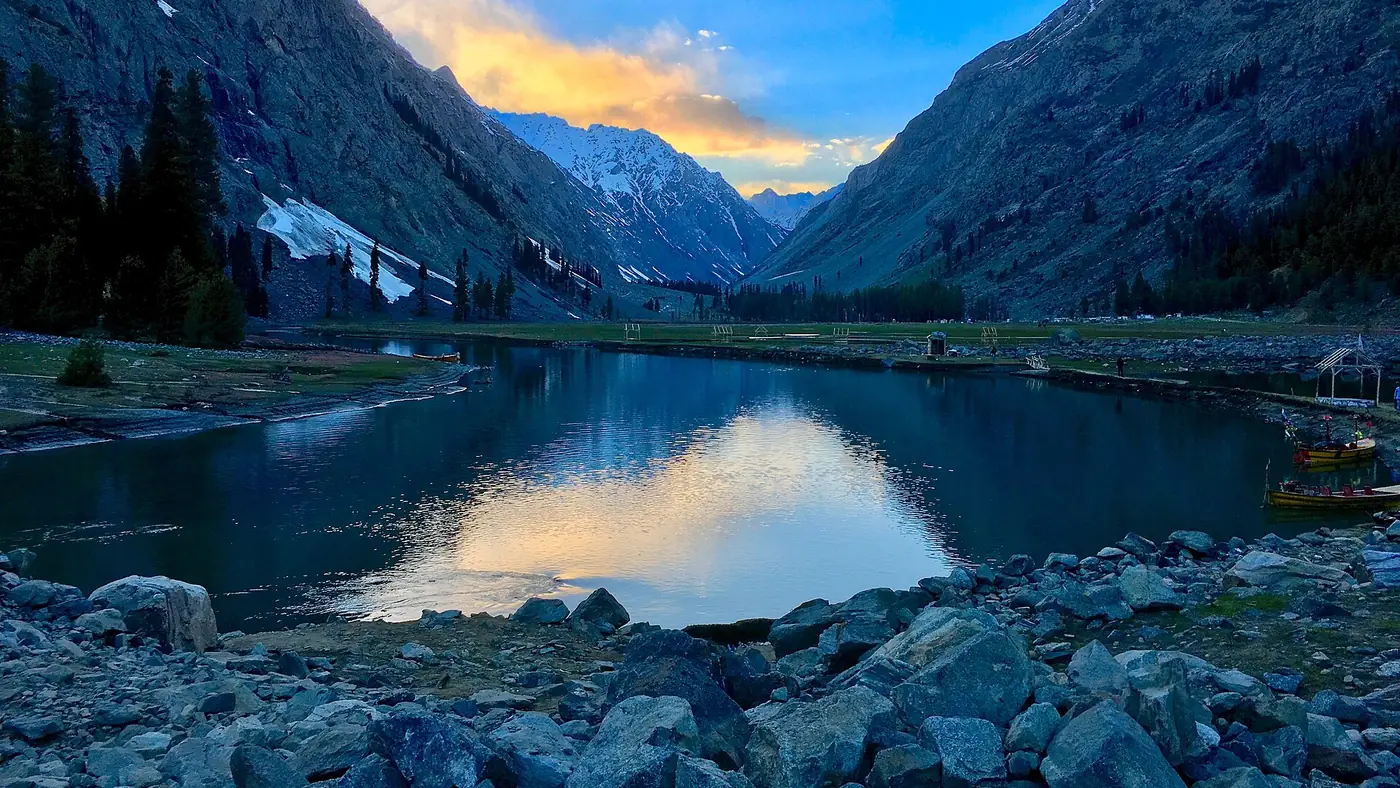
Kalam is why people go to Swat in summer. Days are around 26°C, nights 11 to 14°C, and the air is fresh. Rain is lighter than in Mingora, but it still comes, and rain up here is what raises the river further down.
What to pack for summer:
- Light cotton clothes for Mingora and the drive.
- A fleece or light jacket for Kalam evenings, and something warmer for Mahodand.
- A compact umbrella or rain jacket, and shoes with grip rather than sandals for wet paths.
- Sunscreen, sunglasses and a hat. The sun is strong at altitude even when the air is cool.
Autumn: September to November
September is still warm in Mingora, around 32°C by day, but the monsoon usually eases during the month and rainfall halves. October is dry and comfortable, with highs in the high 20s and cool evenings. November is the driest month of the year in both places, with Mingora days in the low 20s and cold mornings.
Kalam turns quickly. September days are around 24°C with nights near 9°C; by October nights are close to freezing; and by November they are below it, with the first snow possible on the high ground.
What to pack for autumn:
- Layers for Mingora, with a light jacket for the evenings from October.
- A warm jacket for Kalam from late September, and a proper winter jacket, hat and gloves by November.
How to check the weather before you go
Averages tell you what to expect; the forecast tells you what is coming. Before you travel:
- Check the Pakistan Meteorological Department's forecasts and warnings, which cover rain, snow and heat alerts for the upper Khyber Pakhtunkhwa valleys.
- In the monsoon, watch for flood alerts from the provincial disaster management authority, and ask your hotel about the river.
- In winter, call your hotel in Kalam or Malam Jabba the day before to ask about snow on the road.
- Look at the forecast for both ends of the trip. Mingora and Kalam can have entirely different weather on the same day.
Which months have the best weather in Swat?
It depends where you are going:
- Mingora, Saidu Sharif and the Buddhist sites: April, October and November, when days are warm rather than hot and rain is moderate.
- Kalam and upper Swat: June to September, with June and September the most settled.
- Snow: January and February, at Malam Jabba and Kalam.
- The months to be careful with: July and August for monsoon rain and floods, and March for wet, grey weather in the lower valley.
For how Swat compares with the rest of the north in each month, see our seasons guide, and for the valley's highlights, the Swat Valley page.
Frequently asked questions
What is the coldest month in Swat?
January. Mingora averages highs around 13°C and lows around 2°C, while Kalam averages about 7°C by day and -8°C at night.
Does it snow in Swat?
Yes, in upper Swat. Kalam and Malam Jabba usually have snow from December to February. Mingora, below 1,000 metres, stays mostly above freezing, and its winter weather is mainly cold rain.
What is the weather like in Swat in July?
Hot and humid in Mingora, with highs around 35°C and heavy monsoon rain, and pleasant in Kalam, with highs around 26°C and cool nights. Flash floods and landslides are the main risk.
How cold is Kalam at night?
In summer, 11 to 14°C on average. From December to March, average lows are below freezing, reaching about -8°C in January, and colder nights are common.
When is the rainy season in Swat?
July and August bring the monsoon, with around 130 mm of rain a month in Mingora. March is nearly as wet in Mingora, and in Kalam March and April are the wettest months.
Is it safe to visit Swat at the moment?
Pakistani tourists are still visiting, but security in Swat worsened in 2026, including a suicide bombing in Kabal on 2 August that killed 17. Check local news before you go; overseas visitors should note that the UK advises against all travel to Swat.