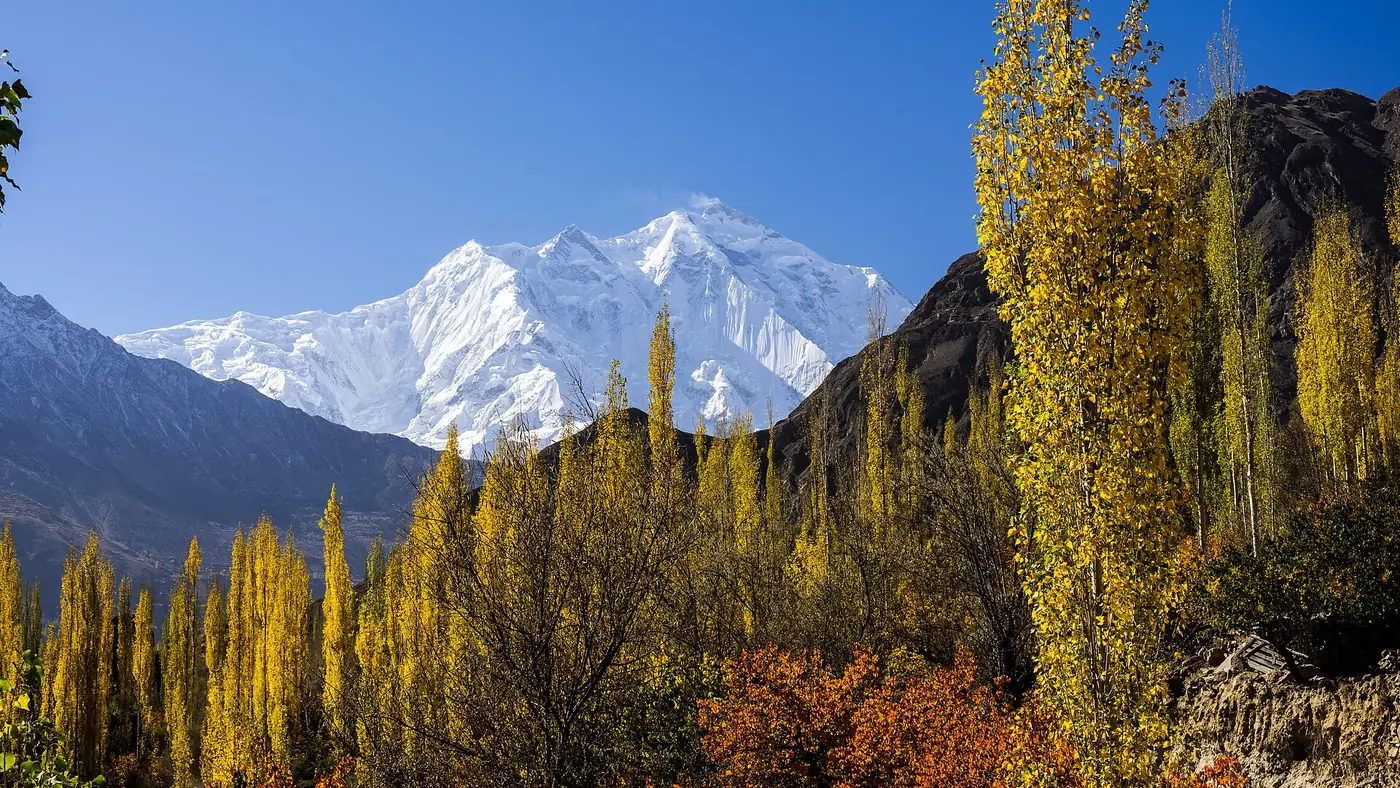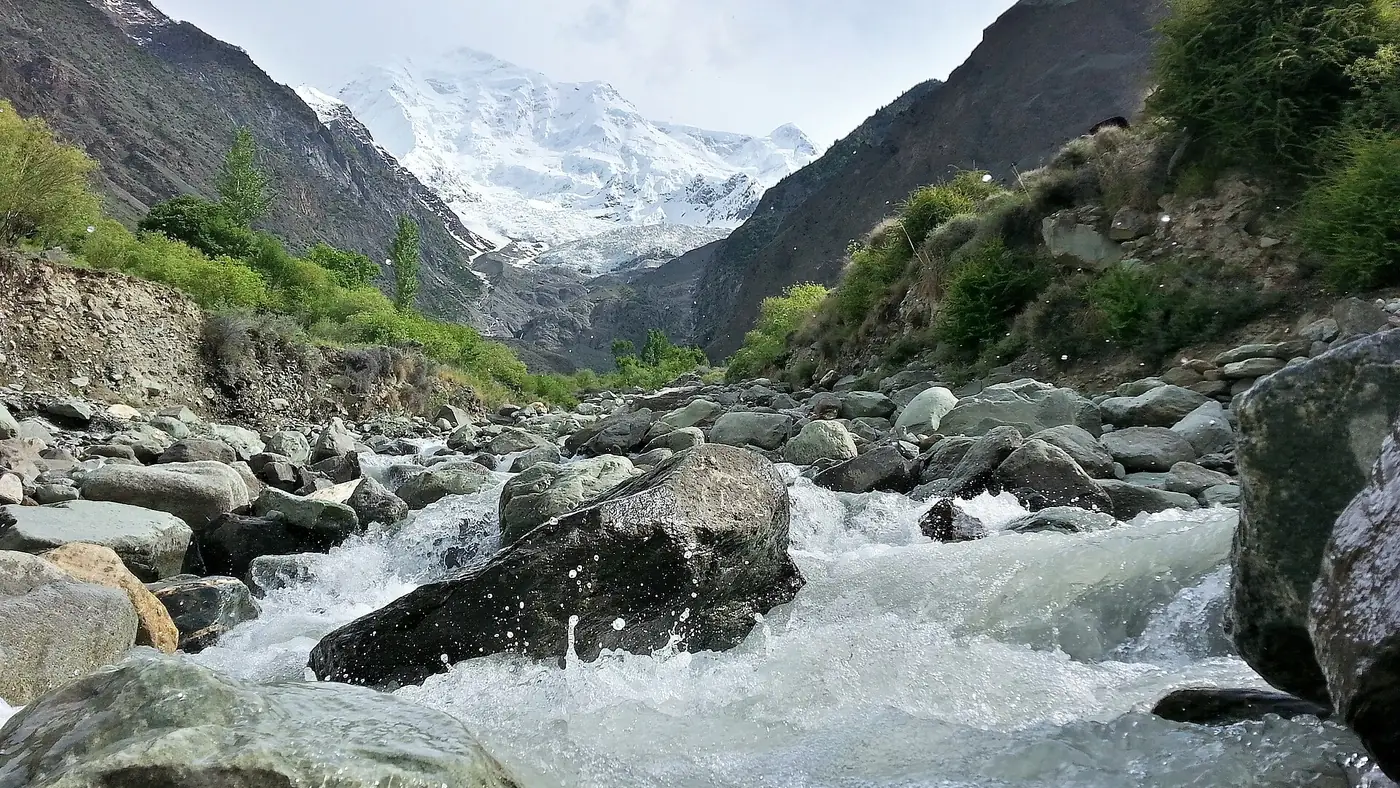
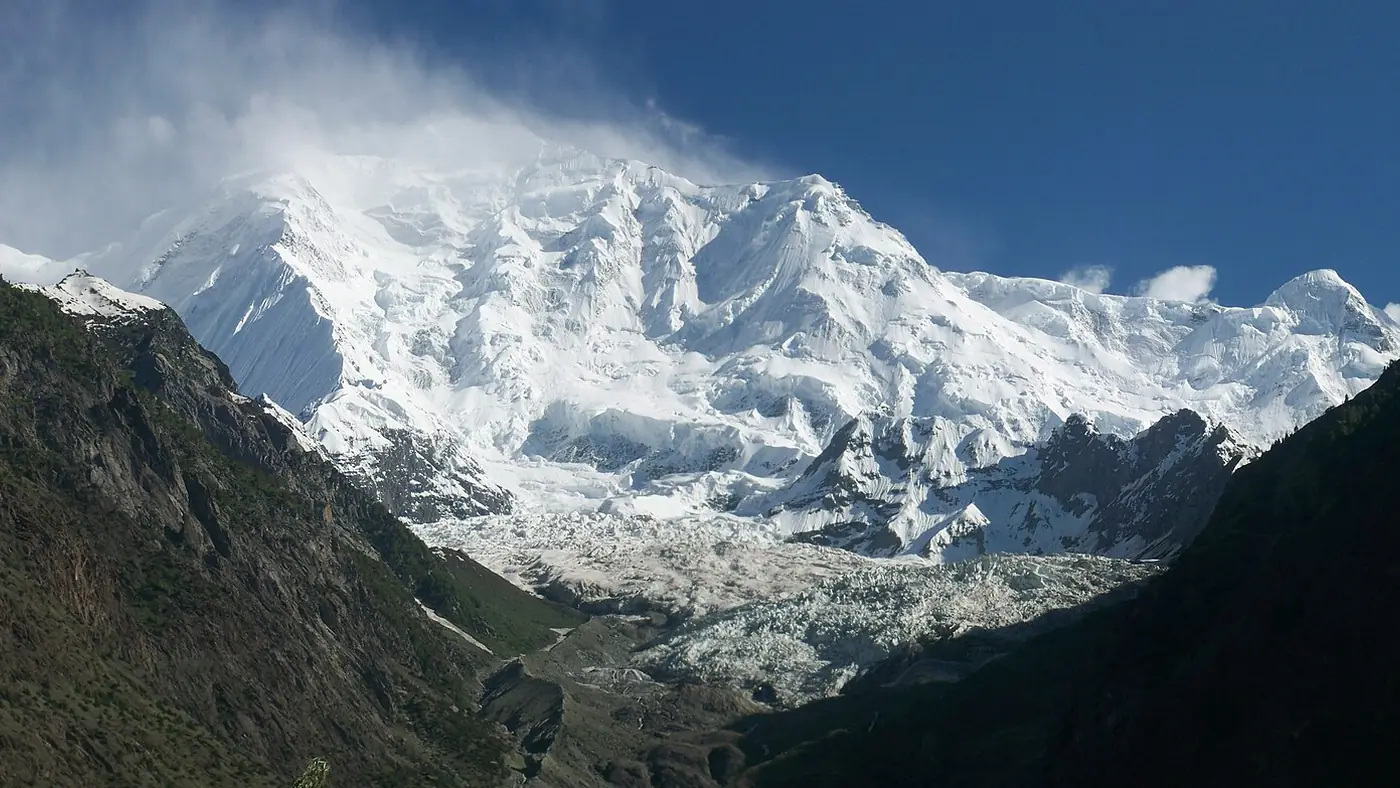
Snowfall in Gilgit-Baltistan comes in two stages. The high ground, such as the Babusar Pass, Deosai and Khunjerab, usually gets its first snow in October and closes to visitors soon after. The valleys where people live get theirs mainly from December to February: upper Hunza normally from late November, Karimabad, Skardu and Naltar through the deep winter, and Gilgit only lightly. Recent winters have started late and dry, so plan a snow trip around a forecast rather than a date.
This guide goes valley by valley through when the snow tends to arrive, looks at how the last two winters actually behaved, and lists the snowy places you can still reach by road once winter sets in.
| Place | Height | First snow, usually | Reachable by road in winter? |
|---|---|---|---|
| Babusar Pass | 4,173 m | October | No; closed from about November to late May |
| Deosai plateau | About 4,100 m | September or October | No; snowbound until June |
| Khunjerab Pass | 4,693 m | October or November | No; closed to visitors from about December to April |
| Upper Hunza, Gulmit to Sost | Above Karimabad | Late November | Yes, on the Karakoram Highway |
| Karimabad and central Hunza | About 2,500 m | December to February | Yes |
| Naltar | Ski slopes up to about 2,950 m | December to March | Yes, by 4x4 |
| Skardu, Shigar and Khaplu | About 2,200 to 2,600 m | December to February, in a few falls | Yes, weather permitting |
| Upper Astore | High side valleys | Early, and heavy | No; cut off for long spells |
| Gilgit | About 1,500 m | Light snow in some winters | Yes |
When does it start snowing?
On the high ground, the first snow comes with autumn. In 2025 the first spell of the season arrived in early October, leaving around six inches on Babusar Top and snow across the upper Kaghan valley and Diamer. Deosai usually closes to vehicles with the first heavy fall, most often in October, and Khunjerab stays open to visitors into November in a good year before winter shuts it.
Snow on the passes is not confined to winter. At the end of May 2025, an unseasonal fall of snow closed the Babusar road. If you are crossing a high pass in May, June or October, carry warm clothes and be ready to turn back.
The valleys come later. The Gojal villages of upper Hunza, from Gulmit up to Sost, normally expect their first snow in late November. Karimabad, Skardu, Shigar and Khaplu see most of theirs from December to February, and January is the most likely month for a proper fall. Gilgit sits low in a dry valley and gets far less than the others; its winters are cold but very dry.
Valley by valley
Hunza and Gojal
Central Hunza gets snow most winters, but rarely a deep, lasting cover. The villages further up the valley, around Gulmit, Passu and Sost, are colder and more reliably white. When snow falls, the orchards and terraces of Karimabad and Altit, the Passu Cones and the frozen edges of Attabad make the scenes people come for. Our guide to Hunza in winter covers heating, power and what stays open.
Skardu, Shigar and Khaplu
Skardu is colder than Gilgit and gets several times as much winter precipitation, most of it as snow. It still comes in a handful of falls rather than a steady blanket. After a fall, the Katpana dunes by the airport turn white under the mountains, and Satpara and the Kachura lakes freeze. Shigar and Khaplu, up the side valleys, get similar snow and are usually reachable on their paved roads in between storms.
Gilgit and Naltar
Gilgit is the mildest of the bases. For snow near the city, go up to Naltar, about 40 km away, where the Pakistan Air Force runs a ski resort with a chairlift and hosts ski competitions. Snow there is most consistent from December to March. The road up is steep and narrow and needs a 4x4 after snow; our Naltar Valley guide covers the route. The lakes above the village are not reachable in winter.
Astore, Deosai and Ghizer
Astore gets some of the heaviest snow in the region. Rama, Minimarg and the road up to Deosai via Chilim are cut off all winter, and even the valley road can be closed for spells after heavy falls. It is a summer trip. In Ghizer, the high road over Shandur closes for the winter, but lower down Khalti Lake, near Gupis, freezes hard in most years; ask in Gilgit about the road before you go.
How recent winters have really behaved
The honest answer to "when does it snow?" has changed. Winters in Gilgit-Baltistan have been getting later and drier, and the last two show it clearly.
- 2024–25: a long dry spell. Dawn reported the region's first snowfall of the winter only at the end of February 2025, when up to six inches fell in Astore, Skardu and Ghanche and blocked the Karakoram Highway around Dasu.
- 2025–26: temperatures stayed unusually high until the end of December, and Skardu's first snow of the season came only on 16 and 17 January 2026, and only a few inches of it. Residents of Hunza spoke of a "snow drought". The natural ice rink at Altit failed to freeze properly for the January ice hockey. Then, in late January, heavy snow arrived across the region, and the tourism department warned of road closures and advised visitors to postpone non-essential trips to the higher areas.
The lesson is to book flexibly, watch the forecast and travel in the few days after a fall, when the snow is fresh and the roads have been cleared. The Pakistan Meteorological Department publishes forecasts and snowfall warnings at weather.gov.pk.
Snow you can still reach by road in winter
With Babusar, Deosai and the top of Khunjerab closed, winter snow in Gilgit-Baltistan means the valleys on the main roads:
- Karimabad and Altit, for snow on the old villages and the forts.
- Attabad, Gulmit, Passu and Hussaini on the Karakoram Highway, and on up to Sost when the road is clear. Our Khunjerab Pass guide explains why the last stretch to the border is not a winter trip.
- Naltar, by 4x4, for the ski slopes and deep snow in the pine forest.
- Skardu: the Katpana dunes, Satpara Lake and the Kachura lakes, all on paved roads.
- Shigar and Khaplu, for the old palaces under snow.
- The Manthokha waterfall in Kharmang, about two hours from Skardu, which freezes in midwinter. Go only in a settled spell, by 4x4, after checking the road.
Planning a snow trip
Getting there is the hard part. The Karakoram Highway through Kohistan is the only road in once Babusar closes, and it takes two short winter days to reach Gilgit. Flights to Gilgit and Skardu save that time when they operate, but winter is when they are most often cancelled. Keep a spare day at each end.
Once there, use a 4x4 with chains and a local driver, drive only in daylight, and ask each morning which roads are open. Hotels need checking too: power cuts are long in winter, so ask about heating and a generator before you book. Our guide to Gilgit-Baltistan in winter covers flights, heating and snow driving in detail, and our guide to the seasons compares winter with the rest of the year.
Is Gilgit-Baltistan worth it for snow?
Yes, if you want the big mountains under snow, empty valleys and a real winter, and you can travel with spare days and a flexible return. Photographers and small groups tend to enjoy it most.
No, if what you want is a guaranteed snowy weekend with children. The journey is long, the snow is not guaranteed on your dates, and the cold nights and power cuts are hard on small children and older parents. Murree and the Galiyat are far closer to Islamabad; our guide to where to see snow in Pakistan compares the options.
Frequently asked questions
When does snowfall start in Gilgit-Baltistan?
On the high passes and Deosai, usually in October. In the valleys, upper Hunza normally expects snow from late November, and Skardu, Karimabad and Naltar mainly from December to February. Recent winters have started later than that.
Does it snow in Hunza?
Yes, most winters, between December and February, though the amount varies a lot. The villages of upper Hunza, around Passu and Sost, get more reliable snow than Karimabad.
Does it snow in Skardu?
Yes, mainly from December to February, in a few falls rather than a lasting cover. In the winter of 2025–26 the first snow in town came only in mid-January.
Can I see snow in Gilgit-Baltistan in summer?
On the peaks and glaciers, always. On the roads, you may find snow at Khunjerab and on Deosai early in their seasons, in May and June, and a late or early fall can bring snow to the passes in any month outside high summer.
Is it safe to travel to Gilgit-Baltistan in snowfall?
It is safer to travel after a fall than during one. Use a 4x4 with chains and a local driver, drive in daylight, check road closures each morning, and follow the advice of the tourism department and local police.