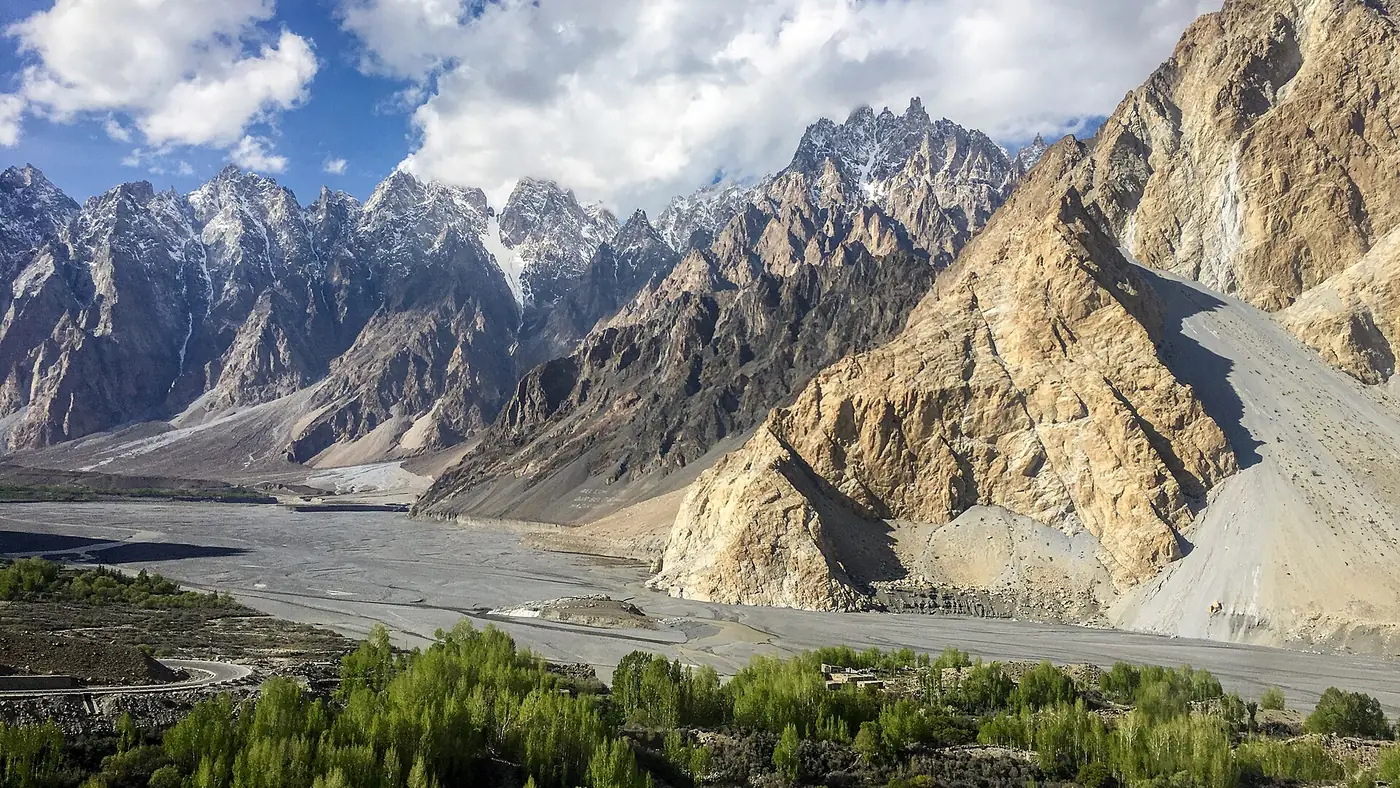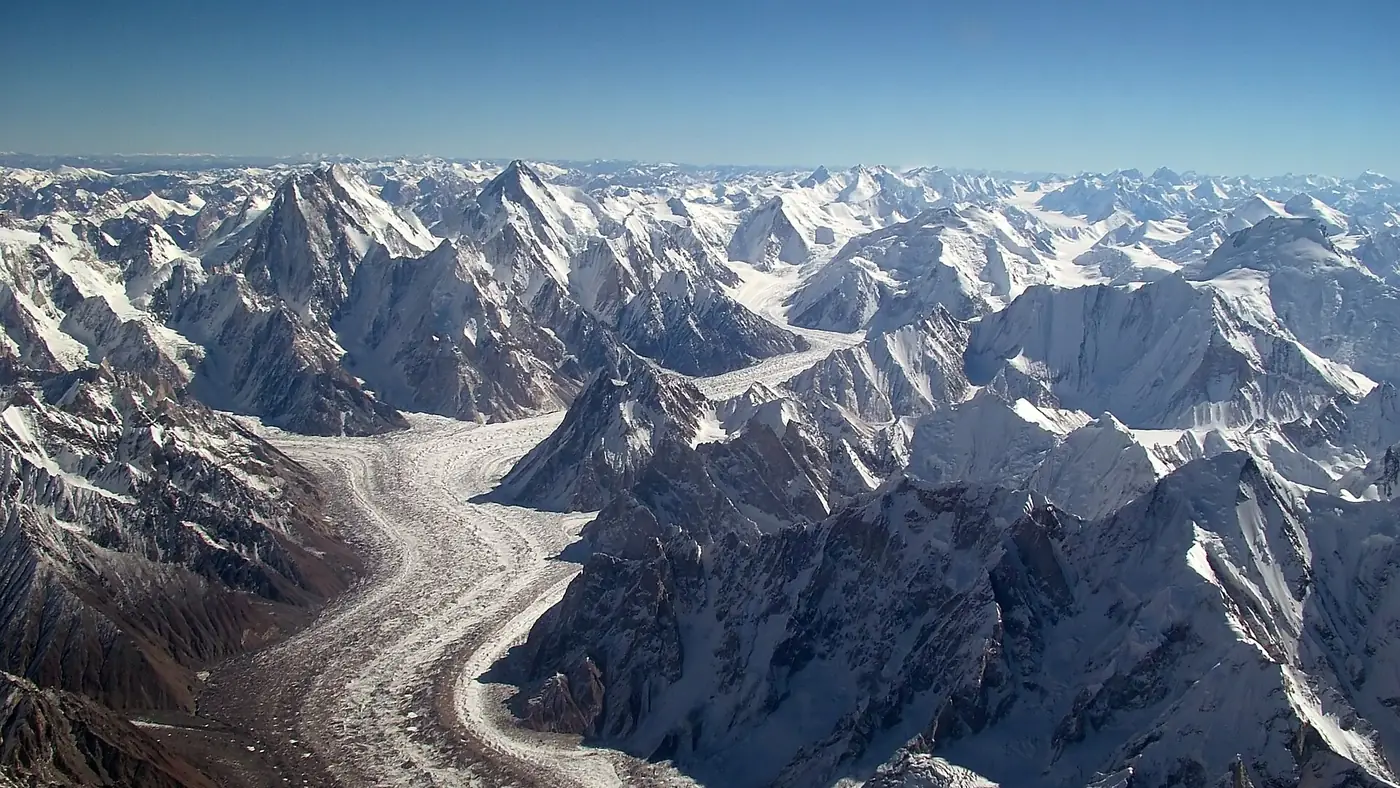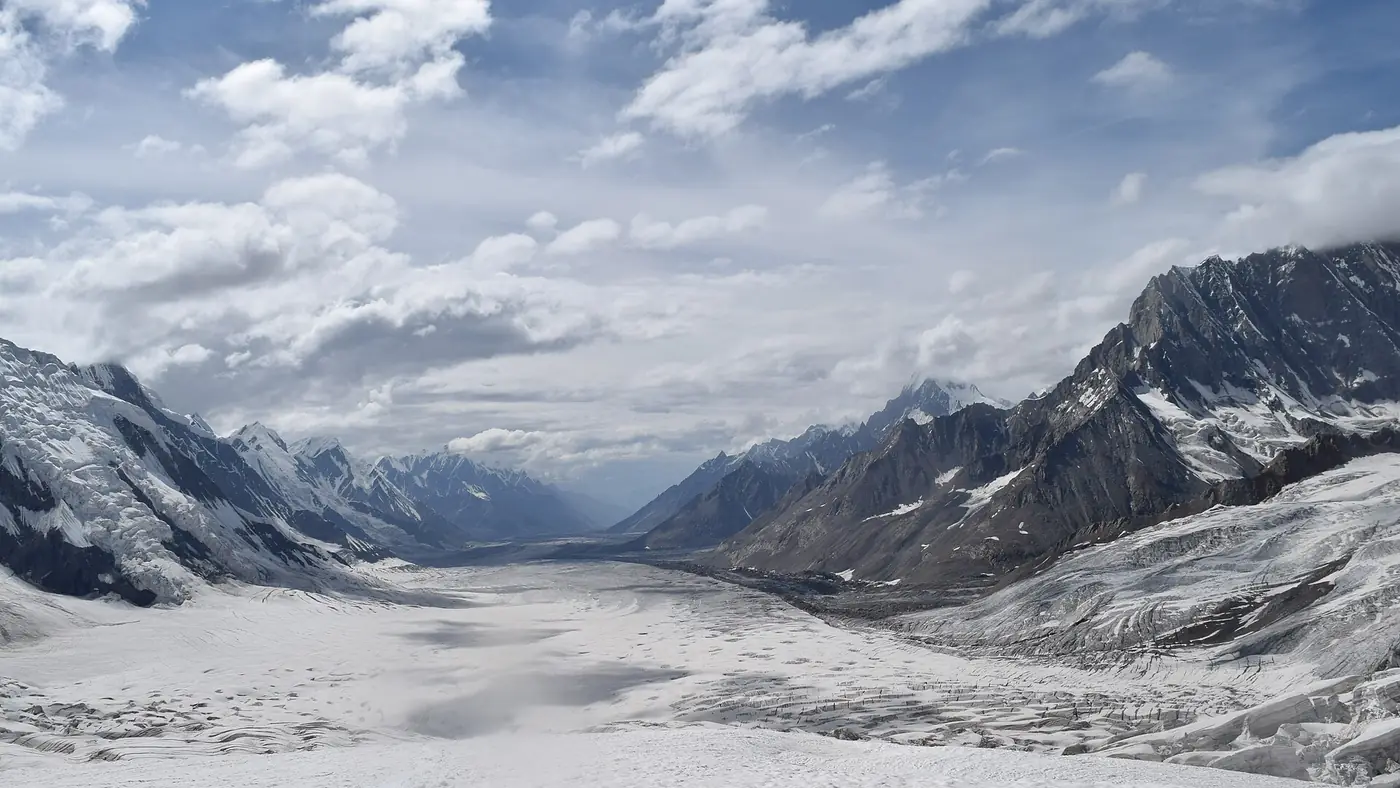
The Snow Lake trek follows the Biafo and Hispar glaciers across the Karakoram, from Askole in Baltistan to Hispar village in Nagar, and takes 12 to 14 days. Together the two glaciers form the longest glacial system outside the polar regions, and the trek crosses the Hispar La at 5,128 metres, the pass where they meet, with Snow Lake itself, a vast snow-covered basin at the head of the Biafo, as the trek's high point.
| At a glance | |
|---|---|
| Route | Askole to Hispar village, via the Biafo and Hispar glaciers |
| Biafo glacier length | About 67 km |
| Hispar glacier length | About 49 km |
| High point | Hispar La, 5,128 m |
| Days | 12 to 14, including acclimatisation |
| Difficulty | Strenuous, remote, glacier travel skills needed |
| Season | July to early September |
What Snow Lake is
Snow Lake is not a lake in the usual sense but a huge, largely flat basin of snow and ice near the top of the Biafo glacier, formed where the Biafo and its tributary, the Sim Gang glacier, meet. It is one of the largest expanses of snow and ice outside the polar regions, and its scale is the main reason the trek has the reputation it does: for two or three days trekkers cross open, featureless white ground with almost no sign of rock or vegetation, navigating largely by the surrounding peaks.
Beyond Snow Lake, the route crosses the Hispar La, at 5,128 metres, the col where the Biafo and Hispar glacier systems meet, and descends the Hispar glacier on the Nagar side to reach Hispar village, ending a traverse that uses roughly 51 km of the Biafo and the full 49 km length of the Hispar, around 100 km of walking on ice and moraine in total.
The route in outline
- Askole to the lower Biafo. The trek starts at Askole, the last village in the Braldu valley, the same starting point as the K2 base camp trek, and follows the Biafo glacier north-west rather than the Baltoro.
- Up the Biafo to Snow Lake. Several days of glacier walking, camping on moraine and ice, gaining height gradually to the Snow Lake basin.
- Across Snow Lake to Hispar La. The most remote stretch of the trek, crossing open snowfields to the pass at 5,128 metres.
- Down the Hispar glacier to Hispar village. A long descent on the Nagar side, ending the traverse at the roadhead village of Hispar.
There is no accommodation anywhere on this route beyond Askole and Hispar. Every night in between is spent camping, with all food, fuel and tents carried in by porters.
Why it needs skills, not just fitness
The Biafo-Hispar traverse does not require technical climbing, but it is a genuine high-altitude glacier journey, and that is a different kind of difficulty from a marked trekking trail. There is no fixed path: routes across both glaciers shift from season to season as the ice moves and melts, and crevasses are a constant hazard, particularly crossing Snow Lake itself and near the Hispar La. Trekkers need to be comfortable on rope with a guide managing glacier travel, competent walking long days at altitude for nearly two weeks, and prepared for total isolation, with no mobile signal, no villages and no way out except forward or back the way you came.
This combination, remoteness plus glacier skills plus sustained altitude, is why the trek is usually recommended only to experienced trekkers, ideally with prior high-altitude or glacier trekking behind them, and always with a qualified guide and full support crew.
When to go
The traverse is only realistic from about July to early September, when the glaciers are most stable and the passes are clear enough to cross; outside this window snow cover and weather risk rise sharply. Our trekking season guide sets out how this compares with the shorter treks in the region.
Is it worth it?
For experienced trekkers, yes, and there are few walks anywhere that match it: nearly two weeks on ice, crossing one of the longest glacial systems on the planet, with almost no other trekking groups encountered along the way. It is not a trip for a first Karakoram trek. Compared with the K2 base camp trek, which shares the Askole starting point, Snow Lake is longer, more remote and needs more glacier experience, though it does not reach quite the same crowds of 8,000-metre peaks in view. See our best treks in Gilgit-Baltistan guide for how it ranks against the region's other major routes.
Frequently asked questions
How many days does the Snow Lake trek take?
Typically 12 to 14 days for the full Biafo-Hispar traverse from Askole to Hispar, including acclimatisation and weather days.
Do I need technical climbing skills for Snow Lake?
No technical climbing is required, but the trek needs glacier travel experience or a strong guide managing rope work, since crevasses are a real hazard on both glaciers.
How long is the Biafo-Hispar glacier system?
The Biafo glacier is about 67 km and the Hispar about 49 km. Together they form the longest glacial system outside the polar regions.
What is the highest point of the Snow Lake trek?
The Hispar La, at 5,128 metres, the pass where the Biafo and Hispar glacier systems meet.
Is Snow Lake trek suitable for beginners?
No. It is a strenuous, remote glacier trek recommended only for experienced trekkers with a qualified guide, not a first high-altitude trip.