
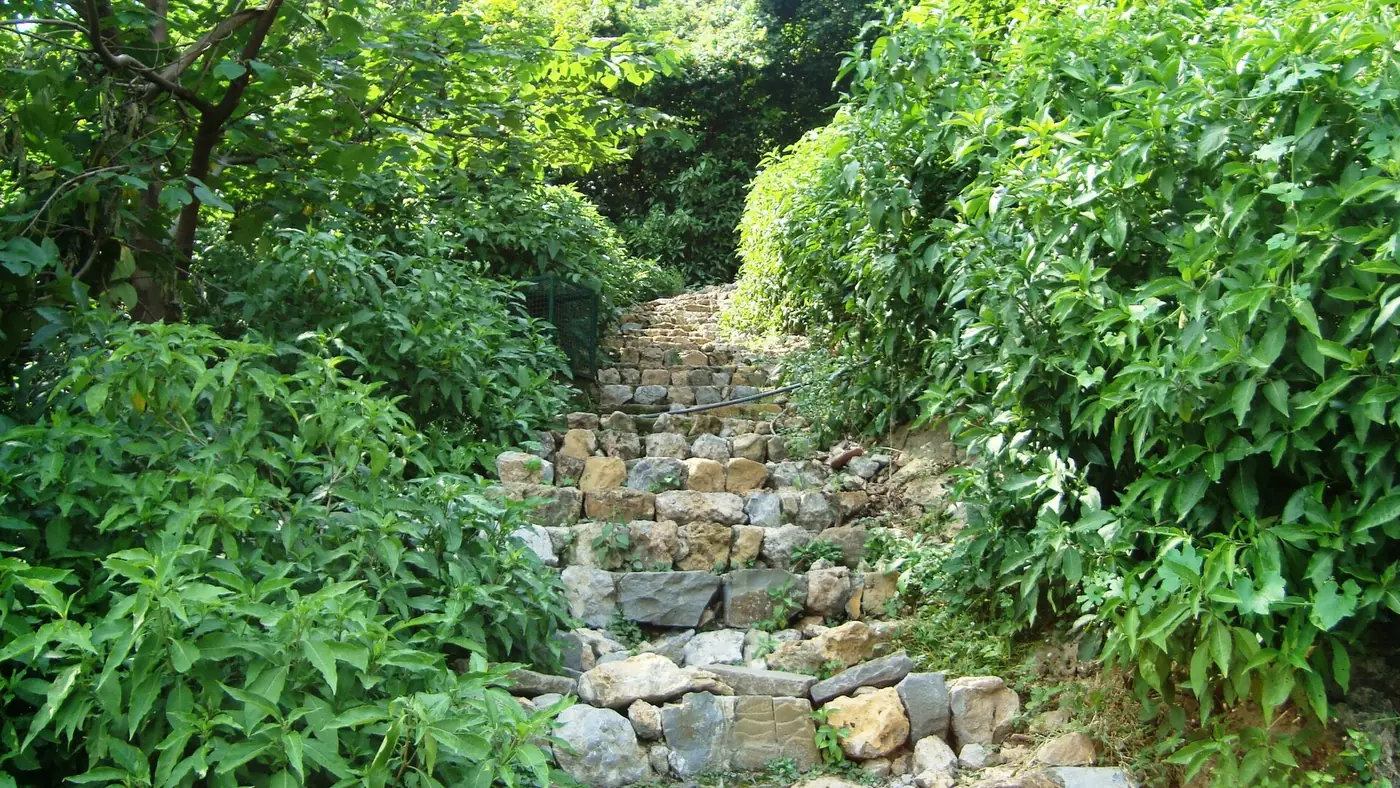
Saidpur Village sits at the foot of the Margalla Hills below Daman-e-Koh, a few minutes' drive from central Islamabad, and it is best visited in the evening for dinner in one of its restored old houses. Entry is free; you pay only for what you eat. Beyond the food, the draw is the village itself: narrow stone lanes, a centuries-old Hindu temple and mud houses restored by the CDA into an arts and crafts quarter.
This guide covers the history behind the village, what you can actually see today, where to eat, and the walking path that climbs above it into the hills.
| At a glance | |
|---|---|
| Where | Foot of the Margalla Hills, below Daman-e-Koh, near sectors E-7/F-7 |
| Entry | Free |
| Best time | Evening, for dinner and the lit-up lanes |
| Time needed | 1 to 2 hours, more with a meal |
| Main sight | A 16th-century Hindu temple, preserved but not used for worship |
| Food | Several restaurants in restored old buildings |
The history of Saidpur
Saidpur is one of the oldest settled sites in the Islamabad area, with roots going back to the Mughal period. Local accounts trace the name to Said Khan, a Gakhar chief who held the area under Mughal rule; one telling has the emperor Akbar giving the village to Said Khan for his loyalty, and Said Khan later passing it on as a wedding gift when his daughter married into the Mughal family.
For centuries afterwards it stayed a mixed community of Muslims, Hindus and Sikhs, with a mosque, a Hindu temple and a Sikh gurdwara close together in the same small cluster of lanes, a layout that still marks the village today. From 2006 the Capital Development Authority restored the old core of Saidpur, turning empty and crumbling buildings into an arts, crafts and dining quarter while keeping the stone lanes and much of the original layout.
What is there to see?
The temple
The best-known building in Saidpur is a small Hindu temple, sometimes called the Ram Mandir or Ram Kund Temple, thought to date to the 16th century. Local tradition connects the site to the Ramayana, with a spring nearby said to have been used by Rama during his years of exile.
The temple has been preserved as a heritage building rather than an active place of worship, and its condition and accessibility have varied over the years as restoration work has continued on and off. Treat it as something to see from the lanes around it rather than a site with fixed opening hours, and don't expect a guided tour of the interior.
The lanes and old houses
Saidpur's real character is in its narrow stone streets and the terraced houses climbing the hillside above them, many restored with their original mud-brick and stone construction. In the daytime you can walk the lanes and look into craft shops selling pottery, textiles and small souvenirs, most of them aimed at the evening crowd rather than serious browsing.
The Sikh gurdwara and mosque
Close to the temple stand a small mosque and the remains of a Sikh gurdwara, part of the same interfaith cluster that gave old Saidpur its reputation. Neither is set up for visitors in the way the restaurants and craft shops are; view them from outside as part of the walk through the village.
Where to eat in Saidpur
Saidpur's restaurants sit in restored old houses stacked up the hillside, most with outdoor seating and views back down over the temple and the lanes below. Pakistani and Mughlai food dominates the menus, with karahi and barbecue among the most ordered dishes, and the terraces are where people come for the setting as much as the food. Prices and specific names change fairly often as places open and close, so check current reviews before booking a table for a group.
Evenings, especially weekends, are the busiest time, with the buildings lit up and every terrace filling. On a weekday you can usually get a table without booking ahead; on a Friday or Saturday night it is worth calling first.
The walk above the village
A path climbs out of Saidpur into the forest above, following a small stream partway up before turning into a valley that leads, for experienced walkers, towards the Pir Sohawa side of the ridge. It is not one of the numbered CDA trails and is less developed and less signed than Trails 3 or 5, so it suits people who already know the hills or are walking with someone who does.
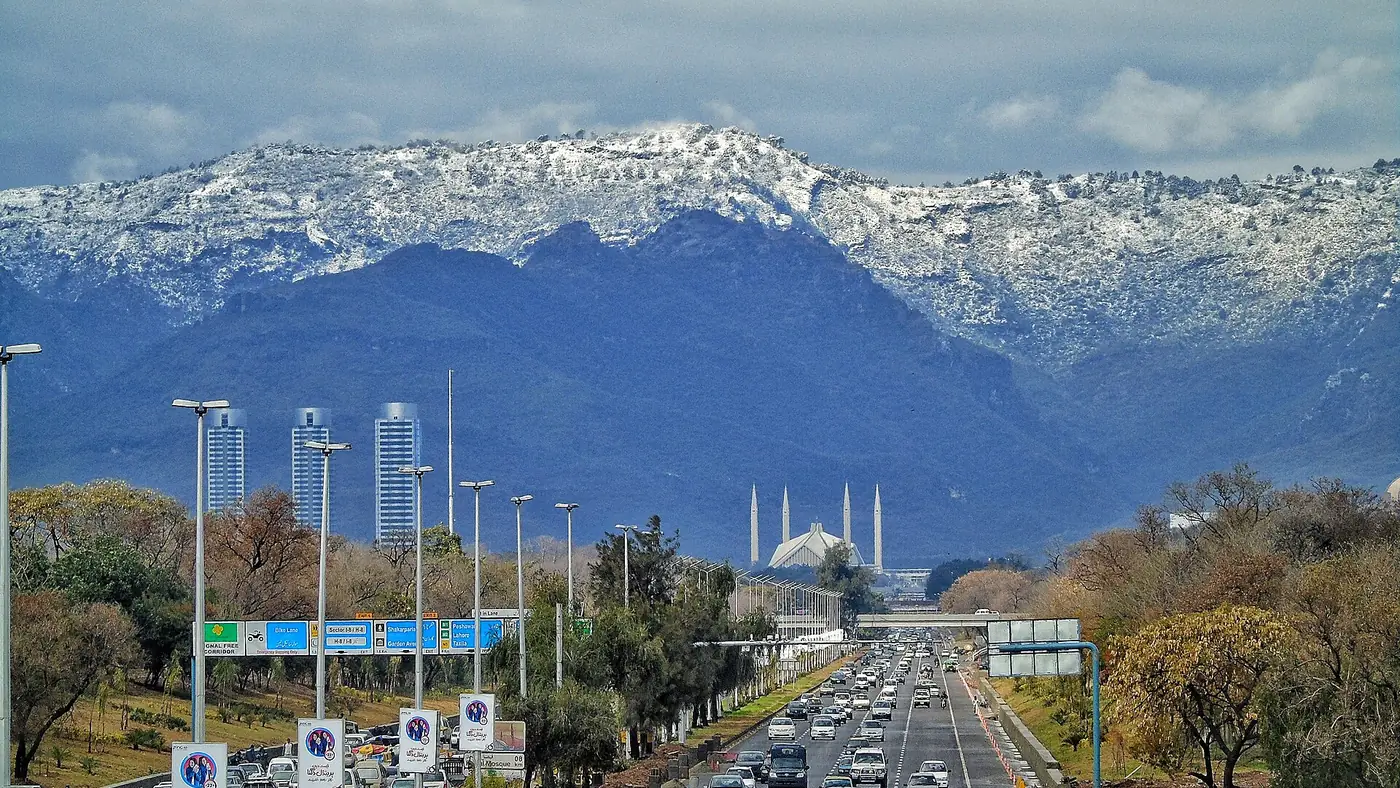
For a straightforward, well-marked hike instead, the numbered trails start a short drive away along Margalla Road; our comparison of every Margalla Hills trail covers where each one starts and how hard it is. If you would rather reach a viewpoint than walk into open forest, Daman-e-Koh is a short drive up the same hillside above Saidpur, with a terrace looking straight back over the city.
Getting there
Saidpur is a short drive from most of central Islamabad, off Margalla Road near the Faisal Mosque and Daman-e-Koh turning, in the F-7/E-7 area at the foot of the hills. Ride-hailing apps cover it easily, which is the simplest option for an evening visit when parking near the busiest restaurants can be tight. There is no public bus service running directly into the village itself.
How to fit it into a day
Saidpur works best as the last stop of a Margalla foothills day rather than the first:
- Afternoon: Faisal Mosque, after Asr. See our Faisal Mosque guide for timings and dress code.
- Sunset: Daman-e-Koh, for the view and the city lights coming on.
- Evening: Saidpur Village for dinner in one of the hillside restaurants, a short drive back down.
Who Saidpur suits
Saidpur suits anyone spending an evening in the Margalla foothills who wants dinner with some atmosphere rather than a standard restaurant. Families, couples and groups all work well here, and the free entry makes it an easy add-on to a day that already includes the mosque and the viewpoint.
It suits sightseers less well if they come expecting a living historic village or full access to the temple: what you actually get is a restored dining and craft quarter built around old structures, at its best after dark. If that is what you are after, it is a straightforward, enjoyable stop; if you want deeper history, Taxila and the old city of Rawalpindi have more to show. For the rest of Islamabad's sights, see our guide to places to visit in the capital, or tell us your dates if Islamabad is part of a longer trip north.
Frequently asked questions
Is there an entry fee for Saidpur Village?
No. Entry is free; you only pay for food, drinks or anything you buy from the craft shops.
What is the best time to visit Saidpur Village?
The evening, when the restaurants and lanes are lit and busiest. A daytime visit works for photographs and a quieter look at the temple and lanes, without the dining crowd.
Can you go inside the Saidpur temple?
The temple is preserved as a heritage building, and access has varied as restoration work has continued. Expect to view it from the surrounding lanes rather than a guaranteed interior visit.
Is Saidpur Village good for families?
Yes. It is flat and easy to walk around near the restaurants, with no entry fee, and most places serve familiar Pakistani food that suits children.
How do I get to Saidpur Village from central Islamabad?
It is a short drive off Margalla Road, near the Faisal Mosque and Daman-e-Koh turning. Ride-hailing apps are the simplest way to get there, especially in the evening when parking is tighter.
Is Saidpur the same as Daman-e-Koh?
No. Saidpur is the restored village and dining quarter at the foot of the hill; Daman-e-Koh is the viewpoint terrace higher up the same hillside, reached by a separate road.
.JPG)