Faisal Mosque in Islamabad is open to visitors every day and there is no entry fee. The best time to come is between prayers, in the late morning or the couple of hours before sunset, and it is worth avoiding Friday around midday, when the Jumu'ah congregation fills the grounds. Dress modestly, take off your shoes before the courtyard, and if you are a woman, cover your head. Expect to spend 45 minutes to an hour and a half.
It is the capital's most recognisable building and one of the largest mosques in the world, and it is still, first of all, a place of worship. This guide covers when to go, what to wear, where women can go, what you can photograph, how to get there and park, and the trail into the hills behind it.
| At a glance | |
|---|---|
| Where | Head of Faisal Avenue, at the foot of the Margalla Hills |
| Entry | Free |
| Best time | Between prayers; the couple of hours before sunset for the light |
| Avoid | Friday midday, and the few minutes around each prayer |
| Time needed | 45 minutes to 1.5 hours |
| Dress | Arms and legs covered; women cover their heads |
| Shoes | Off before the courtyard; carry socks in summer |
| Trail 6 behind the mosque | Closed to the public except on guided tours |
When can you visit Faisal Mosque?
There are no published visiting hours. The mosque is open every day, and visitors walk the grounds and courtyard from morning into the evening, outside the congregational prayers. At each of the five daily prayers, visitors are expected to either join the prayer or step aside and wait until it is over. The prayers themselves are short, but it is worth planning around them.
A few timings to keep in mind:
- Late morning is usually quieter, and the marble is not yet at its hottest.
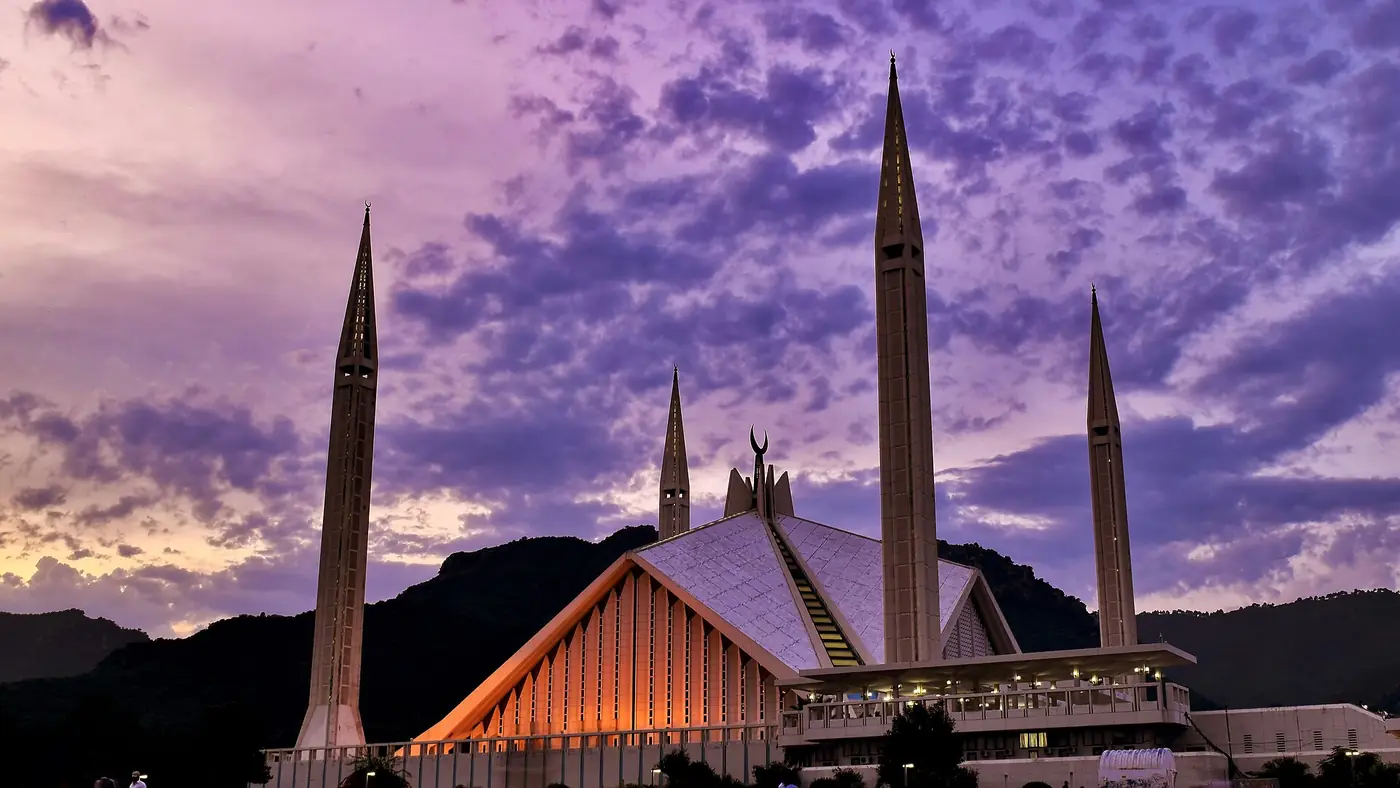
- The hour or two before Maghrib is the most popular slot. The light on the white marble and the grey hills behind is at its best, and the grounds are busy with families. Arrive after Asr and you have a good stretch before the sunset prayer.
- Friday is the busiest day. Around the Jumu'ah prayer the car parks fill, the roads around the mosque slow down and there is little room for sightseeing. Visit on another day, or come later on Friday afternoon.
- Ramadan and Eid bring very large congregations, particularly for taraweeh, the last ten nights of Ramadan and the Eid prayers. It is a remarkable sight if you are coming to pray; for sightseeing, choose another time.
Prayer times shift through the year, so check them for the day you plan to visit.
Dress code, etiquette and photography
What to wear, and how to behave
The rules are the ones you would expect at any major mosque:
- Men: long trousers, and shirts with sleeves. No shorts.
- Women: loose clothing that covers the arms and legs, and a dupatta or scarf over the head before you enter the courtyard. If you have forgotten one, don't count on borrowing one at the gate.
- Shoes: taken off before the courtyard and left at the shoe stands. The courtyard is marble, and in summer it gets very hot underfoot by midday, so socks help.
- Behaviour: keep your voice down, don't walk in front of anyone praying, and keep children close. Couples should keep a respectful distance.
Photography rules
- The grounds and courtyard: photography is generally fine, and this is where the classic shots of the minarets and the tent-like hall are taken.
- Inside the main prayer hall: don't photograph.
- People: never photograph anyone at prayer, and ask before photographing people, particularly women.
- During prayers: put the camera away.
- Drones: don't fly one. Drone use in Islamabad needs official permission, and the mosque is not the place to test the rules.
- Shoots and filming: a family photograph is fine; a staged fashion or video shoot is not appropriate in a working mosque.
Can women go inside Faisal Mosque?
Yes, into the grounds and the courtyard, and women regularly visit with their families. For prayer, women use a gallery on the first floor, above the main prayer hall.
The main prayer hall itself has been closed to women under a policy set by the Dawah Academy of the International Islamic University, which manages the mosque together with the CDA. In December 2022 the then President questioned the rule and asked for it to be reviewed, noting that elderly and disabled women had to climb stairs to reach the gallery with no lift. We have not seen a public announcement that the policy has changed, so women should expect to pray in the gallery and follow what the staff at the entrance say on the day.
Non-Muslim visitors are welcome in the grounds and courtyard outside prayer times, but have generally not been allowed into the main prayer hall.
Getting there and parking
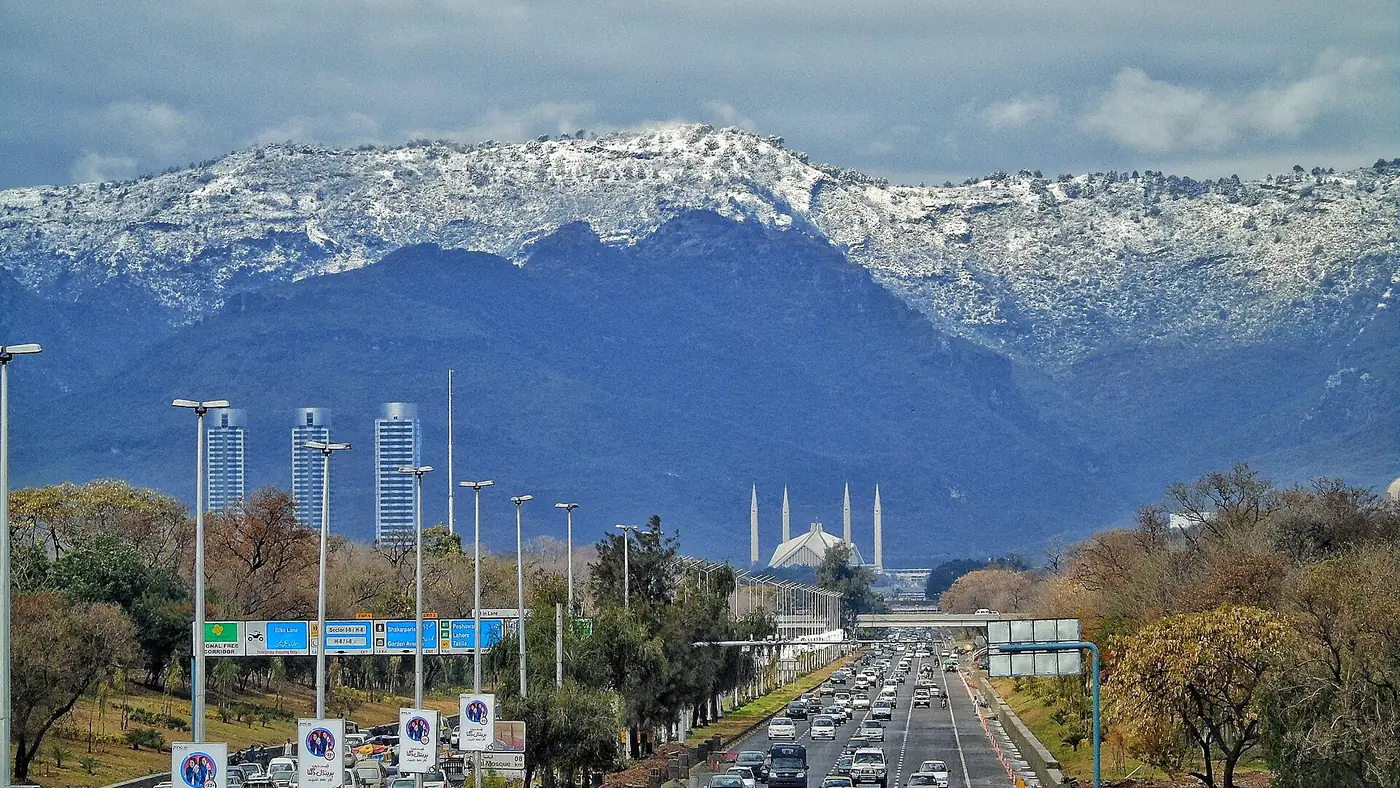
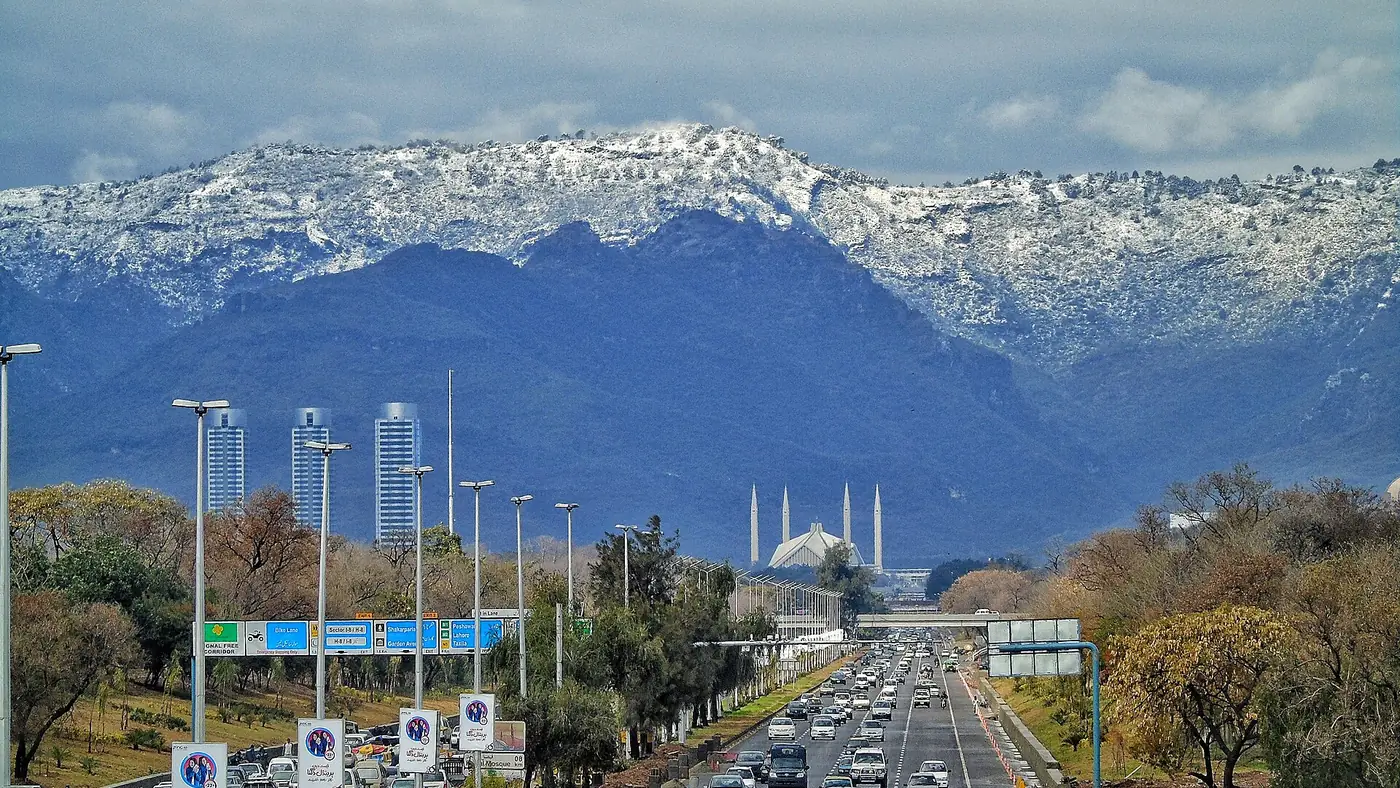
Faisal Mosque stands at the northern end of Faisal Avenue, where the city meets the Margalla Hills, and you can see its minarets from much of Islamabad. It is a short drive from most sectors of the city; from Rawalpindi, allow extra time for traffic.
There are large car parks around the mosque, with plenty of space on an ordinary day; on Fridays and on Eid they fill up and the approach roads slow to a crawl. Ride-hailing apps work well and save the parking question altogether. The CDA's ST-01 feeder bus, which runs in the daytime between PIMS hospital and Daman-e-Koh, stops at Faisal Masjid on the way.
What you are looking at
The mosque was designed by the Turkish architect Vedat Dalokay, whose entry won an international competition in 1969. Instead of a dome, the main hall is an eight-sided concrete shell shaped like a desert tent, with four minarets about 90 metres tall. Construction began in 1976, funded largely by Saudi Arabia, and the mosque is named after King Faisal, who had backed the project. It was completed in 1986, and from then until 1993 it was the largest mosque in the world.
The numbers are still striking: about 10,000 worshippers in the main hall, tens of thousands more in the courtyard and porticoes, and room for far more in the grounds on Eid. Inside the hall, if you are going in to pray, look for the calligraphy by the Pakistani artist Sadequain and the blue and white tiled qibla wall designed by the Turkish artist Mengü Ertel.
Beside the mosque is the grave of General Zia-ul-Haq, who died in 1988 and was buried in its grounds.
Trail 6: the hills behind the mosque
Trail 6 starts behind Faisal Mosque and climbs through a forested valley of the Margalla Hills. It is closed to the general public. Since January 2022 the area has been a leopard preservation zone of the Margalla Hills National Park, after leopards were photographed in the forest behind the mosque.
The Islamabad Wildlife Management Board runs guided tours of the zone for a fee, which you book through the board. Walking in on your own is not allowed, and the board's advice for every Margalla trail is to hike in daylight only, since leopards are most active at dawn, dusk and night.
If you want a walk near the mosque, the open trails start a few minutes' drive away along Margalla Road. Our comparison of every Margalla Hills trail explains which suits whom.
Combining it with other sights
Faisal Mosque fits easily into a day with the other sights at the foot of the hills. The viewpoint at Daman-e-Koh looks straight across the city to the mosque and is a short drive away, and Saidpur Village is close by for an evening meal. A good order is Faisal Mosque in the late afternoon, then Daman-e-Koh for sunset and the city lights.
For the rest of the capital, from the Pakistan Monument to Lok Virsa, see our guide to places to visit in Islamabad.
Who it suits, and is it worth it?
Everyone who comes to Islamabad should see Faisal Mosque at least from the outside: it is the city's defining building, and it is free, central and easy. Families, first-time visitors and anyone interested in architecture will find it worth an hour.
It suits sightseers less well on Fridays and during Ramadan, when it is busy with worshippers, and women hoping to see the main hall may be disappointed. If you have only a short time and the mosque is busy, the view from Daman-e-Koh gives you the building in its setting. If you are passing through Islamabad on the way north and would like it built into your plans, tell us your dates.
Frequently asked questions
What are the visiting hours of Faisal Mosque?
There are no published hours. It is open every day, and visitors can walk the grounds from morning into the evening outside the congregational prayers. Friday midday is best avoided.
Is there an entry fee for Faisal Mosque?
No. Entry to the mosque and its grounds is free.
Can women enter Faisal Mosque?
Yes. Women can visit the grounds and courtyard and pray in the first-floor women's gallery. The main prayer hall has been closed to women under the mosque's long-standing policy.
Can non-Muslims visit Faisal Mosque?
Yes, outside prayer times, dressed modestly and with shoes removed. Non-Muslim visitors have generally not been allowed into the main prayer hall.
Is photography allowed at Faisal Mosque?
Yes in the grounds and courtyard, but not inside the main prayer hall, and never of people praying. Drones need official permission.
Is Trail 6 open?
No. Trail 6, behind the mosque, has been a leopard preservation zone since January 2022 and is open only on guided tours run by the Islamabad Wildlife Management Board.