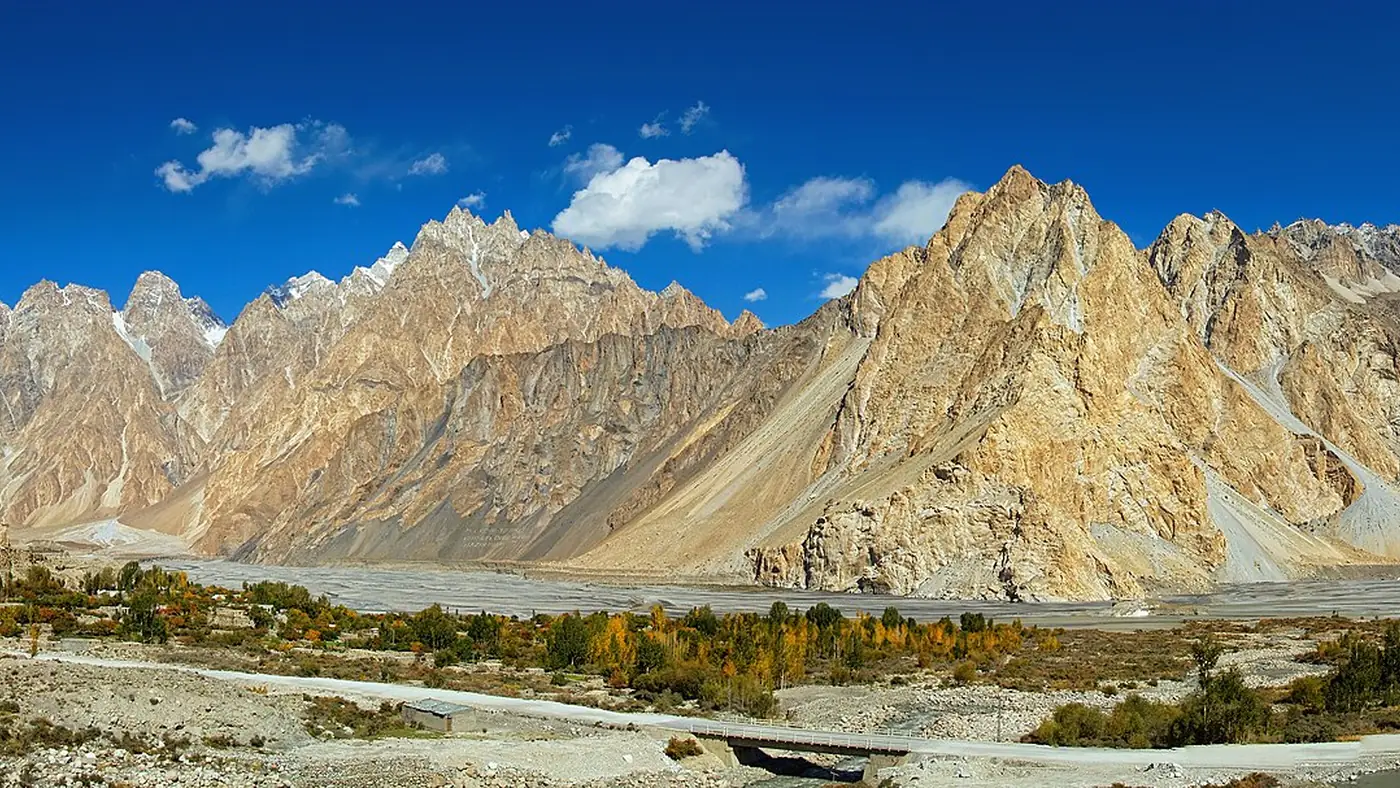
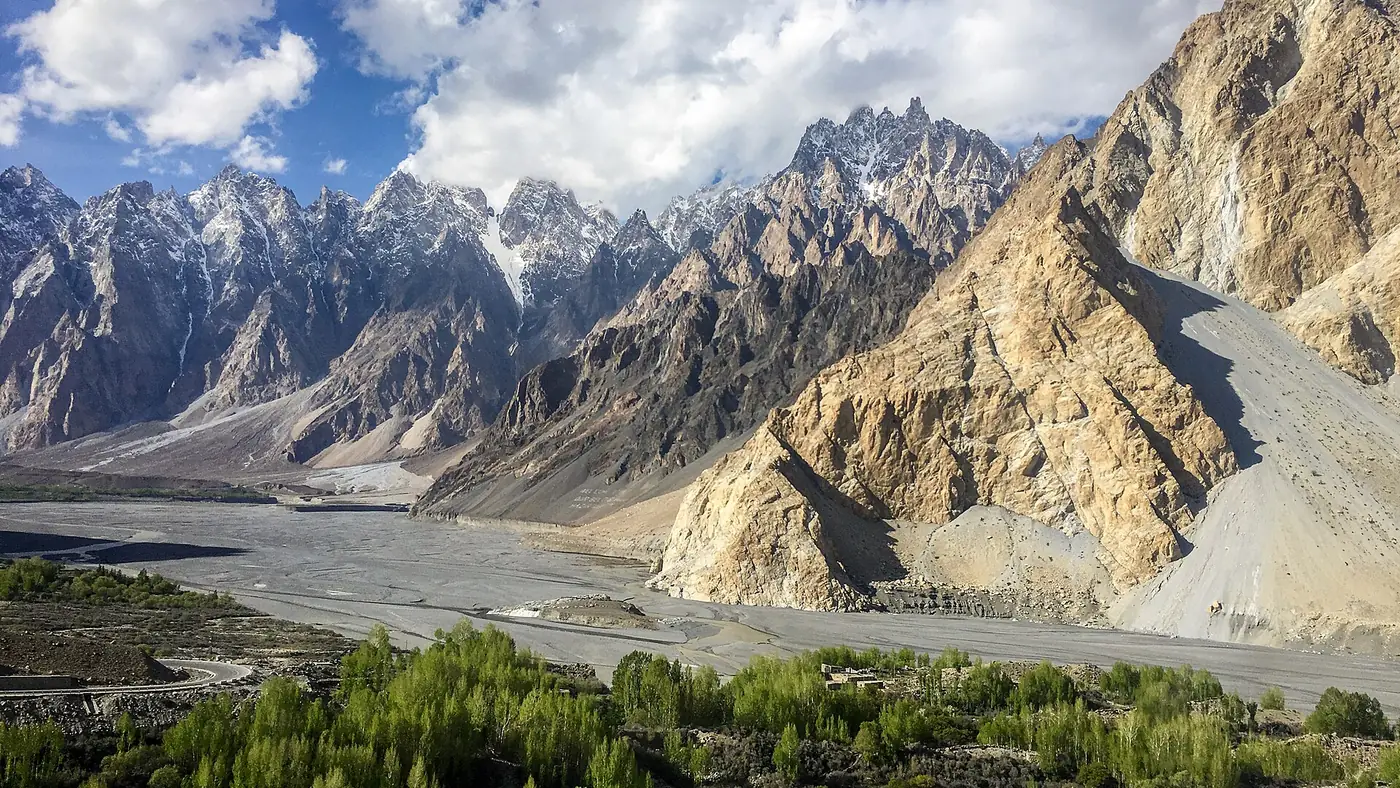
Responsible tourism in Pakistan means carrying your rubbish out rather than leaving it, using water and fire carefully in places with no waste system, and putting money into the hands of the guesthouses, drivers and shopkeepers a trip actually passes through. None of it is complicated, and most of it is just paying attention in places that get less careful the moment a valley fills up in July.
The number of visitors to the north has grown fast over the last few years, and the infrastructure to deal with the litter, sewage and traffic that come with them has not grown at the same pace. What each traveller does still matters, because most of the north is still small towns and single-lane roads, not a resort built to absorb it.
Why it matters more in the north than at home
A stream that looks like scenery is often someone's drinking water a mile downstream. A meadow with no bin is not a meadow with no rubbish problem, it is a meadow where the rubbish has nowhere to go except a hillside, a river, or a fire. Hunza, Skardu, Fairy Meadows, Deosai and the Neelum valley all depend on tourism income, and all of them are small settlements without city-scale waste collection.
Gilgit-Baltistan's government and organisations working with it have been pushing waste collection and recycling points in Gilgit, Hunza and Skardu in recent years, and Hunza banned plastic shopping bags as early as 2019, ahead of most of the country. None of that works if visitors keep bringing plastic in and leaving rubbish behind faster than it can be collected.
Plastic: what's banned and what to bring instead
Single-use plastic bags are banned in Islamabad and have been since 2019, and Gilgit-Baltistan announced a region-wide ban on plastic bags from January 2023, following Hunza's earlier lead. Enforcement varies by town, and small shops still sometimes hand out a bag out of habit, but the direction of travel is clear.
- Carry a refillable water bottle. Bottled water is sold everywhere in the north, but the bottles rarely leave with you the way they arrived.
- Bring your own cloth or jute bag for the fruit, dried apricots and handicrafts you'll end up buying.
- Say no before a shopkeeper reaches for a plastic bag. It's a normal request and nobody will think it odd.
- Pack out anything plastic you do end up with, rather than leaving it at a guesthouse that has nowhere to send it.
Litter, on the road and off it
The easiest rule is the oldest one: whatever you carry in, carry back out, including wrappers, tissues and cigarette butts. Viewpoints along the Karakoram Highway, the Babusar road and the Neelum valley all accumulate rubbish fastest at the spots with the best view and the least reason for a vehicle to stop for long.
- Keep a rubbish bag in the car for the whole trip, not just for camp.
- Don't bury rubbish at a campsite. Wind and animals uncover it, and food waste draws wildlife toward tents.
- If a site has no bin, that's not permission to leave things behind; it means you carry them to the next town that does.
- A few minutes picking up rubbish other people left is not this website's invented sentiment, it's just useful, and it costs nothing.
Campfires and cooking fires
Forest fires have become a real problem across the north in recent dry seasons, and officials in Khyber Pakhtunkhwa have specifically asked tourists to stop lighting fires in forested and high-risk areas, since a careless campfire is one of the leading causes. Treat any fire, even a small one for tea, as something that needs full attention until it is properly out.
- Use a camp stove instead of an open fire where you can. It's faster, cleaner and carries none of the same risk.
- If a campsite has an existing fire ring or hearth, use that rather than starting a new scorch mark on open ground.
- Never light a fire in dry grass, near pine forest, or in windy conditions.
- Put a fire out with water and check it is cold, not just no longer flaming, before you leave or sleep.
- Above the treeline, in places like Deosai, there is barely any wood to begin with; what looks like scrub is slow-growing high-altitude vegetation, not firewood.
Water: what looks abundant usually isn't
Glacier-fed rivers and lakes look endless, but many guesthouses in Hunza, Skardu and the Neelum valley run on tanks filled from a limited local supply, and villages further down a valley draw drinking water from the same streams travellers wade into.
- Wash with biodegradable soap where possible, and never directly in a lake or stream; use a container and pour the water away from the source.
- Turn off taps and don't run hot water longer than needed in guesthouses running on generator-heated tanks.
- Treat or filter water for drinking rather than assuming every mountain stream is safe, however clear it looks.
Supporting the places you pass through
The most direct form of responsible tourism is spending money where the trip actually happens, rather than bringing everything pre-packed from Lahore or Karachi.
- Eat at local restaurants in Karimabad, Skardu town, Kalam or Kel rather than only at a hotel dining room.
- Buy dried fruit, walnuts and handicrafts directly from shops and stalls in the valley you're visiting, not only from a city on the way.
- Stay in family-run guesthouses where you can; our guide to homestays in northern Pakistan covers how they work.
- Hire a local driver or guide rather than doing everything with an outside company that brings its own staff and never spends locally.
- Tip fairly and in cash where service has genuinely helped, without turning every interaction into a transaction.
Wildlife and protected areas
Deosai National Park and Khunjerab National Park exist specifically to protect species like the brown bear, the Marco Polo sheep and the snow leopard, all of which are more sensitive to disturbance than a passing car makes obvious. Our Khunjerab Pass guide and the Deosai National Park guide both cover what to expect on the way in.
- Keep a distance from marmots, ibex and any other wildlife, and never feed them; animals that learn to approach vehicles for food are at far greater risk from traffic and from people.
- Stick to existing tracks in national parks rather than driving or walking new lines across open ground.
- Follow park staff instructions on where camping and fires are and aren't allowed.
What actually makes the difference
If you only manage a few of these, the ones that matter most are simple: pack out every piece of rubbish, don't light fires you can't watch until they're cold, and spend money with the people whose valley you're in rather than routing it all back to a city agency. None of it costs much time, and it's the difference between a place that stays worth visiting and one that quietly stops being one. Our travel guide has more on planning a trip that gets the basics right from the start.
Frequently asked questions
Is plastic actually banned in the northern areas?
Yes, in parts of it. Islamabad has banned single-use plastic bags since 2019, and Gilgit-Baltistan announced a region-wide ban from January 2023, building on Hunza's own ban from 2019. Enforcement is uneven, so bring your own bag and bottle rather than relying on it.
Can I light a campfire while camping in the north?
Only where it's clearly safe and permitted, ideally in an existing fire ring, away from dry grass or forest, and never left unattended. Given recent forest fire seasons in Khyber Pakhtunkhwa, a camp stove is the safer default, and above the treeline there is little to burn anyway.
Is it safe to drink from streams and lakes in the north?
Treat or filter water rather than assuming it's safe just because it looks clear, and avoid washing directly in a stream or lake that a village downstream may rely on for drinking water.
How can I support local communities on a trip north?
Book local guesthouses and drivers, eat where locals eat, and buy dried fruit and handicrafts directly from the valley you're visiting rather than only from stops in a city. Small, direct spending reaches people faster than a package that routes everything through one company.
What should I do with rubbish if there's no bin?
Carry it with you until you reach a town that has waste collection. Burying or leaving rubbish at a viewpoint or campsite, even food waste, causes more harm than carrying an extra bag for a few more hours.