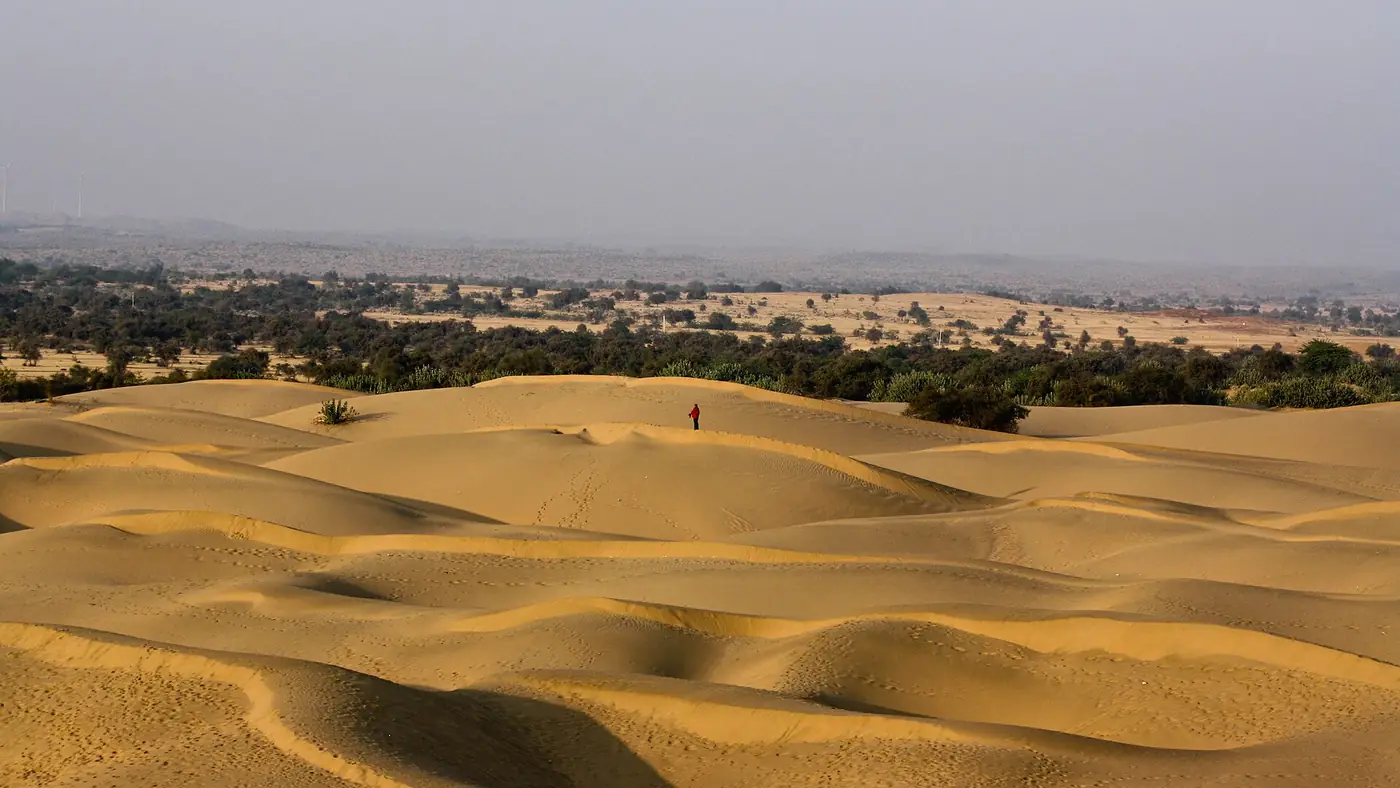
The best places to visit in Tharparkar, the desert district in the far southeast of Sindh, sit far apart across a landscape of sand dunes, granite hills and small villages, so the district rewards a plan rather than a single stop. The best way to visit is as a loop: Mithi as your base, then Nagarparkar and the Karoonjhar hills to the east, and Umerkot on the way back towards Karachi. Done at an easy pace, that circuit takes three to four days.
This guide lays out the circuit stop by stop, with the drive time between each place, so you can plan how much of Tharparkar you can realistically cover.
| At a glance | |
|---|---|
| District capital | Mithi |
| Area | About 19,600 km², the largest district in Sindh |
| From Karachi to Mithi | Roughly 370 km, about 6 to 7 hours by road |
| Mithi to Nagarparkar | About 150 km, 3 to 3.5 hours |
| Mithi to Umerkot | About 110 km by road, 2 to 2.5 hours |
| Best months | November to February |
Mithi: the base for the circuit
Mithi is Tharparkar's district headquarters and the only town in the district with a real choice of guest houses, fuel and a proper bazaar. It sits roughly in the middle of the district, which makes it the natural first and last stop on a Tharparkar trip rather than a destination in itself.
Most people spend one night here before heading further into the desert, and a second night on the way back. If you want to know how to get here from Karachi, our guide to Karachi to Tharparkar by road covers the route options and timing in detail.
Tharparkar also has the largest Hindu population, by absolute numbers, of any district in Pakistan, and that mix of communities shows in Mithi's bazaar and in the temples and shrines scattered through the district, alongside its mosques. It is one of the things that makes travelling here feel distinct from the rest of Sindh.
Nagarparkar and the Karoonjhar hills
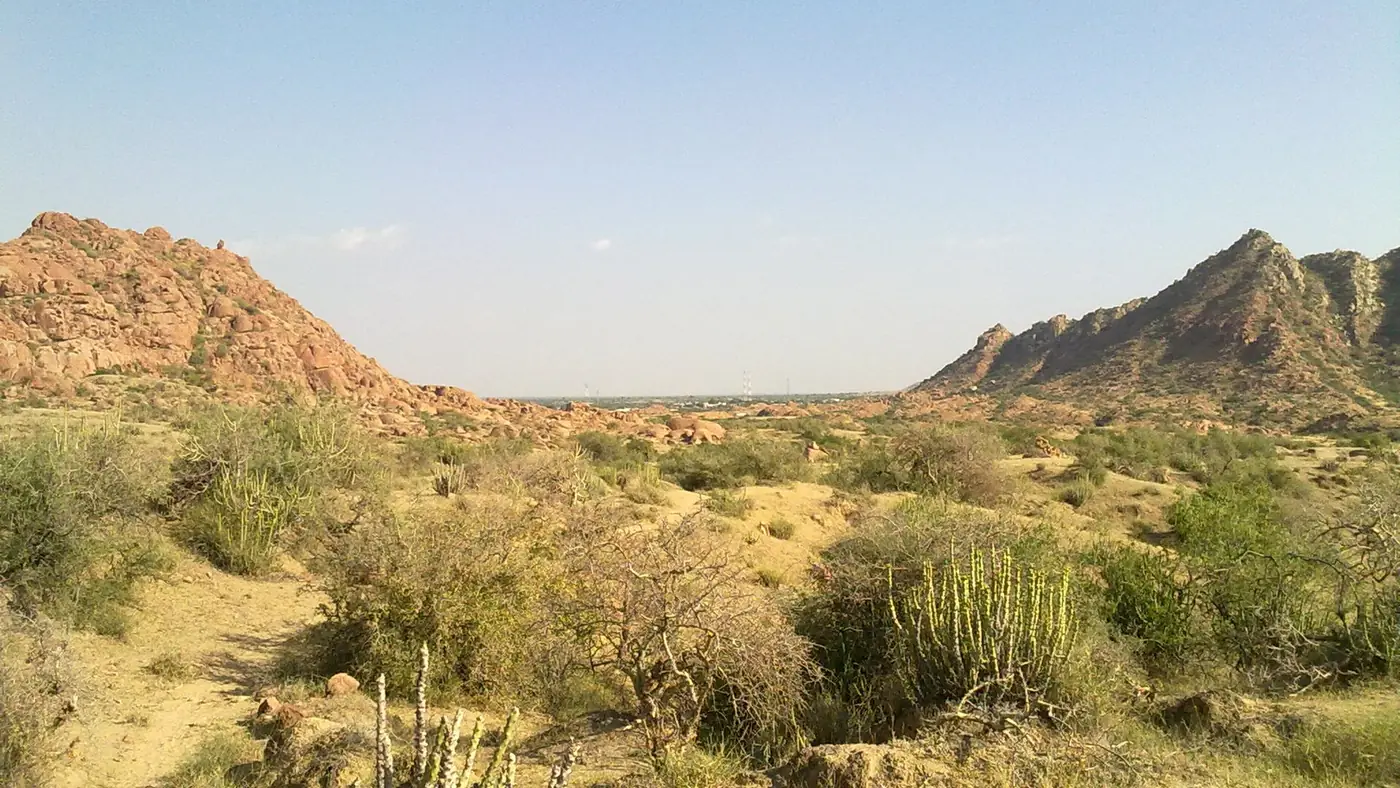
Nagarparkar is the far eastern anchor of the circuit, about 150 km and three to three and a half hours from Mithi on a road that gets narrower and quieter as you go. This is where Tharparkar stops looking like flat desert: the town sits at the foot of the Karoonjhar hills, a 19-km range of pink granite that is the district's most distinctive landscape.
Around Nagarparkar and along the base of the hills are the region's Jain temples, most dating from the 12th to the 15th centuries and now on UNESCO's tentative World Heritage list as the Nagarparkar Cultural Landscape. The best known is the Gori Temple, a white marble structure with some of the oldest surviving Jain frescoes in the northern subcontinent. Our visitor's guide to Nagarparkar covers the temples, rest houses and border-area rules in full, and our Karoonjhar Mountains guide covers the hiking routes and streams.
Nagarparkar sits close to the India-Pakistan border, and the area is patrolled by Pakistan Rangers. Expect checkpoints on the way in, and check the current situation before you go.
Umerkot: fort, museum and Akbar's birthplace
Umerkot is roughly 110 km from Mithi, about two to two and a half hours, and makes a natural stop on the way back towards Karachi if you loop back via Mirpurkhas rather than retracing your route. The town's centrepiece is Umerkot Fort, built in the 11th century by the Sodha Rajput ruler Rana Amar Singh, and famous as the place where the Mughal emperor Akbar was born in 1542 while his father Humayun was in exile. The fort now houses a small archaeological museum. Our Umerkot Fort guide has the full history and what to see inside.
Sardharo and the smaller stops
Along the Islamkot road between Mithi and Nagarparkar, Sardharo is a picnic point developed by the Sindh Tourism Development Corporation at a perennial spring on the eastern edge of the Karoonjhar range. It is a reasonable stretch-your-legs stop rather than a destination to build a day around.
Villages along the route are as much a part of Tharparkar as the named sights: round mud-and-thatch houses, camel carts on the roadside, and Hindu and Muslim communities living close together in a way that is unusual elsewhere in Pakistan. Slowing down for these is often what people remember most.
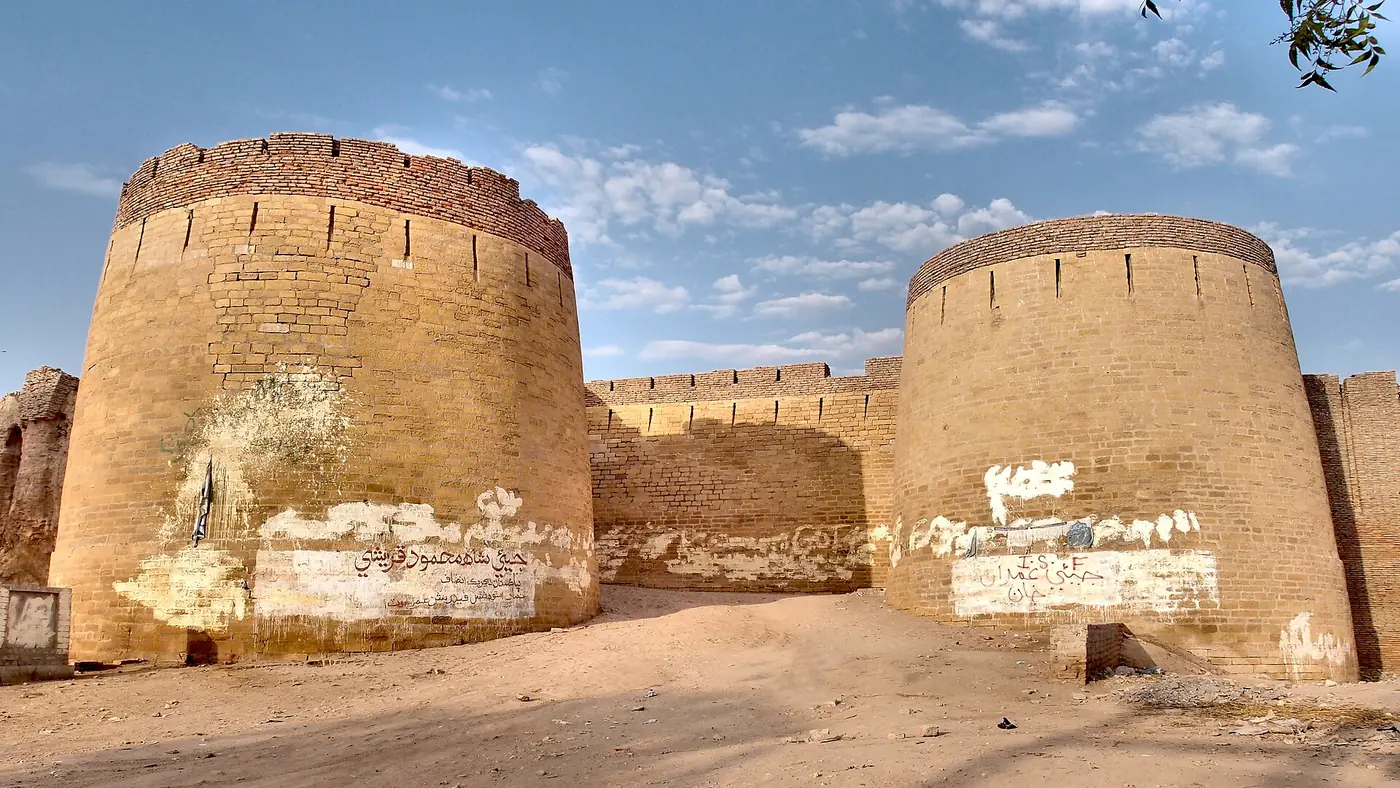
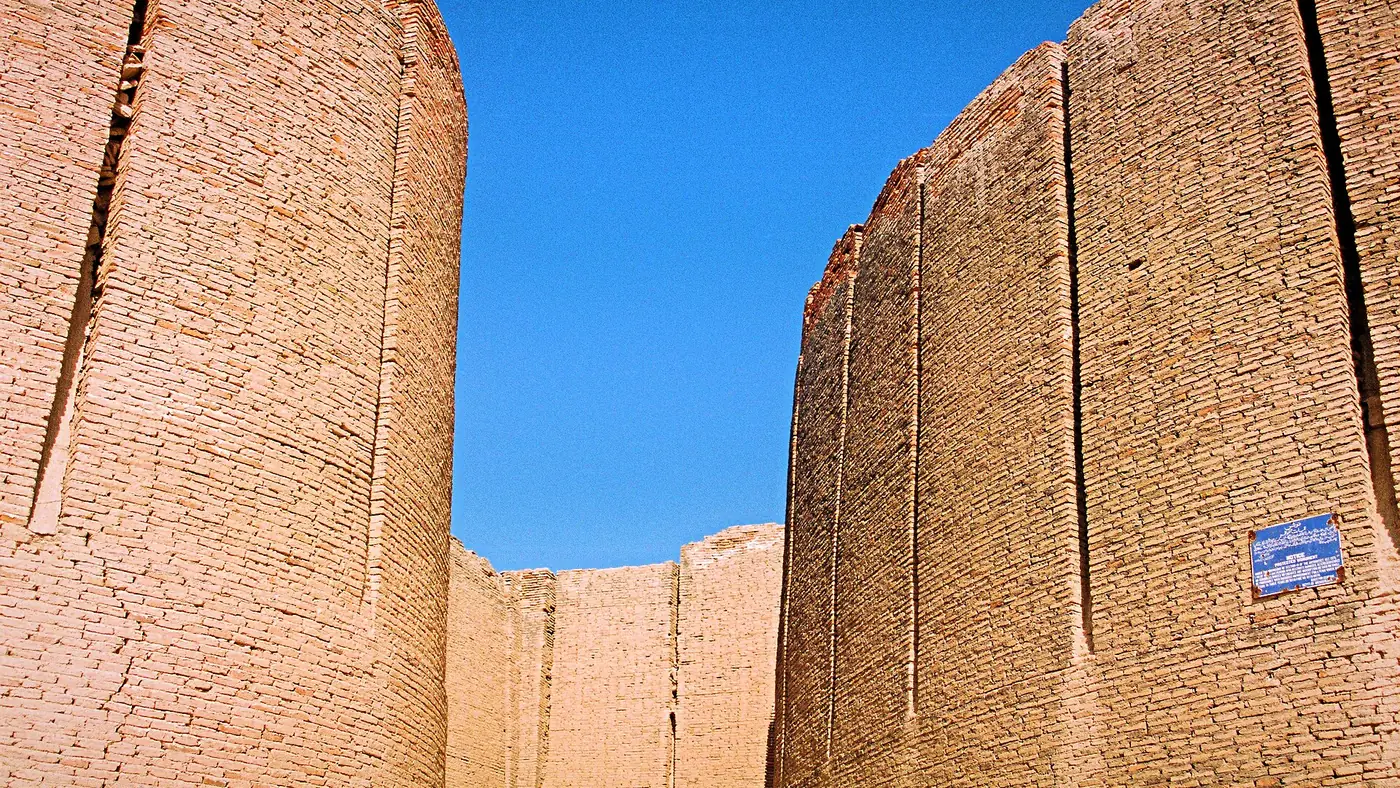
Closer to Mithi, Naukot Fort is a brick fortification built in 1814 by the Talpur ruler Mir Karam Ali Khan to control the Sodha Rajput chiefs along the frontier of his territory. It sits in Mithi Taluka itself, so it needs only a short detour rather than a dedicated day, and its nine bastions and twisted entrance passage are worth the half hour it takes to look around.
Practicalities: fuel, cash and signal
Fuel stations, ATMs and mobile signal all thin out the further east you go. Fill up and draw cash in Mithi before heading on to Nagarparkar, since neither is reliable once you leave town, and don't assume you can pay by card anywhere outside the district's main hotels. Signal drops in and out around the Karoonjhar hills and closer to the border, so agree a plan with anyone not travelling with you before you lose contact.
Putting the circuit together
A workable three-day plan looks like this:
- Day 1: Drive from Karachi to Mithi, arriving by mid-afternoon. Settle in and see the town in the evening.
- Day 2: Mithi to Nagarparkar, with a stop at Sardharo on the way. Spend the afternoon at the Jain temples and the foot of the Karoonjhar hills, and stay near Nagarparkar.
- Day 3: Nagarparkar back to Mithi, then on to Umerkot for the fort and museum, before driving back towards Karachi or overnighting in Umerkot.
With a fourth day you can add an early walk in the Karoonjhar hills before leaving Nagarparkar, which is the coolest and clearest time to be up there.
When to go
November to February is the only realistic window for this circuit. Summer in Tharparkar runs into the mid-40s Celsius and is not something to plan a multi-stop road trip around. If you want to see the desert at its greenest rather than its most comfortable, our guide to Tharparkar in monsoon covers that trade-off.
Frequently asked questions
How many days do you need to see Tharparkar properly?
Three days covers Mithi, Nagarparkar, the Karoonjhar hills and Umerkot at a reasonable pace. Two is possible if you cut Umerkot or the Karoonjhar hills, but you will be driving more than you are sightseeing.
Can you visit Tharparkar as a day trip from Karachi?
Not sensibly. Mithi alone is six to seven hours from Karachi each way, so a same-day round trip leaves almost no time on the ground. Plan for at least one night.
Is Nagarparkar worth the extra distance from Mithi?
Yes, for the Karoonjhar hills and the Jain temples, which are unlike anything else on this circuit. It adds a full day to the trip given the drive each way.
Do you need a 4x4 for this circuit?
No. The main roads to Mithi, Nagarparkar and Umerkot are paved, though narrower and quieter than the highways further west. A normal car in good condition manages them fine outside the monsoon.
Is Tharparkar safe to visit?
Pakistani travellers visit Tharparkar regularly and it is generally calm, but parts of the district sit close to the India-Pakistan border, where the UK Foreign Office advises against all but essential travel within five miles of the border. Check current advice before you go, particularly for the Nagarparkar area.