Tharparkar in monsoon, roughly late July through September, is a different district from the rest of the year: the sand dunes turn green, temporary marshes appear between them, and the district's peacocks come out to display after the rain. It is the most visually striking time to see the Thar Desert, and also the trickiest time to drive through it, because the same rain that greens the dunes can cut roads and strand vehicles.
This guide covers when the rain actually falls, what changes in the landscape, and what to weigh up before planning a monsoon trip.
| At a glance | |
|---|---|
| Monsoon window | Roughly mid-July to September |
| Rainfall | Highly variable year to year; some areas average as little as 100 mm annually |
| What changes | Dunes turn green, temporary wetlands form, peacocks display |
| Main risk | Flooded or washed-out roads, especially away from the main highways |
| Best sub-window | Late August to mid-September, after the heaviest spells, before the ground fully dries |
When does it actually rain in Tharparkar?
Tharparkar sits in a tropical semi-arid zone, and most of its rain falls in a short window during the southwest monsoon, from July to September. Outside that window the district is dry for most of the year, which is exactly why the change when the rain does come is so visible.
Rainfall totals vary enormously from year to year. Some parts of the district average as little as 100 mm annually, and a poor monsoon can mean the desert barely turns green at all. In a strong year the difference is dramatic: 2011 remains the district's benchmark wet year, when rainfall far exceeded the long-term average and Tharparkar saw some of its worst flooding on record. Because the rain is this unpredictable, there is no fixed date to build a trip around. Plan around the season, not a calendar date, and expect to adjust once you see how the year is going.
What the desert looks like after rain
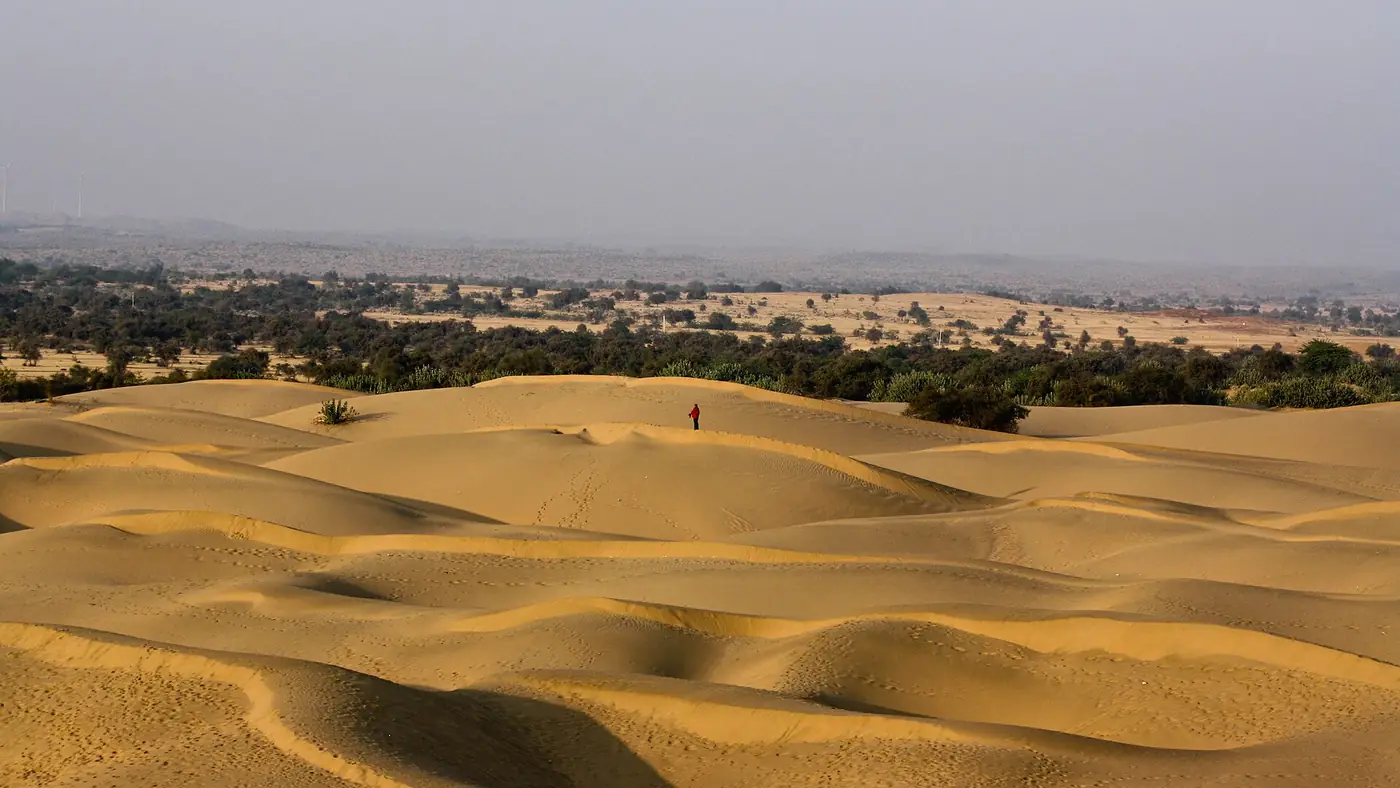
After good rain, the dunes that are normally bare sand fill in with grass and low scrub within days, and shallow, temporary pools form in the low ground between them. Wildflowers appear on ground that looked completely dead a month earlier. It is the closest the Thar Desert comes to looking like grassland, and it does not last: the green fades back to sand-colour over the following weeks as the water dries out.
The rain also matters well beyond scenery. June to August rain is what lets Thari farmers grow wheat, vegetables and lentils on land that has no other water source, so a good monsoon has a real effect on the district's year, not just its look.
Peacocks and monsoon wildlife
Tharparkar is one of the few places in Pakistan with a healthy wild peacock population, and they are closely tied to the rains. In drought years peacocks in the district can die in large numbers from lack of water and food; when the rain arrives, they are far more visible, calling and displaying across the greener ground. If seeing wild peacocks is a specific goal, the weeks just after good rain are the best chance of it, though sightings are never guaranteed on any single visit.
The Rann of Kutch floods too
Tharparkar's southern edge runs towards the Rann of Kutch, the vast salt marsh that Sindh shares with India's Gujarat state. In the dry months it is a cracked white salt flat; through the monsoon, from June to September, it fills with rainwater run-off and tidal water pushed in from the Arabian Sea, turning into a wetland that supports one of the world's larger breeding colonies of flamingos, along with pelicans, storks, cranes and a wide range of waterfowl. It is not a sight you plan a dedicated trip around, since access is limited and much of it sits close to the border, but it is part of why the wider Thar region changes so completely in monsoon, not just the dunes around Mithi and Nagarparkar.
The roads: the real risk of a monsoon trip
The trade-off for the green landscape is road condition. Rain that is light enough to green the dunes without causing problems is common, but heavy spells can flood low-lying stretches of road, wash out unpaved sections, and in a bad year cut off villages for days. The main highways between Karachi, Mithi and Umerkot are usually the last to be affected and the first to reopen; smaller roads out towards Nagarparkar and the Karoonjhar hills are more exposed.
If you are driving out in monsoon:
- Check road status before you leave, not just the forecast. A clear sky in Mithi does not mean the road you are driving is clear.
- Don't try to cross flowing water on a road, even if it looks shallow. Desert flash floods can be stronger than they look and the road surface underneath may already be washed away.
- Build in slack. A monsoon trip is not the time for a tight schedule with a flight or an event to get back for.
- Carry more fuel and water than you think you need. Fuel stops are limited even in dry weather, and a delay from a closed road can add hours.
Is monsoon the right time for your trip?
If your priority is seeing Tharparkar at its greenest, with peacocks and a landscape unlike the rest of the year, late monsoon is worth planning around, ideally the weeks after the heaviest rain has passed rather than during it. If your priority is a reliable, comfortable trip with predictable roads, go instead in the cooler months from November to February, when the district is dry but far easier to move around. Our circuit of Tharparkar's main sights works better in that dry season for exactly this reason.
Families, first-time visitors to the district and anyone on a fixed schedule are better off avoiding monsoon. Travellers who have some flexibility and want to see the desert at its most unusual are the ones monsoon suits.
Frequently asked questions
What month does it rain most in Tharparkar?
Most of the district's rain falls between July and September, with no fixed peak week, since totals and timing vary a great deal from year to year.
Does it rain every year in Tharparkar?
Not reliably. Some years bring little rain and the dunes barely change colour; other years, like 2011, bring heavy rain and flooding. There is no guarantee of a "green desert" trip in any given year.
Is it dangerous to drive in Tharparkar during monsoon?
It can be, mainly because of flooded or washed-out roads rather than the rain itself. Check current road status before travelling and avoid driving through standing or flowing water on the road.
Can you see peacocks in Tharparkar any time of year?
Wild peacocks live in Tharparkar year-round, but they are far more visible and active after monsoon rain, when food and water are plentiful. Sightings in the dry months are possible but less reliable.
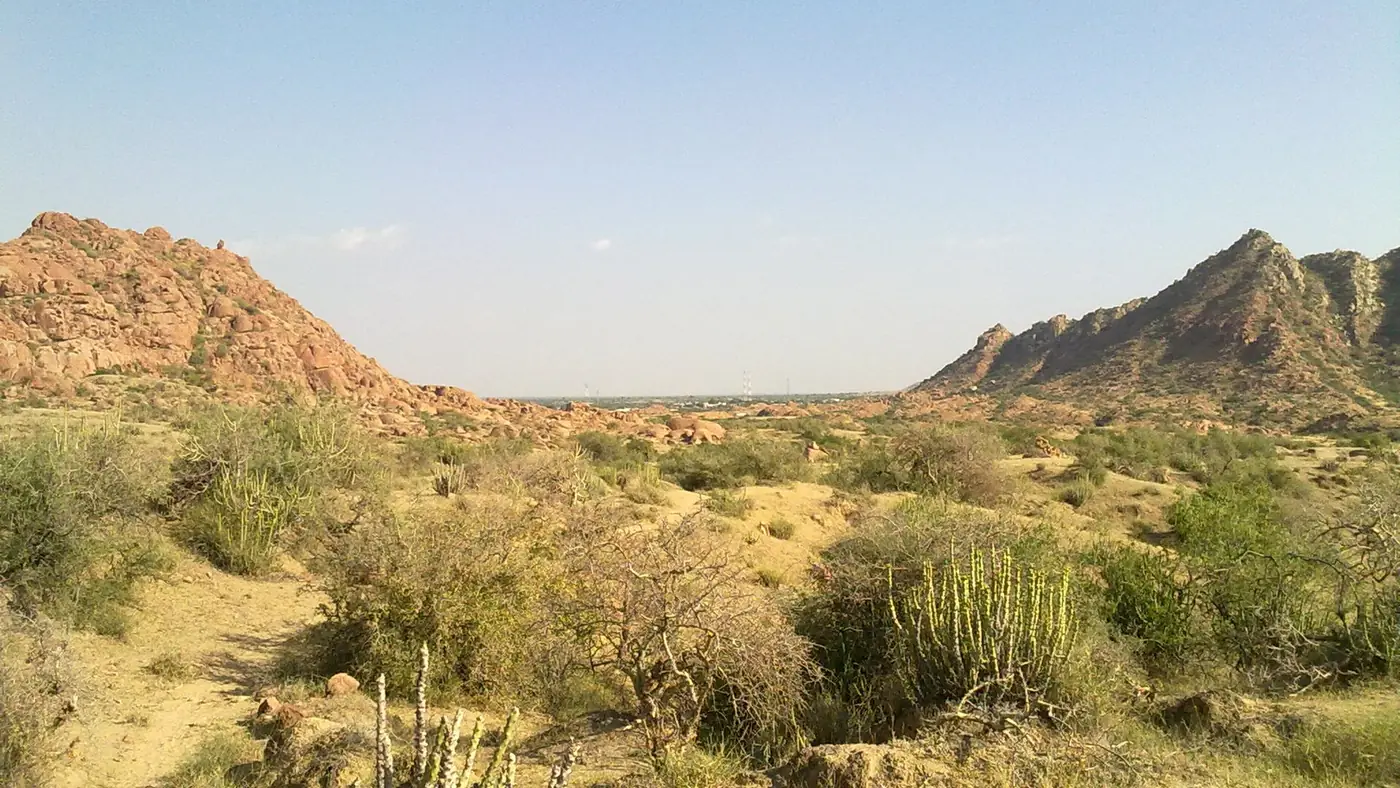
Is monsoon a good time to visit Nagarparkar and the Karoonjhar hills?
The hills are at their greenest just after monsoon rain, which is genuinely a good look for them, but the roads out to Nagarparkar are among the more exposed in the district if the rain is heavy. Check conditions before setting out.