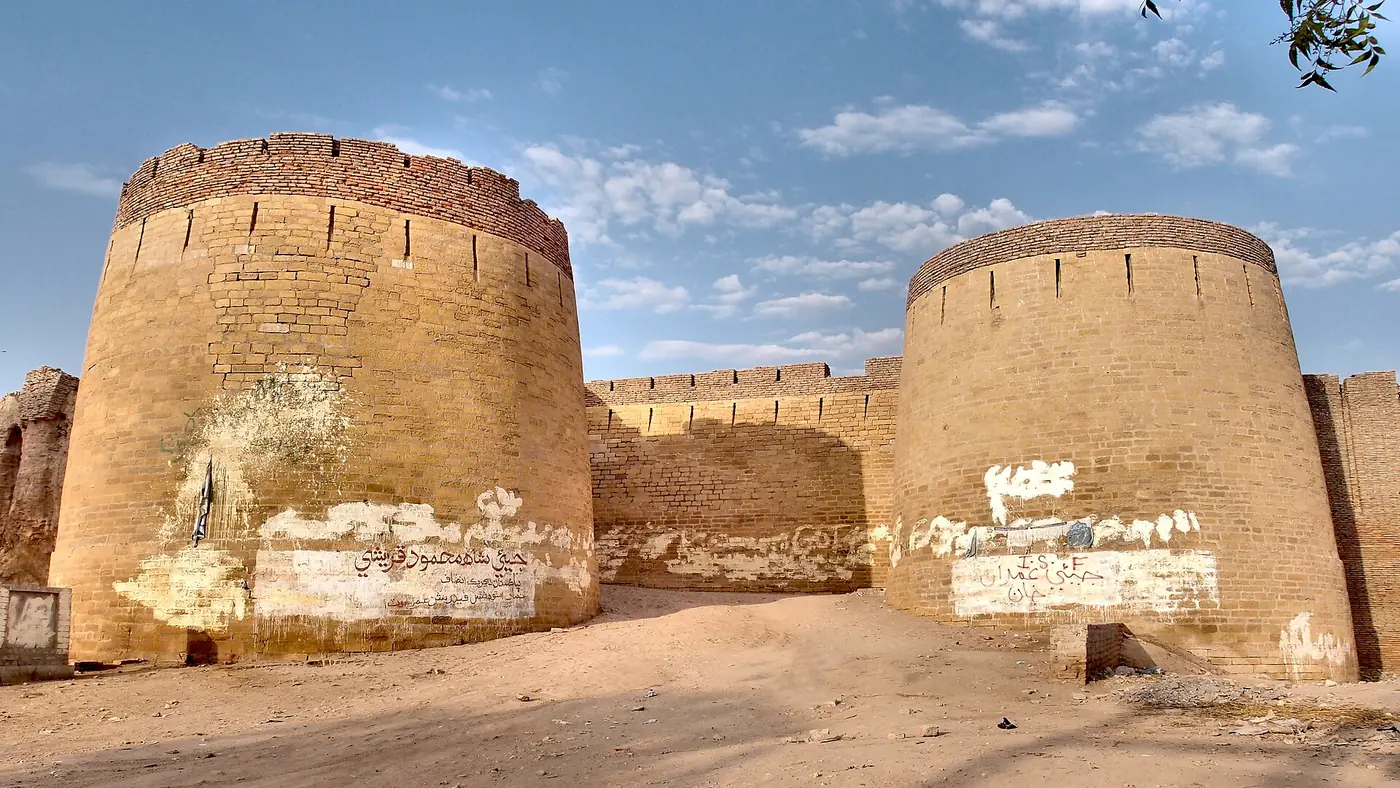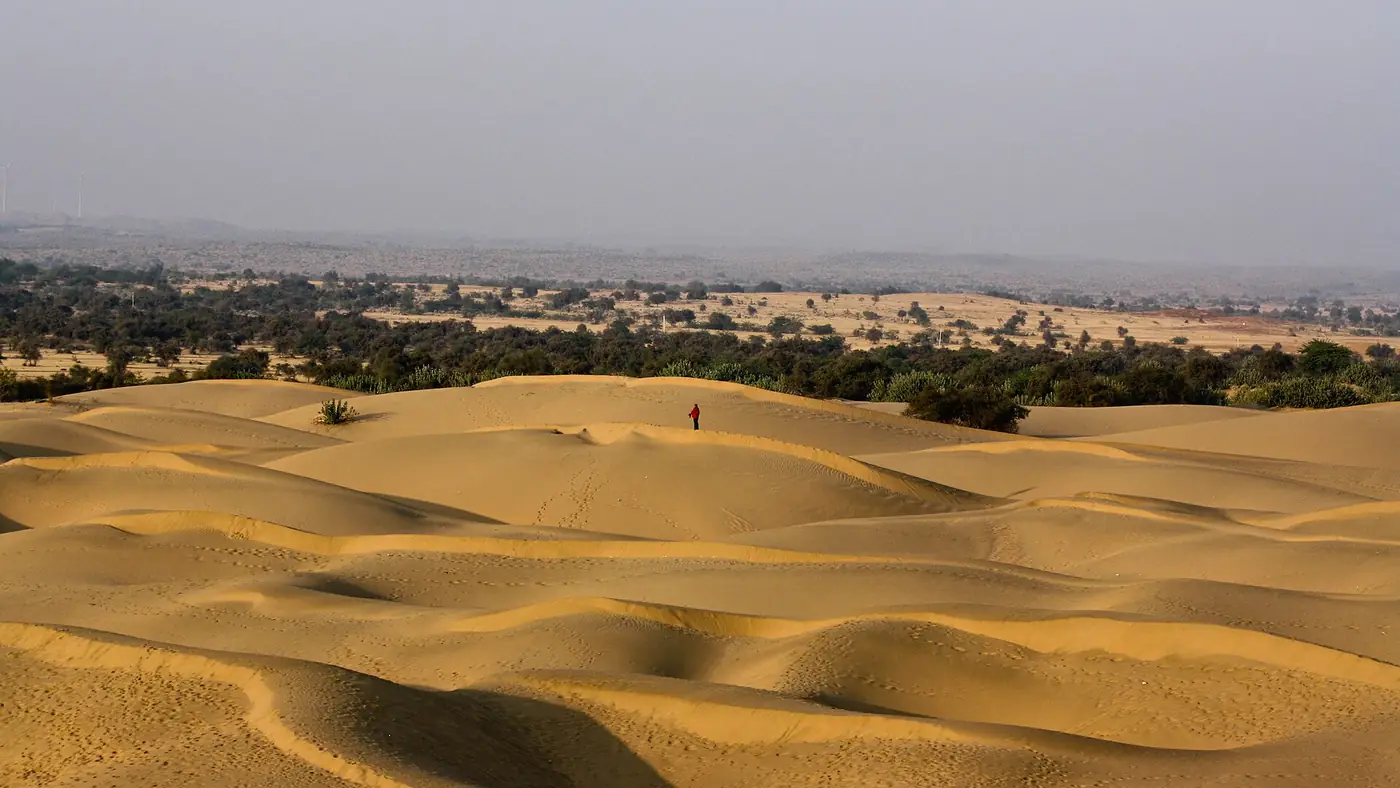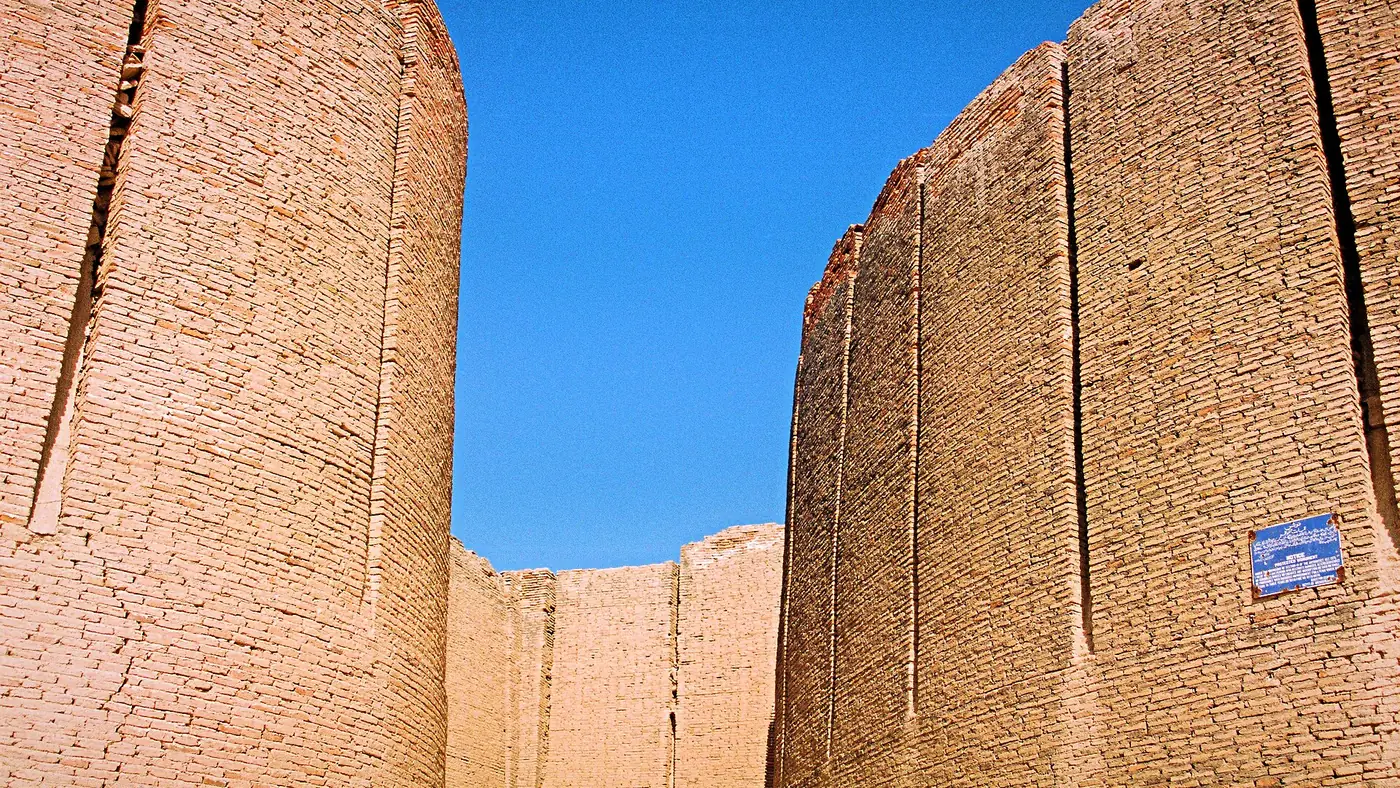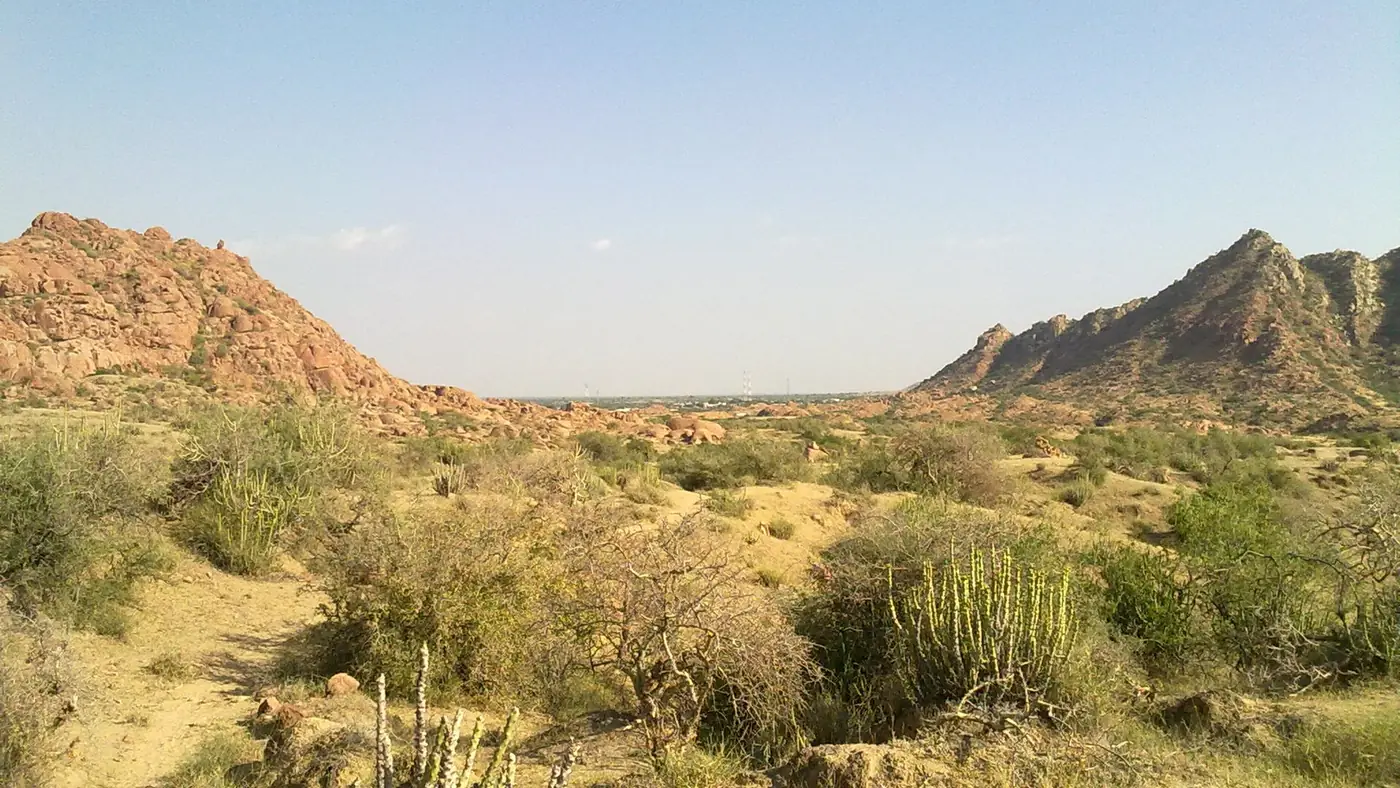
Nagarparkar is a small town in the far southeast corner of Sindh, at the foot of the Karoonjhar hills and close to the India-Pakistan border. It is one of the few places in Pakistan with a cluster of medieval Jain temples, and it sits in genuinely different landscape from the sandy desert further west: pink granite hills instead of dunes. It is also remote, with limited accommodation and a border-area security presence, so it needs more planning than most stops in Tharparkar.
This guide covers the temples, the hills, where to stay, what the border-area rules mean for visitors, and when to go.
| At a glance | |
|---|---|
| From Mithi | About 150 km, 3 to 3.5 hours |
| Setting | Foot of the Karoonjhar hills, near the India border |
| Main sights | Jain temples (Gori, Bhodesar and others), Karoonjhar hills, Sardharo |
| Accommodation | Very limited; Rooplo Kolhi Resort (Sindh Tourism) and a few basic guest houses |
| Best months | November to February; the hills are greenest just after monsoon |
| Security | Pakistan Rangers patrol the area; expect checkpoints |
Getting to Nagarparkar
Nagarparkar is reached from Mithi, about 150 km away on a road that takes three to three and a half hours by car. There is no shorter way in; every route to Nagarparkar goes through Mithi or approaches from further south via Badin. If you are coming from Karachi, our guide to Karachi to Tharparkar by road covers both options.
Minibuses also run the Mithi–Nagarparkar road at intervals through the day, a cheap if slow alternative to driving, with the last bus back to Mithi departing in the early afternoon.
The Jain temples
The area around Nagarparkar holds a cluster of Jain temples, most built between the 12th and 15th centuries, now on UNESCO's tentative World Heritage list as the Nagarparkar Cultural Landscape. Almost no Jain community remains in the area today, so the temples stand as abandoned but genuinely old religious architecture rather than active places of worship.
The best known is the Gori Temple, a white marble structure dedicated to Parshwanath, the 23rd Jain tirthankara, with some of the oldest surviving Jain frescoes in the northern subcontinent. It sits close to the border and has, at times, come with checkpoint formalities for visitors, including questions about photography, so bring identification and expect some scrutiny. The Bhodesar mosque, built in a similar domed marble style at the foot of the hills, is a short distance away and shows how closely Jain and Islamic architecture in this corner of Sindh borrowed from each other.
A second, smaller Jain temple stands near the Bhodesar dam reservoir. None of the temples are actively maintained as tourist sites, so go with the expectation of quiet, slightly weathered buildings rather than a polished heritage attraction.
The area's biggest religious site is a different tradition altogether: the Churrio Jabal Durga Mata Temple, a Hindu shrine on a hilltop near Nagarparkar that draws around 200,000 pilgrims a year during its Shivratri festival, making it one of the largest religious gatherings anywhere in Tharparkar. Outside festival dates it is a quieter hilltop site, and worth combining with the Jain temples if your visit allows an extra half day.
The Karoonjhar hills
Nagarparkar sits at the foot of the Karoonjhar range, a line of pink granite hills that runs for about 19 km and is the most distinctive landscape feature in Tharparkar. The town is within easy reach of several points along the range, and it is the natural base for exploring them. Our Karoonjhar Mountains guide covers the hiking routes, streams and conservation status in detail.
Sardharo, on the Islamkot road between Mithi and Nagarparkar, is a developed picnic point at a perennial spring on the eastern edge of the range, and a reasonable stop on the drive in.
Where to stay
Accommodation in Nagarparkar is genuinely limited, more so than almost anywhere else on a Tharparkar circuit. The town's own rest houses are mostly reserved for government employees and not open to the general public. The main option built for visitors is the Rooplo Kolhi Resort, a Sindh Tourism Development Corporation property at Bhodesar, at the foot of the Karoonjhar hills, with a mix of air-conditioned and non-air-conditioned rooms, bookable through the Sindh tourism department. Beyond that, a small number of basic guest houses operate in the town itself.
Given how limited the options are, book ahead rather than assuming you will find a room on arrival, and don't plan to reach Nagarparkar after dark expecting to find somewhere to stay.
Border-area rules and safety
Nagarparkar sits close to the India-Pakistan border, and the Karoonjhar hills and the area around them are patrolled by Pakistan Rangers. Expect vehicle checks and requests for identification on the roads in and around the town, and be straightforward about where you are going and why.
The UK Foreign Office's Pakistan travel advice, updated 22 September 2026, advises against all but essential travel within five miles of the international border between Pakistan and India across the whole country, which is directly relevant this close to the frontier. It does not list Tharparkar or Nagarparkar by name, since the district lies south of the separate line drawn for the rest of Sindh. Pakistani visitors travel to Nagarparkar regularly and the area is generally calm, but check the current UK, or your own government's, advice before you go, particularly if you are travelling from abroad, since it can also affect travel insurance. Carry your CNIC or, for foreign nationals, your passport and visa, and keep to the main roads and known sights near the border rather than wandering off them.
When to go
November to February is the most comfortable window, with mild days and cool nights after the summer heat has broken. If seeing the Karoonjhar hills at their greenest matters more to you than comfort, the weeks just after the July to September monsoon are worth timing a visit around, as covered in our guide to Tharparkar in monsoon. Summer, from April to June, is extremely hot and not a sensible time to be out walking among the hills.
Frequently asked questions
How far is Nagarparkar from Mithi?
About 150 km, a drive of three to three and a half hours. It is the furthest major stop on a Tharparkar circuit.
Is Nagarparkar safe to visit?
Pakistani visitors go regularly and the town itself is calm, but it sits close to the India-Pakistan border, an area under Rangers patrol and covered by foreign travel advisories against travel within five miles of the border. Check current advice before travelling, especially if you are visiting from abroad.
What is there to see in Nagarparkar?
The main draws are the medieval Jain temples, particularly the Gori Temple, and the Karoonjhar granite hills that rise directly behind the town.
Where can I stay in Nagarparkar?
Options are limited. The Rooplo Kolhi Resort, run by Sindh Tourism at Bhodesar, is the main purpose-built option, alongside a few basic guest houses in the town. Book ahead.
Do I need a permit to visit Nagarparkar?
No formal tourist permit is required for Pakistani citizens, but expect Rangers checkpoints given the proximity to the border, and carry identification. Foreign nationals should check current requirements before travelling, since border-area rules can change.
Can you visit Nagarparkar as a day trip from Mithi?
It is possible but tight, given the three-hour drive each way plus time at the temples and hills. An overnight stay makes for a much less rushed visit.