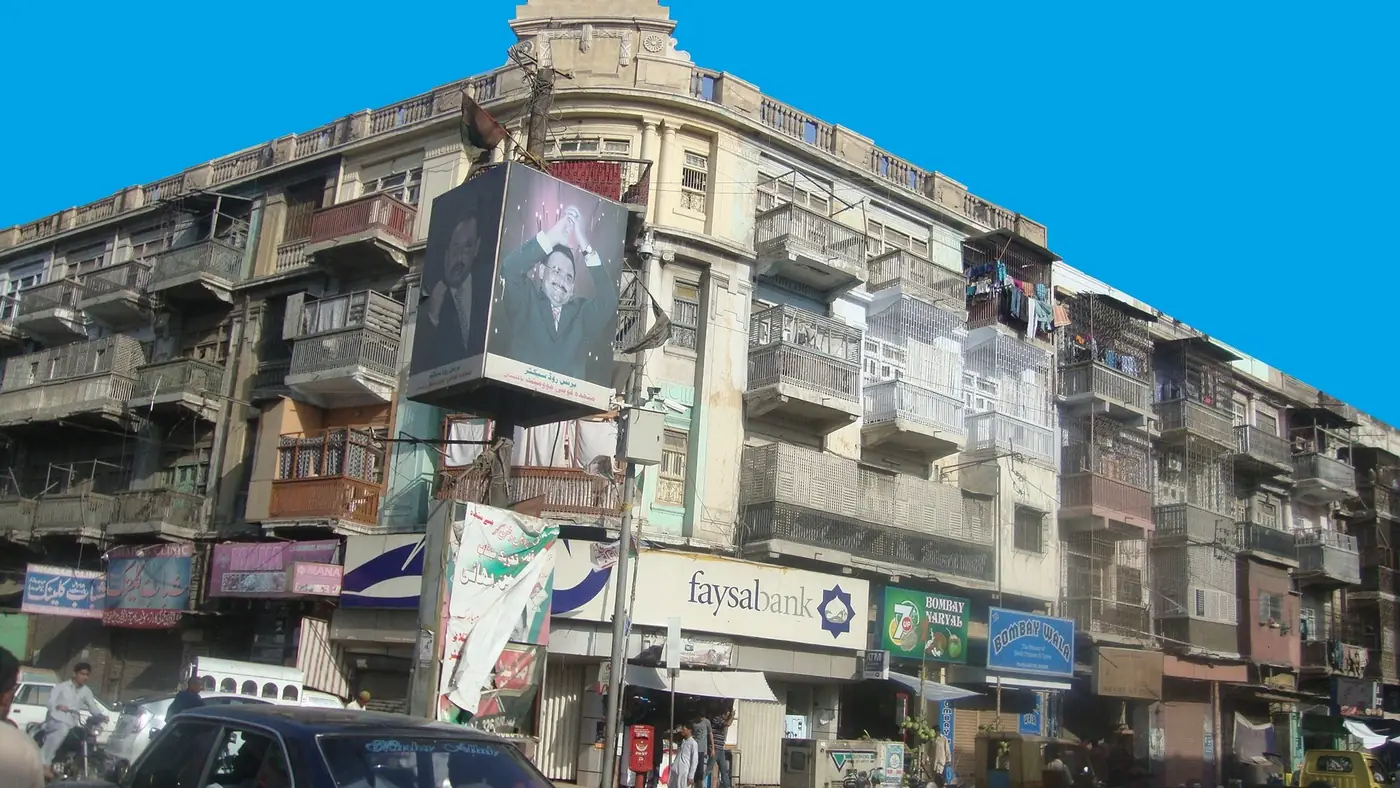
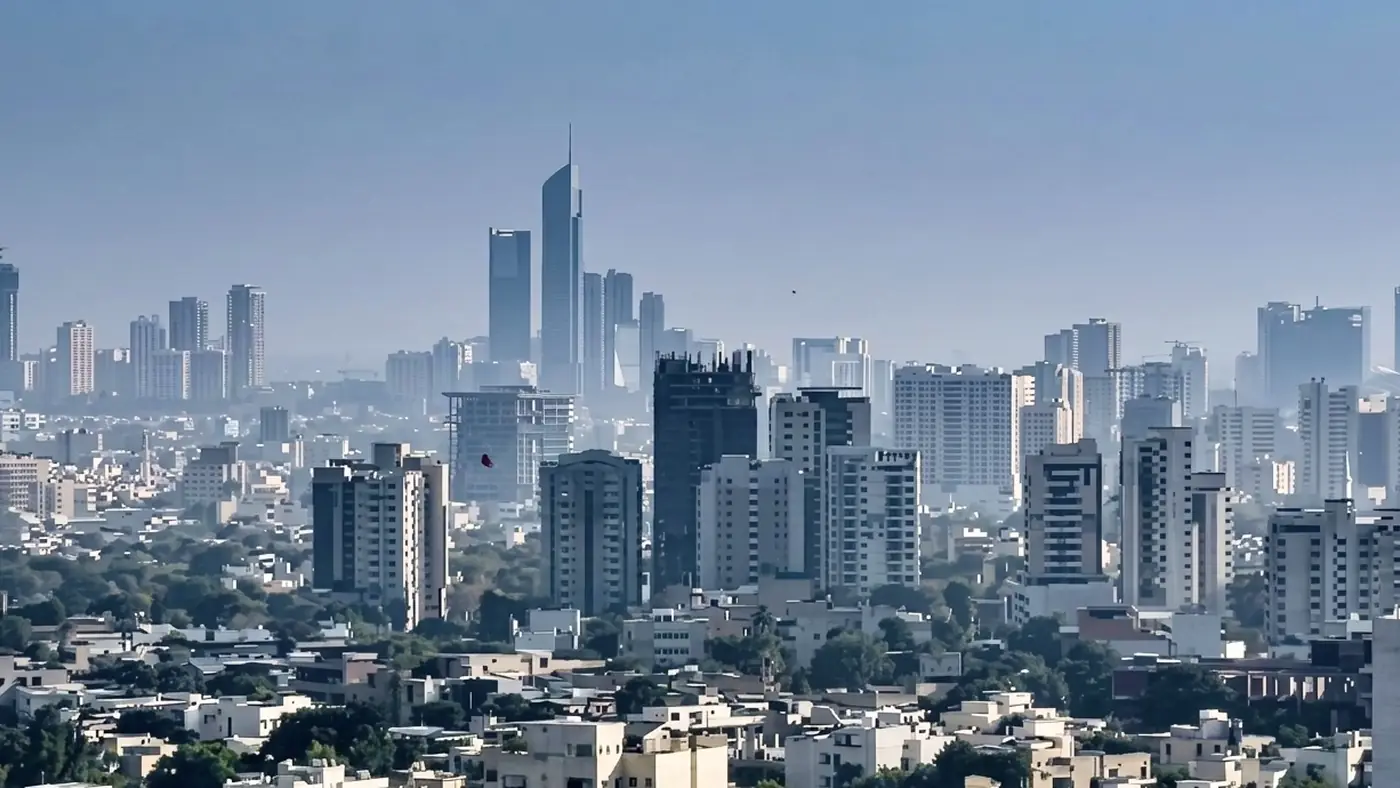
The best places to visit in Karachi fall into four groups: the colonial old city around Saddar and M.A. Jinnah Road, with Empress Market, the National Museum and Burns Road; Clifton, with Frere Hall, Mohatta Palace and the seafront; the military museums along Shahrah-e-Faisal; and the harbour, with Port Grand and the ferry to Manora. Two full days cover the essentials if you group sights by area, because in Karachi the traffic between areas takes more time than the sights themselves.
This list is arranged that way, area by area, with the time each place needs, the timings worth knowing, and which ones pair well in a morning or an evening.
| Place | Area | Time to allow | Worth knowing |
|---|---|---|---|
| Empress Market | Saddar | 45 minutes | Busiest in the morning |
| National Museum of Pakistan | Burns Garden, old city | 1.5 hours | Closed on Wednesdays |
| Merewether Tower and Wazir Mansion | Old town, near the port | 1 hour | Museum open in daytime only |
| Burns Road | Old city | A meal | Nihari in the morning, kababs at night |
| Mazar-e-Quaid | M.A. Jinnah Road | Outside view only for now | Closed to the public in 2026 |
| Frere Hall | Civil Lines | 45 minutes | Daytime |
| Mohatta Palace Museum | Clifton | 1 hour | Tuesday to Sunday, 11 am to 6 pm |
| Sea View and Abdullah Shah Ghazi shrine | Clifton | 1 to 2 hours | Best at sunset |
| PAF Museum and Maritime Museum | Shahrah-e-Faisal, Karsaz | 1.5 to 2 hours each | Both open into the evening |
| Port Grand | Keamari side of the harbour | An evening | Ticketed entry |
| Best months | November to February |
How to plan a day in Karachi
Karachi is huge, and a drive between Clifton and the old city that is quick early in the morning can crawl in the evening rush. The one rule that makes sightseeing here work is to do one area per half day.
- Mornings suit the old city and the museums: cooler, less traffic, markets at their liveliest.
- Late afternoons and evenings suit the seafront, Port Grand and the food streets. Karachi eats late, and Sea View is at its best as the sun goes down.
- November to February is the comfortable season. From April to October the heat and humidity make walking tiring by late morning, and in the monsoon, mainly July and August, heavy rain can flood roads for hours.
- Get around by ride-hailing app or with a car and driver. Keep your phone out of sight at traffic signals and in crowded streets, where snatching is a real risk.
The old city: Saddar, M.A. Jinnah Road and the port
This is where Karachi grew up under the British, and most of its heritage sits within a few kilometres. Start early.
Empress Market
The great Indo-Gothic market in Saddar was built between 1884 and 1889 and named after Queen Victoria, with a clock tower rising 140 feet above a courtyard of stalls. It still works as a market: spices, dry fruit, meat, vegetables and a pet section. Allow 45 minutes, go in the morning, and keep your bag in front of you in the crowds.
National Museum of Pakistan
In Burns Garden, a short drive from Saddar. The museum moved here in 1970 and now has eleven galleries, including Indus Valley finds, Gandharan sculpture, Islamic art, miniatures and coins, and a Quran gallery with around 52 rare manuscripts on display. It is closed on Wednesdays. Allow an hour and a half.
Merewether Tower, the port quarter and Wazir Mansion
At the western end of M.A. Jinnah Road stands the Merewether Tower, a Gothic clock tower opened in 1892 and built from local Gizri sandstone, which once marked the edge of the city for anyone arriving from the port. The roads around it, including I.I. Chundrigar Road, are lined with colonial-era commercial buildings; look up as you drive.
A few minutes away in Kharadar is Wazir Mansion, the house where Muhammad Ali Jinnah was born in 1876, now a small museum with family belongings on the first floor and a library. It keeps daytime hours; check before you go.
Burns Road
The old city's food street, a few minutes from Saddar, known for nihari, fry kabab, rabri and dahi baray. Our guide to Burns Road food street goes through it dish by dish, with the best hours and where families can sit.
Mazar-e-Quaid
Jinnah's white marble mausoleum is Karachi's best-known landmark, but in 2026 it had been closed to the general public for about three years on security grounds, with a reopening announced in August 2026 and no date given. Our Mazar-e-Quaid timings guide explains the current position, and what to see when it reopens. It is floodlit at night and visible from the roads around it.
Pairing: Merewether Tower, Wazir Mansion and Empress Market in the morning, the National Museum before lunch, and Burns Road to eat, either at lunchtime or back in the evening.
Civil Lines and Clifton
Greener, calmer and more spread out. These pair well in an afternoon that ends at the sea.
Frere Hall
A Venetian-Gothic hall completed in 1865, set in gardens between Abdullah Haroon Road and Fatima Jinnah Road. Inside is the Liaquat National Library, with more than 70,000 books, and ceilings painted by Sadequain in the 1980s; one mural was left unfinished at his death in 1987. The gardens are a pleasant place to sit. Allow 45 minutes.
Mohatta Palace Museum
A pink-and-yellow stone palace built in 1927 for the businessman Shiv Rattan Mohatta, in a Mughal revival style, and later home to Fatima Jinnah. It has been a museum since 1999, with changing exhibitions on the art, craft and history of the region. It is open Tuesday to Sunday from 11 am to 6 pm and closed on Mondays and some public holidays; timings change in Ramazan. Photography is not allowed inside. Allow an hour.
Abdullah Shah Ghazi shrine
The shrine of Karachi's patron saint stands on a hillock in Clifton, about ten minutes' walk from Mohatta Palace, under a green-and-white striped dome. The grave itself lies in a crypt below. Dress modestly, cover your head if you are a woman, take off your shoes, and expect a security check at the entrance.
Sea View and Clifton beach
Karachi's city beach: a long sandy front with camel and horse rides, snack stalls and families out in the evening breeze. It is for walking and people-watching rather than swimming. The sea here is rough in the monsoon months, and the commissioner regularly bans swimming along the coast under Section 144 when tides are high. Come for sunset and stay an hour.
Boat Basin and Do Darya
For dinner, Boat Basin in Clifton has a long row of restaurants and food stalls open late. Do Darya, the restaurant strip on the sea at DHA Phase VIII, has shrunk since the DHA moved to close it in 2018, so check which restaurants are still open before you drive out.
Pairing: Frere Hall mid-afternoon, Mohatta Palace until it closes, the shrine, and Sea View for sunset, then dinner at Boat Basin.
Shahrah-e-Faisal and the Karsaz museums
Two of the city's most visited attractions are military museums close to each other near Karsaz, and both stay open into the evening, which makes them a good choice after a hot day.
PAF Museum
On the edge of PAF Base Faisal by the Karsaz flyover, the Pakistan Air Force Museum has more than 50 aircraft, radars and missiles, many displayed outdoors across large lawns. Children tend to love it. Allow at least an hour and a half; ticket prices and hours change, so check before you go.
Pakistan Maritime Museum
Off Karsaz Road, run by the Navy. You can board a submarine and a minesweeper, and see a maritime patrol aircraft and a traditional dhow, alongside galleries on naval and maritime history and marine life. It is open every day, from 9 am to 10 pm on weekdays and until 11 pm at weekends, according to the museum.
Masjid-e-Tooba
In DHA Phase II near Korangi Road, the "round mosque" was completed in 1969 and is often described as one of the largest single-dome mosques in the world: a 212-foot white dome over a prayer hall with no pillars. Visit outside prayer times and dress as you would for any mosque.
Pairing: one of the two museums in the late afternoon, then the other, or dinner, in the evening.
The harbour: Port Grand and Manora
Port Grand is a food and entertainment complex along the 19th-century Native Jetty Bridge at the port, with restaurants, stalls and views over the harbour. It is an evening place, busiest after dark, and has a paid entry ticket; the price and the hours change, so check before you go.
Manora, the peninsula across the harbour mouth, is reached by a short ferry ride of about 15 to 20 minutes from Keamari. It has a beach and a lighthouse, and the ride itself, past the ships in the harbour, is half the point. Go in daylight.
Parks for families
- Karachi Safari Park in Gulshan-e-Iqbal, opened in 1970, is a large family park with a zoo, lakes and a chairlift. Weekends are crowded.
- Karachi Zoo in Garden East, established in 1899, is the country's largest zoo, set in the old Gandhi Garden.
Both are busiest on Sundays and at Eid; weekday mornings are the calmest.
Beyond the city
Karachi's quieter beaches, Hawke's Bay, Sandspit and Paradise Point, are 45 minutes to an hour west of the centre and are covered, with the Chaukhandi tombs, Thatta and Keenjhar Lake, in our guide to day trips from Karachi.
Is Karachi worth visiting as a tourist?
Yes, if you come for what it is: a big, busy port city with the best colonial architecture in the country, serious museums, a long seafront and the most varied food in Pakistan. It rewards people who like cities, food and history, and it is at its best in winter.
It is not a relaxed sightseeing city. Traffic, heat for much of the year and the distances between areas mean two unhurried days achieve more than one packed one. Families with young children will get more from the Karsaz museums, Safari Park and the seafront than from a day of heritage buildings. If you have only one evening, spend it at Sea View at sunset and Burns Road for dinner.
If Karachi is the start of a longer trip, our trip planning page covers how to plan the rest of Pakistan, including flights north.
Frequently asked questions
What are the top places to visit in Karachi?
Empress Market, the National Museum, Frere Hall, Mohatta Palace, Sea View, the PAF and Maritime museums, Port Grand and Burns Road. Mazar-e-Quaid is the city's landmark, but it was closed to the general public in 2026, so check before you go.
How many days do you need in Karachi?
Two days cover the main sights comfortably if you group them by area: the old city and Clifton on one day, and the museums, harbour and food streets on the other. Add a day for a trip to Thatta or the beaches.
What is the best time to visit Karachi?
November to February, when days are warm and dry and evenings are pleasant. Summer is hot and humid, and the monsoon months bring rough seas and flooding.
Is the National Museum of Pakistan open every day?
No. It is closed on Wednesdays and open on the other days in the daytime.
What can you do in Karachi in the evening?
Walk Sea View at sunset, eat at Burns Road or Boat Basin, visit Port Grand, or see the Maritime Museum, which stays open until 10 pm on weekdays and 11 pm at weekends.
Can you swim at Clifton beach?
It is not a swimming beach. The sea is rough for much of the year, there have been many drownings along the coast, and swimming is regularly banned under Section 144 in the monsoon and during high tides.