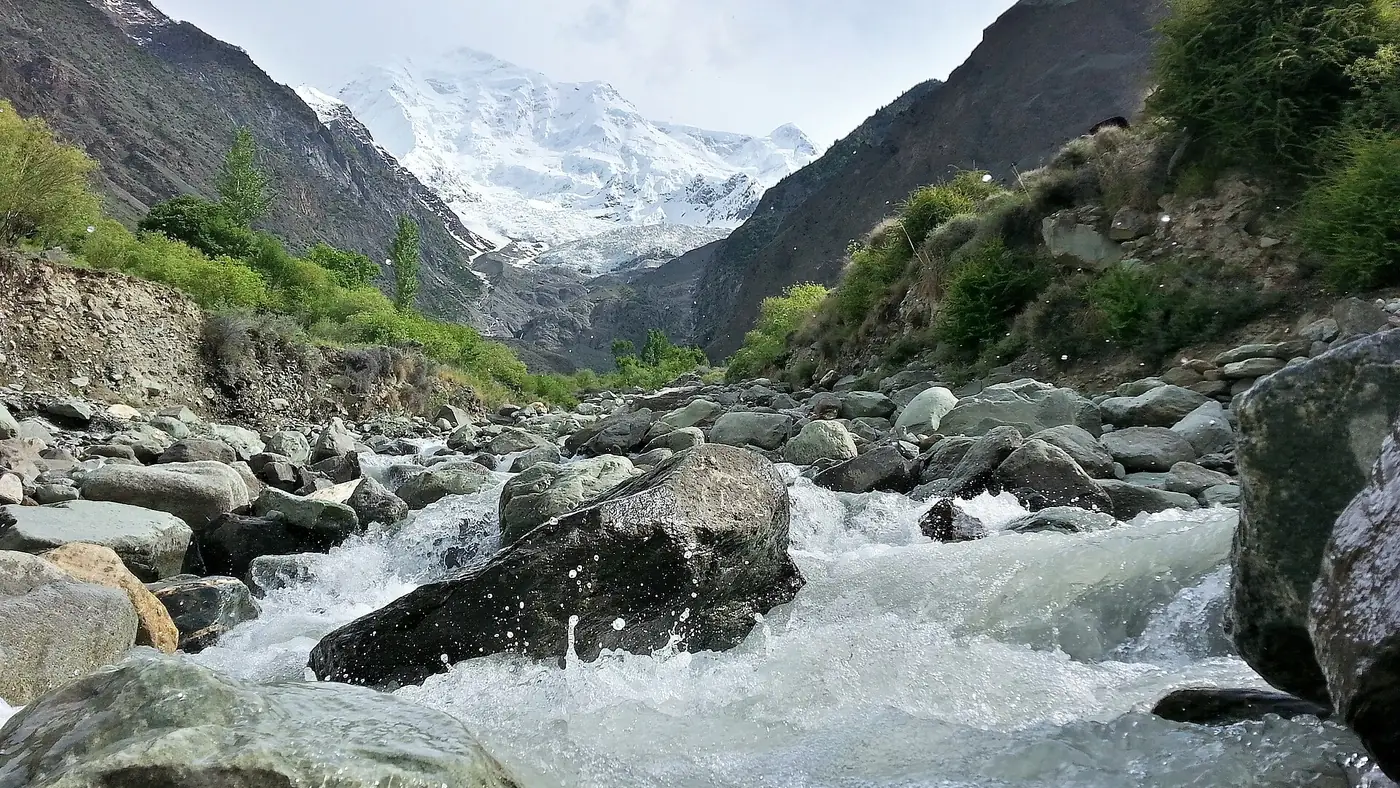
The places to visit in Gilgit-Baltistan group around two bases. From Gilgit, the Karakoram Highway runs north into Hunza and Nagar for Karimabad, Attabad Lake, Passu and the Khunjerab Pass, and a side road runs west to the lakes of Ghizer. From Skardu, roads fan out to the Shangrila lakes, Shigar, Khaplu and the Deosai plateau. Fairy Meadows and the Astore valley sit between the two, off the highway south of Gilgit.
For a first trip of a week, most people pick one base and see it properly rather than trying to cover both. This guide goes through the region district by district, with what is worth the drive in each and roughly how long it takes from the nearest base, so you can shortlist the valleys that fit your days.
| District | Where to stay | Best known for | From the nearest base |
|---|---|---|---|
| Hunza | Karimabad, Aliabad, Gulmit, Passu | Baltit and Altit forts, Attabad Lake, Passu, Khunjerab Pass | 2 to 3 hours from Gilgit |
| Nagar | Karimabad, across the river | Rakaposhi views, Hopper glacier | On the way to Hunza |
| Gilgit | Gilgit | Kargah Buddha, Naltar valley | Naltar about 2 hours by jeep |
| Ghizer | Gahkuch, Phander | Phander and Khalti lakes, Shandur Pass | Phander 5 to 6 hours from Gilgit |
| Skardu | Skardu | Kachura lakes, Katpana dunes, Sadpara Lake, Deosai | Deosai a full day out |
| Shigar | Shigar | Shigar Fort, Sarfaranga dunes, the road to Askole | About 1 hour from Skardu |
| Ghanche | Khaplu | Khaplu Palace, Chaqchan Mosque, Hushe valley | About 3 hours from Skardu |
| Kharmang | Day trip from Skardu | Manthokha waterfall | About 2 hours from Skardu |
| Diamer | Chilas | Fairy Meadows, rock carvings, Babusar Top | Raikot Bridge about 2 hours from Gilgit |
| Astore | Astore, Rama | Rama meadow, Rupal face of Nanga Parbat | 3 to 4 hours from Gilgit |
How Gilgit-Baltistan is laid out
The region's tourism department divides it into ten districts across three divisions: Gilgit, Baltistan and Diamer. For a traveller, it is simpler to think of one road and two hubs.
The road is the Karakoram Highway, which comes up the Indus from Kohistan, passes Chilas and the turn for Fairy Meadows, runs past Gilgit at about 1,500 metres, and then climbs north through Hunza to the Chinese border. Skardu, at about 2,230 metres, is the second hub, reached by the road that leaves the highway near Jaglot and follows the Indus east for about four hours.
Gilgit and Skardu are about five hours apart by road, and each has an airport with flights from Islamabad. Everything below is timed from whichever of the two is nearer. If you are torn between the hubs themselves, our comparison of Hunza and Skardu goes through the choice in detail.
Hunza: the Karakoram Highway valley
Hunza is the easiest district in Gilgit-Baltistan to see well. Almost everything is on or just off a paved highway, and the valley has the widest choice of places to stay.
Central Hunza is Karimabad and Aliabad, two to three hours north of Gilgit. Karimabad is the place to stay for your first nights:
- Baltit Fort, the old palace of the Mirs of Hunza above Karimabad, restored in the 1990s
- Altit Fort and the lanes of old Altit, a short drive or a walk down the valley
- The Eagle's Nest at Duiker, above Karimabad, for sunrise or sunset over the whole valley
Upper Hunza, also called Gojal, starts at Attabad Lake, which formed when a landslide blocked the Hunza river in January 2010. The highway now runs beside it through a chain of tunnels. North of the lake:
- Gulmit, a quiet village with guesthouses, the first stop north of the lake
- Hussaini, for the suspension bridge and Borith Lake nearby
- Passu, for the jagged Passu Cones and the Passu and Batura glaciers, an hour to an hour and a half from Karimabad
- Sost, the last town before the border, and then the Khunjerab Pass at 4,693 metres, three and a half to four hours from Karimabad
Beyond these, Shimshal and Chipursan are remote side valleys reached by long jeep roads, better for a second visit.
Nagar: the other side of the river
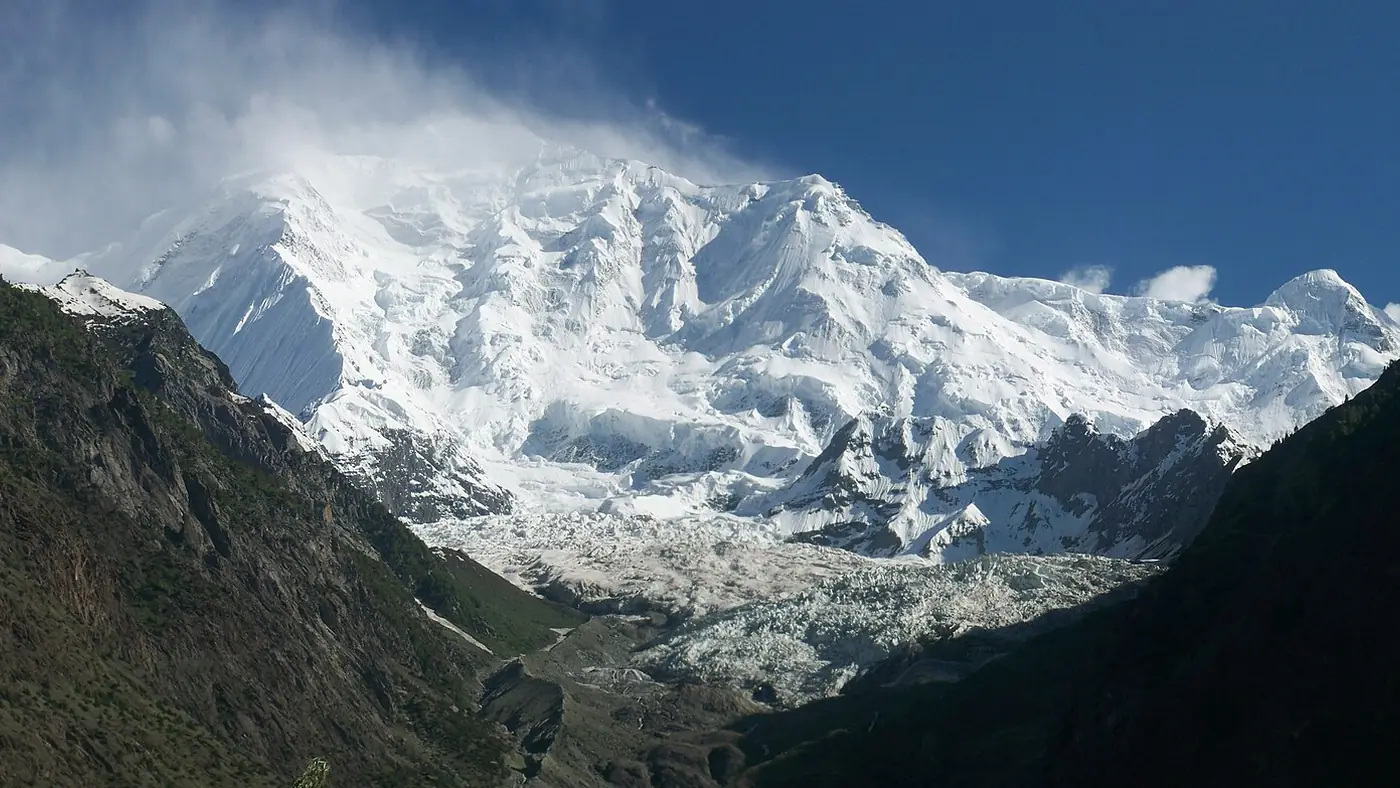
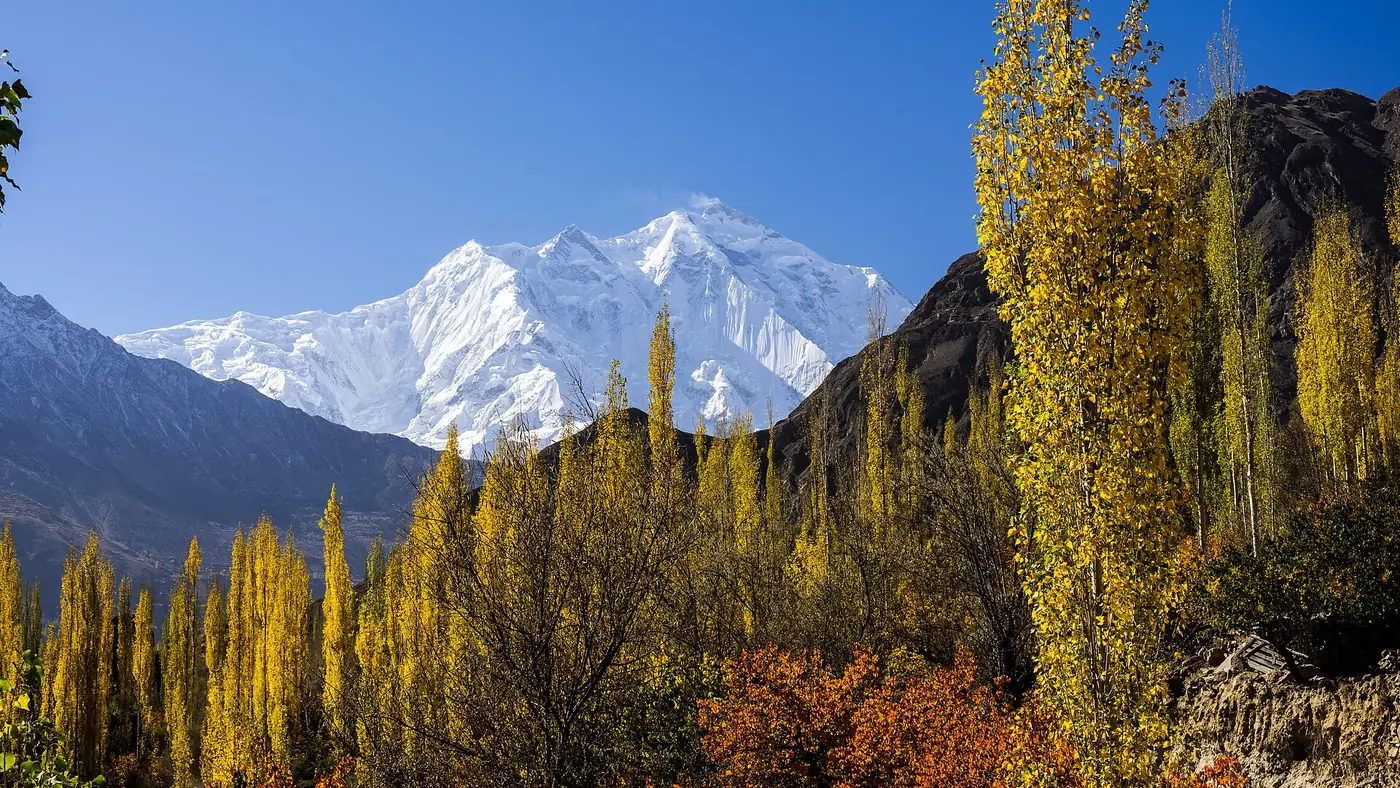
Nagar faces Hunza across the river, and many visitors pass through it without noticing. The Rakaposhi viewpoint at Ghulmet, on the highway on the way up from Gilgit, is the closest roadside view of Rakaposhi, which at 7,788 metres rises almost 6,000 metres from its base.
Across the river from Karimabad, a side road climbs through Nagar Khas to Hopper, where the Hopper glacier grinds past below the village. Nagar is quieter than Hunza, with far fewer places to stay, so most people visit it on day trips from Karimabad. Minapin, on the Nagar side, is the starting point for walkers heading to Rakaposhi base camp.
Gilgit and Ghizer: the town and the lakes to the west
Gilgit is a busy, practical town rather than a sight in itself, but it has two things worth an afternoon: the Kargah Buddha, a figure about 15 metres tall carved into a cliff around the 7th century, about 10 km west of town, and the old rock inscriptions and suspension bridge at Danyore across the river.
Naltar, about 34 km from Gilgit, is a pine valley with a ski resort run by the Pakistan Air Force and a string of coloured lakes above the village. The last stretch to the lakes is a rough jeep track, and the full round trip is a long day.
Ghizer runs west towards Chitral. It is a long drive, but very different country: a broad river valley with turquoise lakes at Khalti, near Gupis, and Phander, five to six hours from Gilgit, and at the far end the Shandur Pass, about 212 km from Gilgit, with its polo ground at around 3,700 metres. The Shandur polo festival is usually held in early July, though in 2026 it was held in June. Places to stay are simple and few, and the road is slow.
Skardu: lakes, dunes and the way up to Deosai
Skardu is a broad, dry basin at the meeting of the Indus and Shyok, ringed by bare mountains. Around the town:
- Lower Kachura, home to the Shangrila resort, and Upper Kachura, the quieter of the two lakes, a short drive west of town
- The Katpana cold desert, dunes beside the airport, best in the hour before sunset
- Sadpara Lake, about 8 km south of town on the road up to Deosai
- Kharpocho Fort, on the rock above the bazaar, and the Manthal Buddha rock, a carved Buddhist relief just outside town
The big one is Deosai, a plateau averaging about 4,100 metres in height, declared a national park in 1993 to protect the Himalayan brown bear. It is only accessible in summer, roughly June to September, and needs a jeep. Plan a full day, or a night on the plateau if you can.
Shigar, Khaplu and Kharmang: palaces, mosques and a waterfall
Shigar, about an hour from Skardu, is built around Shigar Fort, a 17th-century palace restored between 1999 and 2004 and now a Serena heritage hotel and museum. The wooden Amburiq mosque is nearby, and the Sarfaranga cold desert lies on the road between Shigar and Skardu. Shigar is also the way to Askole, the roadhead for the trek up the Baltoro glacier to Concordia and K2.
Khaplu, in Ghanche district, is about three hours up the Shyok river from Skardu. Khaplu Palace, built in 1840 and restored between 2005 and 2011, is partly a Serena hotel and partly a museum. The Chaqchan Mosque, traditionally dated to 1370, is one of the oldest in the region. From Khaplu, a jeep road runs up the Hushe valley towards Masherbrum, for trekkers and for anyone who wants the mountains without the crowds.
Kharmang is the least visited of Baltistan's districts. Its best-known sight is the Manthokha waterfall, about 80 km and two hours from Skardu, an easy day trip.
Diamer and Astore: Nanga Parbat country
Diamer is the district most people drive through rather than visit. Chilas, at about 1,265 metres, is hot in summer and the usual overnight stop on the way north. The rocks along the highway around Chilas carry thousands of ancient carvings, from hunting scenes to Buddhist figures and stupas.
The reason to stop is Fairy Meadows, the meadow facing the Rakhiot face of Nanga Parbat at about 3,300 metres. From Raikot Bridge on the highway, about two hours south of Gilgit, local jeeps take a narrow 15 km track to Tato, and from there it is a walk of two to four hours. See our Fairy Meadows guide. Babusar Top, at 4,173 metres on the summer road from Naran, marks Diamer's boundary with Khyber Pakhtunkhwa.
Astore, three to four hours from Gilgit by a turning off the highway near Jaglot, is the other side of Nanga Parbat:
- Rama, a meadow and lake at about 3,300 metres, about 10 km above Astore town by jeep
- The Rupal valley, where a walk from Tarashing leads under the Rupal face of Nanga Parbat
- The Deosai plateau, reachable from the Astore side via Chilim in summer
- Minimarg and Domel, near the Line of Control, which have needed permission from the authorities in Astore; check the current rules before planning them
How to shortlist for the days you have
Most trips go wrong by trying to see too much. Driving times here are long, and a day with six hours in the car is not a day of sightseeing.
- Five to seven days: one hub. Hunza, with Gilgit and a day at Khunjerab, is the easiest first trip by road; our seven-day Gilgit-Baltistan itinerary lays it out day by day. If you are flying, Skardu with Shigar and a day on Deosai works well.
- Eight or nine days: one hub done properly, plus one side trip. Hunza and Nagar with Fairy Meadows on the way up or down, or Skardu with Deosai, Shigar and a night in Khaplu.
- Ten days or more: both hubs, joined by the Gilgit–Skardu road, though twelve is more comfortable. Add Astore, Ghizer or the Hushe valley if you have time beyond that.
Some honest limits. Fairy Meadows needs a jeep ride on an exposed track and a real walk, so it is not for everyone. Deosai and Khunjerab are both above 4,000 metres, which matters for small children, older parents and anyone with a heart or lung condition. Ghizer and Astore mean long, slow roads and simpler places to stay. And the high places are only open in summer: see our guide to the best time to visit Gilgit-Baltistan before fixing dates.
Our travel guide covers the practical ground for the whole region: permits, altitude, money, signal and what to pack.
Frequently asked questions
What is the most beautiful place in Gilgit-Baltistan?
It depends on what you want. Hunza is the favourite for villages, orchards and mountains close up, Deosai for open space and wildflowers, and Fairy Meadows for the view of Nanga Parbat. Most first-time visitors start with Hunza.
How many days do you need for Gilgit-Baltistan?
A week by road is enough for one region, such as Hunza with Gilgit and Khunjerab. To see both Hunza and Skardu, plan on at least ten days, and twelve if you don't want to rush.
Which is better, Hunza or Skardu?
Hunza is easier for a first trip by road and has a longer season. Skardu is better if you are flying or travelling in July or August for Deosai.
Can you visit Gilgit-Baltistan without a jeep?
Yes, for most of the main sights. Hunza, Nagar, Gilgit, Skardu, Shigar and Khaplu are all reachable on paved roads. You need a jeep for Deosai, the Fairy Meadows track, the Naltar lakes and Rama.
Do Pakistanis need a permit to visit Gilgit-Baltistan?
Not for the main tourist areas; carry your CNIC and show it at checkpoints. A few places near the Line of Control, such as Minimarg, have needed separate permission, so check before you go.
Which places in Gilgit-Baltistan can you visit in winter?
Gilgit, Hunza, Nagar, Skardu, Shigar and Khaplu stay reachable in most winters, weather permitting. Deosai, Fairy Meadows, Babusar and the top of Khunjerab are closed to visitors.