The places to visit in Chitral fall into three groups. There is Chitral town itself, with its fort, the Shahi Mosque and Tirich Mir standing over the bazaar; the valleys within a few hours of it, including the three Kalash valleys, Garam Chashma and Chitral Gol National Park; and Upper Chitral, from Booni and Mastuj up to Shandur and Broghil, which needs days of its own. A first visit of five to seven days covers the first two groups comfortably.
Chitral is a big district, split since 2018 into Lower and Upper Chitral, and distances are longer than they look on a map because every road follows a river. The table gives drive times from Chitral town and how long each place deserves; the sections after it explain what you actually find there.
| Place | From Chitral town | Time to allow |
|---|---|---|
| Chitral town | Half a day to a full day | |
| Birmoghlasht | About 15 km by jeep road | Half a day |
| Chitral Gol National Park | About 2 hours' drive | A full day |
| Kalash valleys | 1.5 to 2.5 hours via Ayun | Two nights |
| Garam Chashma | About 45 km, 2 to 3 hours | A long day, or one night |
| Golen valley | About 24 km | A day |
| Madaklasht | Rough road from Drosh | One night |
| Mastuj | About 4 hours | One night at least |
| Shandur | 6 to 8 hours | One or two nights |
| Broghil | About 250 km | Four to five days, round trip |
Chitral town
Most visitors treat the town as a base, but it deserves a proper half day. It sits at about 1,500 metres on the Chitral river, and on a clear day Tirich Mir, the highest mountain in the Hindu Kush at 7,708 metres, fills the view from the bazaar.
- The Shahi Mosque, built in 1924 by Shuja ul-Mulk, the Mehtar of Chitral, stands on the river bank beside the fort. It is the town's principal mosque; visit outside prayer times and dress modestly.
- Chitral Fort, the old royal fort, is still the residence of the Mehtar's family. General public access is restricted, so expect to see it from outside unless you have arranged permission.
- The Chitral Museum stands beside the polo ground, with ethnographic and archaeological galleries covering the district's history.
- The polo ground is where Chitral's teams practise. Matches are played through the season, and more often from May to July in the run-up to Shandur.
- The bazaar is the place to buy a Chitrali cap, a woollen chogha or hand-woven cloth.
Birmoghlasht and Chitral Gol National Park
Birmoghlasht is the old summer retreat of the Mehtars, high on the ridge above the town at over 2,800 metres, about 15 km away by a steep jeep road. The reason to go is the view: Chitral town below and Tirich Mir across the valley. It is an easy half-day outing, best in the morning before cloud builds.
Chitral Gol National Park, established in 1984, covers the valleys west of the town and holds the largest population of markhor anywhere in the world. The approach road is narrow and exposed, and dangerous after rain, so go by local jeep with a driver who knows it and allow a full day. Seeing markhor is likely but never certain; go early, with binoculars, and let a local guide find them.
The Kalash valleys
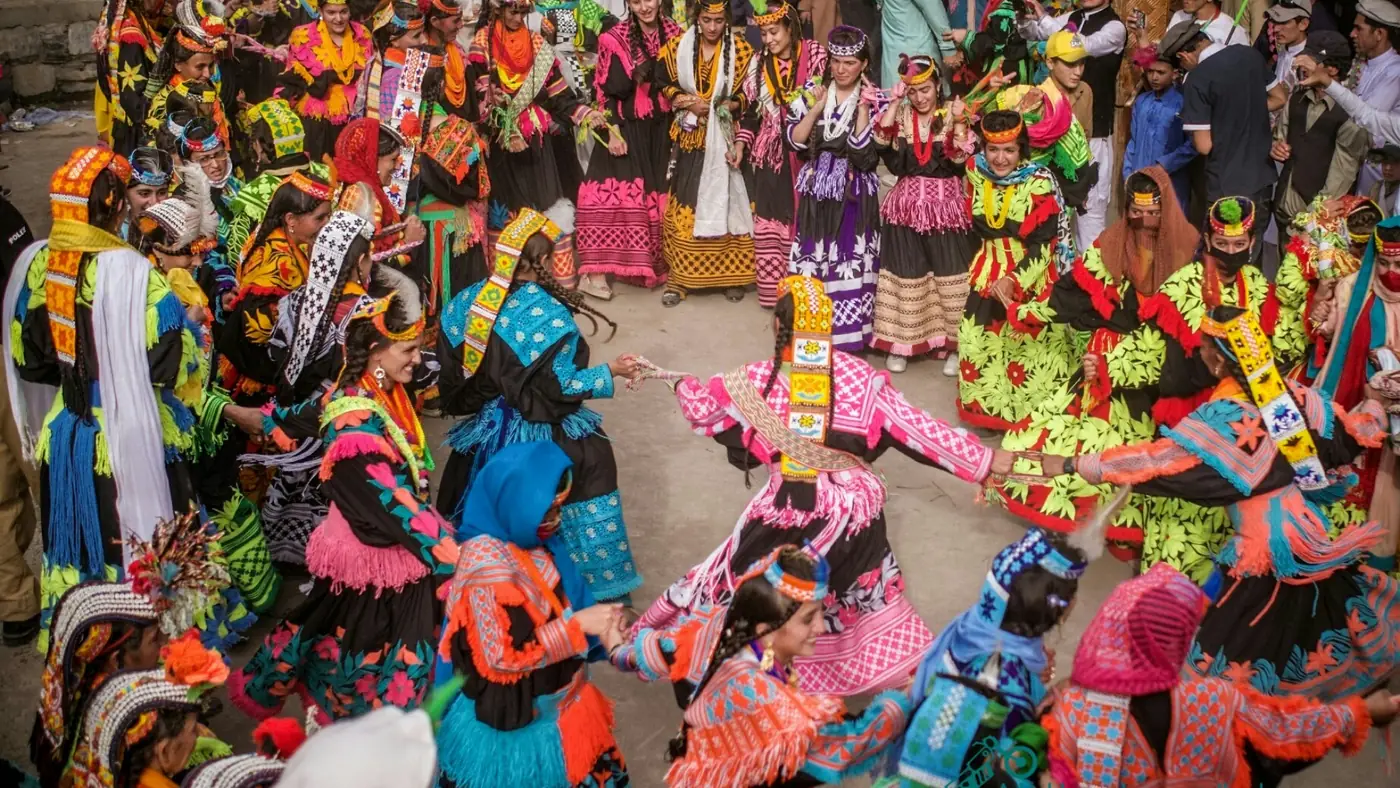
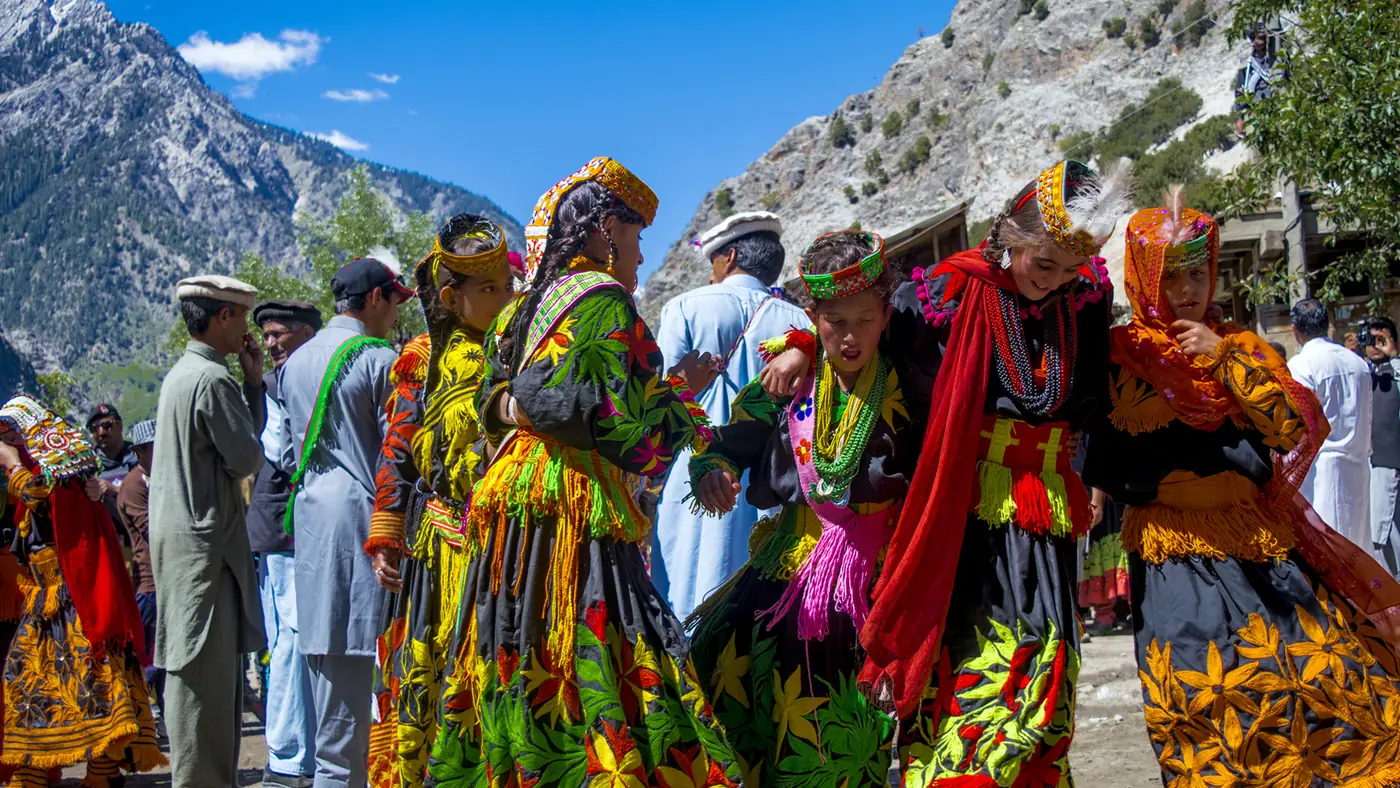
The three Kalash valleys, Bumburet, Rumbur and Birir, are the reason many people come to Chitral. They lie south-west of the town, reached from Ayun on the main road towards Drosh, and are home to the Kalasha, a community of a few thousand people with their own religion, language and festivals.
Bumburet is the largest and has the most guesthouses; Rumbur is quieter; Birir sees the fewest visitors. Give them two nights, not a day trip, so you have a morning and an evening in the villages when day visitors have gone. Our Kalash valleys guide explains how the three compare, and our guide on how to reach the Kalash valleys covers the road from Ayun, which is being rebuilt.
Garam Chashma and the Lutkho valley
Garam Chashma, "hot spring", lies about 45 km north-west of Chitral at the head of the Lutkho valley. The draw is the sulphurous hot spring, which feeds bathing pools in the village, and the valley itself, with the snow peaks of the Hindu Kush at its head. The Lutkho river is known for trout, and fishing needs a permit from the fisheries office.
Allow two to three hours each way on a road that was being resurfaced in 2026. That makes it a long day trip, or a relaxed overnight if you want to use the hot pools in the evening.
Golen valley and Madaklasht
Golen lies about 24 km north-east of the town, where the forested lower slopes give way to bare, craggy peaks. There are one or two simple guesthouses, a private trout farm where you can eat, and trekking routes onwards towards Laspur and Madaklasht. It suits walkers more than sightseers.
Madaklasht sits at the top of the Shishi Koh valley, at around 2,600 metres, reached from Drosh by about 40 km of unpaved road. It is an off-grid village with its own small hydroelectric supply, a Persian-speaking community and a glacier at the head of the valley. Go for one night if you want somewhere very few visitors reach, and go by jeep.
Upper Chitral: Booni, Mastuj and the Tirich valley
Upper Chitral became a separate district in 2018, with its headquarters at Booni, at about 2,100 metres. The Qaqlasht meadows above Booni host a spring festival with polo and local games. The town itself is a stop rather than a destination, and it was badly hit by floods in 2024.
Mastuj, about four hours from Chitral town, is where Upper Chitral starts to feel remote. It sits at about 2,360 metres below a fort first built in the 18th century, at the point where the roads to Shandur, Yarkhun and Broghil divide. Hindukush Heights runs chalets and glamping tents beside the old fort, and there are simpler hotels in the village. Give it at least one night.
The Tirich valley in Torkhow leads towards Tirich Mir, with a jeep track as far as Shagrom, the highest permanent settlement below the mountain. It is trekking country, and a detour of several days rather than a sightseeing stop.
The main road from Chitral to Mastuj and Shandur is being rebuilt as a national highway, with completion targeted for December 2026. Until then, expect roadworks, dust and delays.
Shandur and Broghil
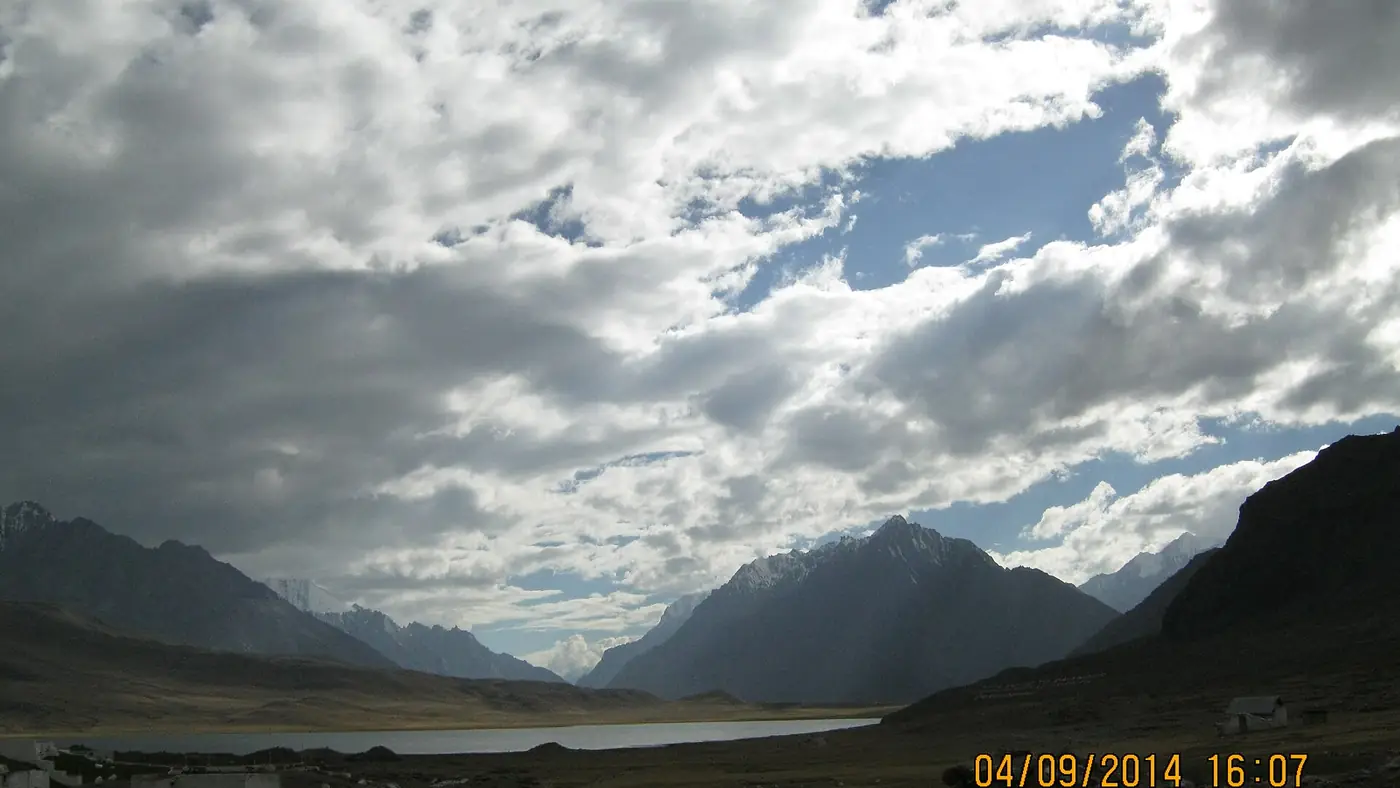
Shandur is the high, grassy pass between Chitral and Gilgit-Baltistan, with a lake and the famous polo ground at about 3,700 metres. It is six to eight hours from Chitral town and usually passable only from about June to October. Most visitors come for the polo festival; outside festival days it is a wide, empty and very cold plateau. Our Shandur Polo Festival guide covers the logistics.
Broghil is the far north of the district, a national park of high pastures and some 30 lakes on the Wakhan border, about 250 km from Chitral. It ranges from above 3,200 metres upwards. Getting there takes long days by jeep, so treat it as a journey of four or five days at the very least, not an add-on.
How many days do you need in Chitral?
A realistic guide, counting days in Chitral rather than on the road from Islamabad:
- Three days: Chitral town and Birmoghlasht, then two nights in one Kalash valley.
- Five days: add Garam Chashma and a second Kalash valley. This is the trip most first-time visitors should aim for; our five-day Chitral itinerary sets it out.
- Seven or eight days: add Upper Chitral as far as Mastuj, or Shandur in summer.
- Ten days or more: Broghil, the Tirich valley or a trek.
Families with young children or older parents will get most from the town, the Kalash valleys and Garam Chashma, which are all at comfortable altitudes. Shandur and Broghil are cold, high and a long way on rough roads, and suit fit adults who don't mind hard days in a jeep.
For the months when each part of the district is open, see our guide to the best time to visit Chitral, and for how we pace road days against time in each place, our trip planning page.
Frequently asked questions
What is Chitral famous for?
The Kalash valleys and their festivals, the Shandur Polo Festival, Tirich Mir, and the markhor of Chitral Gol National Park. The town is also known for the Chitrali cap and for polo.
How many days are enough for Chitral?
Five days in Chitral covers the town, two Kalash valleys and Garam Chashma. Add two or three more for Upper Chitral, and count the travel days from Islamabad separately.
Which Kalash valley is best to visit?
Bumburet has the most guesthouses and is easiest for families. Rumbur is quieter and more traditional, and Birir sees the fewest visitors.
How far is Garam Chashma from Chitral?
About 45 km, which takes two to three hours each way by road. Many people make it a long day trip, but a night there lets you use the hot pools without rushing.
Can you visit Shandur from Chitral in a day?
Only just, and not comfortably. It is six to eight hours each way, so stay a night in Mastuj or the Laspur valley, or camp at Shandur in summer.
Is Upper Chitral worth visiting?
Yes, if you have at least a week. Mastuj, the Laspur valley and Shandur are some of the emptiest country in northern Pakistan, but the roads are slow and the season is short.