
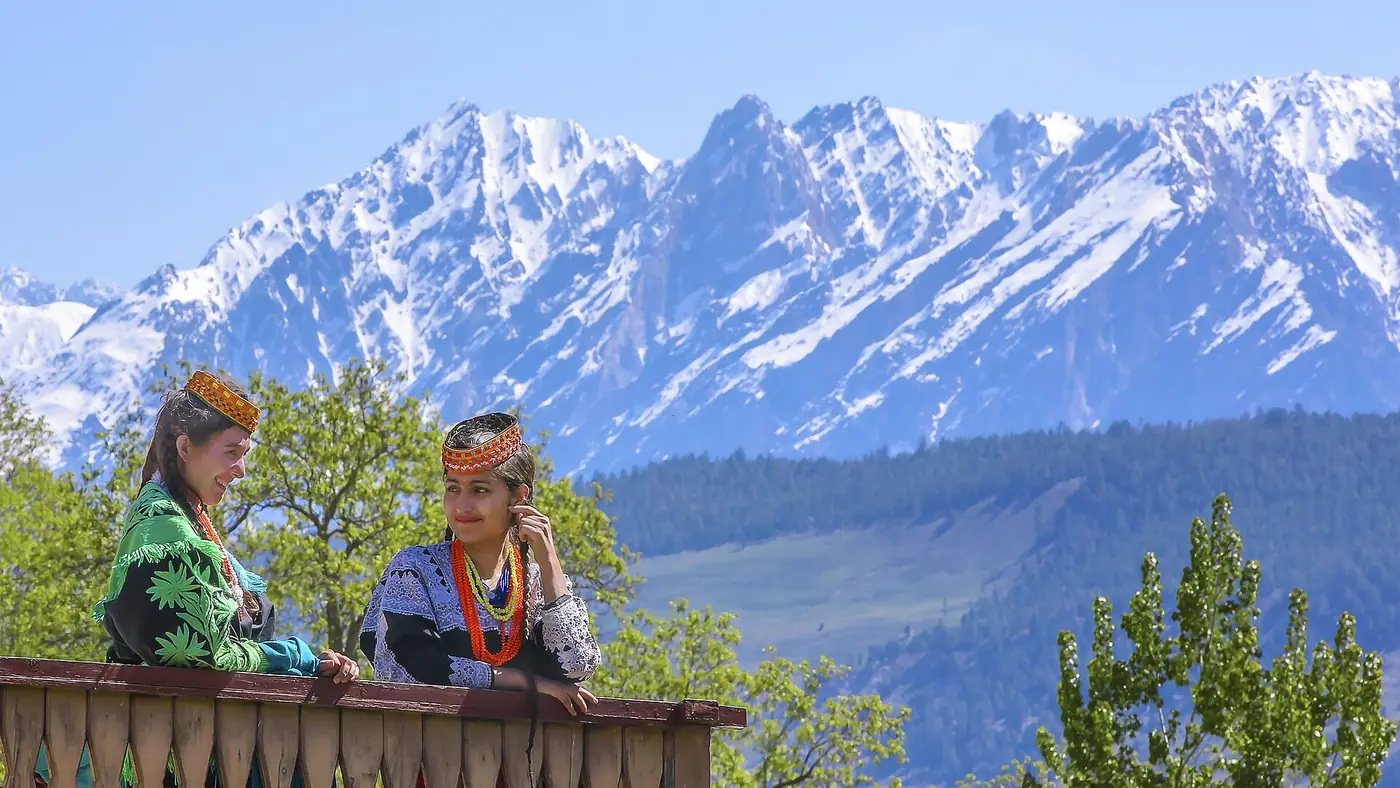
"Kalash valley" means one of three side valleys south-west of Chitral town: Bumburet, Rumbur and Birir. They are home to the Kalasha, a community of a few thousand people with their own religion, language and festivals. Bumburet is the largest and easiest to visit, Rumbur is smaller and more traditional, and Birir sees the fewest visitors. All three are reached from Ayun, on the main road south of Chitral, and deserve two nights rather than a day trip.
This guide explains how the three valleys differ, which suits which kind of trip, and how to plan a visit: when to go, where you register, and how to be a good guest in villages where the visitors often outnumber the residents.
| At a glance | |
|---|---|
| Where | Lower Chitral, reached from Ayun, south of Chitral town |
| From Chitral town | 1.5 to 2.5 hours by road |
| The valleys | Bumburet, Rumbur and Birir |
| Altitude | Over 2,000 metres; cooler than Chitral town |
| Time to allow | Two nights at least |
| Festivals | Chilam Joshi in mid-May, Uchal around 20 August, Phool in autumn, Chaumos in December |
| Entry | Small fee and registration at the checkpost on the way in |
| Mobile signal | Patchy; don't rely on data |
Who are the Kalasha?
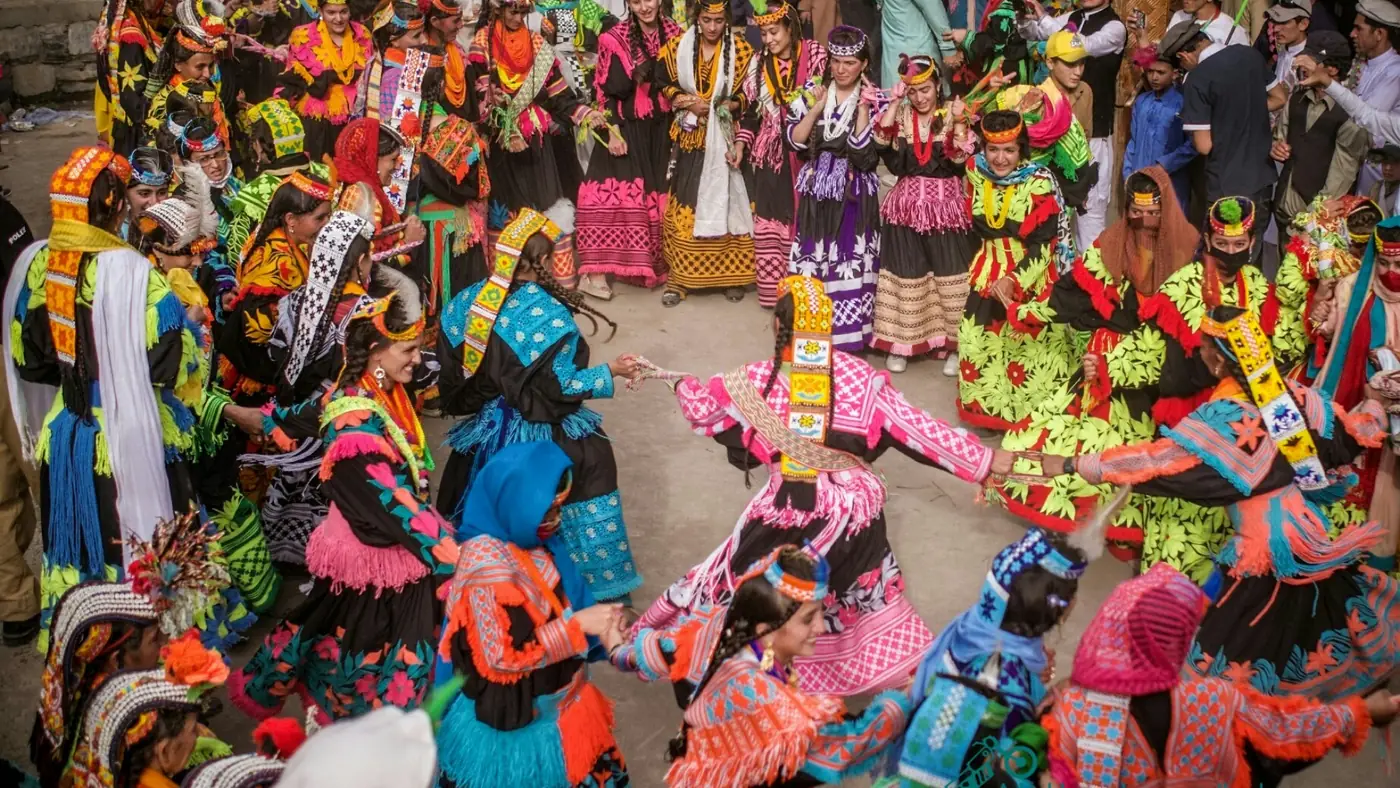
The Kalasha have lived in these valleys for centuries. They speak Kalasha, an Indo-Aryan language related to Khowar, and follow their own religion, with gods, shrines, seasonal festivals and rules of purity that shape village life. Kalasha women wear long black dresses embroidered in bright colours, with beaded necklaces and headdresses sewn with cowrie shells, which is what most visitors picture.
They are a small minority even in their own valleys. Many families in Bumburet in particular are Muslim, some of them Kalasha who converted, and the villages are mixed. That is worth knowing before you arrive: the valleys are not an open-air museum but working farming villages, with fields, walnut and fruit trees, and livestock taken up to summer pastures.
Bumburet: the largest and best equipped
Bumburet is the widest and most populous of the three valleys, and the one most visitors see. It has by far the most guesthouses and hotels, dozens of them, along the road through villages such as Batrik, Brun, Krakal and Anish.
The Kalasha Dur museum and cultural centre at Brun is the best introduction to Kalasha history and daily life, and worth an hour on your first afternoon.
Bumburet suits families, first-time visitors and anyone who wants a proper room and hot water. The trade-off is that it is also the busiest, especially around Eid and during the Chilam Joshi festival in May, when the road up from Ayun can jam for hours.
Rumbur: smaller and more traditional
Rumbur branches off the same approach road below Bumburet and climbs into a narrower valley. It has only a handful of guesthouses, and the villages, including Balanguru and Grom, are more predominantly Kalasha. Foreign visitors have long favoured it for exactly that reason.
It suits travellers who want to walk between villages, sit in a guesthouse garden and see village life rather than other tourists. It is less suited to large family groups who want several rooms and a restaurant.
Birir: the least visited
Birir has its own road, leaving the main valley south of Ayun, and it feels furthest from the tourist trail. There are only a few guesthouses, and shared jeeps from Chitral run only when there are enough passengers. Birir is known for Phool, its autumn festival for the grape and walnut harvest, and it celebrates Chaumos with musical instruments where the other valleys do not.
Birir suits repeat visitors and those who want quiet above all. On a first trip, most people are better served by Bumburet or Rumbur.
Which valley should you choose?
| Bumburet | Rumbur | Birir | |
|---|---|---|---|
| Rooms | Many, all standards | A handful | A few, basic |
| Feel | Busy, mixed villages | Quiet, mostly Kalasha | Remote, least visited |
| Best for | Families, first visits | Walkers, culture | Repeat visitors |
| At festival time | Crowded | Busy | Quieter |
With two nights, a good plan is to stay in Bumburet and spend a morning in Rumbur, or the other way round. With three nights, give each of Bumburet and Rumbur its own night and visit Birir if the road is open.
How to plan your visit
Getting there
All three valleys are reached from Ayun, on the main road about 15 to 20 km south of Chitral town. From Ayun, one road climbs up the gorge to the Bumburet and Rumbur fork, and a separate road runs to Birir. The road to Bumburet is being rebuilt, with work planned to finish before Chilam Joshi in 2027. Our guide on how to reach the Kalash valleys covers the route, the choice between car and jeep, and shared transport.
Registration and entry fee
Everyone registers at the checkpost on the way into the valleys and pays a small entry fee, which goes to Kalasha community welfare. The fee is different for Pakistani and foreign visitors and has changed over the years, so carry cash and pay what is posted. Foreign nationals should keep their passport and visa copies handy; police escorts, once standard for foreigners, are no longer routinely assigned.
Security
The valleys run west to the Afghan border. In September 2023 militants crossing from Afghanistan attacked border posts in the Chitral area, including above Bumburet. The valleys have continued to receive visitors since, but check current news before you travel, stay on the valley roads and village paths, and don't head up towards the border passes.
Where to stay
Bumburet has the widest choice, from simple guesthouses to hotels with family rooms. In Rumbur and Birir expect guesthouses with a few rooms and meals with the family. Wherever you can, stay in a Kalasha-owned guesthouse: it keeps the money in the community whose culture you have come to see. Book ahead for Chilam Joshi, Uchal and Eid, when everything fills.
Going for a festival
The festivals are the most memorable time to visit and the most crowded. Chilam Joshi, the spring festival around 13 to 16 May, draws the biggest crowds, most of them to Bumburet. Uchal, the harvest festival around 20 August, is smaller. Chaumos, around the winter solstice in December, is the most important to the Kalasha themselves; outsiders are welcome only in its second week, and snow often blocks the roads.
If you go for Chilam Joshi, arrive a day early, stay in the valleys rather than driving in from Chitral each morning, and watch the dancing from the edge rather than walking into it. Our guide to the best time to visit Chitral lists the festival dates with the other seasons.
How to be a good guest
The Kalasha have had decades of visitors, and not all of them have behaved well. A few simple rules make a real difference:
- Ask before you photograph anyone, and take no for an answer. This matters most with women and girls, who are often photographed without being asked.
- Don't go into the bashaleni, the house where women stay during menstruation and childbirth, or touch shrines and altars.
- Don't photograph funerals or the graveyards unless you are clearly invited to.
- Don't hand out sweets or money to children.
- Dress modestly and keep your voice down in the villages, as you would anywhere in Chitral.
- Buy directly from Kalasha women selling embroidery and beadwork, rather than from shops.
Is the Kalash valley worth visiting?
Yes, if what interests you is people and culture as much as scenery. Nowhere else in Pakistan has a living tradition like this, and a quiet evening in a Rumbur guesthouse or a morning at the Kalasha Dur museum explains more than any photograph.
If you are mainly after mountain views, you may find the valleys narrower and more built-up than you imagined, and Garam Chashma or Upper Chitral may suit you better; our list of places to visit in Chitral compares them. And if your only free week is Eid, consider going somewhere else, or at least avoid Bumburet, because the traffic and crowds can undo the point of coming.
Our trip planning page sets out how we fit a place like this into a wider trip. For a ready-made plan, the five-day Chitral itinerary gives the Kalash valleys two nights alongside Chitral town and Garam Chashma.
Frequently asked questions
Which Kalash valley is the best?
Bumburet is best for families and first visits because it has the most rooms and facilities. Rumbur is quieter and more traditional, and Birir is the least visited.
How far is the Kalash valley from Chitral?
The valleys are reached from Ayun, about 15 to 20 km south of Chitral town. Allow one and a half to two and a half hours from Chitral to Bumburet, depending on roadworks and traffic.
Is there an entry fee for the Kalash valleys?
Yes, a small fee paid at the checkpost, with a different rate for foreign visitors. It has changed over the years, so carry cash and pay the posted amount.
Is the Kalash valley safe for families?
The valleys receive Pakistani families and foreign visitors throughout the season. They lie close to the Afghan border, where there was a militant attack on border posts in 2023, so check current news before travelling and keep to the valley roads and villages.
Can I take photos of Kalash people?
Only with permission. Ask first, accept a refusal, and be especially careful with women and girls.
When is the Kalash festival?
Chilam Joshi is held around 13 to 16 May, Uchal around 20 August, Phool in Birir in autumn and Chaumos from about 7 to 22 December.
;_Tahsin_Shah_01.jpg)