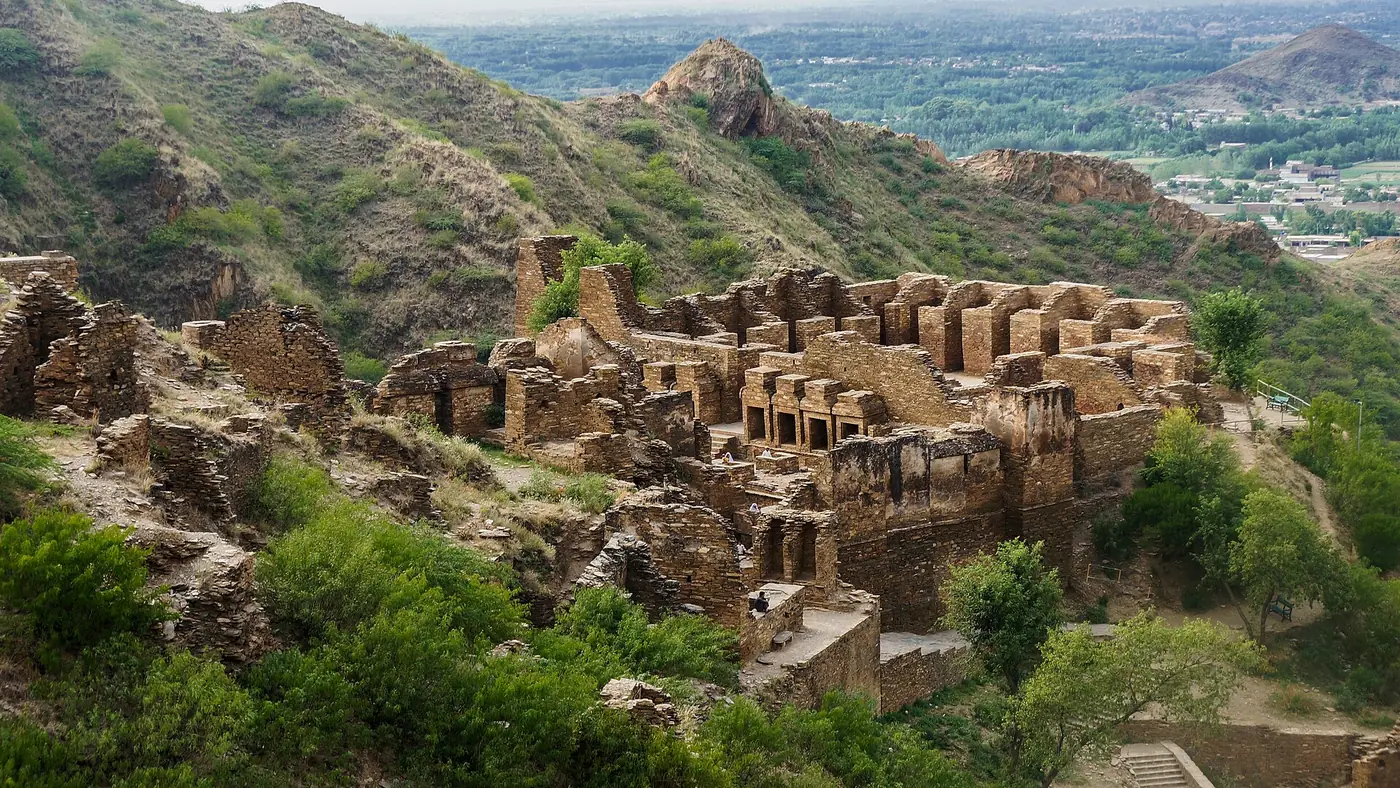
Kashmir Smast is a large natural cave in the hills north-east of Katlang, in Mardan district, reached only on foot. From roughly the 2nd to the 10th century AD it was one of the most important Shaivite Hindu centres in the subcontinent, and the site includes a huge main chamber, a ruined shrine, a water tank and the remains of monastic buildings around it. There is no road to the cave, no facilities, and the old stepped approach has collapsed in places, so this is a full-day outing for fit walkers with local guides, not a casual stop.
This guide covers what the site is, what a visit actually involves, and why it needs more planning than Mardan's other Gandhara sites.
| At a glance | |
|---|---|
| What it is | A large natural limestone cave complex, an important Hindu Shaivite site for about 800 years |
| Where | Babuzai Sakrah hills, north-east of Katlang, Mardan district |
| Access | On foot only; no road to the cave |
| Time needed | A full day |
| Guides | Essential; go only with local people who know the path |
| Best months | October to March, dry ground |
What Kashmir Smast is
The site is a large natural cave, artificially expanded and built into over the centuries, set high in the hills above the Katlang valley. Its main chamber is enormous by the standards of any cave in the region, with a smaller inner chamber further in, and a water tank cut into the rock. Around the cave mouth are the remains of a ruined shrine, a monastery and other structures, built by the community that used the site as a religious centre.
From about the 2nd to the 10th century AD, Kashmir Smast was one of the most important Shaivite Hindu sites in the subcontinent, a centre of worship and, for long stretches, of local political power in this part of Gandhara. Large numbers of coins, seals and copper-plate inscriptions have come from the site and its surrounding valley, evidence of sustained wealth and patronage over roughly 800 years. Much of this material was removed by illegal digging before archaeologists began systematic, protected work in the early 2000s, and looting has remained a concern at the site since.
The name is local rather than historical: a legend holds that one of the cave's tunnels leads all the way to Kashmir, and the wooded, sheltered look of the gorge was said to remind people of Kashmir's scenery.
What a visit involves
There is no vehicle access to the cave itself. Visitors reach it on foot from villages below the ridge on the Katlang side, following paths that climb steadily into the hills. The old masonry steps built to ease the final approach to the cave mouth have collapsed in places, and the ground near the entrance is steep, so this is not a walk to attempt without someone who knows the current state of the path.
Go only with local guides who visit the site regularly and can judge the conditions on the day. Start early, since the full round trip on foot takes the better part of a day, and there is nothing at the site itself in the way of food, water or shelter. Sturdy boots, more water than you think you need, and a torch for the cave interior are the minimum. This is a hike for a fit, prepared group, not a family outing or a casual add-on to a day in Mardan.
How to arrange it
Kashmir Smast is reached from villages on the Katlang side of the Babuzai Sakrah hills, north-east of Katlang town itself, which is about 20 km from Mardan. Arrange a local guide through Katlang before you set out; this is not a site with an official visitor centre or a marked trailhead, and asking locally on the day is far more reliable than trying to plan the route from a map alone.
Our places to visit in Mardan guide covers Kashmir Smast alongside Mardan's other, much easier Gandhara sites, and sets out how a Kashmir Smast day fits into a longer trip.
Who this suits
Kashmir Smast suits fit walkers with a genuine interest in archaeology and a willingness to spend a full day, with a local guide, on an unmarked hill trail for a site with no facilities. It rewards that effort with one of the more unusual places in Gandhara: a cave complex that was a major religious centre for the best part of a millennium, largely unknown outside specialist circles.
It does not suit anyone looking for an easy stop, travelling with young children, or short on time in Mardan. If that describes you, Takht-i-Bahi, Jamal Garhi and Shahbaz Garhi cover similar history with far less effort.
Is it safe to visit?
Kashmir Smast sits in the same district as Mardan's other sites, where the UK government's travel advice, updated 22 September 2026, advises against all but essential travel. The remote, unmarked nature of the route to Kashmir Smast adds a further layer of caution beyond the general district advisory: this is not a place to attempt without current local knowledge of both the path and the security situation. Ask in Katlang about conditions on the day, go only with people who make the trip regularly, and if you hold a foreign passport, check your own government's advice as well, since travelling against it can affect your travel insurance.
Frequently asked questions
Can tourists visit Kashmir Smast?
Yes, but only on foot and only with local guides who know the current state of the path. There is no road and no visitor facilities at the site.
How long does the Kashmir Smast hike take?
A full day. The walk in from villages below the ridge, time at the cave, and the walk back typically fill most of a day, so start early.
Where does the Kashmir Smast trail start?
From villages on the Katlang side of the Babuzai Sakrah hills, north-east of Katlang town. Arrange a local guide in Katlang before setting out rather than trying to find the trailhead alone.
What is inside the Kashmir Smast cave?
A very large main chamber with a smaller inner chamber, a rock-cut water tank, and the remains of a shrine and monastic buildings around the cave mouth, dating from its use as a Hindu Shaivite centre between roughly the 2nd and 10th centuries AD.
Is Kashmir Smast suitable for families or casual visitors?
No. It is a demanding, unmarked hike with no facilities, best suited to fit, prepared visitors with a specific interest in the site's history. Mardan's other Gandhara sites are a better choice for a casual or family visit.