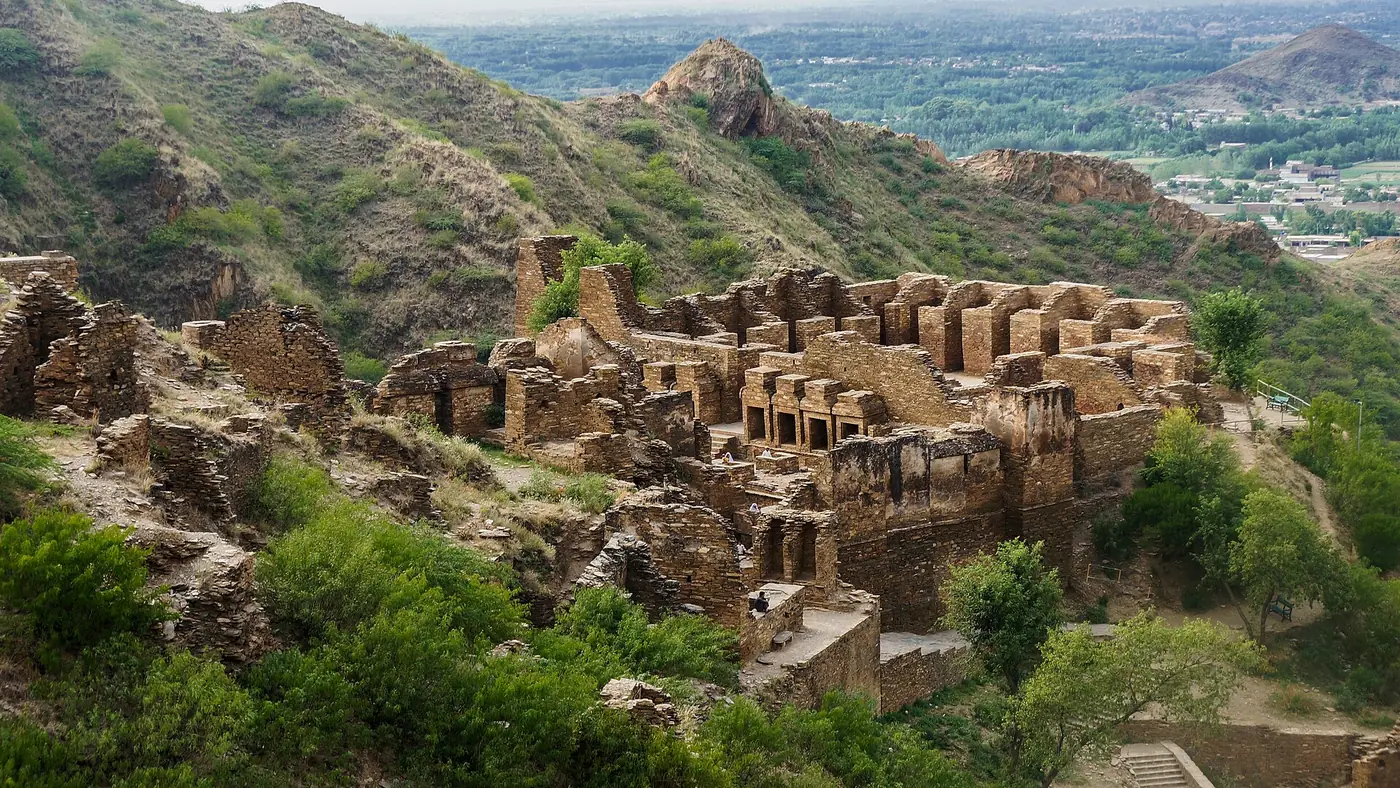
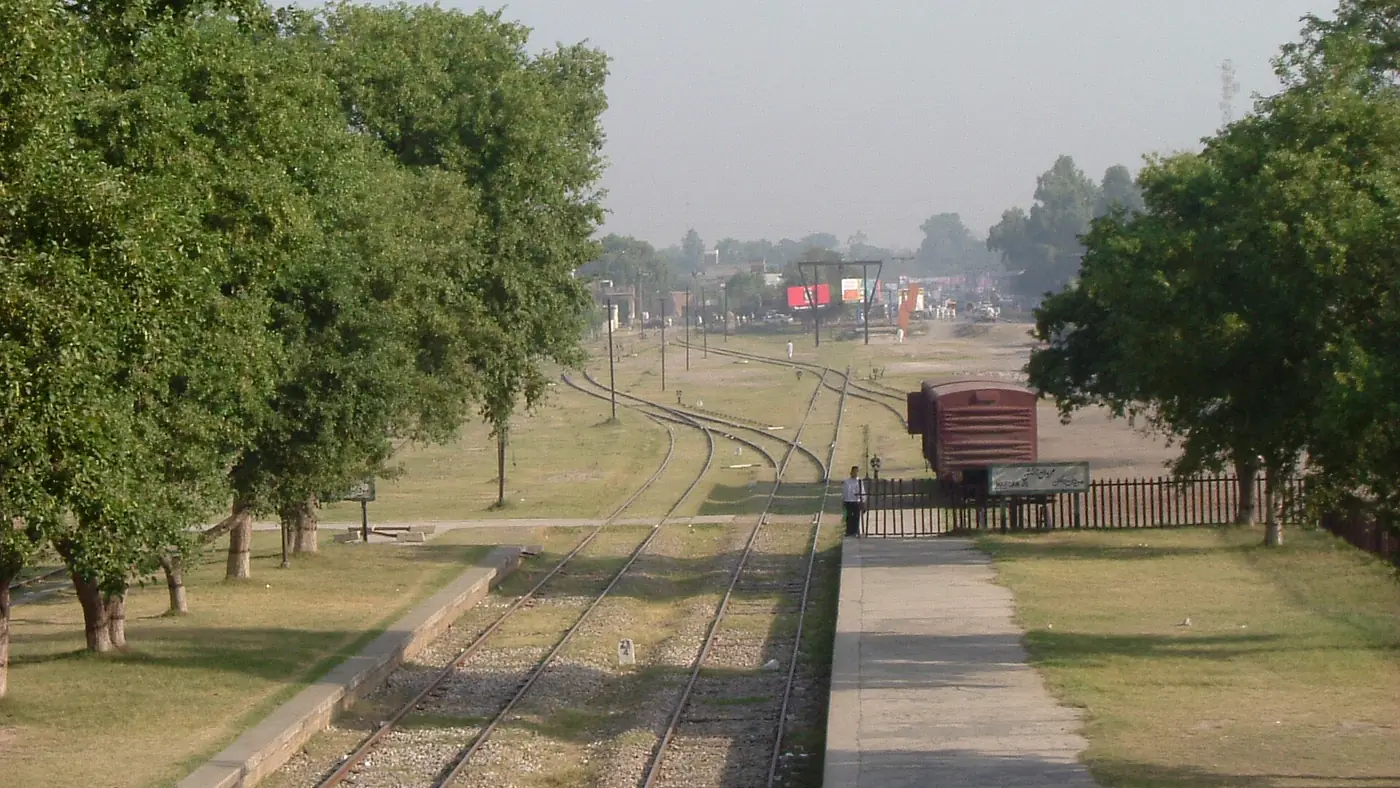
Sahr-i-Bahlol is a small fortified town of the Kushan period, on the plain a short drive from the Takht-i-Bahi monastery near Mardan. It was listed by UNESCO together with Takht-i-Bahi in 1980, as one World Heritage Site covering both a monastery on its hill and a town on the plain below. What you can see today is a raised mound with stretches of the old defensive wall; a modern village now stands on top of the rest.
It is a stop of half an hour, not a destination on its own, and this guide covers what remains, why it matters and how to fit it around Takht-i-Bahi.
| At a glance | |
|---|---|
| What it is | Ruins of a fortified Kushan-period town, part of the Takht-i-Bahi UNESCO site |
| Where | On the plain a short drive from Takht-i-Bahi, near Mardan |
| UNESCO listing | 1980, jointly with Takht-i-Bahi |
| Time needed | About 30 minutes |
| Ticket | None; the site is open ground, not a fenced monument |
| Best months | October to March |
What Sahr-i-Bahlol actually is
The ruins sit on an elongated mound rising up to about 9 metres above the surrounding fields. Portions of the old defensive wall survive around the edges, built in the "diaper" masonry style typical of the first few centuries AD: roughly coursed stone with small chips packed into the gaps. A modern village occupies much of the mound itself, so you are looking at a working settlement built over an ancient one rather than an excavated site you can walk through.
This is a different kind of place from Takht-i-Bahi. The monastery on the hill was a religious complex, protected by its height and abandoned when Buddhism declined. Sahr-i-Bahlol was where people actually lived: a walled town on the plain, trading and farming, with the monastery visible on the ridge above it.
Why it is on the UNESCO list
UNESCO inscribed the "Buddhist Ruins of Takht-i-Bahi and Neighbouring City Remains at Sahr-i-Bahlol" as a single site in 1980, treating the monastery and the town as two halves of one story: the monastic and urban sides of Gandharan life between the 1st and 7th centuries AD. Sahr-i-Bahlol is the urban half.
Excavations here, going back to the 19th and early 20th centuries, produced some of the finest Gandharan sculpture ever found, much of it now in the Peshawar Museum rather than on site. That is part of why a visit is brief: the best finds have moved elsewhere, and what remains at Sahr-i-Bahlol is the shape of the town rather than a museum of objects.
How to get there
Sahr-i-Bahlol lies a short drive from the foot of the Takht-i-Bahi hill, on the road back towards Mardan. Coming from Takht-i-Bahi, follow the local road down to the plain and ask for Sahr-i-Bahlol village; it is well known locally and signposted in places. With a car and driver it adds well under an hour to a Takht-i-Bahi visit, door to door.
There is no separate ticket booth and no formal entrance, since the site is a village mound rather than a fenced monument. Walk the visible stretches of wall respectfully, as this is also where local families live, and don't expect facilities beyond what the village itself offers.
Our Takht-i-Bahi guide covers the ticket, the climb and transport for the monastery itself, and our Gandhara day trip from Peshawar gives a timed plan that puts Sahr-i-Bahlol straight after the monastery.
Is it worth the stop?
For most visitors, yes, but briefly. If you are already at Takht-i-Bahi, the extra half hour to see the wall fragments and understand what the UNESCO listing actually covers is worthwhile, particularly if you have an interest in how Gandharan settlements worked rather than just their religious buildings. If your time is tight, it is the first thing to drop; the monastery on the hill is the reason to make the trip, and Sahr-i-Bahlol adds context rather than a must-see monument.
It does not suit anyone hoping for a fenced, ticketed archaeological park with information boards. Come with the UNESCO description in mind, and treat the wall fragments as what they are: the edge of a town most of which now lies under a living village.
Is it safe to visit?
Mardan district has seen periodic militant activity in recent years, including an attack on the Sahr-i-Bahlol police post itself: on 15 September 2026, a militant threw a grenade at the post in Takht Bhai tehsil, injuring three officers before the attacker was killed by a second grenade going off in his own hand (Aaj News). Pakistani visitors continue to travel to the Takht-i-Bahi and Sahr-i-Bahlol sites, but the UK government's travel advice, updated 22 September 2026, advises against all but essential travel to Mardan district and against all travel on the N-45 north of the Mardan ring road, which is the road towards Takht Bhai. Check current local news and the situation with police before setting out, keep the visit to daylight hours, and if you hold a foreign passport, check your own government's advice, since travelling against it can affect your travel insurance.
Frequently asked questions
What is Sahr-i-Bahlol?
The remains of a small fortified town of the Kushan period, on the plain near Takht-i-Bahi, listed by UNESCO together with the monastery in 1980. A modern village now covers much of the site, and stretches of the old defensive wall are what survive to see.
How far is Sahr-i-Bahlol from Takht-i-Bahi?
A short drive from the foot of the Takht-i-Bahi hill, adding well under an hour to a visit to the monastery, including the stop itself.
Is there an entry fee for Sahr-i-Bahlol?
No. Unlike Takht-i-Bahi, it is not a fenced, ticketed monument. You walk the visible wall fragments on open, village-adjacent ground.
Is Sahr-i-Bahlol worth visiting on its own?
Not really. It is a short add-on to a Takht-i-Bahi trip rather than a destination in its own right, since most of the finds from its excavations are now displayed in the Peshawar Museum rather than on site.
Is it safe to visit Sahr-i-Bahlol right now?
Check the current security situation before you go. The area has seen militant activity, including an attack on the local police post in September 2026, and the UK advises against all but essential travel to Mardan district. Pakistani visitors do still go, but plan around daylight hours and current local advice.