
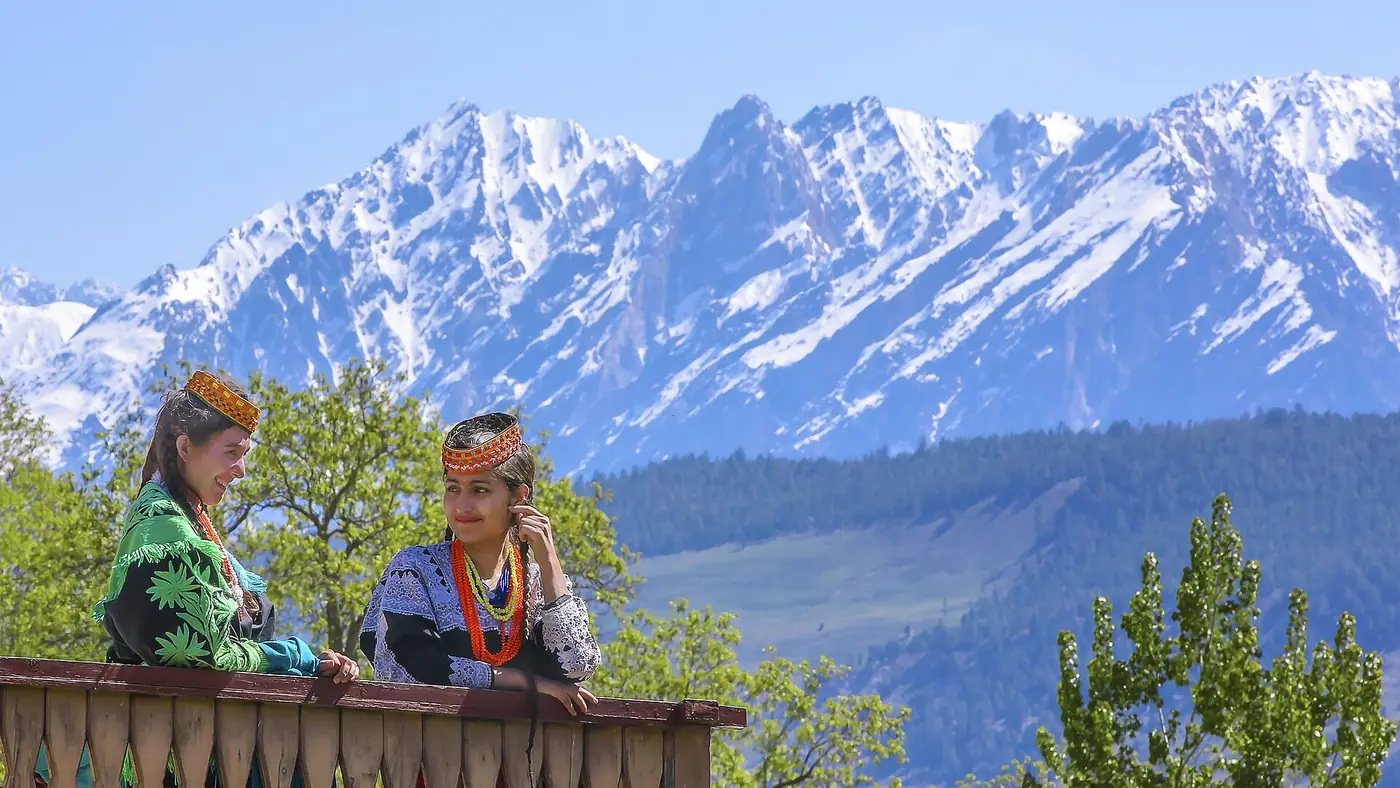
Kalash culture is the living tradition of the Kalasha, a community of about 4,000 people in the Bumburet, Rumbur and Birir valleys of Chitral, with their own religion, language, dress and festivals. For a visitor, three things matter most: ask before you photograph anyone, keep away from shrines and the women's house, and treat the villages as people's homes rather than a show. In 2026 UNESCO added the valleys to its tentative World Heritage list as a rare, living indigenous culture.
This guide explains what the Kalasha believe, what the women's dress means, how ideas of purity shape everyday life, and how to be a visitor the Kalasha are glad to see.
| At a glance | |
|---|---|
| People | About 4,000 Kalasha, in three valleys of Lower Chitral |
| Language | Kalasha, an Indo-Aryan language related to Khowar |
| Religion | Their own polytheistic faith, with gods, shrines and ancestors |
| Festivals | Chilam Joshi (May), Uchal (August), Phool (autumn, Birir), Chaumos (December) |
| Heritage status | Suri Jagek on UNESCO's urgent safeguarding list (2018); valleys on the tentative World Heritage list (2026) |
| Golden rules | Ask before photos; keep out of shrines and the bashaleni; dress modestly |
Who are the Kalasha?
The Kalasha are the last people in Chitral to follow the old religion of this part of the Hindu Kush; their neighbours across the border in Afghanistan were converted to Islam in the 1890s. They speak Kalasha, an Indo-Aryan language closely related to Khowar, the main language of Chitral.
The valleys are mixed. Many families in Bumburet and Birir are Muslim, some of them Kalasha who converted, and Rumbur is the only valley where Kalasha are still the majority. You will hear that the Kalasha are descended from Alexander the Great's soldiers. It is a popular story, not an established fact, and it tends to crowd out the far more interesting culture in front of you.
For an overview of the three valleys and how to plan a visit, see our Kalash valleys guide.
What do the Kalasha believe?
The Kalasha religion has a creator god and a number of other gods and spirits, each with its own shrine or altar, usually in the open air. Among the most important are:
- Mahandeo, whose altars stand on the slopes above villages such as Grom, in Rumbur.
- Jestak, the goddess of home, family and marriage, whose temple, the Jestak han, is the heart of village ritual. Dancing, festival ceremonies and funerals are held there.
- Sajigor, whose sanctuary in Rumbur is one of the most sacred places in the valleys. Only men and boys may go to it.
- Balimain, who is believed to visit the valleys during the winter festival.
Religious life follows the calendar of farming and herding, and the festivals mark its turning points. The Kalasha fix their calendar by watching the sun, moon and stars against the mountains, a practice called Suri Jagek that UNESCO added to its list of intangible heritage in need of urgent safeguarding in 2018.
Pure and impure: the rule that shapes everything
Kalasha life is organised around two spheres: onjesta, the pure, and pragata, the impure. Mountains, juniper, markhor, goats, altars and goat stables belong to the pure sphere; hens, eggs, the graveyard and the bashaleni belong to the impure. That is why traditional Kalasha households keep no poultry. If the two spheres are mixed, the Kalasha believe, illness and misfortune follow, and rituals are needed to put things right.
What this means for you:
- Don't touch altars or shrines, and don't step onto ritual platforms, even if nobody seems to be watching.
- Keep well away from the bashaleni, the house where women stay during menstruation and childbirth. Don't go in, touch its walls or photograph it.
- Stay out of goat sheds unless you are invited.
- In a Kalasha house, wait to be shown where to sit. The space around the hearth has its own rules.
What the women's dress means
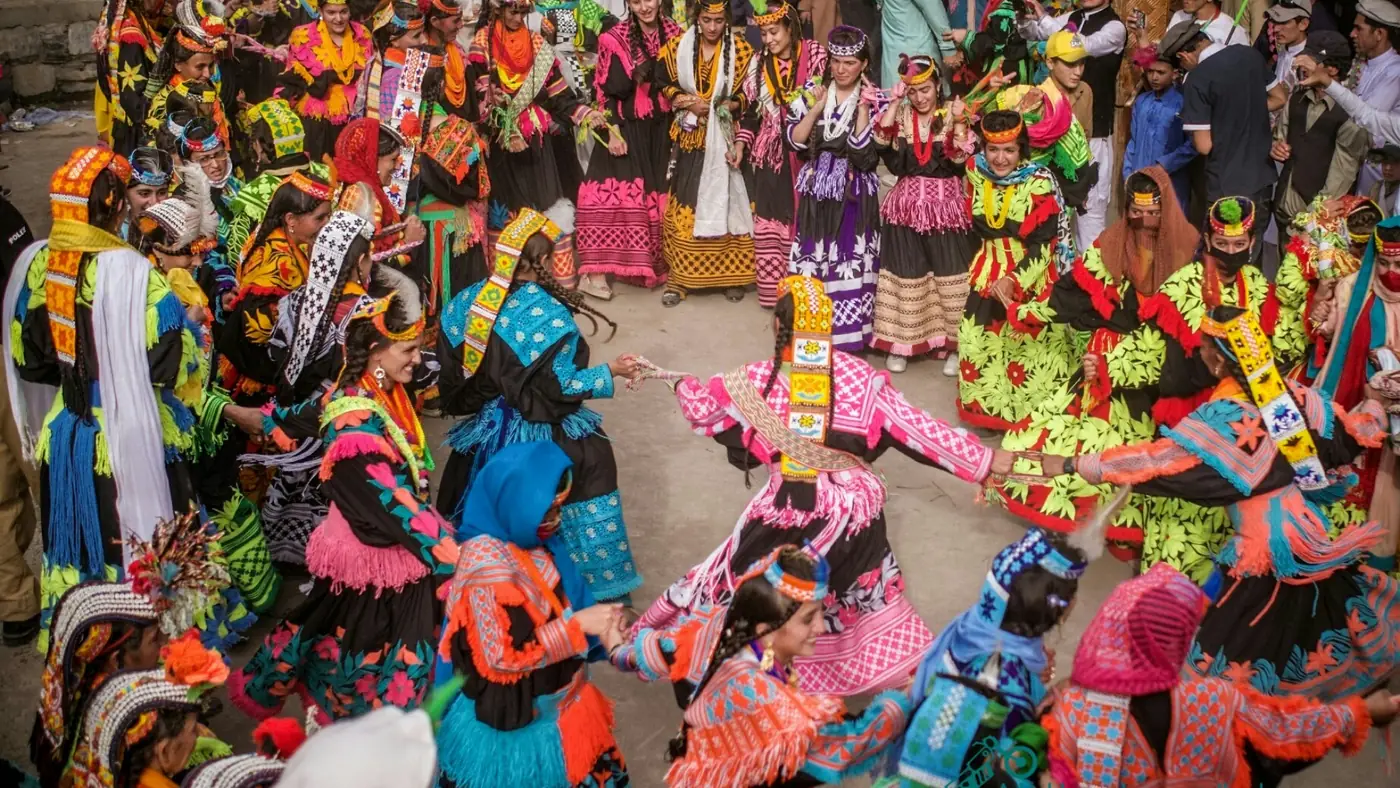
Kalasha women wear long black dresses embroidered in bright colours, most richly at the hem, with many strings of beads. Two headdresses go with them:
- The shushut, a band worn around the head with a long tail down the back, covered in cowrie shells, beads and buttons. It is everyday wear.
- The kupas, a larger headdress heavy with cowries, worn on ceremonial occasions. A girl receives her first at around the age of five, at the rite that marks her passage into womanhood.
Men generally wear shalwar kameez, like other Chitralis. For festivals, women make or buy new dresses, which is part of what makes Chilam Joshi so colourful. The dress is identity, not costume, so don't ask to try it on for a photograph, and buy beadwork from the women who make it rather than from shops.
Festivals, weddings and funerals
The year turns on four festivals: Chilam Joshi in mid-May, Uchal at the harvest in late August, Phool in Birir in autumn, and Chaumos at the winter solstice in December. Visitors are welcome at the public parts of all of them, and less so at the sacred rituals. Our guides to the Chilam Joshi festival and the Chaumos festival explain what an outsider may attend.
Funerals surprise many visitors. The body lies at the Jestak han for up to three days while people dance and sing around it, and the family feeds everyone who comes; at one funeral in Rumbur in 2018, the family provided 30 goats, an ox and more than a tonne and a half of flour. If you come across one, keep your distance and don't photograph it unless you are clearly invited.
Weddings and marriage customs, including elopement, are a favourite subject of false and sensational videos online. Kalasha women are not "sold", and there is no "bride market". Please don't repeat those stories, and don't ask about them.
Photographs and social media
This is where visitors do the most harm. In 2019 a local guide told Dawn that some tourists used their cameras "as if they were in a zoo", and some Kalasha women had started covering their faces to avoid being photographed. Viral videos with misleading titles have since made many families wary of any camera at all.
- Ask before photographing anyone, and accept no without argument.
- Be most careful with women and girls. Never photograph them close up without permission, and never follow them for a picture.
- Don't photograph children without asking a parent, and don't pay children or give them sweets to pose.
- Don't film people for social media as if they were entertainment, and don't caption photos with claims about their private lives.
- Leave the drone in the bag over villages, shrines and dancing grounds.
- Photograph landscapes freely. The valleys, fields and walnut trees are fair game.
How to behave in the villages
- Dress modestly and speak quietly, as you would anywhere in Chitral.
- Ask before walking through fields, courtyards or rooftops, which are part of people's homes.
- Take your rubbish back with you.
- Don't hand out money or sweets to children.
- Don't argue about religion, or ask people when they will convert.
Supporting the community
- Stay in a Kalasha-owned guesthouse where you can, so the money stays with the families whose culture you have come to see.
- Hire a Kalasha guide for a village walk; you will learn far more than on your own.
- Visit the Kalasha Dur museum in Brun, in Bumburet, which has about 1,300 objects of Kalasha and Hindu Kush life; our Bumburet valley guide covers it.
- Pay the entry fee at the checkpost without complaint; it goes to Kalasha welfare.
Is it safe to visit?
The valleys lie close to the Afghan border, where militants attacked military posts in 2023, and the UK government advises against all travel to the Kalash valleys. Pakistani families and foreign visitors still go, and the 2026 festivals were held under tight security. Check local news before you travel and keep to the villages and valley roads. Overseas visitors should know that their government's advice may say not to go, and that ignoring it can void travel insurance.
Is a Kalash trip right for you?
Yes, if you are curious about people and willing to slow down: stay two nights, walk between villages, talk to your hosts and spend an hour in the museum. The Kalasha have welcomed visitors for decades, and most visits leave good memories on both sides.
If what you want is photographs of Kalasha women for social media, please don't go. Our trip planning page explains how we approach visits to communities like this one.
Frequently asked questions
What religion do the Kalash people follow?
Their own polytheistic religion, with a creator god, other gods and spirits such as Mahandeo, Jestak and Sajigor, open-air shrines and seasonal festivals. Many people in the valleys are Muslim, including some Kalasha who have converted.
What language do the Kalash speak?
Kalasha, an Indo-Aryan language closely related to Khowar, the main language of Chitral. Most Kalasha also speak Khowar and Urdu.
Can you take pictures of Kalash women?
Only with their permission, asked for first and accepted if refused. Never photograph women or girls close up without asking, and never follow them for a picture.
What do Kalash women wear?
Long black dresses embroidered in bright colours, strings of beads, and a cowrie-covered headdress: the everyday shushut, or the larger kupas for ceremonies.
Is Kalash culture disappearing?
It is under pressure from conversion, tourism and change, but it is very much alive. UNESCO placed the valleys on its tentative World Heritage list in 2026 as a living indigenous culture.
What should I not do in the Kalash valley?
Don't photograph people without asking, touch shrines or altars, go near the bashaleni, or hand out money to children. Dress modestly and treat the villages as homes.
;_Tahsin_Shah_01.jpg)