
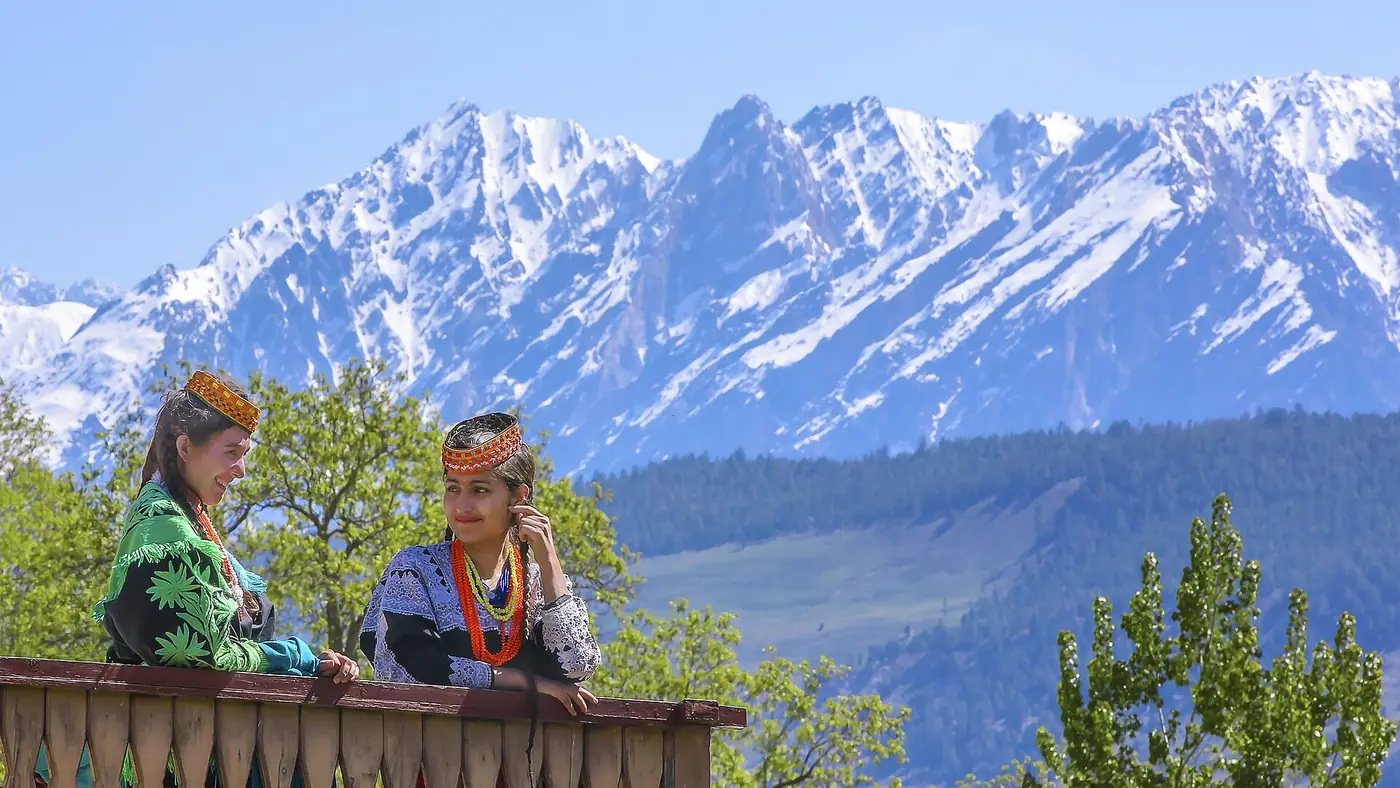
The Chilam Joshi festival is the Kalash spring celebration, held in the three Kalash valleys of Chitral in mid-May, usually from about 13 to 16 May. Over several days the Kalasha decorate their homes and shrines with flowers and walnut branches, share milk saved for the occasion, bless the mothers and babies born since the last festival, and dance to the drums, before a closing day that draws people from all three valleys to Bumburet. In 2026 the celebrations ended on Saturday 16 May.
It is also the busiest week of the year in the valleys. This guide explains what the festival means, what happens on each day, where to watch it, and how to be a guest the Kalasha are glad to have.
| At a glance | |
|---|---|
| When | Usually about 13 to 16 May; the elders set the days |
| Where | Bumburet, Rumbur and Birir; the closing ceremony is in Bumburet |
| Also spelled | Joshi, Chilimjusht, Chilim Josh |
| What it marks | The end of winter, and blessings for the flocks and families |
| Crowds | Heaviest of the year, above all in Bumburet |
| Rooms | Book weeks ahead; they were full in 2026 |
| Tickets | None; you pay the usual entry fee at the checkpost |
| Photography | Ask first, and take no for an answer |
When is Chilam Joshi?
In most years the festival runs from about 13 to 16 May, but the Kalasha elders fix the days, and individual valleys and villages celebrate on slightly different days. Preparations begin well before: families start saving milk around ten days ahead.
The safest plan is to reach the valleys by 12 or 13 May and stay until the closing day. If you can only manage two nights, make them the last two, so you are there for the final procession and dancing in Bumburet.
For 2027, note that Eid ul-Adha is expected around 16 or 17 May. If the festival and the Eid holidays overlap, the valleys and the road will be busier than ever, so book early or consider a different month. Our guide to the best time to visit the Kalash valley compares the festival weeks with the quieter months.
What the festival is for
Chilam Joshi marks the end of a hard winter and the arrival of spring. It comes just before the flocks are taken up to the summer pastures, and much of it is about blessing them, and the families who depend on them.
It is a religious festival first, but also the big social occasion of the Kalasha year. Everyone wears new clothes, relatives come from the other valleys, and young people meet; by tradition, matches made during the festival are announced at its end. For a wider picture of Kalasha beliefs, see our guide to Kalash culture and etiquette.
What happens, day by day
The Kalasha don't publish a programme, and the order varies between the valleys and from year to year. As observed in recent festivals, it runs roughly like this.
- Saving the milk. In the days before the festival, families set aside the milk from their goats, to be shared and offered once it begins.
- Gathering flowers. Children go up the hillsides to collect yellow flowers. Overnight, houses, altars and the temple of Jestak, the goddess of home and family, are decorated with the flowers and with walnut branches.
- Milk day. The stored milk is shared out and drunk, in Bumburet at goat sheds decked with flowers.
- Blessing mothers and babies. Mothers and the babies born since the last festival gather to be purified and prayed over, and a man chosen for the task sprinkles them with milk. In Rumbur, a sacred bread made with walnuts is baked for the day. Walnuts and dried mulberries are handed round afterwards, and visitors are often given some too.
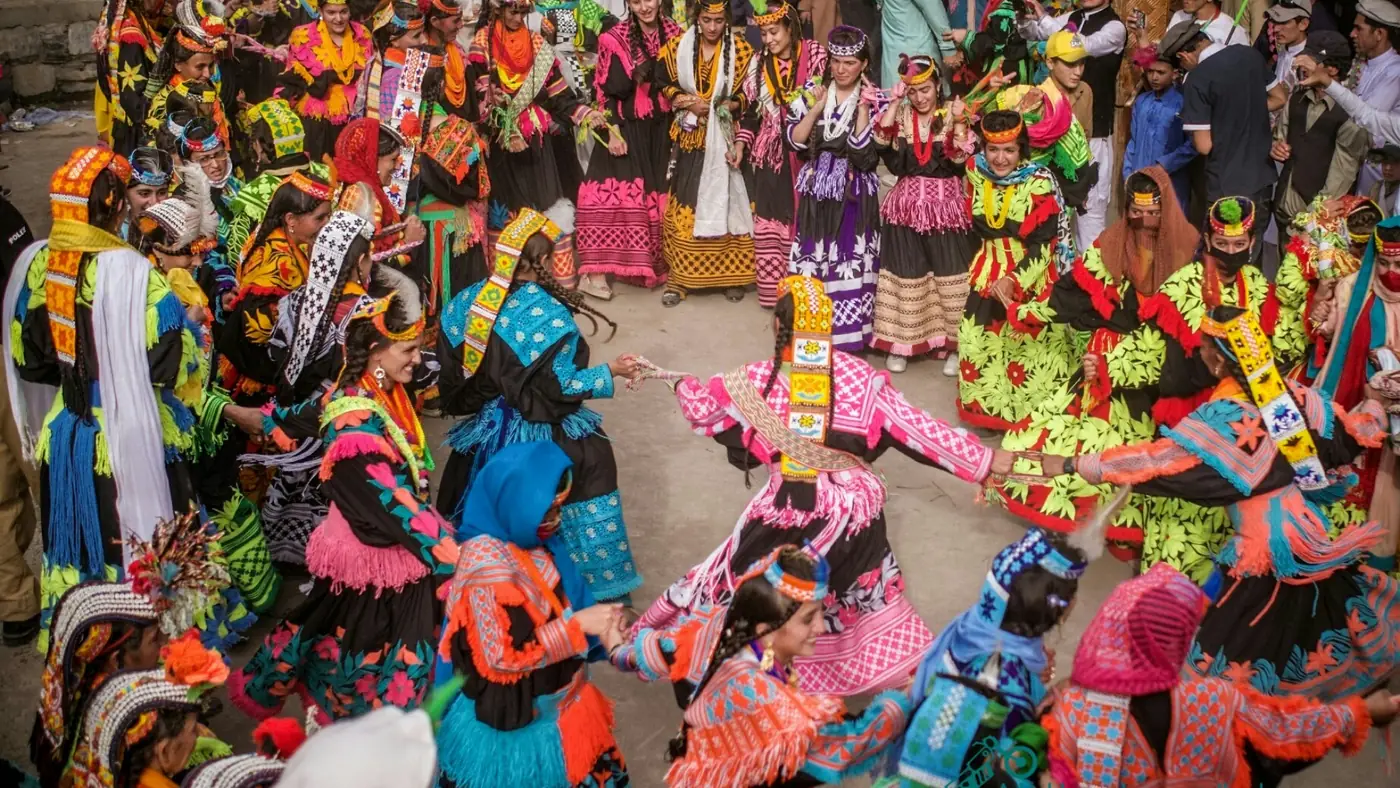
- Dancing. Each day there is dancing at the village dancing grounds, to drums and singing, with slow dances and fast ones, and women and girls in their new dresses and headdresses.
- The closing day. A long procession of Kalasha of all ages walks through Bumburet waving branches: walnut, and in 2026 freshly cut apricot too. The last rituals take place at Batrik, and the festival ends with hours of group dancing by hundreds of young Kalasha at the central dance ground.
Where to watch
Bumburet is the easiest to reach and holds the closing ceremony, so it is where most visitors go and where the crowds are worst. If you stay in Bumburet, you can walk to the dancing grounds and avoid driving in on the busiest days.
Rumbur holds its own ceremonies during the festival, and they are smaller and more intimate. It is the better place to be for the earlier days if you want to see the rituals rather than the crowds. Our guide to the Rumbur valley covers where to stay there.
Birir sees the fewest visitors and celebrates its own Joshi, but it is further away, with its own road, and harder to combine with the closing day in Bumburet.
A good plan is two or three nights: the early days in Rumbur, the last day in Bumburet.
How to be a good guest
The Kalasha welcome visitors to the festival, but in recent years the behaviour of some has made families wary of cameras and outsiders. In 2026, amid tight security, tourists were advised to respect local customs, above all about photographing Kalasha women.
- Watch from the edge. Don't walk into the dancing circle or through a line of dancers. Join in only if you are clearly invited.
- Ask before you photograph anyone, and accept a refusal. Don't photograph women and girls at close range without permission, and don't film people for social media as if they were a show.
- Leave the ritual spaces alone. Don't touch altars, shrines or the flower decorations, and don't go into the Jestak temple unless you are invited.
- Keep away from the bashaleni, the house where women stay during menstruation and childbirth.
- Don't follow groups of women or girls, and don't ask them to pose with you.
- Dress modestly and keep your voice down. It is a religious occasion.
- Accept what you are offered graciously, whether walnuts, mulberries or a place to sit.
Planning your festival trip
- Book rooms early. Everything in the valleys filled up in 2026. Stay in the valleys; driving in from Chitral each day means sitting in festival traffic for hours.
- Leave Chitral early on the day you go up. The road from Ayun is being rebuilt, and on festival days it jams. A local jeep copes better than a low car; our guide on how to reach the Kalash valley explains the options.
- Be ready for rain. On 12 May 2026, the day before the festival, heavy rain caused flash floods in Bumburet. Bring a waterproof, and keep a spare day.
- Carry cash for the entry fee at the checkpost, your guesthouse and transport, drawn in Chitral town.
- Bring warm layers. May days are pleasant, but evenings in the valleys are cool.
Is it safe to go?
The valleys lie close to the Afghan border, where militants attacked military posts in 2023, and the UK government advises against all travel to the Kalash valleys. Pakistani families and foreign visitors attended in 2026, when the festival passed off under tight security. Check the news before you go, keep to the villages and valley roads, and call the KP tourism helpline, 1422, if you need help. Overseas visitors should know that their government's advice may say not to go, and that ignoring it can void travel insurance.
Is Chilam Joshi worth it?
If you want to see Kalasha culture at its most joyful and don't mind crowds, yes. Nothing else in Pakistan looks or sounds like the closing day in Bumburet.
If crowds, traffic and full hotels would spoil it for you, go in June or September instead, when you can spend time with Kalasha families rather than watch them across a crowd. For a smaller festival, Uchal in late August is a good alternative. Our trip planning page explains how we build festival days into a wider trip.
Frequently asked questions
When is Chilam Joshi in 2027?
It is expected in mid-May, usually around 13 to 16 May, but the Kalasha elders set the dates each year. Eid ul-Adha is expected around 16 or 17 May 2027, so book early.
Where is Chilam Joshi celebrated?
In all three Kalash valleys of Chitral: Bumburet, Rumbur and Birir. The closing ceremony, the biggest gathering, is held in Bumburet.
Can tourists join the dancing at Chilam Joshi?
Only if you are invited. Watch from the edge of the dancing ground and never break into a line of dancers.
Can I take photos at the Kalash festival?
Yes, of the scene, but ask before photographing any person and accept a refusal. Be especially careful with women and girls, and don't fly drones over the dancing.
How many days should I stay for Chilam Joshi?
Two or three nights in the valleys, ending on the closing day in Bumburet. A day trip from Chitral means hours in festival traffic for a short time at the dancing.
Do I need a ticket for Chilam Joshi?
No. There is no ticket for the festival; you pay the usual entry fee at the checkpost on the way into the valleys.
;_Tahsin_Shah_01.jpg)