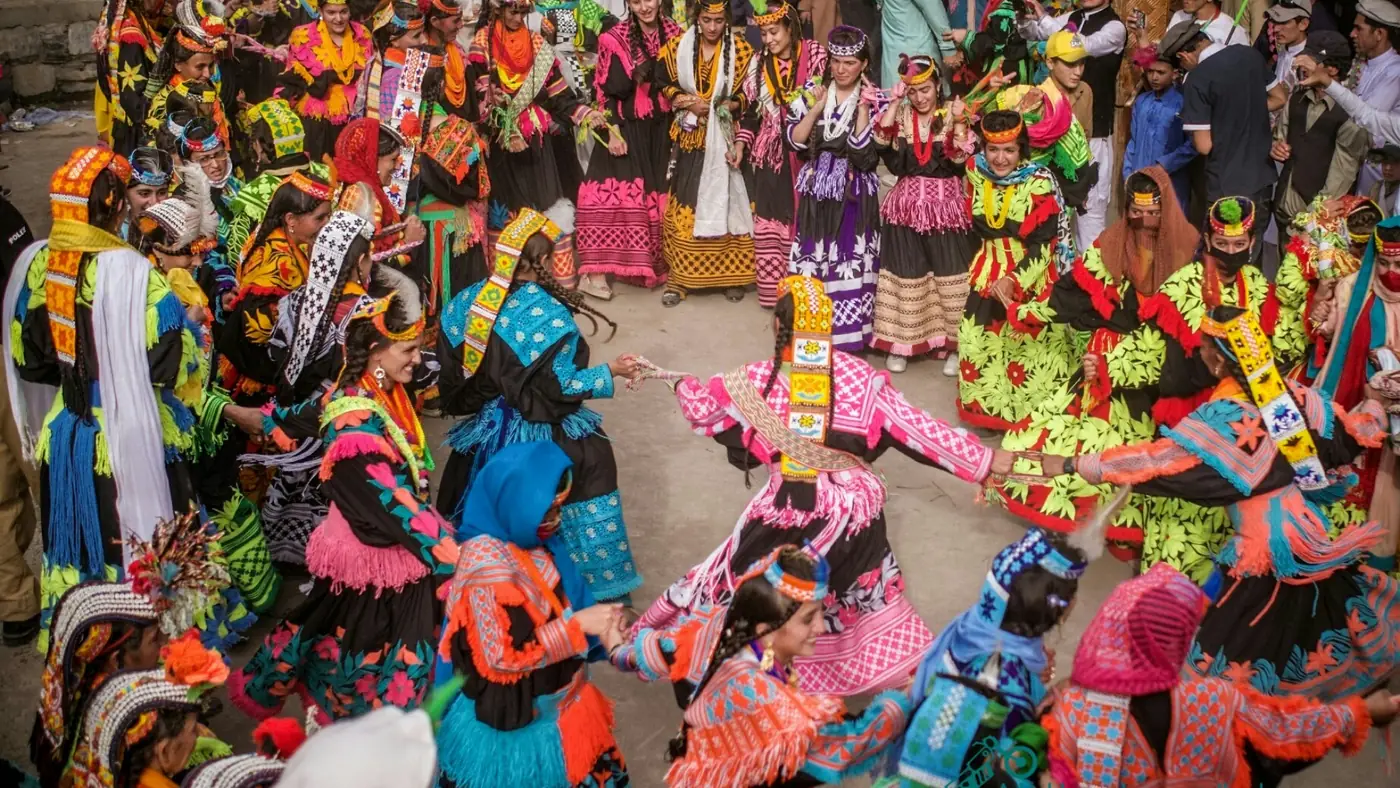
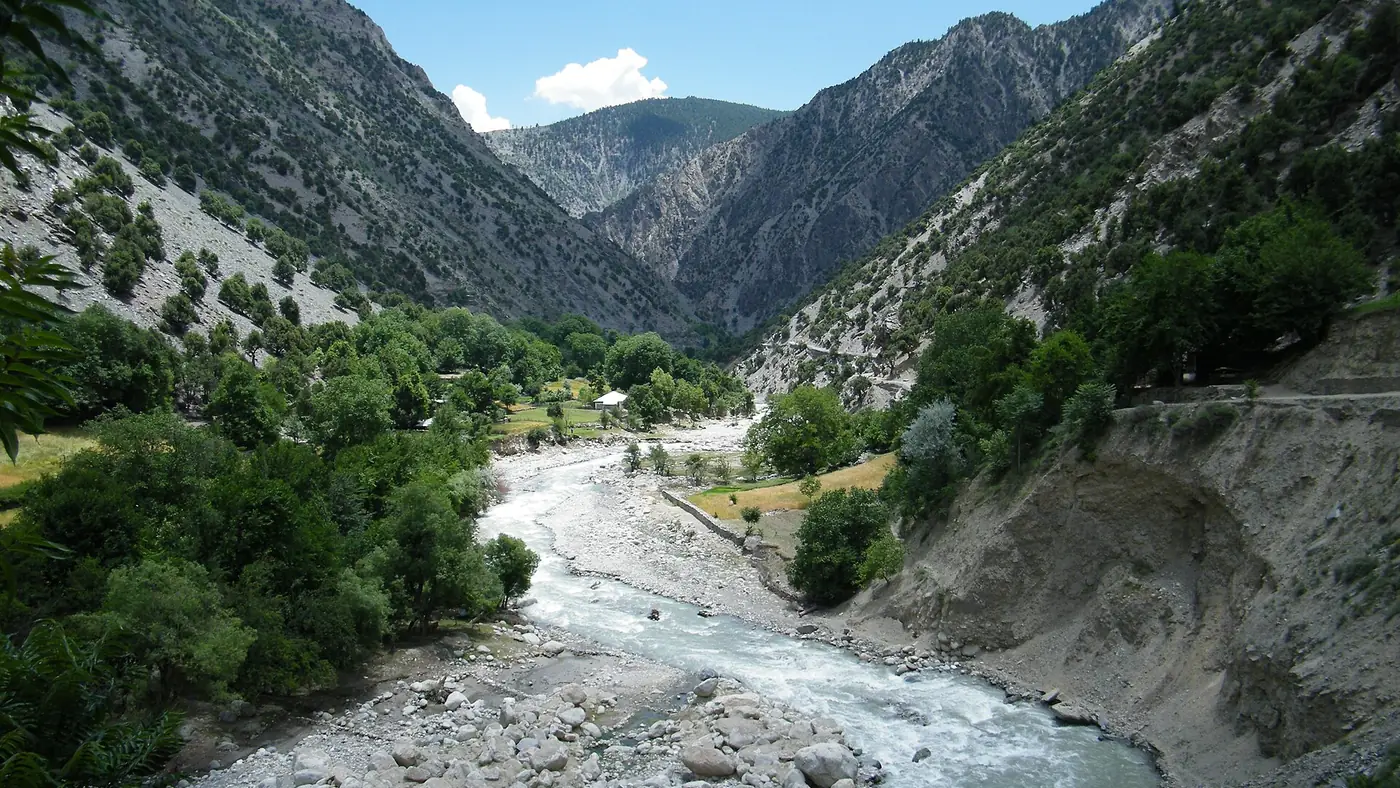
Rumbur valley is the Kalash valley that travellers choose when they want village life rather than crowds. It branches off the same road as Bumburet, just above Ayun, and climbs into a narrower, drier valley with a handful of family guesthouses around the villages of Balanguru and Grom. It is the only one of the three valleys where the Kalasha are still the majority, and it has none of Bumburet's hotel strip.
This guide explains what makes Rumbur different, which villages and sacred places to know about, where to stay, how to get there, and whether it suits your trip better than Bumburet.
| At a glance | |
|---|---|
| Where | Lower Chitral; the road forks from the Bumburet road above Ayun |
| From Chitral town | Similar to Bumburet, 1.5 to 2.5 hours |
| Main villages | Balanguru, Grom and Kalashagrom |
| Character | Narrower, drier and more traditional than Bumburet |
| Rooms | A handful of family guesthouses |
| Sacred sites | The Sajigor sanctuary, for men and boys only; the Mahandeo altar above Grom |
| Transport | Private jeep or a pick-up arranged by your guesthouse |
| Best for | Couples, walkers, small groups and repeat visitors |
Why travellers choose Rumbur
It is still a Kalasha valley. In Bumburet and Birir, Kalasha families are now a minority among Muslim neighbours. In Rumbur they remain the majority, and the rhythm of the villages, from the fields to the festivals, is mostly their own.
It is small and uncommercial. Rumbur was the last of the Kalash valleys to get a road, and it has never developed the hotels and shops that line Bumburet. There are no crowds outside festival days, and evenings are quiet.
Its people have stood up for it. Rumbur's Kalasha fought a 17-year legal battle over the royalties from their valley's forests, decided in their favour by the Supreme Court in the 1990s. That sense of pride and organisation is part of why the valley has kept its character.
You get time with people. Staying with a family, eating what they cook and walking with someone who lives there is the whole point of Rumbur. Foreign travellers have long favoured it for exactly that reason.
The villages
Balanguru is the largest village, spread along the upper valley road beside the river, and several of the guesthouses are here. At Chaumos, processions climb to the plateau at Balanguru for long hours of dancing. It is also one of the places where Kalasha elders have traditionally watched the sunrise against the mountains to set their calendar, a practice UNESCO lists as Suri Jagek. New buildings have started to block some of those views.
Grom sits below a hill crowned by an altar to Mahandeo, one of the most important Kalasha gods, and is a natural start for walks up the valley.
Kalashagrom is the most traditional village in the valley, reached by crossing the stream and climbing a steep path. Go with a local guide or your host, who can make sure you are welcome and show you where you may walk.
The sacred places
Rumbur has some of the most sacred sites in the Kalash valleys, and visitors need to know where not to go.
- The Sajigor sanctuary stands in a sacred grove outside the villages, an open-air shrine to Sajigor, a god said to have come from the neighbouring valleys of Nuristan. Only Kalasha men and boys may go there. Don't try to visit it, and don't photograph it.
- The Mahandeo altar above Grom is visible from the valley. Admire it from a distance unless a Kalasha guide invites you closer.
- The Jestak han, the temple of the goddess of home and family, is where dancing, festival rites and funerals are held. Enter only if invited.
- The bashaleni, the house where women stay during menstruation and childbirth, is strictly off limits.
- The graveyards, with their carved wooden figures, are not places to wander through with a camera.
Our guide to Kalash culture and etiquette explains the ideas of purity behind these rules.
What to do in Rumbur
- Walk between the villages. The paths from Grom up the valley to Balanguru and across to Kalashagrom take you through fields, orchards and walnut trees, and past houses where people are working.
- Take a longer walk with a local guide on the paths above Grom, through the holly-oak forest on the valley sides. Allow around three hours, and ask your guesthouse to arrange someone who knows the way.
- Spend an evening with your hosts. Rumbur's guesthouses are family homes, and dinner is the time to ask about the valley.
- See a festival in its home valley. At Chilam Joshi in May, Rumbur holds its own ceremonies, including the baking of a sacred walnut bread and the blessing of mothers and new babies. In December, Chaumos has started in Rumbur a couple of days before the other valleys.
Rumbur has no museum; for that, go to the Kalasha Dur museum in Bumburet, a short drive away, which our Bumburet valley guide covers.
Where to stay
Rumbur has only a handful of guesthouses, most of them around Balanguru and Grom, several run by Kalasha families, and some have hosted foreign travellers for years. Expect simple rooms and meals with the family, often eaten in the garden, not hotel service.
- Book ahead. With so few rooms, Rumbur can fill quickly at festival time and on Eid.
- Ask what the price includes, usually room and meals, and whether there is hot water.
- Bring cash, drawn in Chitral town, and don't count on finding a cash machine in the valley.
- If Rumbur is full, stay in Bumburet and come over for the day.
Large family groups needing several rooms and a restaurant will find Bumburet easier. Couples and small groups are best suited to Rumbur's guesthouses.
Getting to Rumbur
From Chitral, go south to Ayun and up the valley road to the checkpost, where you register and pay the entry fee. Just beyond, the road divides: one branch runs up to Bumburet, the other into Rumbur.
The Rumbur road is narrower than Bumburet's, and its reconstruction is scheduled after Bumburet's, so expect a rough surface for a while yet. A local jeep is the easiest way in. Shared transport mostly serves Bumburet, so hire a jeep in Chitral or Ayun, or ask your guesthouse to arrange a pick-up. Our guide on how to reach the Kalash valley covers the route and the checkpost.
Is it safe?
Rumbur receives Pakistani and foreign visitors through the season, and its guesthouse families are used to them. But the Kalash valleys run to the Afghan border, where militants attacked military posts in 2023, and the UK government advises against all travel to the Kalash valleys. Check local news before you go, stay on the village paths, don't head up towards the border passes, and call the KP tourism helpline, 1422, if you need help. Overseas visitors should know that their government's advice may say not to go, and that ignoring it can void travel insurance.
Rumbur or Bumburet?
Choose Rumbur if you want quiet, walks and conversation, and you are happy with simple rooms and a family's cooking. It suits couples, small groups and anyone returning to the Kalash valleys for a deeper look.
Choose Bumburet if you are a large family group, want a wider choice of rooms, or want the museum and the festival closing days on your doorstep. With two nights, the best answer is often one in each: Bumburet first for the museum and the bigger villages, then Rumbur to slow down. Our trip planning page explains how we build a stay like this into a wider trip.
Frequently asked questions
Is Rumbur better than Bumburet?
For quiet and traditional village life, yes. Bumburet has more rooms, the museum and more facilities, which makes it easier for families.
How do I get to Rumbur valley?
Drive south from Chitral to Ayun, up to the Kalash checkpost, and take the Rumbur branch where the road divides. A local jeep is the easiest way while the road is being rebuilt.
Where can I stay in Rumbur?
In one of the handful of family guesthouses around Balanguru and Grom, most of them Kalasha-run. Book ahead, especially for Chilam Joshi and Eid.
Can I visit the Sajigor shrine?
No. The Sajigor sanctuary is one of the most sacred Kalasha sites, and only Kalasha men and boys may go there.
Is Rumbur the quietest Kalash valley?
It is much quieter than Bumburet. Birir sees even fewer visitors, but Rumbur is the valley where Kalasha remain the majority and where most travellers go for a traditional stay.
Can I visit Rumbur as a day trip from Bumburet?
Yes. It is a short jeep ride back down to the fork and up the Rumbur side. A night in Rumbur is better, though, to see the villages in the evening and early morning.