
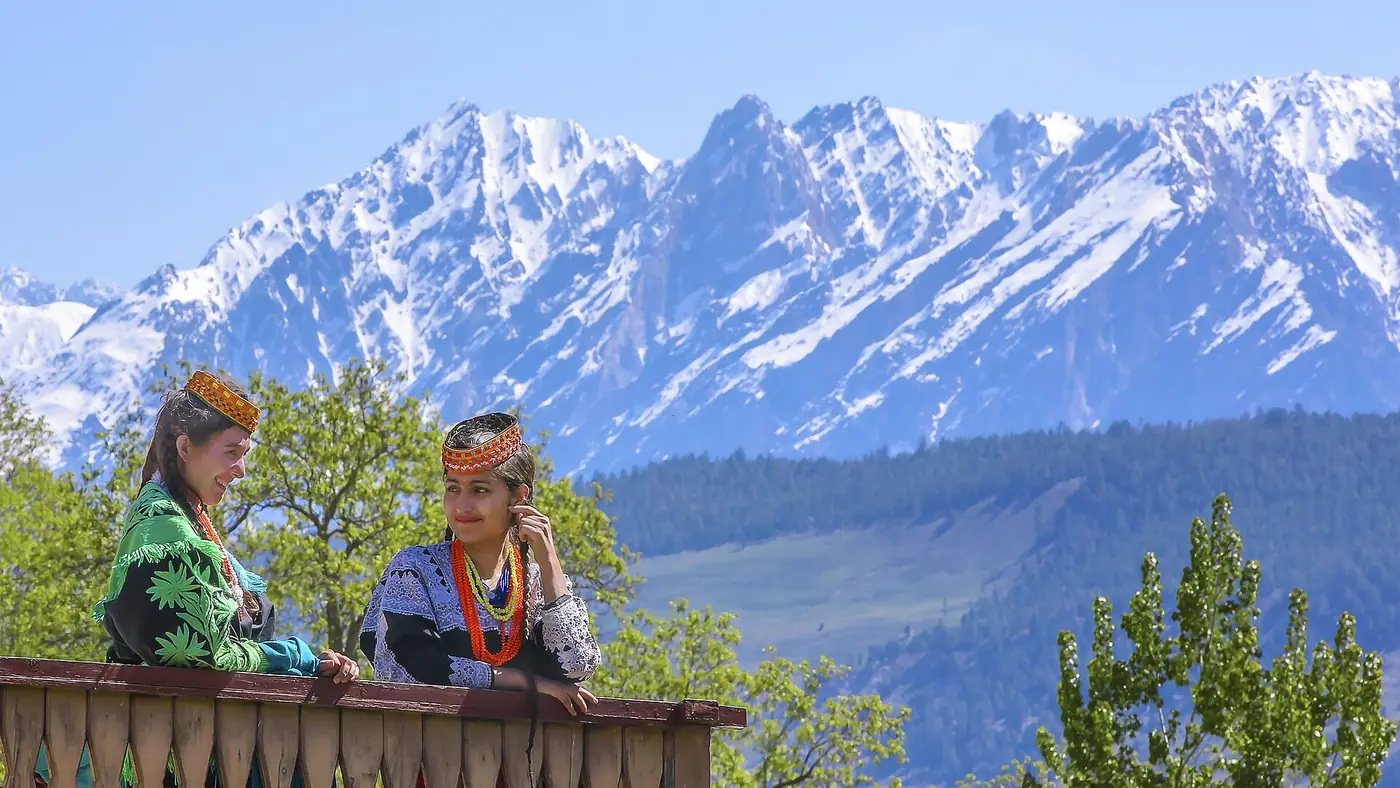
The best time to visit the Kalash valley is from May to October. Go in mid-May for the Chilam Joshi festival, or late August for Uchal, if you want to see the dancing and can live with crowds. Go in June, September or early October if you would rather see the villages as they usually are, with rooms to spare and a quieter road. Winter is for the Chaumos festival in December, and only for people who don't mind snow.
The choice is really between festival weeks and ordinary weeks, and it matters more here than the weather does. This guide compares the two, goes through the seasons, and covers how the road and the holidays change the picture, including a clash in May 2027 worth knowing about now.
| At a glance | |
|---|---|
| Best overall | May to October |
| Chilam Joshi, spring | Usually 13 to 16 May |
| Uchal, harvest | Late August, around 20 to 22 August |
| Chaumos, winter | About 7 to 22 December |
| Quietest good months | June, September and early October |
| Village altitude | About 1,900 to 2,200 metres |
| Hardest months | December to March: snow, cold and the wettest spring weather |
| The road from Ayun | Being rebuilt; completion targeted before May 2027 |
Festival weeks or quiet weeks?
| Festival weeks | Quiet weeks | |
|---|---|---|
| What you see | Dancing, processions, rituals | Farming villages at work |
| Crowds | Heavy, especially in Bumburet | Light outside Eid and weekends |
| Rooms | Full; book weeks ahead | Easy to find |
| The road | Slow, with jams from Ayun | Normal, apart from roadworks |
| Time with people | Little; everyone is busy | Far more |
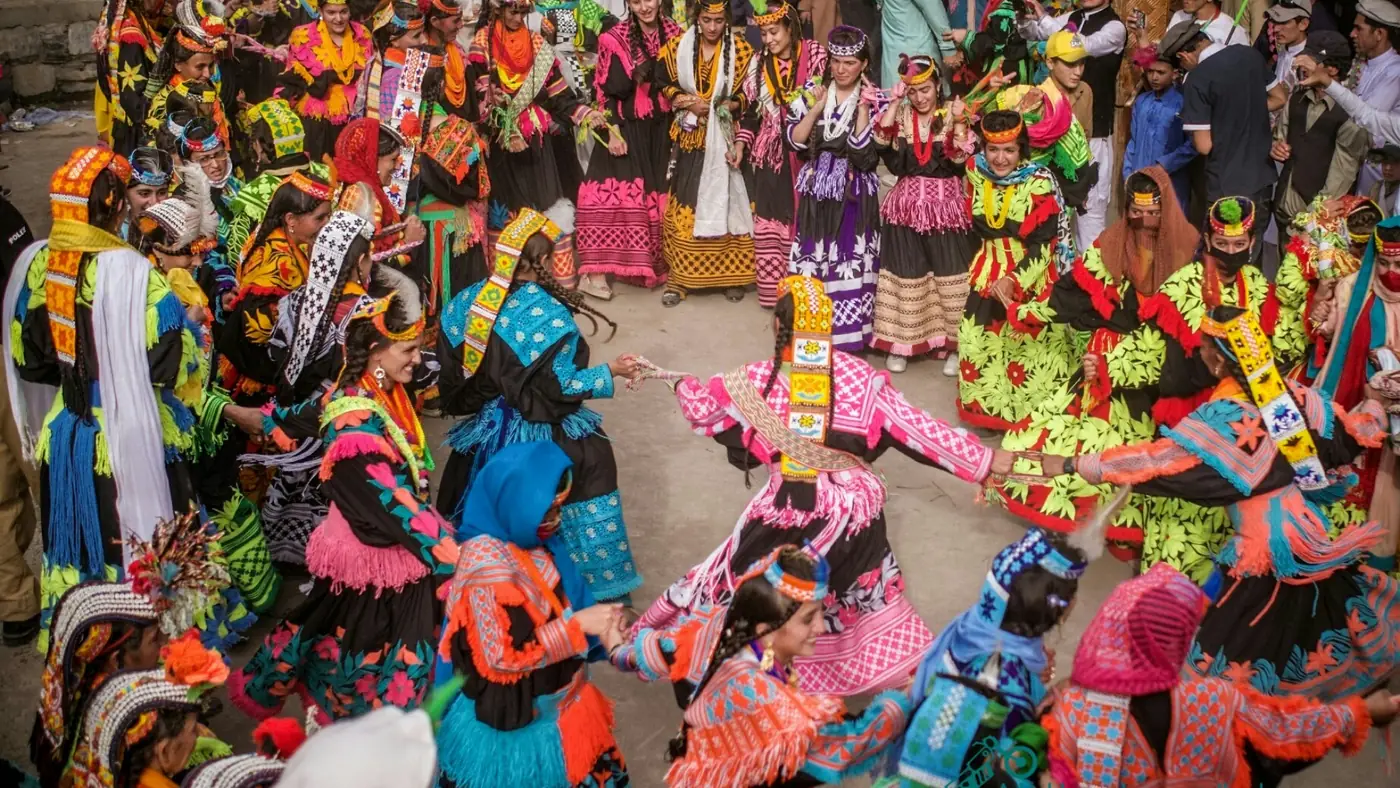
Festivals are the most memorable time to be in the valleys, and the most crowded. At Chilam Joshi in May 2026, hotels were fully booked, and the Kalash Valleys Development Authority organised parking and cleaning for the crowds. Many visitors arrive for one day of dancing and see very little else.
Quiet weeks are when you can walk between villages, sit with a guesthouse family in the evening and get a sense of how people live. If culture rather than spectacle is the point, go outside the festivals.
Spring: March to May
March and April are the wettest months in the district: Chitral town averages close to 100 mm of rain in March, more than in any other month, and the valleys are cold at night. Fruit trees flower in the valleys in spring, and fields start to turn green, but it is not a comfortable time to stay in simple guesthouses.
May is green and mild, and it brings Chilam Joshi, the spring festival, usually held from about 13 to 16 May. It marks the end of winter and the coming of spring, with milk offerings, flowers and several days of dancing across all three valleys. Our Chilam Joshi guide sets out what happens each day.
Spring storms are the risk. On 12 May 2026, the day before the festival began, heavy rain sent flash floods down the streams in Bumburet and damaged a house. Keep a day spare, and check the forecast before driving up from Chitral.
Summer: June to August
June is one of the best months. The festival crowds have gone, the valleys are at their greenest, and the days are warm. Families take their goats up to the high pastures for the summer, so village life is spread between the fields and the mountains.
July is the hottest month in Chitral town, where the average high is around 36°C. The Kalash villages sit several hundred metres higher and are noticeably cooler, which makes them a good escape from the heat of the town.
August ends with Uchal, the festival that gives thanks for the wheat and barley harvest, held around 20 to 22 August. It is smaller than Chilam Joshi but still busy: in 2026 police were deployed at the dancing grounds and on the roads to manage the traffic.
Summer carries a flood risk. In July and August 2015, heavy rain and a glacial outburst caused serious flood damage in Bumburet. If you travel in July or August, follow the local news and don't cross swollen streams.
Autumn: September to November
September and early October are, for many travellers, the best weeks of the year. The heat has gone, the air is clear, and the valleys are busy with the grape and walnut harvest. Birir, the smallest valley, holds its own harvest festival, Phool, in autumn.
Late October and November are colder, with frosty nights and golden trees, and very few visitors. Bring warm layers and ask your guesthouse about heating before you book.
Winter: December to February
December belongs to Chaumos, the winter solstice festival and the Kalasha new year, held from about 7 to 22 December. It is the most important festival to the Kalasha themselves, and the first part is closed to outsiders. Snow often blocks the valley roads. Our Chaumos guide explains what visitors may attend and how to get there in winter.
January and February are the coldest months, with snow in the villages. Chitral town averages around 9°C by day in January and below freezing at night, and the valleys are colder still. Unless you have a reason to be there, wait for spring.
How the road changes through the year
The road from Ayun to the valleys is being rebuilt by the National Highway Authority. In July 2026, asphalt was due to reach the forest post by mid-August, with Bumburet next and then Rumbur and Birir, and the stated aim of finishing before Chilam Joshi in May 2027. Deadlines have slipped before, so expect some roadworks into 2027.
- In dry months, expect dust and short waits while machinery clears the road.
- After rain, unfinished sections turn to mud, which is hard on low cars.
- At festival time and on Eid, the narrow road can jam for hours; leave Chitral early.
- In winter, snow can block the valley roads for days, and snow near the Lowari tunnel can hold traffic on the main road from the south.
Our guide on how to reach the Kalash valley covers the route, the vehicles and the checkpost.
Holidays to plan around
Eid fills the valleys, Bumburet especially, and the road with them. If your only free week is Eid, expect crowds, or choose somewhere else.
May 2027 needs particular care. Eid ul-Adha is expected around 16 or 17 May 2027, right at the end of the usual Chilam Joshi dates. If both fall in the same week, it could be the busiest the valleys have been in years. Book very early, or go in June instead.
Is it safe to visit?
The Kalash valleys run west to the Afghan border. In September 2023, militants crossing from Afghanistan attacked military posts in the Chitral area, and in early 2026 cross-border firing at Arandu, further south, forced families from their homes. The UK government advises against all travel to the Kalash valleys, which it lists with the N-45 road from Mardan to Chitral.
Pakistani families and foreign visitors still travel there, and both Chilam Joshi and Uchal went ahead in 2026 with a heavy police presence. Check local news before you go, keep to the villages and valley roads, and don't head up towards the border passes. Overseas visitors should know that their government's advice may say not to go, and that ignoring it can void travel insurance.
Which time suits you?
- A first visit, for the culture: late May, June or September. You see ordinary village life and still find a room.
- For a festival: Chilam Joshi if you can handle crowds; Uchal if you want something smaller. Stay two nights in the valleys, not a day trip.
- With young children or older parents: June or September, avoiding Eid and festival weeks, when the road and rooms are hardest.
- For autumn colour and clear views: October.
- In winter: only the second half of Chaumos, with a local driver and spare days.
For how the valleys fit into a wider Chitral trip, see our guide to the best time to visit Chitral, which covers Shandur and Upper Chitral too. Our trip planning page explains how we pace festival trips and spare days.
Frequently asked questions
Which month is best for the Kalash valley?
June and September are the best all-round months, with good weather, few crowds and rooms to spare. May is best if you want to see Chilam Joshi.
When is the Kalash festival held?
Chilam Joshi is usually held from about 13 to 16 May, Uchal around 20 to 22 August, and Chaumos from about 7 to 22 December. Birir also holds Phool in autumn.
Can you visit the Kalash valley in winter?
Yes, but snow can block the roads for days and the villages are very cold. Go for the second half of Chaumos in December, with a local driver and a spare day or two.
Is the Kalash valley crowded during Chilam Joshi?
Yes. Rooms fill, Bumburet is packed and the road from Ayun can jam for hours. Book early and stay in the valleys rather than driving in from Chitral each day.
Is the Kalash valley hot in summer?
Less than Chitral town. The villages sit at about 1,900 to 2,200 metres, several hundred metres above the town, so summer days are warm rather than hot and nights are cool.
;_Tahsin_Shah_01.jpg)