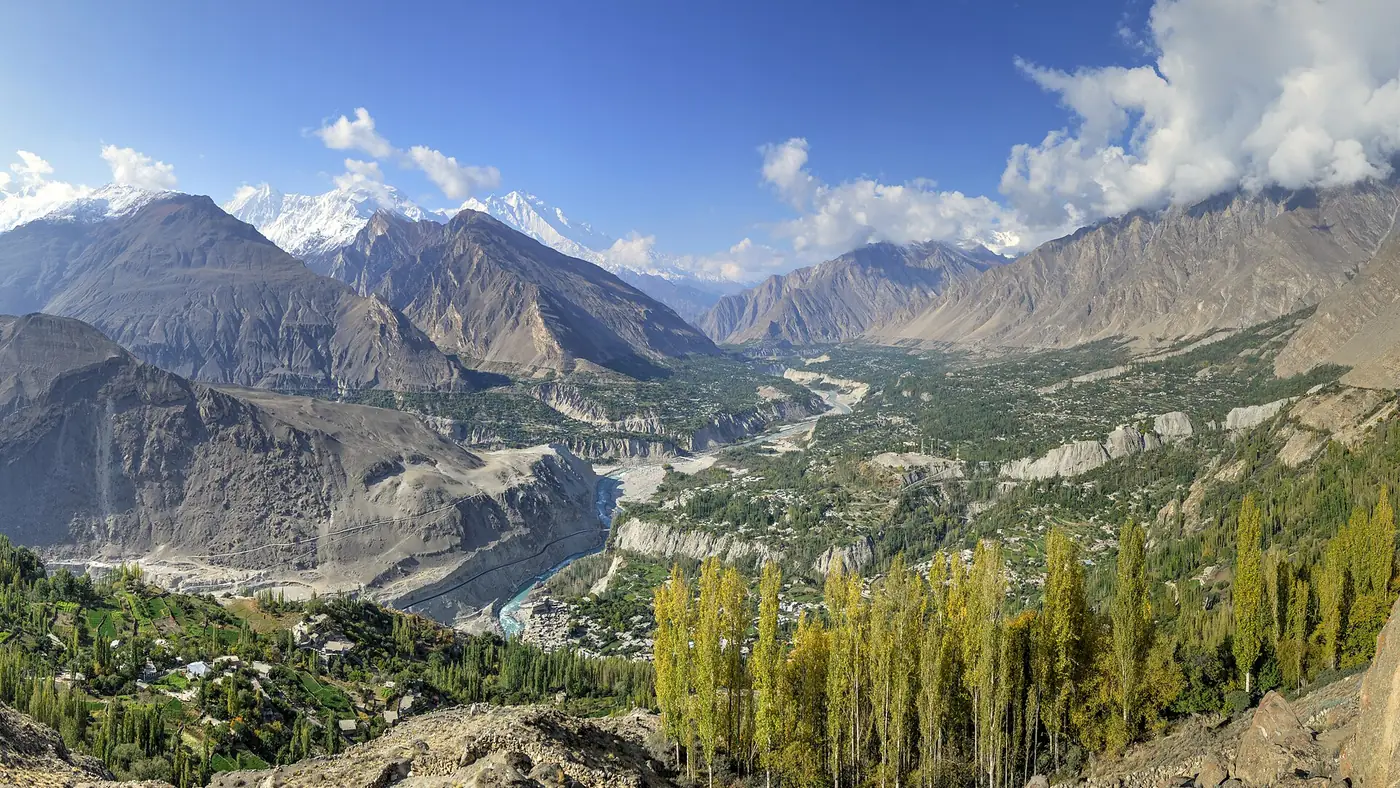
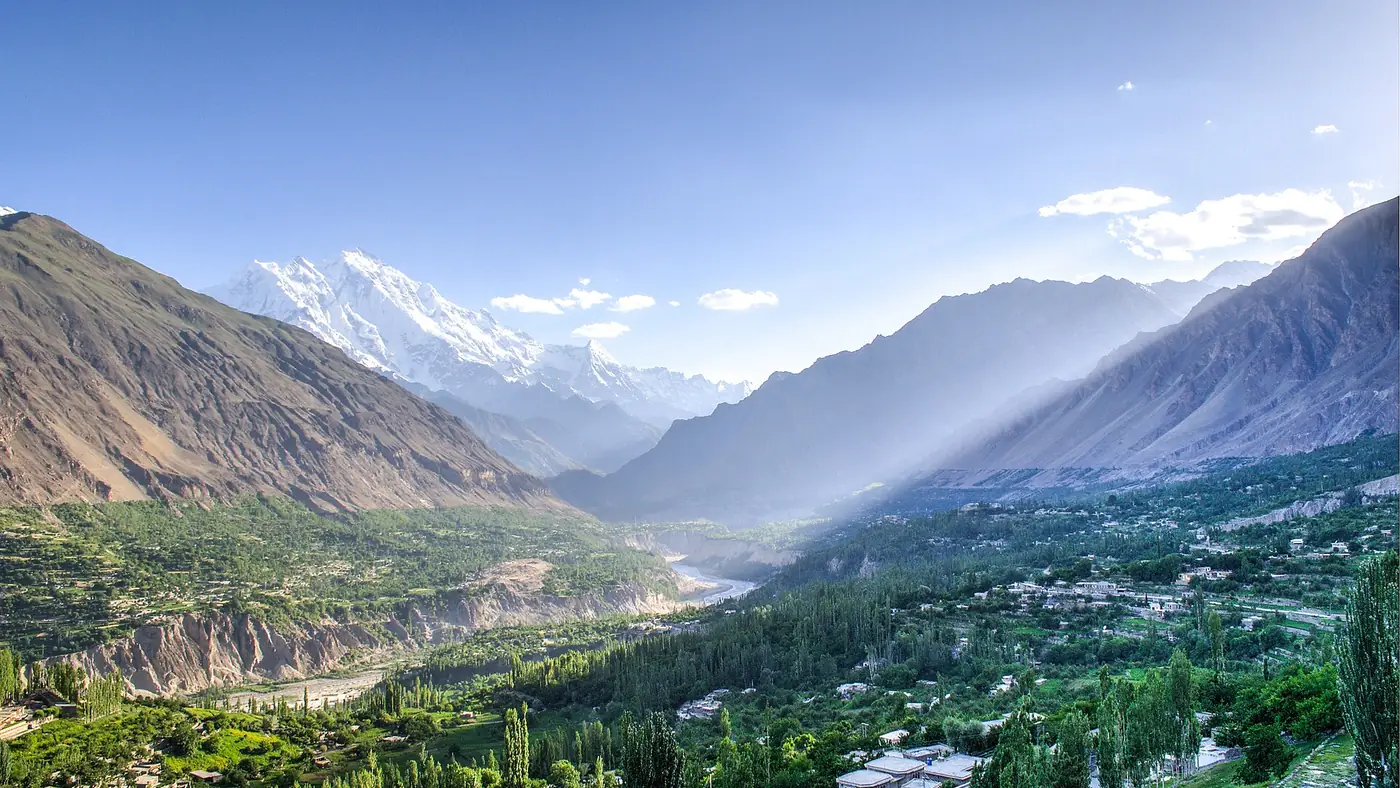
This Hunza itinerary for 7 days is for people who would rather see the valley on foot than through a windscreen. Spend three nights in Karimabad for the forts, the Eagle's Nest viewpoint and a morning across the river in Nagar, then three nights in Gojal, upper Hunza, for Attabad Lake, a proper walk to a glacier and the Khunjerab Pass from Passu. Day seven is kept free for weather, and you leave on the morning of day eight.
The week starts when you reach Hunza. If you fly into Gilgit, that is the same day; if you drive from Islamabad, add two days on the road at each end.
| At a glance | |
|---|---|
| Nights | Karimabad 3, Gulmit or Passu 3, Karimabad 1 |
| Getting there | Fly Islamabad to Gilgit, then 2 to 3 hours by road; or two days' drive |
| Longest day | Khunjerab from Passu, 6 to 7 hours with stops |
| Highest point | Khunjerab Pass, 4,693 m |
| Best months | May to October; Khunjerab roughly May to November |
| Spare day | Day 7 |
| Transport | A car and driver for the week, or your own car |
| Suits | Families, older parents, walkers, anyone who dislikes long drive days |
How the week fits together
Shorter Hunza trips do everything from Karimabad and spend long days in the car. This one uses two bases and moves only twice, so most days involve less than three hours of driving.
- Karimabad first. The forts, the old town and Nagar are close by, and the first nights at about 2,500 metres let everyone settle.
- Gojal next. Gulmit and Passu put the upper valley's glaciers on your doorstep, and Passu is roughly an hour closer to Khunjerab. After five nights in the valley, 4,693 metres is also easier on the body.
- A spare day before you leave, so one closed road or snowy morning at the pass costs you nothing.
- One car for the week. Hopper, the Gojal trailheads and Khunjerab are hard to reach by public transport. Hotels in Karimabad can arrange a car and driver.
PIA is the only airline flying to Gilgit, and only in good weather. Driving up takes two days each way, usually with a night in Chilas; our guide to driving from Islamabad to Hunza covers the route. By road the whole trip becomes about eleven days; a week door to door leaves only about three days in the valley.
Days 1 and 2: Karimabad and Altit
Day 1: arrive. From Gilgit it is about 100 km up the Karakoram Highway to Karimabad, two to three hours with a stop at Ghulmet, where Rakaposhi (7,788 m) rises straight out of the valley. Check in, rest, and keep the evening to a stroll through the bazaar or along a level stretch of water channel.
Day 2: the forts and a sunset.
- Baltit Fort at opening time, before the tour groups. Visits are by guided tour, about an hour, ending on the roof.
- The old lanes below the fort, then the walk along the hillside to Altit, under an hour on village paths.
- Altit Fort and its Royal Garden, with lunch in Altit and a rest afterwards.
- Sunset at Eagle's Nest in Duikar, a steep drive above Altit, with Rakaposhi, Diran and Lady Finger in the evening light. Go up an hour before sunset and take a warm layer.
Day 3: Nagar and the Hopper glacier
Nagar, across the river from Karimabad, is a separate district with far fewer visitors. The road leaves the highway near Ganish, crosses the Hunza river and climbs through Nagar Khas to the village of Hopper, about an hour to an hour and a half each way, rough in places.
From the viewpoint you look down on a huge, grey, rubble-covered glacier, where the Bualtar and Barpu glaciers meet. On a warm day you can hear it crack. A steep path leads down to the ice; with children or older parents, stay at the top. In summer heatwaves, glacier-flood alerts are issued for Nagar's valleys, and when one is in force, keep away from streams and follow local advice.
Be back in Karimabad for a late lunch and keep the afternoon light. Fit walkers can climb to the Queen Victoria monument above Baltit, about an hour up with a steep scramble at the end.
Days 4 and 5: Attabad, Gulmit and a day on foot
Day 4: up to Gojal. Pack up and drive north.
- Attabad Lake, about an hour from Karimabad, for a morning boat ride.
- Through the tunnels to Gulmit, the main town of Gojal, at 2,465 metres. Walk the old village, or climb the Ondra Poygah staircase, some 1,600 steps to the ruined fort above the town, in 30 minutes to an hour.
- The Hussaini suspension bridge, to look at or, if you are steady with heights, to cross.
- Borith Lake, a short side road above Hussaini, for tea by the water in the late afternoon.
Stay in Gulmit, the bigger village, or Passu, about 20 km further on and closer to the pass. Our guide to where to stay in Hunza compares them.
Day 5: a day on foot. Pick one walk to suit the group:
- Easy: the path from Passu village to the foot of the Passu glacier, about 2 km and 30 to 45 minutes each way, almost flat. Look at the ice from the moraine; don't walk onto it.
- Moderate: from Gulmit or Ghulkin across the rubble of the Ghulkin glacier to Borith Lake, two to three hours, with a local guide because the route over the moraine shifts each year. Have your driver meet you at the lake.
- Hard: the Yunz valley from Passu, two to three hours of steep, rocky climbing between the Passu and Batura glaciers, and a full day in all.
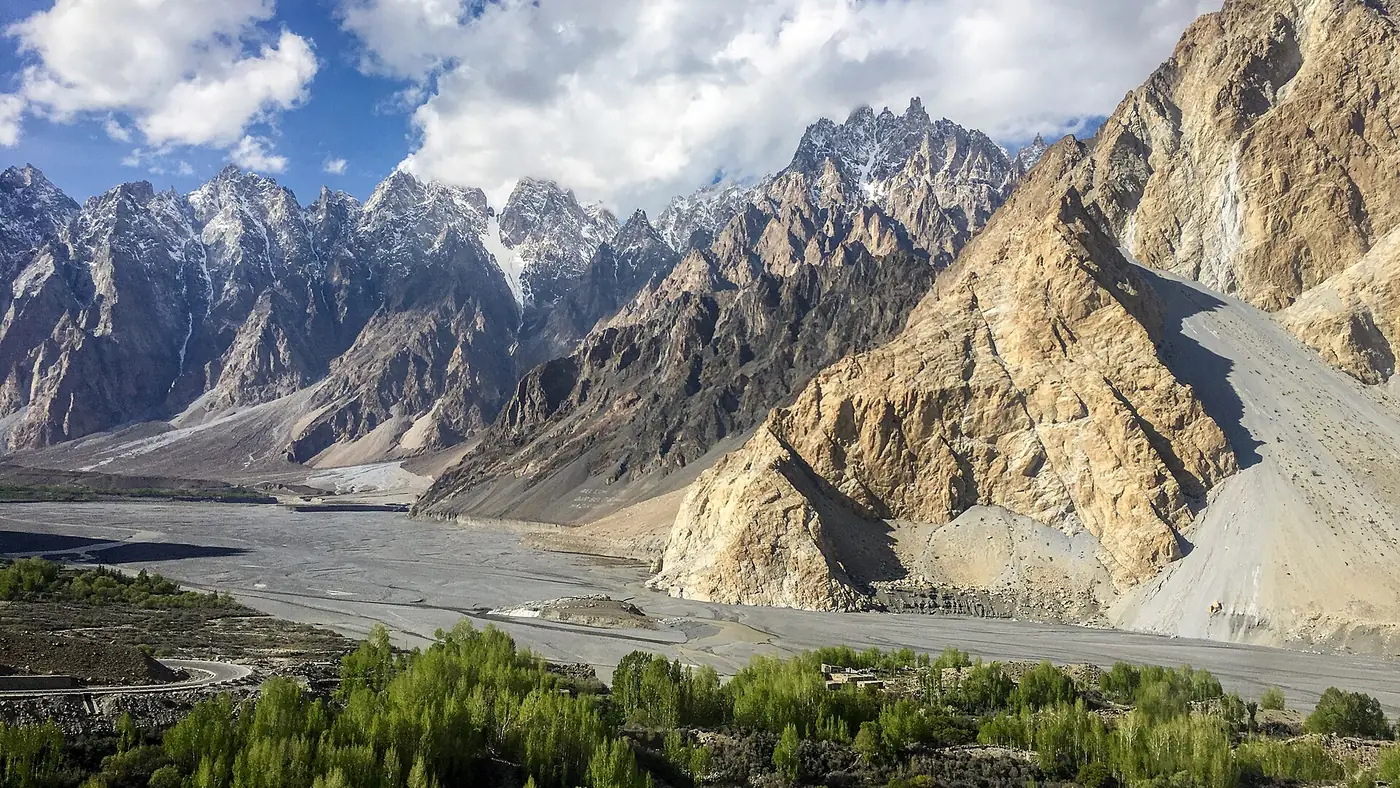
Finish with the Passu Cones in the late afternoon, when the light falls on the ridge. Our guide to hikes in Hunza has the details of each walk.
Day 6: Khunjerab Pass from Passu
From Passu the border is about two and a half hours away, a far easier day than the round trip from Karimabad.
- Leave by 8. Fill the tank in Sost, 45 minutes to an hour up the road; there is no fuel beyond it.
- The Dih checkpoint. Show your CNIC and pay the Khunjerab National Park fee in cash.
- At the top by late morning. An hour at 4,693 metres is plenty. Walk slowly, drink water, and head down at once if anyone has a bad headache, nausea or dizziness.
- Back in Passu by mid-afternoon, with time to rest before dinner.
Our guide to the drive from Hunza to Khunjerab covers the road, the checkpoint and what to carry.
Day 7: the spare day, and leaving on day 8
Hold day seven back. If snow or a landslide closed Khunjerab on day 6, which happens most often in May, October and November, try again from Passu. If rain, a road closure or an unwell traveller pushed anything else back, this is where it goes.
If you don't need it, have a slow morning in Gojal and drive back down to Karimabad, stopping at Attabad on the way, with time for the bazaar or Eagle's Nest if cloud spoiled day 2. Fit walkers could spend it on Ultar Meadow instead, a hard climb of three to five hours from Baltit.
Day 8: leave Karimabad early for Gilgit and the morning flight, or start the drive south to Chilas. A cancelled flight costs another day, so keep the day after your return free.
Changing the plan for the season
- April: blossom, but Khunjerab is closed to visitors until about early May. Replace day 6 with a second walk, and expect snow on the higher paths.
- May and October: quieter and good for walking, but Khunjerab closures are more likely, so the spare day earns its place. Late October brings the autumn colour.
- July and August: the surest months for Khunjerab, but also the monsoon, when landslides south of Gilgit and glacier-flood alerts are most likely.
- November to March: Khunjerab is closed and the higher Gojal walks are under snow, so a shorter stay in Karimabad makes more sense than a full week.
Our guide to the best time to visit Hunza goes through the year month by month.
Is a week in Hunza worth it?
For most people who like to walk, yes. A week lets you see Nagar and Gojal properly, spreads the altitude out before Khunjerab and still leaves a day in hand. With no long days, it is also the gentlest way to bring older parents or small children.
It suits less well anyone who wants to cover as much of the north as possible; a week split between Hunza and another valley will feel better value. Our nine-day Gilgit, Hunza and Khunjerab tour covers much of this plan, adds Gilgit and the Naltar lakes, and keeps a spare day for weather.
Frequently asked questions
Is 7 days too long for Hunza?
Not if you like walking or travel with family. Three or four days covers the main sights; a week adds Nagar, a day on foot in Gojal and a spare day, at a far gentler pace.
What is the best 7-day itinerary for Hunza?
Three nights in Karimabad for Baltit, Altit, Eagle's Nest and the Hopper glacier; three nights in Gulmit or Passu for Attabad, a glacier walk and Khunjerab; a spare day; then leave on day eight.
Where should I stay for a week in Hunza?
Split it between Karimabad and Gulmit or Passu. That saves long drives to Gojal and Khunjerab, and each base has walks from the door.
Can I visit Khunjerab Pass on a 7-day Hunza trip?
Yes, between about May and November. Go from Passu, about two and a half hours each way, late in the week when everyone has adjusted to the altitude, and keep the next day spare.
Do I need a car for a week in Hunza?
Yes, for Hopper, the Gojal walks and Khunjerab. If you fly in, hire a car with a local driver through your hotel.