Gilgit-Baltistan traditional food is mountain food: wheat and buckwheat, dried fruit, meat preserved for the winter, and apricot oil in almost everything. The dishes to look for are chapshuro, a meat-filled bread from Hunza; mamtu, steamed meat dumplings found across the region; harissa, a slow-cooked winter dish of wheat and meat; diram phitti, a sprouted-wheat bread eaten with apricot oil; and, in Baltistan, noodle dishes such as balay and prapu. Karimabad is the easiest place to try them, at a few long-running family restaurants, and Skardu's heritage hotels serve Balti dishes.
This guide goes region by region, explains what each dish is and when it is eaten, and says where a visitor can actually order it.
| Dish | What it is | Where it comes from |
|---|---|---|
| Chapshuro | Minced meat sealed in thin bread and cooked until crisp | Hunza, now across the region |
| Mamtu | Steamed dumplings of minced meat and onion | Across the region |
| Harissa | Wheat and meat slow-cooked to a thick porridge | Hunza; winter, weddings and funerals |
| Diram phitti | Bread of sprouted wheat, eaten with apricot oil or butter | Hunza; a winter breakfast |
| Hoilo garma | Local greens cooked with bread, garlic, ginger and onion | Hunza |
| Molida | Shredded flatbread cooked with dried cheese, finished with apricot oil | Hunza; for guests and special days |
| Balay | Hearty noodle soup with meat | Baltistan |
| Prapu | Hand-made noodles with walnut paste and apricot oil | Baltistan |
| Marzan | Sprouted-wheat dough served with apricot oil | Baltistan; special occasions |
| Chamus | A drink made from dried apricots | Hunza |
What makes the food of Gilgit-Baltistan different
The valleys were cut off for much of the year until the Karakoram Highway and the Skardu road were built, and the old diet shows it. Families grew wheat, barley and buckwheat, kept goats, sheep and yaks, and dried what they could not eat fresh. Apricots were dried on the roofs, their kernels pressed for oil, and meat was dried in winter to last until spring.
The result is food with little chilli and few spices, built on bread, grain, dairy and oil. It is filling, often rich, and quite unlike the curries of the plains. Most of it is still home cooking. You will not find much of it on hotel menus, which lean towards Pakistani and Chinese dishes, so it is worth seeking out.
Hunza and Nagar
Chapshuro is the dish every visitor hears about. Minced meat, usually beef, mutton or yak, is mixed with onion, green chilli and herbs, sealed between two thin rounds of dough and cooked until the outside is crisp. It is cut into wedges and eaten hot, and is often compared to a pie or a pizza. It is now made in Gilgit and all over Hunza.
Diram phitti is made from wheat that has been soaked and left to sprout, then dried and ground; diram is the sprouted flour. The thick bread is broken up and eaten with apricot oil or butter. It is a winter breakfast, and is also made for weddings and births.
Harissa is wheat and meat cooked slowly with ghee until smooth and elastic. It is a winter dish, and one for gatherings: it is made for weddings and for funerals, from Chapursan down to Karimabad, so you are more likely to be offered it in a home than to find it in a restaurant.
A few everyday dishes are worth ordering when you see them:
- Hoilo garma: a local leafy green, rather like spinach, cooked with pieces of bread, garlic, ginger and onion.
- Molida: shredded flatbread cooked with dried cheese and served with apricot oil, traditionally for guests.
- Dawdo: a soup with home-made noodles, with meat or vegetables.
Gojal, upper Hunza
North of Attabad Lake, the Wakhi villages of Gulmit, Passu and Shimshal share much of Hunza's kitchen, but yak meat and dairy play a larger part, above all in Shimshal, where families still take yaks to the high pastures in summer. Dried yoghurt and cheese are kept for the winter.
Passu is also known for something newer: apricot cake. Glacier Breeze, a café on the highway at Passu with a view of the glacier and the Passu Cones, has been famous for it for years.
Baltistan
Balti cooking has much in common with Ladakh and Tibet across the mountains, and the Balti table is built on noodles, bread and butter tea.
- Balay is a thick noodle soup, usually with goat meat, made for cold days.
- Prapu is hand-made wheat noodles covered in a paste of ground walnuts or almonds with apricot oil and local herbs.
- Marzan is a mound of dough made from sprouted wheat, served with a bowl of apricot oil. It takes days to prepare, so it is made for special occasions such as Nowruz and weddings.
- Gyal here means buckwheat cakes cooked on an iron plate over a wood fire, eaten with apricot oil and sometimes honey or walnut paste.
- Butter tea, salty and made with butter and milk, is the backbone of the Balti kitchen and can be a breakfast in itself.
Mamtu and chapshuro are eaten in Baltistan too.
Winter food and nasalo
In parts of Gilgit-Baltistan, early winter brings nasalo, when families slaughter a yak, cow, sheep or goat and preserve the meat for January and February, the coldest months. Long strips are salted, spiced and hung to dry, and minced meat and fat are made into sausages called ghittey. The festival itself falls around 21 December. Dried meat then goes into soups and stews through the winter, which is why a winter visit is the time to find the heaviest local dishes.
Apricots in everything
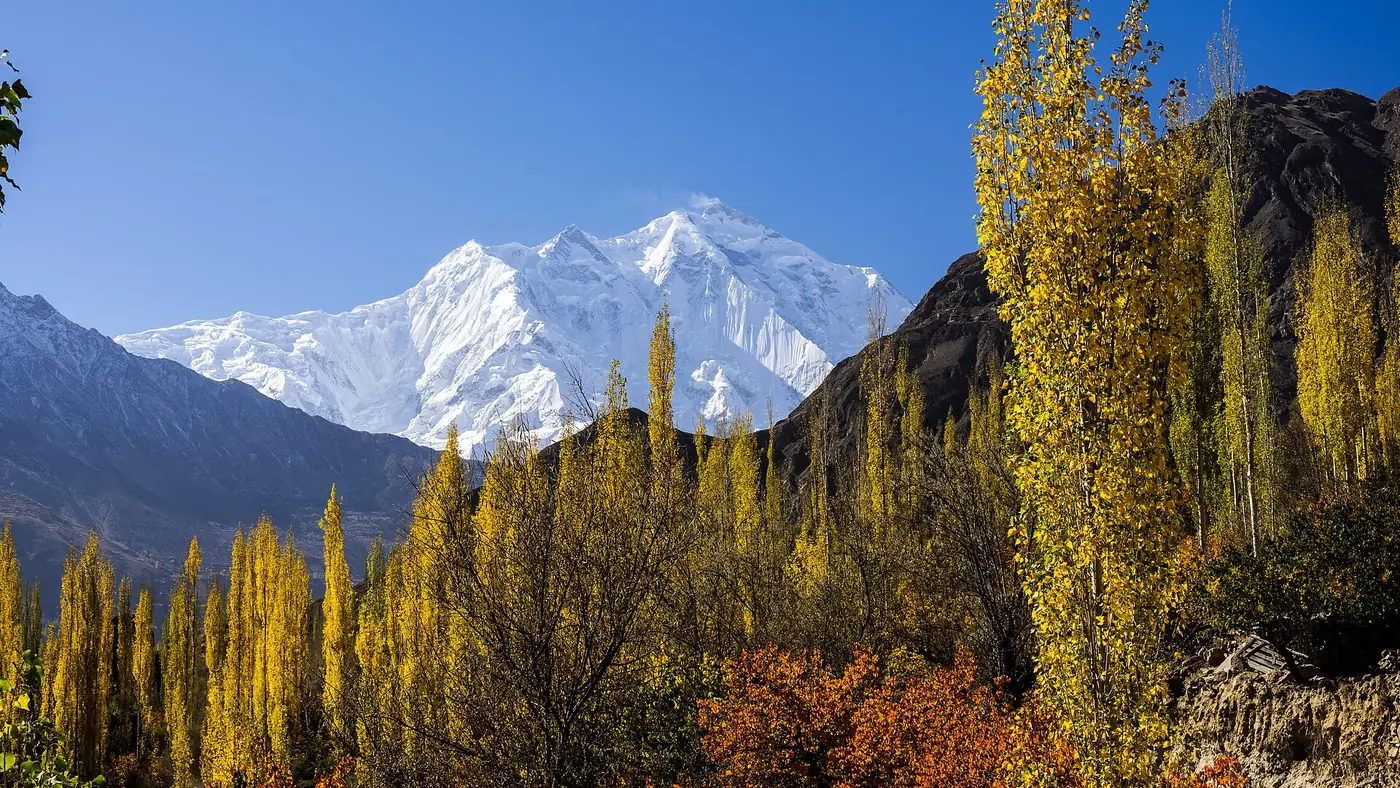
Apricots are to Hunza and Baltistan what mangoes are to Multan. In Hunza they are picked from late June into July, then dried on roofs and in the shade for a few weeks. What comes from them:
- Dried apricots, eaten as they are, soaked, or cooked.
- Apricot oil, pressed from the kernels, which finishes diram phitti, molida, prapu and marzan. It tastes a little like almond oil.
- Chamus, a drink made by soaking dried apricots.
- Apricot soup, a sweet-and-sour dawdo made with dried apricots, and kak moch, boiled apricots with home-made pasta.
- Apricot cake, the modern café version.
In spring, the same trees give Hunza its blossom season; our guide to Hunza blossom season covers when.
Where to try traditional food
- Hunza Food Pavilion, Karimabad. A small family restaurant in the Karimabad bazaar run by Lal Shehzadi, whose restaurant was one of the first women-owned businesses in the area. Chapshuro, dawdo, hoilo garma and molida are cooked to order from local ingredients.
- Cafe de Hunza, Karimabad. Best known for its walnut cake, and a Karimabad fixture for many years.
- Glacier Breeze, Passu. Apricot cake, with the Passu Cones out of the window.
- Serena Shigar Fort and Serena Khaplu Palace. Both heritage hotels serve Balti dishes, including mamtu and chapshuro at Shigar, alongside Pakistani and continental food. Non-residents should check whether the restaurant is open to them.
- Guesthouses and homestays. The most traditional food is cooked at home. Ask your host a day ahead; many dishes take hours or need ingredients prepared in advance.
For more on Karimabad and the villages around it, see our guide to places to visit in Hunza, and for Baltistan, places to visit in Skardu.
Tips for eating well in the north
- Expect mild food. Ask for green chilli or chutney if you want heat.
- Allow time. Chapshuro, mamtu and most home dishes are made to order.
- Vegetarians do well. Diram phitti, hoilo garma, molida, prapu, gyal and marzan contain no meat.
- Mind nut allergies. Apricot kernels, walnuts and almonds are in a great many dishes and in the oil.
- Buy dried apricots and apricot oil from shops in Karimabad or Skardu rather than at the roadside on the way home, and check the date on bottled oil.
Our travel guide has more practical advice for a first trip north, and our Gilgit, Hunza and Khunjerab tour spends several days in Karimabad and Gojal, where most of these dishes come from.
Is it worth seeking out?
Yes, if you are curious and not in a hurry. A plate of hot chapshuro in Karimabad or a bowl of prapu in Skardu tells you more about the valleys than another viewpoint does, and it costs little.
If you are travelling with children who eat only familiar food, don't worry: daal, karahi, rice and naan are available everywhere. Order one local dish for the table and let everyone try it.
Frequently asked questions
What is the most famous food of Gilgit-Baltistan?
Chapshuro, the meat-filled bread from Hunza, is the best known, followed by mamtu dumplings and apricot products. In Baltistan, prapu, balay and butter tea are the classic dishes.
What is chapshuro made of?
Minced meat, usually beef, mutton or yak, mixed with onion, green chilli and herbs, sealed between two thin rounds of dough and cooked until crisp. It is eaten hot, cut into wedges.
What is diram phitti?
A thick bread made from sprouted wheat flour, broken up and eaten with apricot oil or butter. It is a traditional winter breakfast in Hunza.
Where can I eat traditional Hunza food in Karimabad?
Hunza Food Pavilion in the Karimabad bazaar cooks chapshuro, dawdo and other Hunza dishes to order. Many guesthouses will also cook local food if you ask a day ahead.
Is Gilgit-Baltistan food spicy?
No. Traditional dishes use little chilli and few spices, relying on meat, grain, dairy and apricot oil. Chilli is usually served on the side.