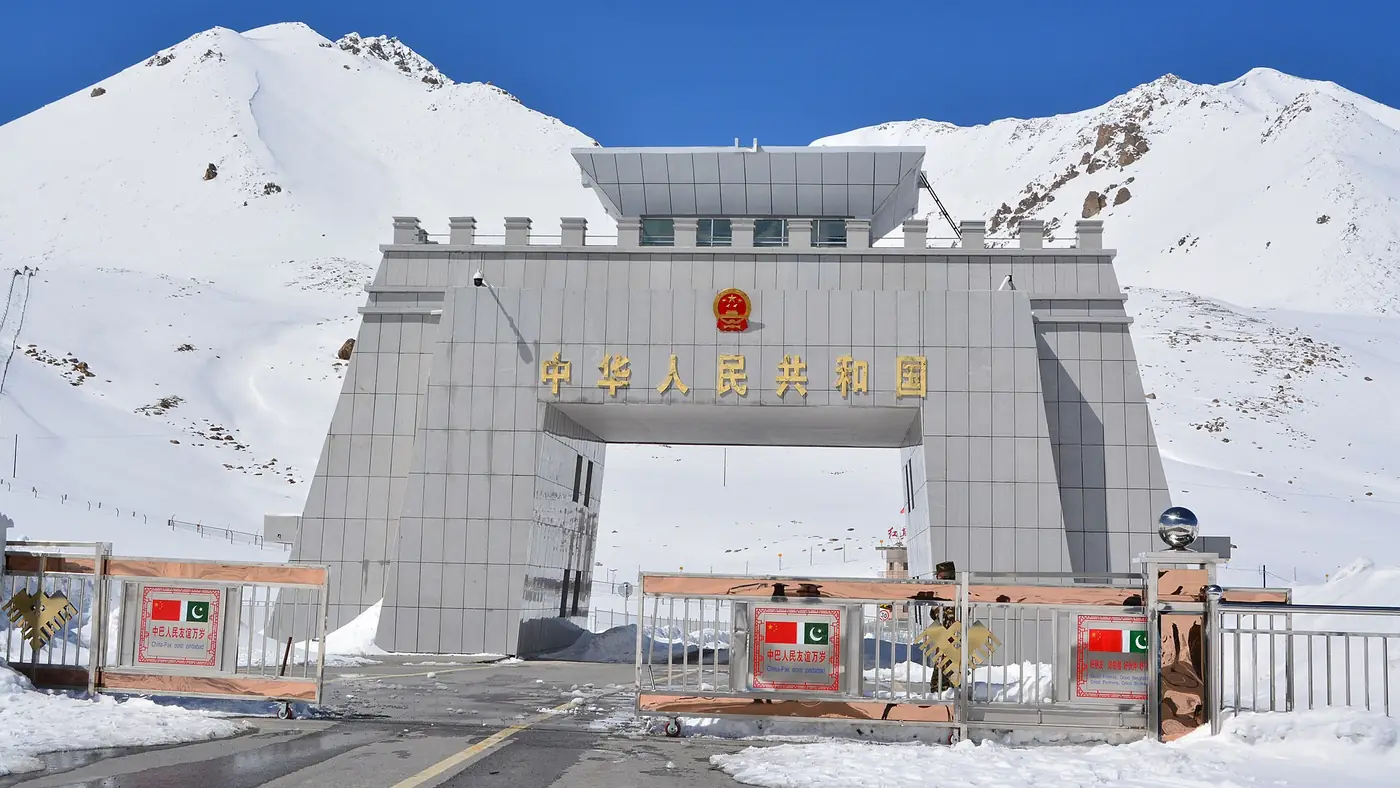
Crossing Khunjerab Pass into China is a real border crossing, not an extension of the day trip to the pass: it needs a valid Chinese visa arranged in advance, and it is done by an official bus from Sost to Tashkurgan, not in your own car. Day visitors who drive up from Hunza to see the border marker are not crossing it, and cannot simply carry on into China at the gate.
This guide sets out what Pakistanis actually need to make the crossing: the visa, how the Sost immigration post works, the bus itself, and when the crossing runs.
| At a glance | |
|---|---|
| Crossing point | Khunjerab Pass, 4,693 m, then on to Tashkurgan, China |
| Visa | A Chinese visa obtained in advance; none issued at the border |
| Immigration | Cleared at Sost (Pakistan) and Tashkurgan (China) |
| How you travel | By NATCO bus from Sost; private vehicles cannot cross |
| Journey time | About 5 to 6 hours from Sost to Tashkurgan |
| Season | Roughly May to November, and only on operating days |
| Tickets | Book in advance from the Pakistani side |
You need a Chinese visa before you travel
There is no visa on arrival at Khunjerab, and none issued at Tashkurgan. Every traveller, Pakistani or foreign, must have a valid Chinese visa in their passport before they reach the border, or they will simply be turned back.
For Pakistani citizens, the visa is applied for through the Chinese Embassy in Islamabad's authorised application centre, Gerry's Chinese Visa Application Service Centre, which also handles applications from Rawalpindi, Khyber Pakhtunkhwa and Gilgit-Baltistan. Pakistani ordinary passport holders are exempt from the visa fee, but you still need a passport valid for more than six months with a blank page, and the embassy collects fingerprints from applicants aged 14 to 70. As of 2026 the embassy states it generally needs about four working days to process an application once documents are complete, though a request for more documents or an interview can take longer, so apply well before you plan to travel and don't book non-refundable travel until the visa is issued.
Because the requirements and processing times can change, check the current instructions on the Chinese Embassy in Islamabad's website before you apply.
Immigration at Sost
Sost, the last town in Pakistan on the Karakoram Highway, holds Pakistan's customs and immigration post for the crossing. Everyone travelling on to China clears Pakistani immigration here before the bus sets off, and the equivalent Chinese process happens on arrival in Tashkurgan, roughly 100 km beyond the pass on the Chinese side. Expect a thorough check: passports and visas examined closely, luggage screened, and the whole process, door to door, taking several hours rather than minutes. Our guide to Sost covers the town's services if you need to stay the night before an early departure.
You cross by bus, not by car
Independent travellers cannot drive their own vehicle across Khunjerab into China. The crossing is made by official bus, run on the Pakistani side by NATCO, the government transport company, connecting Sost to Tashkurgan in around five to six hours. Buses from the Chinese side are run by a separate Chinese operator; through services all the way to Kashgar or Gilgit have not always run in recent years, so check current routing before you plan a longer journey beyond Tashkurgan.
Buy your ticket in Sost in advance if you can; the bus does not always have space for walk-up passengers, and departures tend to be in the morning. Fill up any remaining plans around the border's operating days rather than the bus schedule alone, since the crossing does not run every day.
When the crossing operates
The trade route over Khunjerab has been kept open through winter since December 2024, but that is for cargo, not for the bus service that carries passengers. The passenger crossing still follows a tourist season, broadly May to November and closed by snow for the rest of the year, and even within season it typically does not run every day of the week, closing for Pakistani and Chinese public holidays among other gaps. Ask at the NATCO office in Sost, or through your travel agent, for the current operating days before you plan a specific date. Our Khunjerab Pass guide covers the pass's tourist-visit season in more detail, which follows a similar window but is a separate question from the passenger border crossing.
What a day visitor to Khunjerab cannot do
If you are visiting the pass as a day trip from Hunza, with only your CNIC and no Chinese visa, you stay on the Pakistani side of the border gate. Staff at the pass will not let you walk through to the Chinese side without the paperwork, whatever the queue of trucks passing through looks like. This is a genuine international border, guarded on both sides, and the marker and the gate are as far as a day visit goes.
Is crossing into China worth the trouble?
For most travellers planning a Hunza holiday, no: it adds a visa application, a long bus journey and a separate trip logistics on the other side, for a destination that is a further journey from Tashkurgan even once you arrive. It makes sense if travelling on into Xinjiang, or further into China, is genuinely part of your plans, in which case the visa and the bus are simply the first step of that trip.
If Khunjerab itself, rather than China, is the goal, our nine-day Gilgit, Hunza and Khunjerab tour takes you to the pass and back as part of a wider look at the valley, with no visa or border formalities involved.
Frequently asked questions
Do Pakistanis need a visa to cross into China at Khunjerab?
Yes. A Chinese visa must be obtained in advance through the Chinese Embassy in Islamabad's application centre. There is no visa on arrival at the border.
Can I drive my own car across Khunjerab Pass into China?
No. The crossing is made by official bus from Sost to Tashkurgan. Private vehicles are not permitted to cross the border.
How long does the bus take from Sost to Tashkurgan?
About 5 to 6 hours, including the stop for immigration formalities at the border.
Is the Khunjerab border crossing open all year?
No. The passenger crossing follows a tourist season of roughly May to November and does not run every day within that window. Cargo trade has run through winter since December 2024, but that does not apply to passenger buses.
Can a day visitor to Khunjerab Pass walk into China?
No. Day visitors without a Chinese visa stay on the Pakistani side of the border gate. Crossing requires a valid visa and travel on the official bus service.